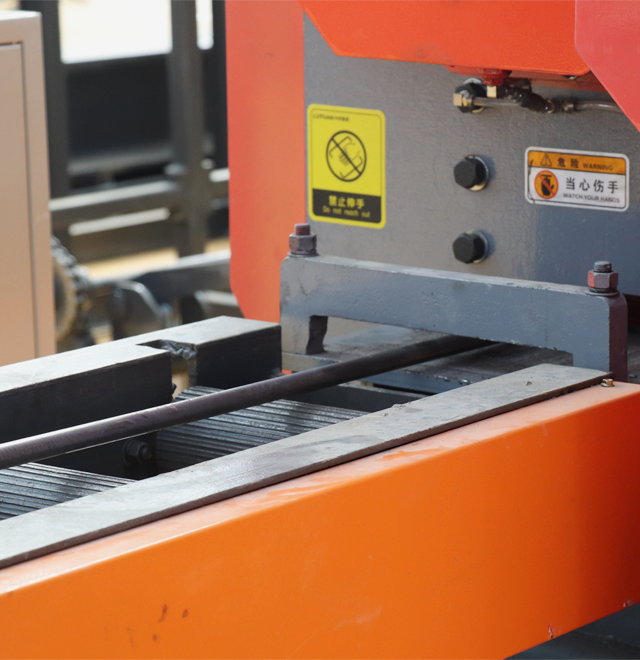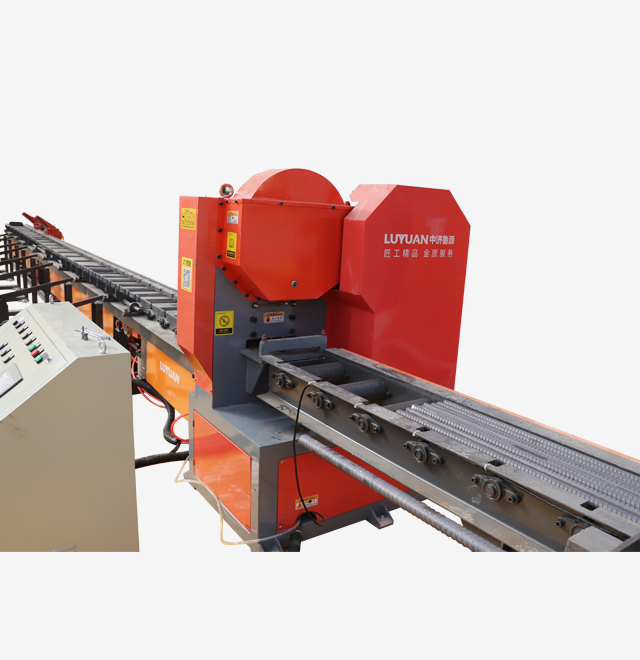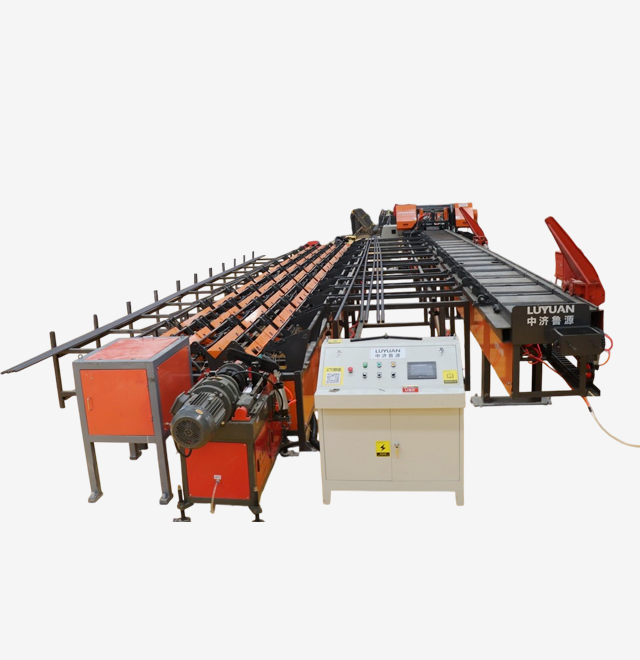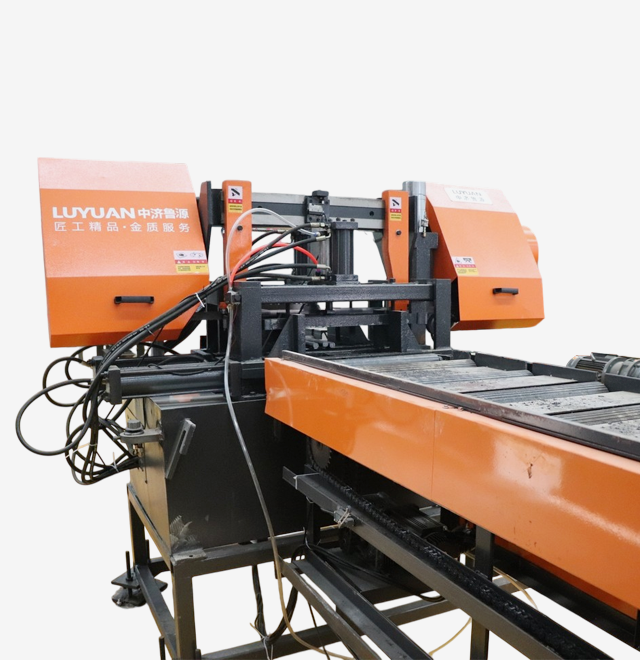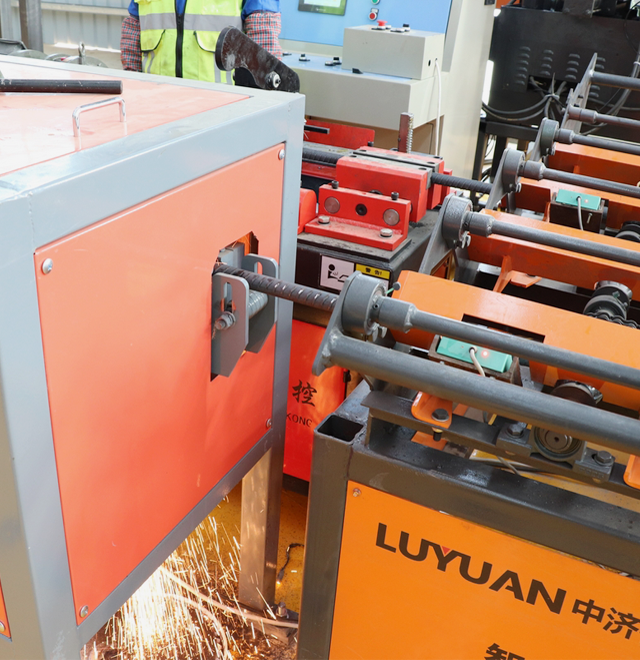
CNC Rebar Threading Machine
2.Operation Mode: Automatic CNC / servo-controlled
3.Shearing Mode: Electric cutting system
4.Rebar Diameter Range: φ10–40 mm
5.Shearing Length Range: 0.7–12 m
6.Shearing Precision: ±2 mm
7.Power Supply: 380V / 50Hz / 3-phase
8.Control System: CNC + HMI touch control
9.Production Efficiency: 80–120 pieces/hour
10.Main Materials: Heavy-duty welded steel frame
11.Application: Construction steel bar processing and cutting
Product Description
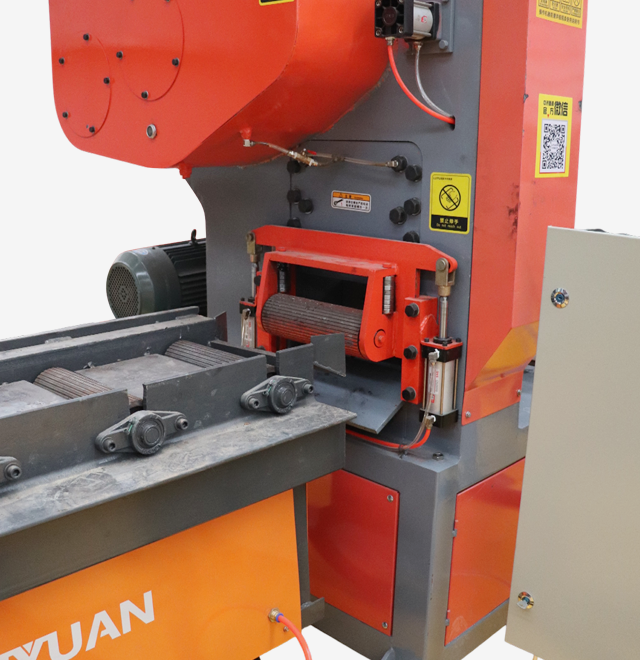
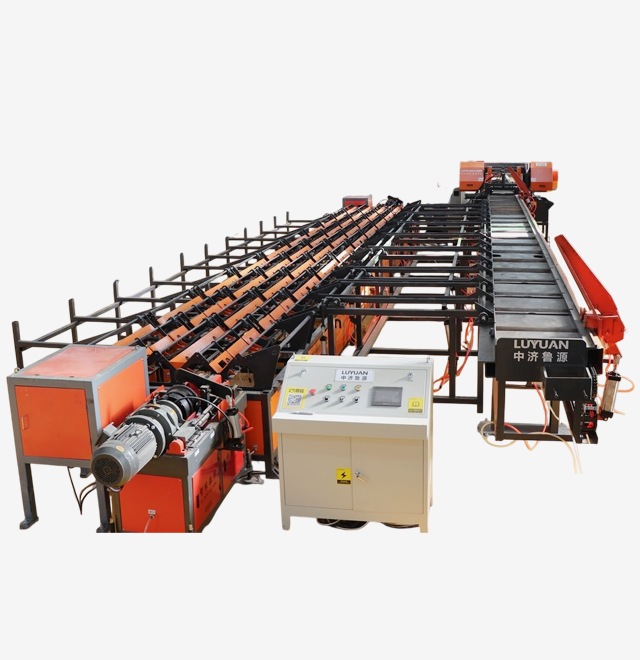
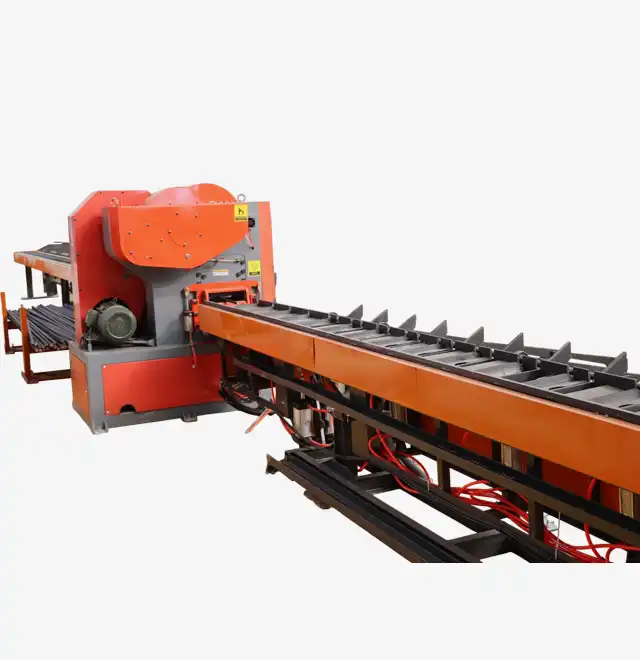
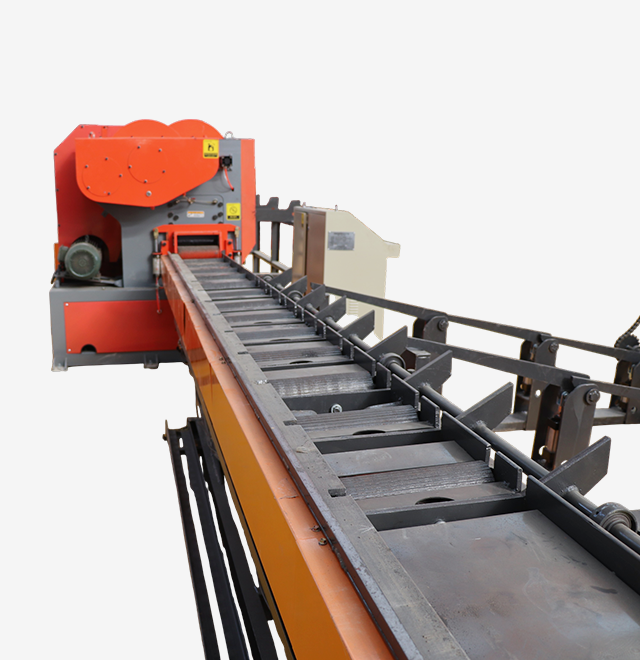
CNC Rebar Threading Machine: High-Precision Automated Solution for Modern Construction
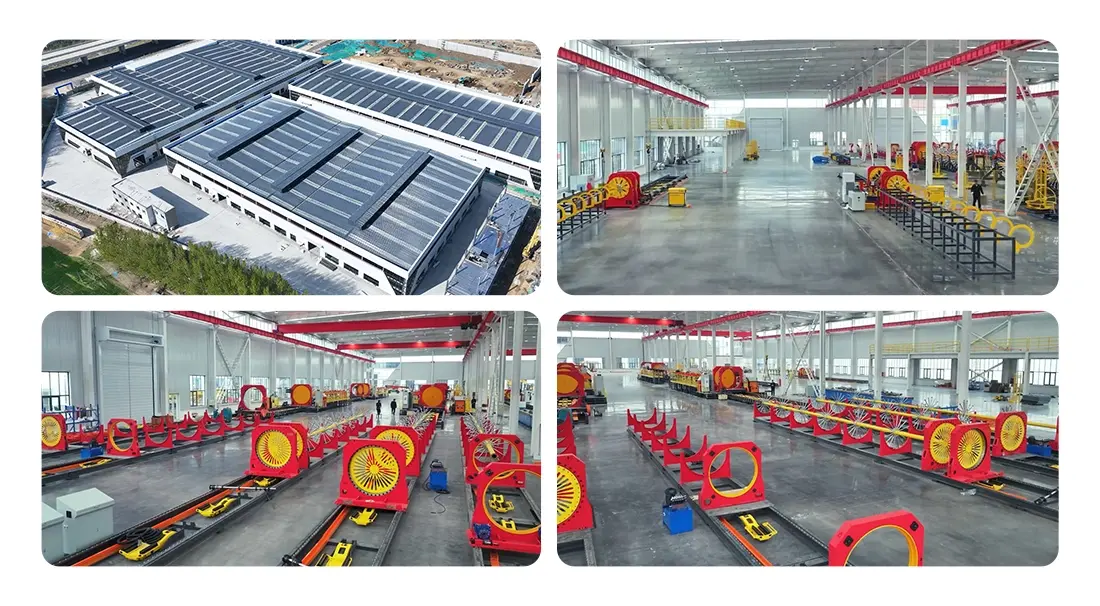
The construction industry demands precision and efficiency in steel reinforcement processing. Shandong Zhongji Luyuan Machinery Co., Ltd., established in 2016 with a registered capital of RMB 50 million, delivers enterprise-grade CNC Rebar Threading Machine solutions engineered for large-scale infrastructure projects. Our fully integrated system combines sawing, threading, and grinding in one automated line, processing rebar diameters from φ16 to φ50 mm with threading precision of ±1 mm/m.
With handling speeds coming to 90 m/min and day by day yield surpassing 1,500 strings per move, our gear serves major clients counting China Railroad Gather and CSCEC over about 100 nations. The machine highlights brilliantly PLC control, water powered clamping frameworks, and high-torque 7.5kW engines planned for 24-hour persistent operation in requesting environments.
What Makes Our CNC Rebar Threading Machine Stand Out
Integrated Automation Technology
You no longer require numerous machines for distinctive forms. Our framework coordinating nourishing, fixing, sawing, threading, and crushing into one consistent workflow. This kills manual taking care of between stations and diminishes labor prerequisites to fair one administrator per line.
The closed-loop CNC control framework screens each operation in real-time. It consequently compensates for breadth varieties and guarantees string profile consistency over thousands of pieces.
Superior Processing Precision
Thread precision specifically impacts auxiliary security. Our machine keeps up a pitch exactness inside ±0.05mm utilizing exactness ball screw drives and high-hardness amalgam rolling wheels (HRC 62-65).
The pressure driven clamping framework holds rebar solidly amid preparing. This avoids vibration-induced blunders and produces smooth, burr-free cuts that require no auxiliary wrapping up. Your strings will meet JG/T 163-2013 Review I graft measures where joint quality surpasses parent fabric ductile strength.
Industrial-Grade Durability
Built on a heavy-duty welded steel outline, the machine withstands ceaseless operation in cruel development situations. The cooling framework avoids warm distortion amid expanded runs.
Rolling wheels prepare 3,000 to 5,000 strings some time recently requiring upkeep. Recurrence change innovation naturally alters torque and speed when exchanging between HRB400 and HRB500 review rebars.
Technical Specifications
| Parameter | Type 600 Specification |
|---|---|
| Model | Type 600 |
| Sawing Width | 600 mm |
| Diameter Range | Φ16–Φ50 mm |
| Conveying Speed | 90 m/min |
| Processing Length | 1.5–12 m |
| Length Tolerance | ±1 mm/m |
| Feed Speed | Stepless adjustment |
| Clamping Method | Hydraulic |
| Main Motor Power | 4 kW |
| Hydraulic Pump Power | 3 kW |
| Cooling Pump Power | 60 W |
| Material Rack Motor | 3 kW |
| Total Installed Power | 19 kW |
| Overall Dimensions (L×W×H) | 29,000 × 3,800 × 2,450 mm |
| Control System | PLC + HMI Touch Screen |
| Power Supply | 380V / 50Hz / 3-Phase |
Key Performance Advantages
Efficiency That Scales With Your Project
Manual threading averages 300-500 pieces per shift. Our CNC Rebar Threading Machine delivers over 1,500 threads in the same timeframe—a productivity increase of 300-400%.
The machine operates continuously for 24 hours with minimal supervision. This capability proves essential for tight construction schedules in bridge, tunnel, and high-rise projects where delays cascade across multiple trades.
Cost Reduction Through Precision
Inconsistent manual threading creates rejection rates up to 15% on quality-critical projects. Our automated system reduces waste to below 2% through real-time monitoring and adjustment.
Batch cutting consistency minimizes material loss. The intelligent control system optimizes cut patterns to extract maximum usable length from each rebar piece.
Simplified Operation
The intuitive HMI touch screen lets operators set parameters in seconds. Pre-programmed profiles for common rebar grades eliminate guesswork. You simply select diameter, length, and quantity—the machine handles the rest.
Digital tracking capability allows integration with ERP systems. Every threaded piece can be traced for quality documentation required in nuclear power and hydropower installations.
Where Your Investment Delivers Maximum Value
Mega-Infrastructure Applications
Bridge pylon and tunnel construction demand mechanical splicing that withstands seismic loads. Our machine produces threads with full profiles and uniform depth, ensuring couplers engage correctly under stress conditions.
The system handles the thick-diameter rebars (40mm+) common in these projects. Automated processing eliminates the human error that causes field rejections and costly rework.
Nuclear and Hydropower Facilities
These environments prohibit threading inconsistencies. Our CNC system maintains 100% thread uniformity across production runs. The closed-loop control compensates for material hardness variations in real-time.
Operators achieve the 0.02mm precision threshold required for safety-critical applications. Destructive testing consistently shows parent material failure rather than joint failure—the gold standard for splice quality.
Prefabricated Concrete Production
Modern PC factories require equipment that syncs with automated material handling. Our machine features RS485 and Ethernet interfaces for seamless line integration.
Fast model changeover supports the product variety typical in precast operations. Switching between rebar diameters takes minutes, not hours, maximizing your production uptime.

Quality Assurance You Can Verify
Built-In Testing Capabilities
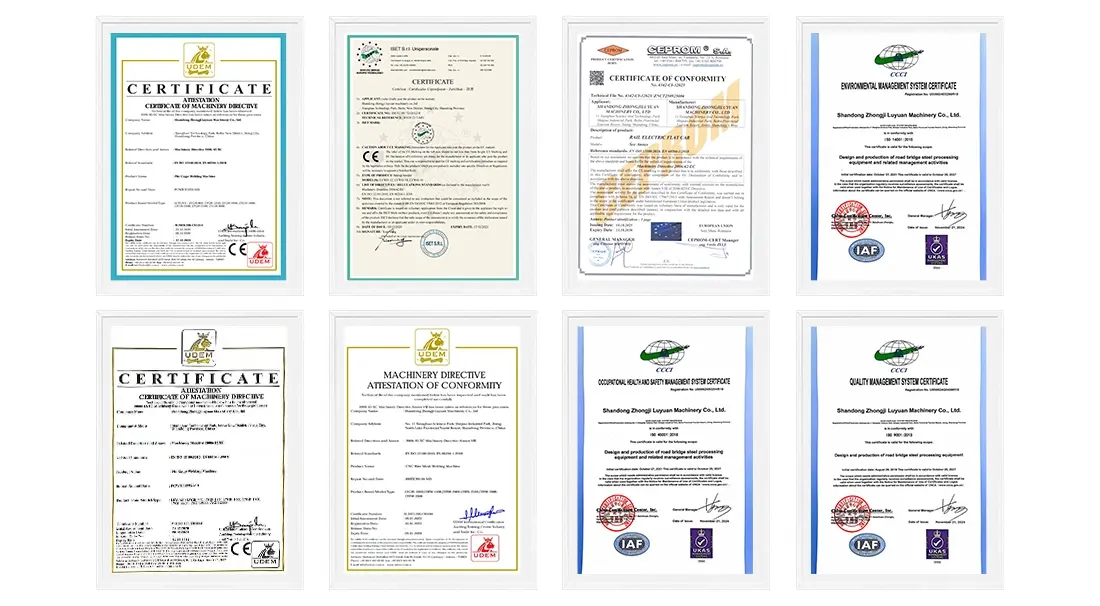
Thread profile accuracy meets 6g/6h tolerance levels verified through Go/No-Go ring gauges. Surface finish inspection confirms smooth coupler engagement without micro-cracks or burrs.
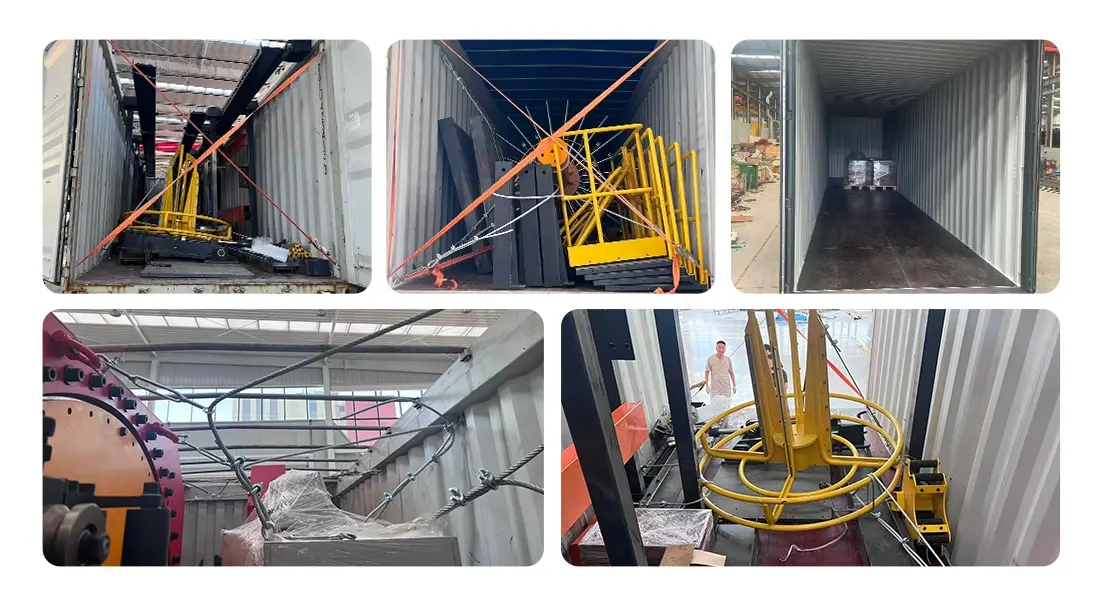
The equipment undergoes 72-hour continuous load testing before shipment. This validates hydraulic pressure stability and PLC response times under production conditions.
Standards Compliance
All processed threads comply with JG/T 163-2013 standards. Random sampling for tensile strength testing shows joints consistently exceed parent material strength ratings.
Uniform rib stripping prevents thin-threading that compromises load-bearing capacity. The precision diameter control ensures couplers thread smoothly without cross-threading or binding.
Frequently Asked Questions
Q: How does the machine handle distinctive rebar grades like HRB400 and HRB500?
A: The framework employments recurrence change to consequently alter torque and speed based on fabric hardness. This guarantees ideal rolling constrain notwithstanding of rebar review, keeping up string quality over distinctive steel specifications.
Q: What is the normal life expectancy of the rolling wheels?
A: High-quality amalgam wheels prepare 3,000 to 5,000 strings some time recently requiring substitution or regrinding. Genuine life expectancy depends on rebar breadth and review being handled. Normal support expands wheel life significantly.
Q: Can the machine coordinated into a completely programmed handling line?
A: Yes. Advanced units highlight RS485 and Ethernet interfacing for synchronization with stacking racks, automated arms, and central control frameworks. This permits total robotization from crude fabric to wrapped up strung rebar.
Q: What causes string decrease issues and how is it corrected?
A: Decreasing ordinarily comes about from rolling head misalignment. The CNC framework gives advanced calibration devices to alter head centerline situating. This dispenses with decrease and keeps up parallel string dividers all through the length.
Q: Is specialized preparing required for operators?
A: Whereas the touch screen interface is user-friendly, administrators require preparing on sensor calibration and die-setting strategies. This information keeps up the accuracy limit required for steady quality output.
Q: How rapidly can you switch between diverse rebar diameters?
A: Demonstrate changeover takes around 10-15 minutes with legitimate tooling organization. The framework stores parameter profiles for common sizes, decreasing setup time for habitually prepared diameters.
Partner With Proven Expertise
Ready to transform your rebar processing efficiency? Contact our team at sales2@shandongluyuan.com to discuss your project requirements and receive a customized CNC Rebar Threading Machine solution proposal.