CNC Bar Bending Machine for Complex Rebar Shapes in Bridge and Tunnel Construction
Oct 21, 2026
Standard bending tools can't keep up when bridge decks need stirrups that are curved and tunnel linings need cages that are perfectly angled. A CNC bar bending machine can handle these problems because it has customisable control and servo-driven accuracy. It can handle rebar widths from 6mm to 32mm and bend it at speeds of up to 180°/sec while keeping a length error of 1mm. This technology bridges the gap between design plans and field-ready strengthening for companies in the U.S. and other countries that manage large-scale infrastructure. It cuts down on wasteful materials and extra work while keeping projects on schedule.
Understanding CNC Bar Bending Machines in Complex Rebar Fabrication
What These Machines Actually Do
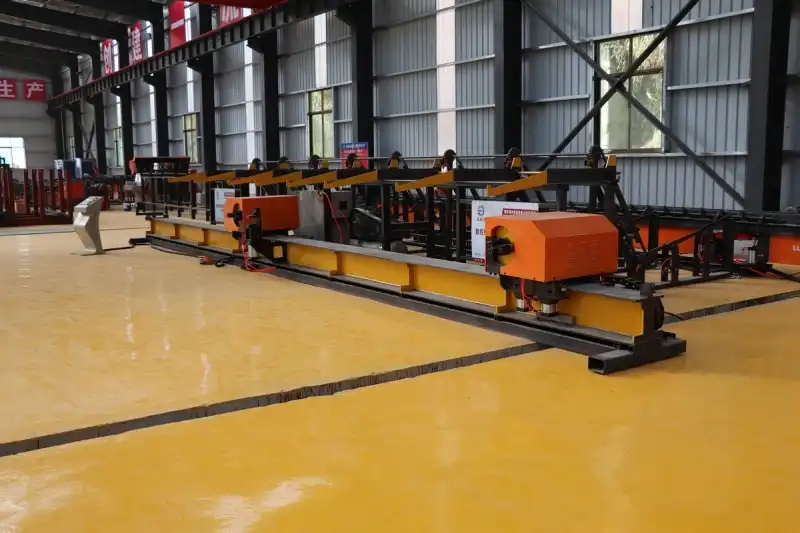
A CNC bar bending machine is an automatic industrial system that is run by PLC software and stepper motors. It always makes exact turns without having to be measured by hand because it reads shape data that has been programmed into it. It can square up, measure, bend, and cut all at the same time. In places where geometric accuracy is important for how well a building holds up under load, this makes it very useful for making bridge bases and cave walls stronger.
Key Components That Drive Accuracy
The bending head, feed rollers, and control interface all work together to make angle accuracy ±1°. Most feed rollers are made of chromium-molybdenum alloy steel that has been heated to an HRC of 58–62. This makes them strong enough to handle rough wear during processes that are always under a lot of stress. The machine can make complex stirrups, spiral cages, and custom curved profiles that exactly match CAD drawings. This way, the user doesn't have to guess what the drawings mean.
Real-World Applications in Infrastructure
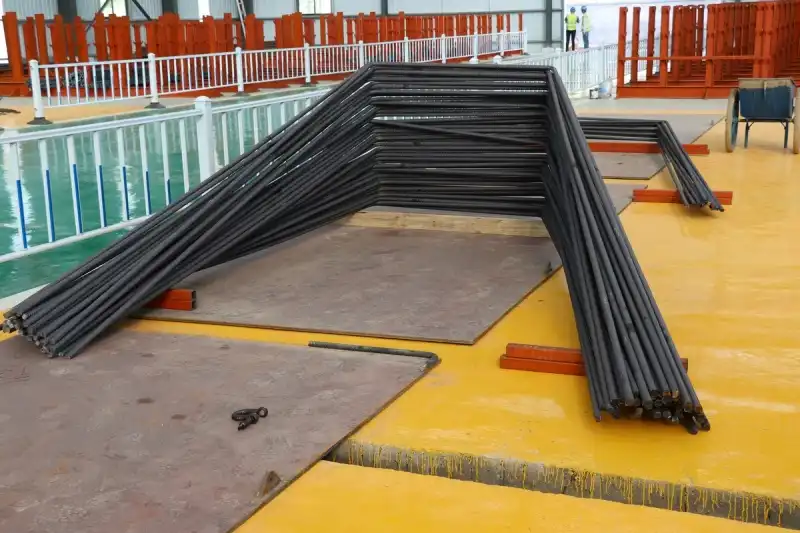
What do these tools do? They make compound stirrups for pier posts and bent bottom supports for arch bridges. Ring segments and grid arches are made during the tunnel-building process, and they have to fit together perfectly. A lot of standard cages are made with this equipment at prefabricated concrete plants. This makes putting them together much faster and with a lot less work that needs to be done on-site.
Overcoming Limitations of Manual Bending: The Shift to CNC Solutions
Bending by hand has been useful for building for a long time, but it falls short when projects get bigger, and the maths gets harder. It takes trained workers longer, gives less uniform results, and makes them more likely to get hurt when they work with heavy-diameter rebar. Huge projects like building a bridge or a tunnel make the difference in how much work gets done between manual and automated methods even bigger.
Where Manual Methods Fall Short?
Both manual and hydraulic bending depend on the skill of the operator for every bend. This adds differences in size that add up over hundreds of identical parts. For a bridge project that needs 50,000 stirrups, even a 2 mm difference between each piece causes a lot of extra work, extra costs, and schedule delays that procurement managers can't handle with a cnc bar bending machine.
How CNC Addresses These Gaps?
CNC rebar bending technology takes away the need for a person to control the bending process. Once a shape program is loaded, the machine makes a full run of bends that are all the same length and angle. The speed of production goes up a lot—some CNC models can make up to 30 normal stirrup forms per minute—and the accuracy of the angles stays the same on every piece.
Selecting the Right CNC Model for Your Project
Your output volume and bar diameter range will help you decide between hydraulic and electric drive methods, as well as between small and heavy-duty frames. Electric servo-driven machines use less energy and are quieter, while hydraulic types can handle longer widths while being loaded continuously. A heavy-duty CNC platform with a multi-axis bending head gives the most reliable results for projects that use rebar up to 32 mm thick and have complicated shapes with many angles.
Technical Specifications and Automation Benefits for Complex Rebar Shapes
Core Technical Parameters to Evaluate
The most important things to look for in a CNC rebar bending machine for bridge and tunnel work are:
- Bar diameter range: 6mm–32mm for single-line heavy-duty models; 5mm–16mm for double-wire configurations
- Bending speed: Up to 180°/sec with angular precision of ±1°
- Length precision: ±1mm, ensuring shape consistency across high-volume runs
- Bending axes: Multi-axis heads allow complex 3D stirrups without repositioning
Not only are these numbers used for marketing purposes, but they also tell us if the machine can meet the standards for bridge and tunnel engineering on the job site.
Software Integration and Programming Efficiency
Modern tools for controlling CNC machines can link directly to BIM models and platforms for managing projects. When engineers upload rebar shape files, the machine automatically turns them into bending sequences that don't need to be entered again by hand. This integration cuts down on programming mistakes and setup time between shape changes, which is very important when a tunnel contract calls for dozens of different rebar profiles.
ROI and Production Efficiency
The number of hours of work needed to process one ton of rebar is cut by a measured amount when automation is used. According to data from independent infrastructure companies, cnc bar bending machine processing can cut the cost of labor for working with rebar by 40–60% compared to traditional methods. It can also cut down on material waste by optimizing the exact cut-and-bend process. For buying managers who are figuring out the return on investment (ROI) of tools, these numbers make a strong case for investing in CNC technology.
Maintenance, Safety, and Operational Best Practices
Routine Maintenance Protocols
A CNC reinforcement bending machine needs to have its feed rollers and bending pins oiled on a regular basis, its hydraulic or electrical drive systems checked every day, and its control system's angular reference points calibrated on a regular basis in order to keep it running at full capacity. Keeping a stock of spare parts, especially for things that get worn out quickly, like bending pins and feed roller bearings, stops unplanned downtime that can stop the whole construction schedule.
Safety Features and Compliance Standards
There are physical guards around the bending area, emergency stop systems, and proximity sensors on modern CNC machines that stop the machine when a user enters the working area. All of these features meet the requirements for U.S. OSHA safety standards and CE electrical safety certification.
Operator Training and Best Practices
Machines made with ISO 9001 quality management systems have written process rules that help with compliance checks on regulated projects like nuclear power and highway infrastructure.
Procurement Guide and Trusted Supplier Insights
It takes a lot of money to buy a CNC bar bending machine, so be careful. When evaluating, you should look at more than just price. You should also look at the machine's specs, its ability to be customized, its warranty terms, its availability of spare parts, and its technical support after the sale.
Here are the main things that buying managers always put first:
- Machine capability vs. project scope: Confirm that the bar diameter range and bending axis count match your most complex rebar shapes.
- Supplier track record: Look for verified deployments on comparable infrastructure projects and documented cooperation with major engineering groups.
- After-sales support: Response time for technical service, availability of replacement parts, and remote diagnostics capability all affect total cost of ownership.
- Customization options: Projects with non-standard rebar shapes benefit from suppliers who offer engineering support for custom tooling and control software configuration.
These factors have a direct effect on practical results. Your production line will keep running when it matters most if your source provides expert help and parts when you need them.
Shandong Zhongji Luyuan Machinery Co., Ltd. was established in 2016 with 50 million yuan in listed capital. They create and make high-end CNC rebar processing equipment for infrastructure projects like high-speed railroads, bridges, tunnels, and rail transit. The business works with China Railroad, China Railroad Construction, China State Construction, and China Communications Construction, and it sends goods to more than 100 countries. Find out more about the product at zjly2025.aixdb.cn.
Conclusion
Building bridges and tunnels puts real demands on the people who make rebar—tight standards, large volumes, and complicated shapes that can't always be met by hand. CNC bar bending machine technology meets these needs with its programmable accuracy, ability to work on multiple axes, and built-in software controls. When procurement teams look at buying new equipment, the benefits of faster output, more accurate processing, and less reliance on labor make it clear that the technology should be used. Working with a manufacturer with a lot of experience who offers engineering support and quick service after the sale protects both the equipment investment and the schedule it helps keep.
FAQ
Can a CNC bar bending machine handle all complex rebar shapes used in bridges and tunnels?
Yes. CNC rebar bending equipment with multi-axis bending heads can produce compound stirrups, spiral cages, curved profiles, and closed-loop shapes required for bridge piers and tunnel ring segments. The specific shape range depends on the number of bending axes and the bar diameter capacity of the model selected.
What is the difference in maintenance between hydraulic and electric CNC models?
Hydraulic models require regular fluid checks, filter replacements, and seal inspections in addition to mechanical maintenance. Electric servo-driven models have fewer fluid-related maintenance tasks but require periodic motor and encoder calibration. Both types benefit from scheduled lubrication and wear-part replacement programs.
How long does it take to program a new rebar shape into the CNC system?
For standard shapes entered through the control interface, programming typically takes 5–15 minutes. When importing directly from BIM or CAD files, setup time shortens significantly. Complex multi-angle shapes may require additional verification runs before full production begins.
Connect With Zhongji Luyuan for Your Rebar Processing Needs
For your next bridge or tunnel project, you need tools that work as expected every shift. The Cnc bar bending machine supplier team at Zhongji Luyuan is prepared to help you find the right equipment for the precise rebar processing needs of your project. You can email our technical team at sales2@shandongluyuan.com or go to shandongluyuan.com to get a personalized quote, technical advice, or a product demonstration.
References
1. American Concrete Institute. ACI 318-19: Building Code Requirements for Structural Concrete. 2019.
2. American Institute of Steel Construction. Steel Construction Manual, 16th Edition. 2023.
3. Federal Highway Administration. Bridge Inspector's Reference Manual. U.S. Department of Transportation, 2012.
4. International Organization for Standardization. ISO 9001:2015 Quality Management Systems — Requirements. 2015.
5. Nawy, Edward G. Reinforced Concrete: A Fundamental Approach. Prentice Hall, 2009.
6. Transportation Research Board. NCHRP Report 754: Bridges for Service Life Beyond 100 Years. National Academies Press, 2014.