CNC Stirrup Bending Machine Helps Construction Suppliers Meet High-Demand Rebar Component Orders
Oct 7, 2026
When large infrastructure projects hit peak production cycles, rebar processing becomes one of the most pressure-sensitive operations on any job site. A CNC stirrup bending machine addresses that pressure directly. By integrating straightening, measuring, bending, and cutting into one automated workflow, this equipment lets construction suppliers process high volumes of steel stirrups with sub-millimeter precision and minimal operator input. Whether you run a rebar distribution center or manage equipment procurement for a major highway contractor, understanding how these machines work—and how to choose the right one—can meaningfully affect your bottom line.
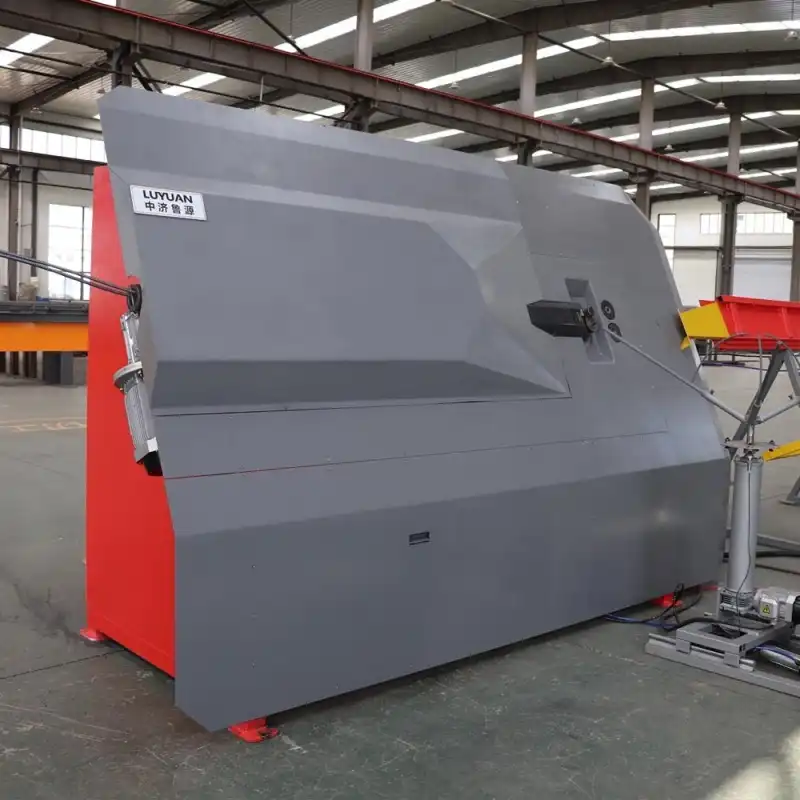
Understanding CNC Stirrup Bending Machines and Their Operating Principles
Core Functionality and Workflow
A CNC stirrup bending machine takes steel wire that has been wound up and turns it into finished stirrups in one step. The rebar is fed into the machine, which then straightens, measures, bends, and cuts it. This gets rid of the multi-station manual method that slows things down and leads to mistakes in measurements. The whole process is controlled by a CNC interface. Shape parameters are entered by workers, and the machine follows them with ±1° accuracy in angles and ±1mm accuracy in lengths.
Key Components and Axis Control
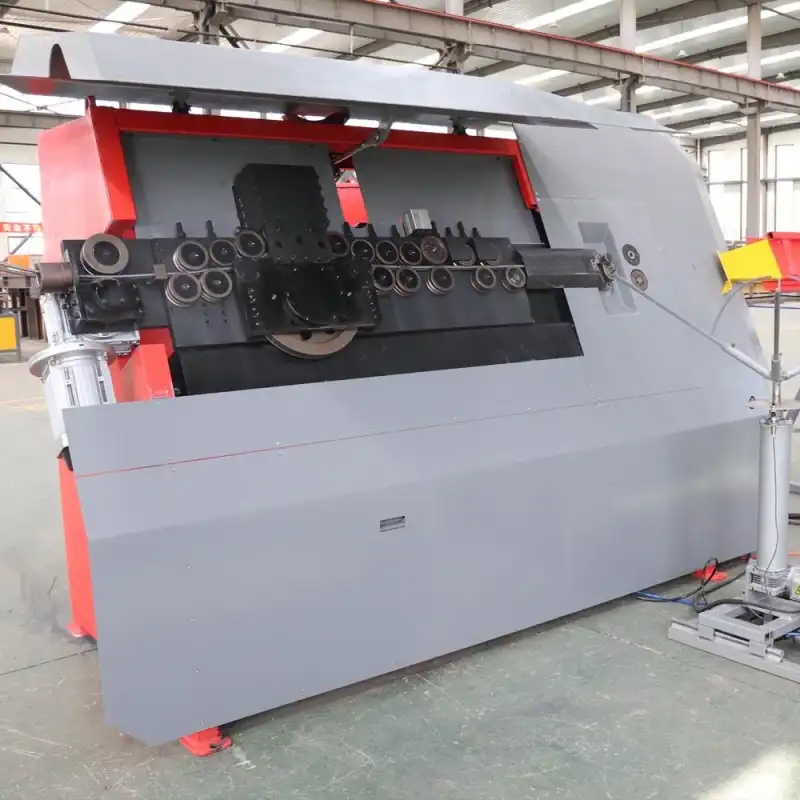
There are high-torque servo motors, a gas or hydraulic cutting system, and a multi-roller adjustment unit at the mechanical heart of the machine. Driven by servos, the traction pulls the wire at up to 100m/min, and the bending head can turn up to 180 degrees. The CNC encoder gives constant input, which stops length mistakes that add up over long production runs. This is a very important feature when working with thousands of pieces per shift.
Safety Features and Operator Protection
Modern systems for bending rebar have safety shelters around fast-moving parts, emergency stop circuits with tested response times, and drive motors that measure temperature. These are not extras that you can choose not to have; they are quality standards required by CE approval and ISO 9001 manufacturing processes. When purchasing managers look at tools for big groups, these built-in safety features lower their risk of liability and help them follow site safety rules.
Advantages of CNC Stirrup Bending Machines for Construction Suppliers
Construction companies that work on infrastructure projects are under a lot of stress because of tight deadlines, a lack of workers, and the fact that solid parts can't have any mistakes in their measurements. Each of these problems can be solved directly by automated rebar handling tools.
Here are the main benefits this equipment brings to production:
- Higher throughput with consistent accuracy: Traction speeds reaching 100m/min allow a single cnc stirrup bending machine to process volumes that previously required multiple operators, while maintaining ±1mm length tolerance across every piece.
- Reduced material waste: Automated measuring eliminates the manual measurement errors that generate scrap. Over a production run of thousands of pieces, this directly improves material yield and reduces cost per unit.
- Lower labor dependency: One trained operator can manage the full production cycle, reducing payroll exposure and the risk that skilled labor shortages will stall output.
- Extended component life through material quality: Straightening rollers made from high-alloy tool steel with surface hardness of HRC 58–62 and tungsten carbide cutters extend service intervals and reduce unplanned downtime.
These benefits directly lead to measurable gains for shops that make rebar and big building companies. When a metro building business needs 50,000 square stirrups in two weeks, the order will ship on time if production is consistent and machines are up and running all the time.
Comparing CNC Stirrup Bending Machines: Making the Right Choice
CNC vs. Manual and Semi-Automatic Systems
Because manual bending depends on the skill and strength of the person doing it, the angle and length of each batch will be different. Some of that variability is reduced by semi-automatic systems, but they still need a lot of manual work. With CNC-controlled steel bending tools, the precision is not at all dependent on the operator. When it comes to sellers who get a lot of repeat orders, a CNC system is the only way to go for quality stability.
Technical Specifications to Evaluate
When looking at different models, it's important to pay close attention to the wire diameter range (usually 5–13mm for single-line processing, or smaller sizes for double-line processing), the speed at which the wire can be bent, the encoder resolution, and the quality of the HMI interface. During QC verification, a constant load test that lasts 24 to 48 hours helps prove thermal stability in real production circumstances. Also, buyers should make sure that the CNC software handles spring-back compensation correctly. This is an important part of getting accurate angles on harder steel grades.
Energy Efficiency and Sustainability
Servo-driven machines use a lot less energy than hydraulic ones with the same load because servo motors only generate power when they're needed. This difference affects both operating costs and environmental compliance reporting for construction companies that are trying to meet carbon reduction goals or report under ESG frameworks.
Procurement Guide: How Construction Suppliers Can Buy CNC Stirrup Bending Machines
Evaluating Supplier Credibility
It takes more than just comparing prices to find the right rebar bending cnc stirrup bending machine supplier. It is important for buyers to check that the seller has ISO 9001 certification, CE compliance documentation, and a track record of working on projects of a similar size. Zhongji Luyuan was formed in 2016 with 50 million yuan in registered capital. It has long-term business ties with China Railroad, China State Construction, and China Communications Construction, and it has sent equipment to almost 100 countries and regions.
New vs. Used Equipment Considerations
New machines come with a full warranty, the latest software, and assistance from the maker. Used equipment may require less money up front, but it also comes with a higher risk of worn-out parts, old control systems, and less after-sales support. When there is a lot of production going on and downtime directly affects project schedules, new equipment with a verified warranty is usually the safer option.
Negotiating Orders and Delivery Terms
For purchases of a medium to large amount, providers like Zhongji Luyuan can make equipment configurations that are unique to each job. Before signing a deal, buyers should make sure they understand the wait times, commissioning support, and operator training programs. Talking about multi-unit pricing for project rollouts that happen in stages can also make the investment more efficient as a whole.
Future Trends and Automation Impact in CNC Stirrup Bending Machines
IoT Integration and Predictive Maintenance
More and more modern CNC rebar processing systems can connect to the internet of things (IoT). This lets production data like cycle counts, mistake rates, and motor temperatures be sent to central management platforms. This lays the groundwork for predictive maintenance scheduling, in which service is based on actual wear data instead of set intervals. This cuts down on both unplanned downtime and maintenance costs that aren't needed.
AI-Assisted Quality Monitoring
Some newer systems have inspection logic that is run by AI and watches the measurement output in real time, flagging any differences before they become batch flaws. This level of automatic quality control lowers the number of rework requests and helps suppliers meet paperwork needs for projects like bridges or nuclear power plants that have to follow strict structural specifications.
Industry 4.0 and Supply Chain Agility
As construction supply chains become more data-driven, procurement and operations teams can see capacity and schedules better with CNC stirrup bending equipment that works with ERP and production management systems. This lets them respond faster to large orders without having to hire more people.
Conclusion
As more money is spent on building infrastructure, the construction industry needs more carefully made rebar parts. Construction companies can meet large orders with the speed, precision, and dependability of a Cnc stirrup bending machine without having to hire more workers or waste more materials. Long-term value is determined by picking a seller with clear manufacturing standards, project knowledge, and quick customer service after the sale. You can trust Zhongji Luyuan because it has worked on state-level infrastructure projects before and exports to almost 100 countries. This makes it a good partner for suppliers who want to increase capacity.
FAQ
1. How often should a CNC stirrup bending machine be serviced?
Routine maintenance times rely on how much work needs to be done, but most makers say that the straightening rollers, cutter blades, and lubrication spots should be checked every 200 to 300 hours of operation. In high-volume production settings, the whole system should be inspected at least once every six months. This should include calibrating the servo motors and making sure the encoders are working correctly.
2. What rebar materials are compatible with these machines?
The majority of CNC stirrup bending tools can work with both flat and bent steel bars in types like HRB400 and HRB500 that are frequently used in structural concrete work. Most of the time, wire diameters from 5mm to 13mm can be used together. Buyers should make sure that the bending pins and cutter inserts of the machine are rated for the tensile strength of the types of rebar that will be used in their projects.
3. Can the machine be configured for non-standard stirrup shapes?
Yes. CNC control interfaces let operators enter custom geometric parameters for shapes that aren't rectangles, like polygons and circular stirrups. A lot of the time, shape data can be imported directly from structural drawings. The software also accounts for material spring-back to keep dimensions accurate across complex profiles.
Partner with Zhongji Luyuan for Your CNC Stirrup Bending Machine Needs
Zhongji Luyuan has sold automatic tools for processing rebar to large infrastructure builders in almost 100 countries. With full commissioning support and user training included, our Cnc stirrup bending machine lineup includes both single-line and double-line versions. You can email our team at sales2@shandongluyuan.com to get cost information, specs, or a consultation that fits the size of your project. We quickly answer questions about sourcing, and every order is backed up by a specialized after-sales team.
References
1. International Federation for Structural Concrete (fib). fib Bulletin 72: Bond and Anchorage of Embedded Reinforcement. 2014.
2. American Concrete Institute. ACI 318-19: Building Code Requirements for Structural Concrete. 2019.
3. Construction Industry Institute. Automation and Robotics in Construction: Research Report 171. 2017.
4. McKinsey Global Institute. Reinventing Construction: A Route to Higher Productivity. 2017.
5. ASTM International. ASTM A615/A615M: Standard Specification for Deformed and Plain Steel Bars for Concrete Reinforcement. 2022.
6. European Committee for Standardization. EN ISO 9001:2015 Quality Management Systems — Requirements. 2015.