How Does Pile Cage Resistance Welding Machine LYGH-400D Improve Welding?
Oct 7, 2026
The pile cage resistance welding machine LYGH-400D from Zhongji Luyuan improves welding by replacing manual arc welding with automated high-power resistance welding. This approach generates precise fusion at each rebar intersection without burn damage, producing consistent weld joints across every cage section. The PLC-controlled system maintains uniform current delivery, so spiral spacing stays within tight tolerances and cage geometry remains perfectly cylindrical. The result is measurably stronger connections, less material waste, and a production rate of up to 8 sections per 10-hour shift—output levels that manual methods simply cannot match.
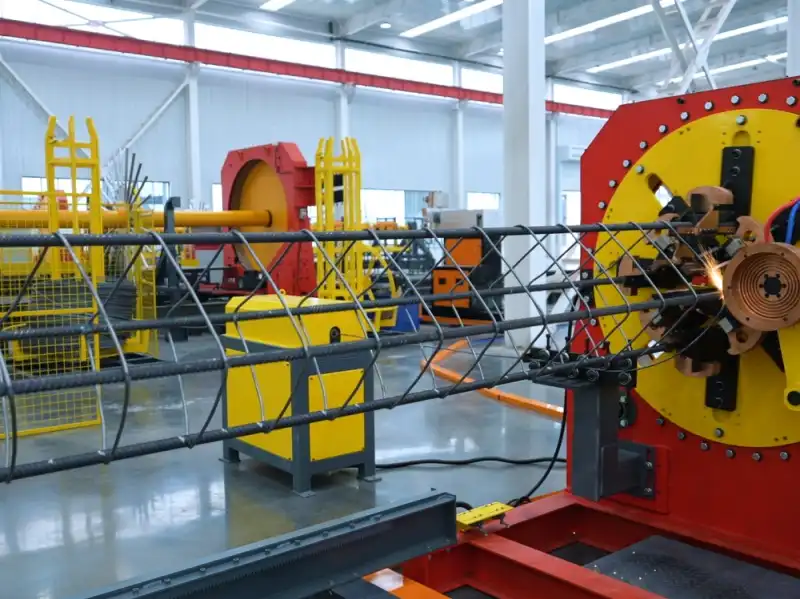
Understanding the Working Principle of the LYGH-400D
A strong electric current is sent through two contact points to make resistance welding work. Rebar is fused together without an open flame or filler material because of the resistance at the metal contact, which creates limited heat. Since no consumables are needed, the weld area stays clean and strong.
How the Electrode System Drives Accuracy
The LYGH-400D has chromium-zirconium copper electrodes that focus the current exactly where the spiral meets the main bar. The contact force stays the same during every weld cycle because the hydraulic pressure stays at ≤16 MPa. This mixture gets rid of cold welds and uneven penetration, which are two common problems that happen when manufacturing is done by hand.
PLC Control and Current Regulation
The touch screen interface and built-in PLC system give operators direct control over the parameters of welding. Digital commands set the time of the current, the pressure on the electrodes, and the progress of the spiral. The auto-correction feature changes the output in real time when the width of the rebar changes within the φ12–φ25 mm main bar range or the φ6–φ12 mm spiral bar range. This keeps the weld quality the same along the whole length of the cage.
Energy Efficiency Under Continuous Operation
With a total power of 60 KW, the LYGH-400D works with controlled energy delivery instead of a constant high-draw output. Current bursts only during the welding cycle, so less power is used when the machine is not in use. When compared to CO₂ shielded arc welding, resistance welding doesn't make any harmful fumes, slag, or shielding gas. This makes the process safer for operators and cheaper per unit of energy used.
Key Features and Specifications That Enhance Welding Performance
Learning about the pile cage resistance welding machine LYGH-400D's technical specs helps procurement teams decide if it meets the needs of their project.
Here are the main specs that describe how much the LYGH-400D can make:
- Cage diameter range: φ250–φ400 mm, covering small-diameter pile and slope support applications
- Cage length: 3–16 m, customizable to project specifications
- Main bar diameter: φ12–φ25 mm; spiral bar: φ6–φ12 mm
- Spiral bar spacing: ≤200 mm, adjustable via PLC settings
- Production efficiency: 8 sections per 10 hours (based on 12 m per section)
- Operating personnel: 1 operator per shift
- Footprint: 35 m × 3 m
- Power supply: 380V / 50 Hz / 3-phase
These numbers directly lead to lower wage costs and shorter schedules for big building projects.
Pay close attention to the single-operator design. Three to five skilled welders are needed on a normal manual welding line to get the same output. One person watches the touch screen, loads the rebar, and manages the output on the LYGH-400D. This greatly reduces the cost of labor per cage section. This difference adds up quickly for contractors who have to work with tight funds and long-term building projects.
Built-In Safety Mechanisms
There are safety features built into the machine that protect against hydraulic overload, electrical separation, and air supply pressure control at ≤0.6 MPa. When there is an abnormal load, these systems keep the electrodes from getting damaged and keep the person safe from electrical dangers.
Maintenance and Electrode Service Life
After 5,000 to 10,000 welds, chromium-zirconium copper electrodes usually need to be dressed or replaced. The touch screen keeps track of the number of welds, which makes planning maintenance more proactive than reactive. This cuts down on unplanned downtime, which is important for any equipment manager in charge of a production floor that is always running.
Comparative Advantages: LYGH-400D vs. Other Pile Cage Welding Machines
On many building sites, people are still using manual arc welders and simple semi-automatic cage formers. But when the number of projects grows and time constraints get tight, their limitations cost a lot.
The LYGH-400D fills in these holes in three ways that can be measured. First, weld consistency: resistance welding produces a smooth melt at every joint, which is proven by macro-etching and shear tests to be at or above the parent metal's yield level. Manual welds depend on how skilled and tired the person is. The LYGH-400D can weld 8 sections of a 12 m cage every 10 hours, which is 3–5 times faster than a normal manual welding team. Third, pitch accuracy: digital encoder feedback keeps the spiral spacing variation within ±5 mm, which meets the strict standards needed by standards for nuclear, railroad, and bridge engineering.
Cost Analysis Over Project Lifetime
For medium- to large-sized contractors, the savings on labor alone make the investment worth it, and the payback time is doable. Cutting down on tools like welding wire, shielding gas, and flux also lowers the cost of materials over time. The price of each welded cage piece goes down significantly after the first few months of use, when one user takes the place of a crew of several people, and when the power of the equipment stays at 60 KW.
After-Sales and Warranty Support
Zhongji Luyuan was formed in 2016 with 50 million yuan in listed capital. It has teamed up with China Railroad, China State Construction, and China Communications Construction. The business sends goods to almost 100 countries, such as South Korea, Malaysia, Thailand, Kazakhstan, and Israel. This track record gives us faith in the Pile cage resistance welding machine LYGH-400D's long-term ability to be serviced and in having parts available.
Practical Applications and Industry Use Cases
The LYGH-400D works well in a number of tough building settings where the quality and speed of the welds directly affect the safety of the structure.
High-Speed Rail and Bridge Foundations
For bridge pier foundations, a lot of reinforcement cages have to be made with very tight size tolerances. Because it can keep the pitch and cylinder shape exactly the same, the LYGH-400D is perfect for this job, where each cage has to meet engineering standards without any changes.
Urban Piling and Slope Stabilization
The machine's automated process cuts down on site noise and gets rid of the risks of open-arc welding in crowded cities. When it comes to slope support projects, the φ250–φ400 mm cage diameter range covers the standard small-diameter pile sizes used for highway and railroad embankment work.
Marine and Port Infrastructure
When epoxy-coated or galvanized rebar is used in salty settings that are corrosive, it needs to be welded in a way that doesn't damage the protected coating. Resistance welding makes the bond strong enough at the contact point without spreading the heat too far, so the coating stays intact along the length of the rebar.
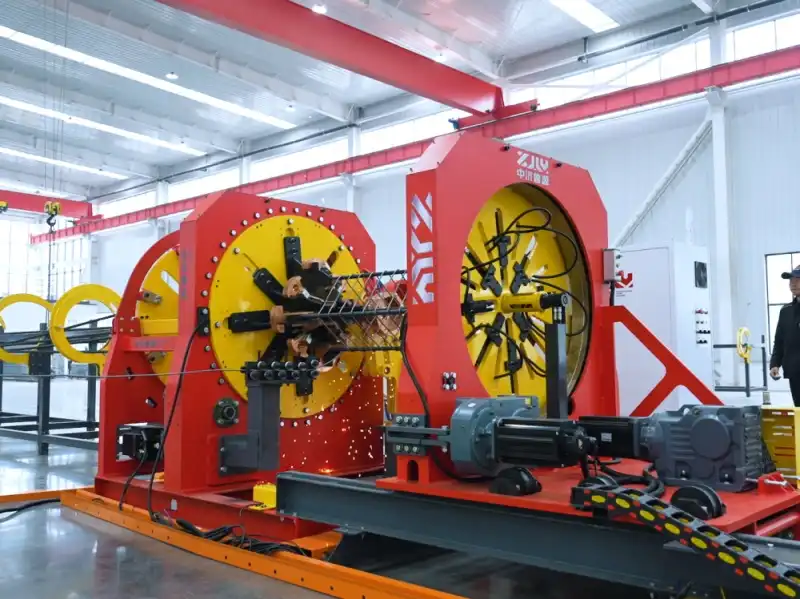
How to Procure the LYGH-400D and Maximize Your Investment
When purchasing managers look at the LYGH-400D as a possible supplier, they should start by talking to a technical expert directly to make sure that the equipment configuration matches the project requirements. With cage lengths that can be changed up to 16 m and bar thickness ranges that can be changed, the basic model can usually meet the needs of most projects without any changes.
Zhongji Luyuan helps international buyers by sending them documentation packages for customs clearance, installation help, and training for operators. Contractors who are working on more than one job at the same time can make bulk purchases and get deliveries scheduled around their plans. You can get price lists and detail sheets by emailing sales2@shandongluyuan.com or going to zjly2025.aixdb.cn.
Conclusion
The pile cage resistance welding machine LYGH-400D addresses the challenges infrastructure contractors have with production: the need for labor, inconsistent weld quality, and slow output. The machine makes physically sound pile cages faster than people can do it by hand because it uses both automatic resistance welding and PLC precision control. A well-designed electrode system, one user, and 60 KW of power can do the work of a full welding crew. This equipment will directly improve both quality control and production costs for any company that is in charge of large-scale foundation or pile work.
FAQ
Q1: What rebar diameters does the LYGH-400D support?
The machine can work with round bars (φ6 to φ12 mm) and thin bars (φ12 to φ25 mm). Both ranges can be changed to fit the needs of the project.
Q2: How does resistance welding differ from CO₂ arc welding?
Resistance welding is three to five times faster, doesn't need welding wire, shielding gas, flux, or other materials, and doesn't make any smoke or slag. This keeps the workers safer and lowers the cost of running each weld.
Q3: Can the machine produce cages with variable spiral spacing?
Yes. The PLC lets you set different divided pitches within the same cage. This lets you have closer spacing at the top and bottom, where shear resistance needs to be higher.
Q4: How many operators does the LYGH-400D require?
Each shift only needs one person. The operator watches the touch screen, loads the rebar, and manages the output without needing extra people to do the welding by hand.
Q5: What does electrode maintenance involve?
Every 5,000 to 10,000 welds, chromium-zirconium copper electrodes should be cleaned or changed. The machine's weld clock makes organizing easy, which means that production stops less often than expected.
Ready to Improve Your Pile Cage Production? Contact Zhongji Luyuan
The pile cage resistance welding machine LYGH-400D for sale by Zhongji Luyuan comes with a professional technical team and a well-established service network around the world. Our team can help you with setup and project-specific issues, whether you are looking for a single unit or planning a full production line. To get a meeting and product detail package, email us at sales2@shandongluyuan.com.
References
1. American Welding Society. Welding Handbook, Volume 2: Welding Processes. AWS, 2004.
2. International Federation for Structural Concrete (fib). Model Code for Concrete Structures 2010. fib Bulletin 65, 2012.
3. American Concrete Institute. ACI 318-19: Building Code Requirements for Structural Concrete. ACI, 2019.
4. ASTM International. ASTM A706/A706M: Standard Specification for Deformed and Plain Low-Alloy Steel Bars for Concrete Reinforcement. ASTM, 2022.
5. British Standards Institution. BS EN ISO 14327: Resistance Welding – Procedures for Determining the Weldability Lobe for Resistance Spot, Projection and Seam Welding. BSI, 2004.
6. National Institute of Standards and Technology. NIST Technical Note 1907: Measurement of Weld Quality in Structural Steel Fabrication. NIST, 2016.