CNC Stirrup Bending Machine Optimizes Reinforcement Production for Concrete Columns and Beam Structures
Oct 21, 2026
A CNC stirrup bending machine is an automated piece of equipment that integrates straightening, measuring, bending, and cutting rebar into one continuous process. Controlled by advanced CNC systems and driven by high-torque servo motors, it converts coiled steel wire into precise geometric shapes — primarily stirrups used to reinforce concrete columns and beams. For infrastructure contractors, precast manufacturers, and rebar processing centers, this machine directly addresses rising labor costs, inconsistent manual bending accuracy, and material waste, while delivering the dimensional precision that structural engineering demands.
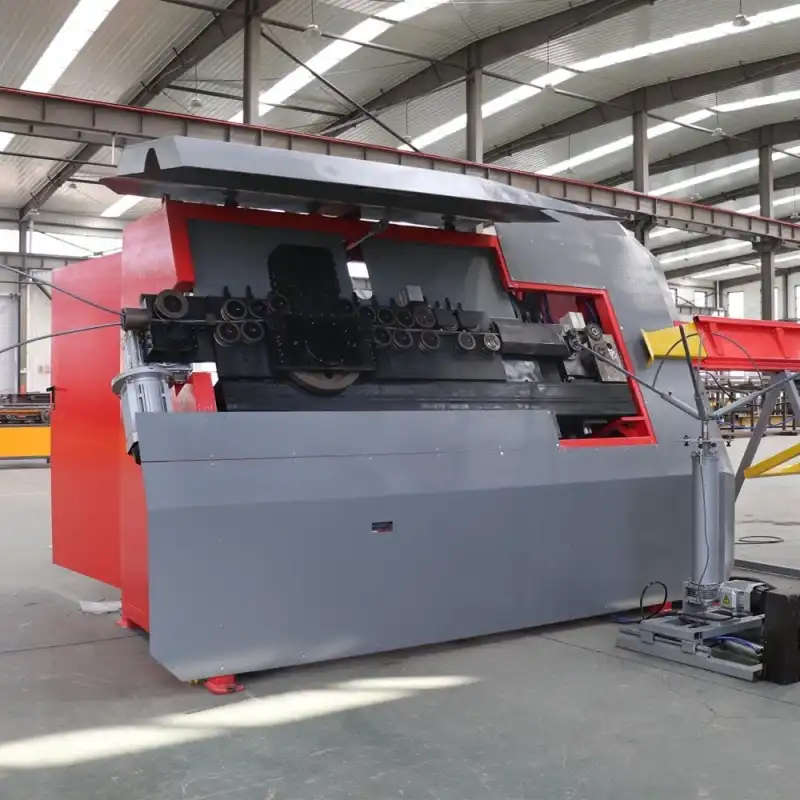
Understanding CNC Stirrup Bending Machines: Key Features and Operation
A CNC rebar stirrup bending machine is faster and more accurate than hand-bending bars or using simple hydraulic tools. Rebar that has been wound up is fed through a group of rollers that straightens it out. Then, each piece is cut and checked to make sure it's within ±1mm of being the right size. It is then bent to the right angle (within ±1°). It does all of this on its own in one run. With this much power, when people do things, there are no longer any changes in this world.
Core Technical Parameters
Some setups let you feed wires with two lines for smaller sizes. Most types that are made for mass production can handle wires with a single line width of 5 mm to 13 mm. Tracks can bend up to 180 degrees in any direction and move up to 100 meters per minute. These numbers come from specs given by the maker and are in line with ISO 9001 standards for making things and CE safety standards for tools.
Key Mechanical Components
It is made of high-alloy tool steel that has been heated to an HRC of 58–62 and then has several wheels that have been hardened. The cutting method for models can be either gas or hydraulic. When it makes quick, clean cuts, the bar end doesn't bend. Users can quickly save and load different stirrup programs with the PLC control interface. This speeds up the process of setting up shapes and sizes.
Fully Automatic vs. Semi-Automatic Models
This type of machine works well in places that need to keep making things and handle a lot of rebar. These are great for smaller companies because they give them more freedom, as they are easy to set up. The decision is based on daily production goals, the size and shape of the stirrups, and the available floor space in the factory.
Optimizing Reinforcement Production: Benefits and Performance Enhancements
They need to be a certain shape when you use concrete beams and supports to build something. If the hook angle or leg length is wrong, it can weaken the bond between the rebar and the concrete. This can change how the building's weight is distributed. The pieces can't all be the same, even if thousands of them are bent by hand. That's what technical standards say.
These tools help keep things moving on busy job sites in the following ways:
- Processing speed: cnc stirrup bending machine automated feed-and-bend cycles at up to 110m/min replace the time-consuming setup and measurement steps of manual production, allowing a single operator to manage output that previously required three to four workers.
- Dimensional accuracy: Sub-millimeter length tolerance and ±1° angular precision across extended production runs keep structural components within specification without requiring rework or rejection.
- Material efficiency: Precise measurement and cutting reduce offcut waste. On large infrastructure projects, even a 2–3% improvement in material yield generates measurable savings given the volume of rebar processed.
- Labor cost reduction: One trained operator can oversee the entire automated process, reducing dependence on skilled manual benders who are increasingly difficult to source and retain.
Feed-and-bend rings that can work at speeds of up to 110 meters per minute do the work that used to take people hours to set up and measure. Because of these changes, one person can now do the work of three or four people. Fixing errors of less than 0.1° in angles and lengths over long production runs keeps structure parts within specs so they don't need to be remade or thrown away.
You lose less material because you don't have as many extra pieces when you measure and cut things properly. Even a 2–3% increase in material output can save a lot of money on big building projects. This is because a lot of rebar is being worked on. One trained person can run the whole automatic system, which saves the company money on labor costs because they don't have to hire and keep skilled people to bend metal by hand.
Choosing the Right CNC Stirrup Bending Machine for Your Business
Before you buy stirrup bending tools, you should make sure that the job is compatible with what the machine can do. It costs more than it needs to when you buy a machine, and if you don't get a powerful enough one, it disrupts production and delays plans.
Assess Your Production Volume and Wire Diameter Range
First, make a list of the wire sizes you use most often and how much power you need from the pedal every day. Someone who bends D10 and D12 stirrups for bridge pier columns on the job needs different tools than someone who quickly makes D6 column ties. Make sure the machine can handle all widths before you say what width you want.
Compare Automation Level Against Budget and Throughput
You don't have to do anything with some CNC models because they do everything for you. But it costs more to buy them. Installations that are only partly automatic are a good start for buildings that have to do a lot of work every day. How long will it take to get your money back? Add up how much work you hope to save and the cost of the tools. Most business people can get their money back from the tools they buy in 12 to 24 months.
Evaluate Supplier Technical Depth and After-Sales Coverage
The people who run a machine are what make it do its job. Service providers that offer factory commissioning, operator training, and trackable service response times should be given more weight. When you sell something to another business, after-sales service, like having spare parts on hand and being able to get help from far away, is often what makes the difference between an asset that lasts and works well and one that needs expensive repairs.
Operational Guidance and Maintenance Best Practices
The cnc stirrup bending machine is manufactured by Shandong Zhongji Luyuan Machinery Co., Ltd., which serves customers in nearly 100 countries and provides technical support and after-sales service. Buyers can discuss their project requirements with the company, including target production output, rebar specifications, and machine configuration, to determine a suitable solution for their stirrup bending operations.
Daily Startup and Programming Checks
Make sure the bent wheels are in the right place, and the rebar feed can go through without any issues before each run. After setting up the stirrups, make sure they are the right size for the job. Every shift should have a five-minute check to make sure nothing was missed and that the work needs to be redone.
Scheduled Maintenance Intervals
The cutting and straightening wheels are the parts that break down the fastest. Every 200 to 500 hours of use, depending on how thick the wire is and how fast it is being made. Each time, do what the maker says. Check the edge that cuts and how hard the roller surface is. Physical shifts can be stopped by getting rid of old parts at the right time.
Operator Training and Safety Protocols
To keep everyone safe, operators should be shown how to add rebar, use the CNC interface, and know what to do in an emergency. Wear safety glasses and gloves that won't cut you, and always follow the PPE rules. It is important for facilities that use ISO or CE compliance tools to keep records of all training and upkeep work so that they can be checked.
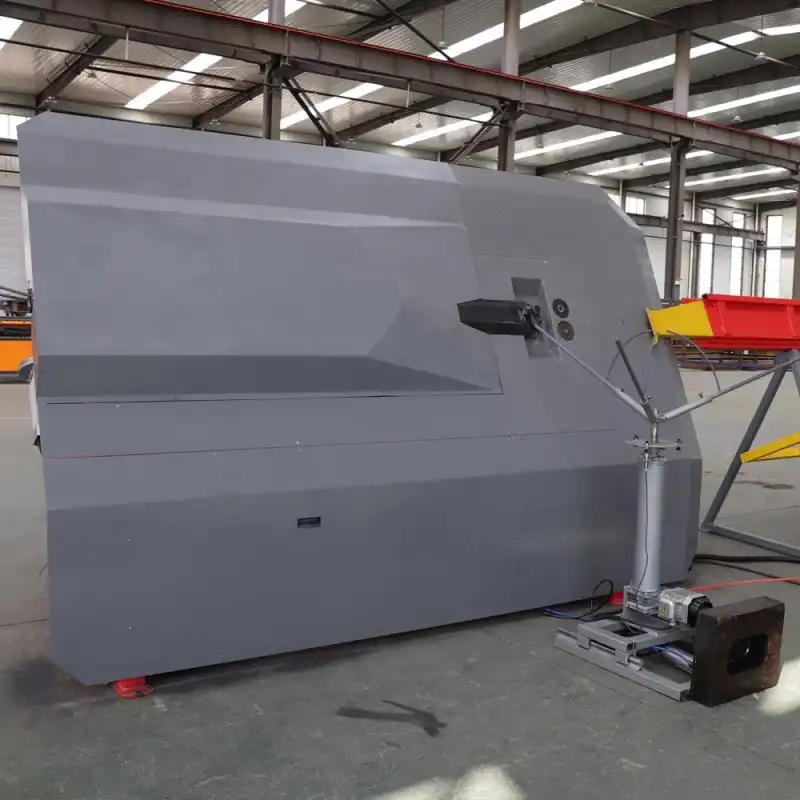
Procurement and After-Sales Support: Making an Informed Purchase
Procuring capital equipment for infrastructure projects involves more than comparing price sheets. Delivery lead times, warranty terms, customization capacity, and the supplier's technical track record all factor into the total cost of ownership.
Evaluate Factory-Direct and Authorized Supplier Options
Factory-direct procurement from a CNC stirrup bending machine manufacturer typically provides the clearest path to customization, competitive pricing on bulk orders, and direct access to engineering support. Authorized distributors can offer logistical advantages in specific regions. Verify the supplier's project references and ask for documentation of past equipment installations on comparable projects.
Warranty Coverage and Long-Term Service Agreements
A standard warranty period of 12 months on major mechanical and electrical components is common across the industry. Service agreements that extend coverage and guarantee response times within 24 to 48 hours protect against downtime-related schedule impacts. Confirm spare parts availability and lead times before signing a purchase agreement.
Customization for Project-Specific Requirements
Large infrastructure contracts often require stirrup geometries that standard catalog models do not cover. Suppliers with in-house engineering teams can modify bending head configurations, extend the wire diameter range, or adapt the control interface to integrate with existing production management systems. This capability is particularly relevant for nuclear power, hydropower, and long-span bridge projects with strict dimensional tolerances.
Conclusion
In the past, one way to get more done was to automate the process of making rebar stirrups. It's now needed for projects that are pressed for time, don't have enough workers, or need a very precise plan for the structure. To make concrete beams and columns, you need tools that can bend stirrups quickly, correctly, and in the same way every time. The people who buy things like capital equipment make sure they know how well a CNC stirrup bending machine works, if it meets quality standards, and if there is good customer service after the sale. First, you need to find a machine that can handle how much you need to make. This will save money and make the project go better.
FAQ
What is the difference between a CNC stirrup bending machine and a manual bending tool?
This takes longer and leaves room for error. It is up to the CNC machine to feed, measure, bend, and cut the metal. Over a thousand pieces can be lined up, and the readings will stay within ±1mm in length and ±1° in angle. The two have very different ways of making things. A CNC system can get a lot more done every day with a lot fewer people.
What wire diameter range do these machines typically handle?
Most standard CNC stirrup benders can work with single-line wires that are 5 mm to 13 mm wide. For smaller sizes, you can get double-line setups that make the output per turn higher. Before you buy the machine, make sure it can work with all the kinds of bars you will need for your job.
How often do key wear components need replacement?
The parts that break down the fastest are the wheels that cut and shape. The rollers should be checked every 200 to 500 hours of normal use in a factory. Tungsten carbide or high-alloy tool steel that has been fired to HRC 58–62 blades last longer than steel blades. If you follow the maker's fix plan, mistakes won't add up over time.
Ready to Improve Your Reinforcement Production? Contact Zhongji Luyuan
To start, Zhongji Luyuan had a registered capital of 50 million yuan in 2016. Contractors in more than 100 countries buy CNC stirrup bending machines from this company. These machines are used on high-speed train, bridge, metro, and nuclear power projects. China Railroad, China Communications Construction, and China State Construction have all chosen to work with the company for a long time. The engineering team at Zhongji Luyuan can help you whether you need a standard production model or a setup that works for a certain project. If you want to get professional help and prices on equipment, you can email sales2@shandongluyuan.com or visit shandongluyuan.com.
References
1. American Concrete Institute. ACI 318-19: Building Code Requirements for Structural Concrete and Commentary. 2019.
2. American Institute of Steel Construction. Steel Construction Manual, 16th Edition. 2023.
3. International Federation for Structural Concrete (fib). fib Model Code for Concrete Structures 2010. Ernst & Sohn, 2013.
4. Construction Industry Institute. Prefabrication and Modularization: Increasing Productivity in the Construction Industry. CII Research Report, 2012.
5. National Ready Mixed Concrete Association. Concrete in Practice: Reinforcement Detailing and Placement Standards. NRMCA, 2020.
6. Engineering News-Record. "Automation in Rebar Fabrication: Impact on Infrastructure Project Efficiency." ENR, 2022.