Enhancing Construction with Automatic Rebar Cage Welding Workstation
Sep 1, 2026
Modern infrastructure demands precision, speed, and reliability. The Automatic Rebar Cage Welding Workstation represents a transformative leap in reinforcement fabrication, addressing the critical needs of contractors tackling large-scale projects from high-speed railways to nuclear power facilities. These sophisticated systems integrate PLC-controlled automation with gas shielded welding technology, producing structurally sound reinforcement cages that meet stringent engineering standards while dramatically reducing labor dependency and operational costs. As project timelines tighten and skilled labor becomes increasingly scarce, automated rebar cage fabrication has evolved from a competitive advantage into an operational necessity for forward-thinking construction enterprises across infrastructure, rail transit, and commercial building sectors.
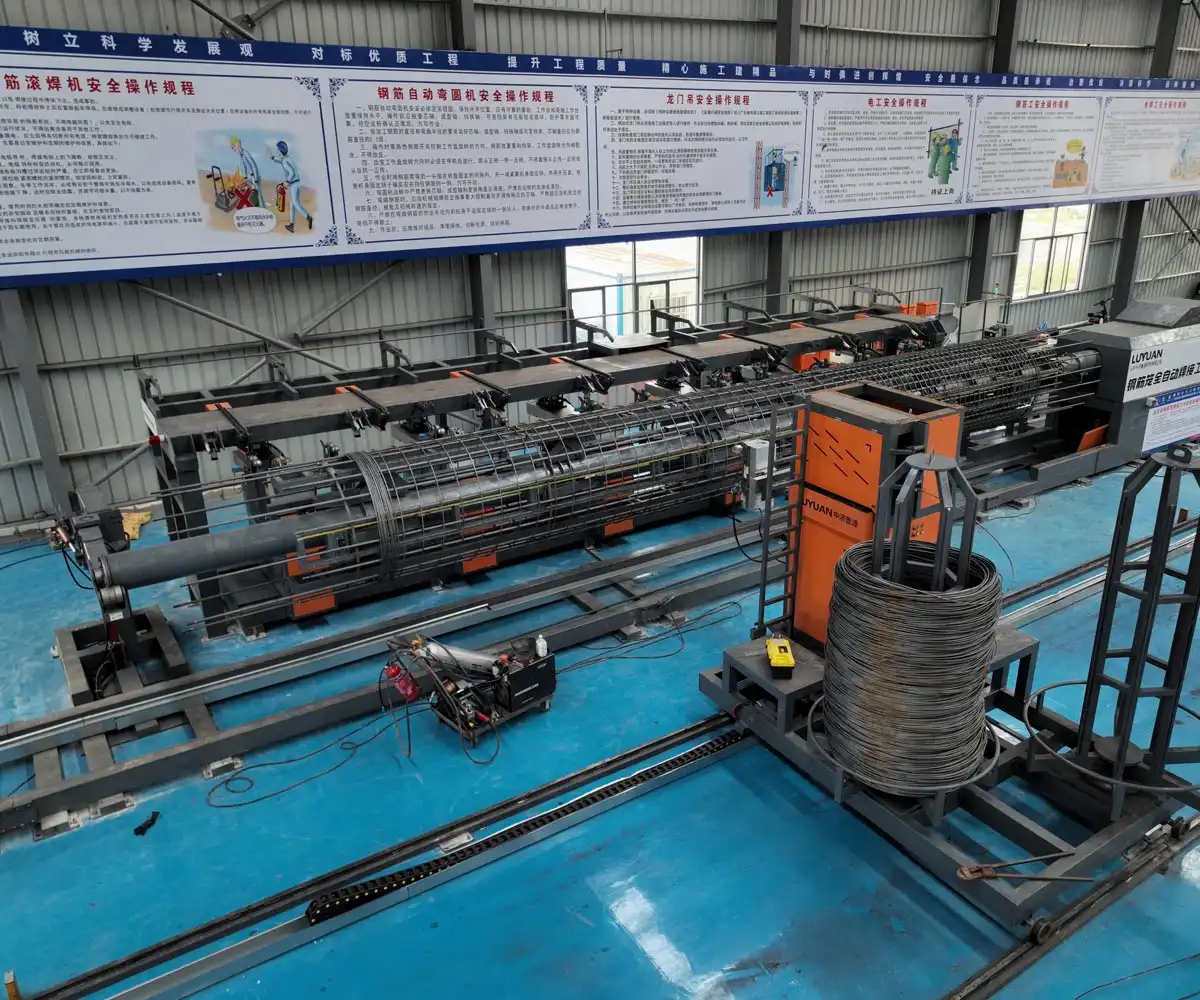
Understanding Automatic Rebar Cage Welding Workstations
What Defines an Automated Rebar Cage System?
An Automatic Rebar Cage Welding Workstation addresses three major issues that have long plagued the construction industry: a lack of certified welders, inconsistent structural integrity due to differences in manual welding, and lengthy fabrication processes that delay the building of important infrastructure. CNC accuracy and synchronized welding bots work together in these integrated industrial systems to make cylinder-shaped or prismatic reinforcement bars that are mostly used in deep foundation engineering. The technology basically digitizes the production process, which makes sure that every weld point meets architectural standards and cuts the need for up to 80% more onsite labor.
Core Technical Components and Capabilities
Several important parts of the workstation's architecture depend on them working together. The structure is held together by a high-strength steel frame that supports synced variable-frequency drive systems that allow precise control of the spin. The welding module uses gas-shielded welding techniques to make sure that the penetration depth and joint integrity are the same for main bar diameters from φ18 to φ40 mm and spiral reinforcement from φ8 to φ16 mm.
With the PLC control system and an easy-to-use touch screen interface, one person can oversee the whole manufacturing process. This control framework coordinates the feeding mechanisms, positioning systems, and welding heads to control the pitch with an accuracy of within ±1mm, which can't be done by hand. With a diameter range of φ700 to φ2500 mm and the ability to make cages up to 12 meters long, the LYZD-GJL2500 model is perfect for rigorous tasks.
The system needs a 380V three-phase source at 50Hz for power, with a total operating power of 30 kW and a welding capacity of 100 kW. The hydraulic pressure is -16 MPa and the air supply stays at 0.8 MPa. This gives the necessary force for moving and handling materials. The 30m x 8.5m equipment footprint needs careful plant layout planning, but it produces 13 cages per 10-hour shift, which is twice or three times the amount that can be made by hand.
Quality Standards and Manufacturing Precision
It is very important that these workstations strictly follow international manufacturing standards. These include ISO 9001 quality management protocols and structural welding codes like AWS D1.4 for reinforcing steel. Every weld joint is checked to make sure it meets certain standards for shear and tensile strength. Wear-resistant alloy guide wheels and high-torque servomotors are used in production systems to keep the joints' dimensions stable even when they're under a lot of weight. This level of engineering accuracy makes sure that the design requirements are met, no matter if the project uses ACI 318, Eurocode 2, or its own engineering standards.
Benefits of Using Automatic Rebar Cage Welding Workstations in Construction
Productivity Transformation and Schedule Compression
Traditional hand rebar cage assembly takes a lot of time and people, and it often becomes the most important part of a project's critical path. Automated systems cut down on the time it takes to make things while keeping the production flow going. Because they can make one to three cages an hour, based on how complicated the size is, contractors can stick to tight building schedules even for big infrastructure projects. This speeding up is especially helpful in cities where building windows are limited and delays lead to fines that get worse over time.
Automation with an Automatic Rebar Cage Welding Workstation not only increases speed, but it also makes planned output more reliable than ever before. Project managers can confidently predict when the cages will be delivered by planning activities like digging, setting up the forms, and scheduling the concrete pour all at the same time. This predictability cuts down on crew and equipment idle time, making the best use of the project's resources across all of its work fronts.
Welding Consistency and Structural Integrity
There are many things that can affect the quality of manual welding, such as the operator's skill, fatigue, the environment, and many other human factors. With automated welding, this variation is taken care of, and every cage made has the same level of weld penetration, spatter control, and joint strength. Gas-shielded welding keeps the join pool clean by keeping outside air from getting into it. This makes strong, clean ties that meet or beat design requirements.
This consistency is very important in situations where extreme structural performance is needed, like seismic zones that need flexible details, high-rise supports that have to move huge loads, or sea environments where the integrity of the weld directly affects how long something will last. Quality control methods built into the PLC system keep track of all operational parameters, making paper trails that meet the strict inspection needs of regulatory authorities and consulting engineers.
Economic Impact and Return on Investment
The financial benefits go far beyond lowering the cost of labor directly. Precision cutting and positioning get rid of the overages and extra work that come up with manual tasks, which leads to a big drop in material waste. When compared to multiple hand welding stations going at the same time, automatic gas shielded welding uses less energy per cage. When there is less waste, buying teams order closer to the theoretical amounts. This speeds up the turnover of goods and frees up working capital that would have been used to buy materials.
Lifecycle economics is better when equipment lasts a long time. High-strength steel framing and wear-resistant parts make the construction very long-lasting. It will last for years and years with little maintenance. Low failure rates mean that the equipment is always up and running, so you don't have to worry about lost output or high fix costs that come with less durable equipment. All of these things usually lead to a good return on investment (ROI) within 18 to 24 months for contractors working on big building projects full-time.
Workplace Safety Enhancement
Automated systems make it much safer for operators to be around welding hazards like arc flash, fumes, heat stress, and the strain that comes from holding the same position over and over again. One person working at a control station oversees the whole process safely from a distance. They watch over production through a touch screen instead of touching hot materials and welding fires directly. This setup meets international safety standards for the workplace and lowers the number of accidents, insurance costs, and human costs related to building injuries.
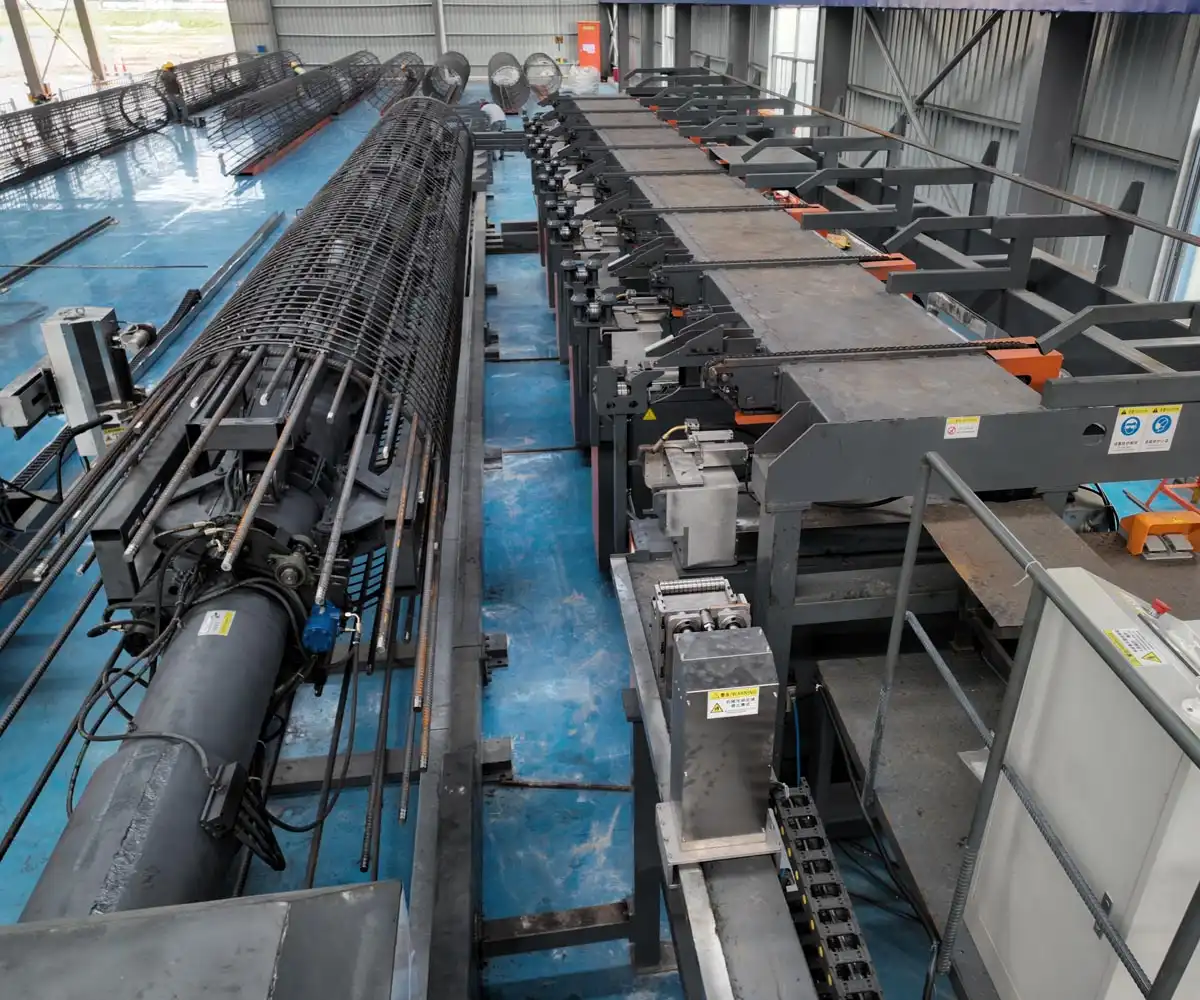
Comparing Automatic vs Manual Rebar Cage Welding
Labor Intensity and Skill Requirements
To make a rebar cage by hand, teams of certified welders must work together in a planned order, positioning the main bars, wrapping the spiral reinforcement, tack welding the intersections, and finishing the welds. To do this job well, you need to have a lot of physical stamina and learn special skills that take years to learn. There aren't enough skilled welders in North America right now, which makes it harder and more expensive to hire and keep these teams.
Automated systems turn this equation around. One trained person is in charge of the workstation and uses the control interface to load raw materials and start production sequences. The scientific understanding needed is more about how the system works than how to weld, which cuts training time from years to weeks. This makes it easier for more people to find work while also lowering wage pressure. This lets construction companies move skilled welders to more specialized jobs where their skills are most useful.
Output Quality and Dimensional Control
Variation is a natural result of manual methods, but an Automatic Rebar Cage Welding Workstation eliminates these inconsistencies. Welders with a lot of experience can make joints with different penetration depths, uneven spacing between spiral wraps, and dimensional tolerances that move as fatigue builds up from long shifts. These differences make it necessary to make changes further down the line during the placement of the cage, and if quality control finds problems later in the process, they could hurt the structure's performance.
The automated method gives accuracy that can't be matched by human hands. Positioning is controlled by a CNC machine that keeps the circular spacing within ±5mm along the whole length of the cage. Cylindrical cages are perfectly spherical when they rotate at the same time. Automated weld sequence places joints at exactly measured distances, making the assembly's structural capacity spread out evenly. This level of accuracy in measurements makes installation easier, cuts down on changes that need to be made in the field, and gives structural engineers confidence that the conditions on the job site match what was planned.
Scalability for Large Project Volumes
Small jobs that don't need a lot of cages may be able to be done by hand, especially when the geometry is unique and requires custom manufacturing methods. But as the size of a project gets bigger—either by the number of cages, the complexity of the size, or the tightening of the schedule—automated systems become clearly better. Scalability that can't be reached with human methods is created by the ability to run continuous operations across multiple shifts without lowering quality, the ability to accurately plan logistics based on predictable output rates, and the quick ability to reprogram for different cage specs.
Big building companies who are working on various sites at the same time find that putting all of their automated cage production in one place helps them make the best use of their resources. This hub approach allows for just-in-time delivery to project sites, which cuts down on the need for storage on-site while keeping production flexible for different project needs.
How to Select the Right Automatic Rebar Cage Welding Workstation for Your Needs?
Capacity Analysis and Project Matching
The first step in selection is to be honest about what you need for operations. Figure out how many cages you expect to have across all of your projects, taking into account both present plans and work that you expect to be done in the future. Look at the range of cage lengths and diameters that your projects usually need. The diameter range of φ700–φ2500 mm works for most civil infrastructure projects, like bridge piers, building foundations, and standard pile work. The 12-meter length range works for most structural sections.
Ratings of production efficiency need background information. The requirement of 13 cages per 10-hour shift assumes standard designs, such as 12 meter lengths and standard reinforcement plans. Throughput may be slowed down by complicated shapes with two main bars, two spiral bars, or special spacing needs. Instead of depending only on headline capacity numbers, procurement teams should ask for production studies that are tailored to their unique cage designs.
Technical Integration and Site Requirements
Careful planning is needed for physical installation. The 30m x 8.5m footprint needs a dedicated floor room with enough structural support for the weight of the tools and materials. The 380V three-phase power supply must be supported by electrical infrastructure that can handle enough amperage for the 30 kW operational load and the 100 kW welding capacity. For hydraulic and gas services, specifications need to be checked. Hydraulic systems need to be able to handle -16 MPa of pressure, and compressed air supplies need to be able to handle 0.8 MPa.
Environmental issues are important. The workstation works best in covered areas that keep the equipment from getting wet and let enough air flow through for the welding fumes. To keep hydraulic fluid viscosity and computer component reliability, temperature ranges should stay within the limits set by the maker. Noise levels from operations need to be compared to local rules. However, modern systems have acoustic damping that usually meets the needs of industrial zoning.
Supplier Evaluation and Partnership Criteria
How reliable your equipment is depends a lot on how well it was made and how well your supplier can support it. Zhongji Luyuan has been developing CNC equipment for eight years and has worked with big contractors like China Railroad, China State Construction, and China Communications Construction Corporation. He also has a lot of engineering resources at his disposal. This operating experience gives you faith in the longevity and consistency of the product.
Support after the sale is what sets quality sellers apart from those who just sell tools. Comprehensive training programs make sure that operators quickly learn how to use the system. Technical help that responds quickly cuts down on downtime when questions come up during the ramp-up of production. Maintenance advice makes equipment last longer, and having parts on hand keeps downtime from being too long while parts are being ordered. The warranty should cover both problems with the equipment and promises of good performance, so that you can get help if the system doesn't work as expected.
Customization and Future Flexibility
Standard configurations for an Automatic Rebar Cage Welding Workstation work well for many uses, but large contractors often find that they need to be customized to meet their specific operational needs. Cage length extensions longer than the standard 12 meters can fit special structural parts. Different project needs are met by modified width ranges. Improvements to the control system work with the production management software that is already in place, so tracking can be done from one place across multiple computers.
Strategies for buying things should weigh the needs of the present with the needs of the future. Modular designs let you add more space as the number of projects you need to do grows. Software-based control systems can get changes that add new features without having to replace the hardware. Taking these steps to protect capital investments from becoming obsolete protects capital investments against obsolescence and extends the economic lifespan of purchases that require big financial commitments.
Procuring Automatic Rebar Cage Welding Workstations: Best Practices
Qualification and Vendor Authentication
Thoroughly qualifying suppliers is the first step to successful procurement. Check the qualifications of the manufacturer, such as ISO 9001 approval, which shows that the quality management system is mature. Check the export certificates that say the goods meet the requirements of the final market. This is especially important for items with electrical parts and pressure systems that need to follow safety rules. Ask for facility audits or inspection reports from a third party that prove the factory's production and quality control methods.
Checking references gives you a lot of useful information. Get in touch with current customers who are using similar equipment in similar ways. As for reliability, find out how fast help responds, how much output is actually happening, and if parts are available. It's hard to get information from marketing materials alone without visiting sites that are already in use to see how the equipment is holding up after a lot of use, what repairs are needed, and how happy the operators are.
Transparent Cost Analysis and Budget Planning
The price of the equipment is only the first part of the total cost of ownership. Installation costs, such as preparing the foundation, connecting utilities, and commissioning services, raise the initial investment. The cost of training makes sure that workers get good at what they do fast. Maintenance needs that happen once a year use up ongoing funds. Spare parts inventories keep downtime from going on for too long. Using a lot of energy affects how much it costs to run the equipment over its whole life.
Ask for specific cost estimates that include all of these things. Compare competing proposals on the same level, making sure that all of the vendors' specifications are the same. Be wary of equipment prices that are too low and then add costs for things like installation, training, or service contracts that you have to sign. Reliable sellers give clear, detailed quotes that help with accurate budgeting and making smart decisions.
Service Agreements and Performance Guarantees
Different suppliers offer very different warranty terms. Standard coverage usually covers problems with the way the product was made for 12 to 24 months. Better programs offer longer protection or performance guaranties. Some providers promise that their tools will be available for production at a certain level of time, and they will pay you if it's not. These rules put operational risk on the manufacturer, which encourages strong design and quick support.
Extended service agreements are worth looking into, especially for businesses that don't have their own technical staff. These contracts offer regular maintenance, faster access to parts, and fixed yearly costs instead of uncertain repair costs. Carefully look over the agreement's terms. Things like reaction times, parts that are covered, labor rates for work that isn't covered by guarantee, and conditions for renewing the contract can all affect its long-term value.
Flexible Acquisition Models
Traditional capital buy works best for businesses that have the money and need tools for a long time. It gives owners the most benefits over an extended service life. But in some situations, different models are better from a strategic point of view. Leasing equipment helps businesses keep their working capital and gives them operational flexibility, so they can increase or decrease their capacity as project volumes change. Lease-to-own agreements give you freedom and the chance to own the tools eventually, while spreading out the costs over the first few years of use.
Some sellers offer trials or showcase programs for their tools, which let you try it out before making a final decision. These chances lower the risk of buying something by making sure that the equipment meets business needs and fits in well with current processes. Verifying performance in real production conditions gives confidence that can't be gained from just watching demonstrations in the factory or reading through specifications.
Conclusion
The change from making rebar cages by hand to using machines is more than just an upgrade for the equipment; it's also a way to plan for the future needs of infrastructure. Automatic Rebar Cage Welding Workstations improve safety, quality, productivity, and the efficiency of workers, as well as making the workplace safer. These technical advantages lead to better project economics and competitive differentiation. To choose the right system, you need to weigh the needs of the current project against the needs of long-term operations. You also need to look at the manufacturing quality and customer service of potential providers and set up your purchases in a way that allows for the most flexibility while protecting your cash investments. When companies use this technology, they can work on bigger, more complicated projects while still meeting the high standards of quality and meeting deadlines that set industry leaders apart.
FAQ
What rebar specifications work with automated welding systems?
Standard reinforcement grades, such as ASTM A615 Grade 60/75 (equivalent to HRB400/500 in foreign standards), can be used in automated rebar cage welding machines. The LYZD-GJL2500 model can work with main bar diameters ranging from φ18 to φ40 mm and spiral reinforcements ranging from φ8 to φ16 mm. This is a wide range that can be used for most major infrastructure projects, such as bridge foundations, building piles, and tube linings. Custom designs can make these ranges longer for specific uses that need bars with a bigger diameter or reinforcement plans that aren't typical.
How often does the equipment require maintenance?
Routine maintenance is done at times set by the manufacturer. It usually includes visual checks every day, lubrication of moving parts once a week, and system checks of hydraulic pressure, air supply, and electrical connections every month. Depending on how much is being made, major service intervals happen every three to six months to take care of wear parts like guide rollers and welding consumables. Systems that are well taken care of have low failure rates, and unplanned downtime is less than 2% of all processes that are well handled.
Can one operator really manage the entire system?
The PLC control system and easy-to-use touch screen interface make it possible for standard production runs to be managed by a single operator. The worker puts in the raw materials, tells the machine how to make the cages through the control panel, starts the automated production process, and checks the quality of the work. Complex configurations or first-time setups may benefit from technical supervision during initial runs, but routine production only needs one trained person, which changes the labor economics in a big way compared to manual fabrication, which needs coordinated teams.
Elevate Your Infrastructure Projects with Zhongji Luyuan
Investing in cutting-edge technology for fabricating reinforcements gives your company a competitive edge in the constantly changing building industry. Zhongji Luyuan offers complete solutions that include tried-and-true equipment, technical know-how, and quick support. Their partnership goes beyond just delivering equipment and includes long-term operational success. Our LYZD-GJL2500 Automatic Rebar Cage Welding Workstation manufacturer has eight years of specialized engineering improvement. Major infrastructure contractors in nearly 100 countries and regions trust them for tough jobs in North America, Southeast Asia, and the Middle East. You can email our team at sales2@shandongluyuan.com to talk about the specifics of your project, get detailed technical documentation, or set up a production demonstration. Check out zjly2025.aixdb.cn to see our full selection of CNC reinforcement processing options that will improve your working efficiency and project delivery.
References
1. American Concrete Institute. (2019). Building Code Requirements for Structural Concrete (ACI 318-19) and Commentary. Farmington Hills: ACI Committee 318.
2. American Welding Society. (2018). Structural Welding Code—Reinforcing Steel (AWS D1.4/D1.4M:2018). Miami: AWS Technical Committee on Structural Welding.
3. Construction Industry Institute. (2020). Automation and Robotics in Construction: Opportunities and Challenges. Austin: CII Research Team.
4. International Organization for Standardization. (2021). Quality Management Systems—Requirements (ISO 9001:2015). Geneva: ISO Technical Committee.
5. National Institute for Occupational Safety and Health. (2020). Welding and Manganese Exposure in Construction: Safety Guidelines. Cincinnati: NIOSH Division of Applied Research.
6. Precast/Prestressed Concrete Institute. (2017). Manual for Quality Control for Plants and Production of Structural Precast Concrete Products (MNL-116-17). Chicago: PCI Quality Control Committee.