How a CNC ReBar Bending Machine Improves Stirrup Accuracy for Building Projects
Oct 26, 2026
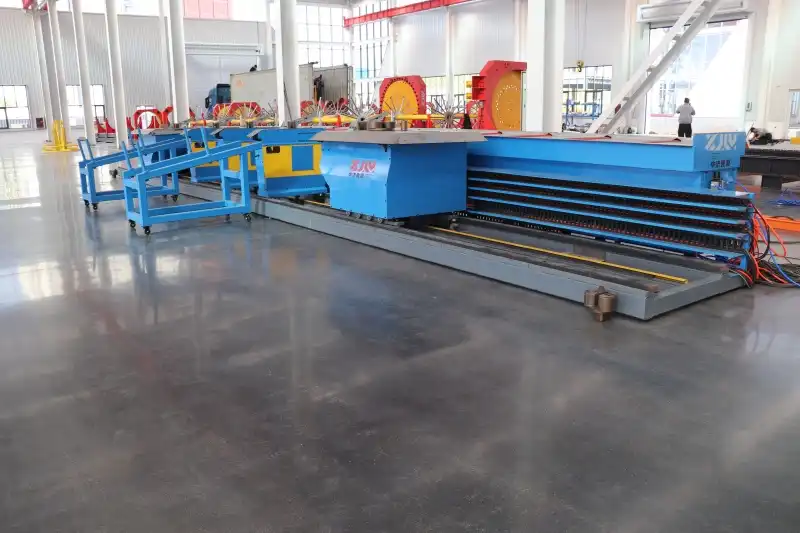
A CNC bar bending machine directly addresses one of construction's most persistent challenges: producing stirrups with consistent dimensional accuracy at scale. By replacing manual measurements and hand-operated equipment with servo-driven, PLC-controlled automation, these machines achieve bending angle precision of ±1° and length tolerances within ±1mm. For project teams managing high-volume rebar schedules across bridges, metro systems, or commercial towers, that level of repeatability translates into fewer rejected pieces, less material waste, and tighter alignment with structural engineering specifications from the first piece to the last.
Understanding Stirrup Accuracy Challenges in Construction
Why Stirrups Matter More Than Most People Realize
Stirrups are the side supports that keep long pieces of rebar in place inside a concrete beam or shaft. They hold the concrete core in place while it's under stress and resist shear forces. There is a chance that the concrete cover won't meet code requirements if the stirrup geometry is off by even a few millimeters. The cage may also not fit the formwork properly. The U.S. standard for structural concrete, ACI 318-19, sets very tight limits on the sizes of the reinforcements that can be used, and stirrups that don't meet these limits can cause expensive inspection failures.
Where Manual Methods Fall Short?
For traditional hand bending, a worker's sense of touch, a fixed bending table, and measuring each piece by hand are all that are needed. Dimensional scatter is created by this process across a production batch. Construction productivity studies consistently show that making rebar by hand has a mistake rate that requires 5–15% of the work to be redone on big projects. That percentage means a lot of lost work hours and tons of steel for a contractor who is working on tens of thousands of stirrups for a single bridge or high-rise foundation.
The Ripple Effect of Inaccurate Stirrups
When stirrups aren't level, they set off a chain reaction. Cage assembly takes longer because workers have to fix or throw away pieces that don't fit on the floor. There are more inspection hold points. Project plans get pushed back. The cost of materials goes up because cuts that are too long can't be returned. Every non-conformance must be tracked on U.S. infrastructure projects that are paid for by the federal government. This adds to the secretarial work that needs to be done on top of the actual rework. Most of these problems don't happen in the first place if accuracy is solved during the production stage.
How CNC Bar Bending Machines Work to Enhance Stirrup Accuracy?
The Role of PLC and Servo-Drive Systems
A CNC rebar bending machine uses design parameters that the operator types in. These include the bar diameter, bend angle, leg length, and hook configuration. They are sent to a PLC controller, which then sets up a precision feed system and a bending head that is driven by servo motors. Only milliseconds pass before the servo drives respond. They keep the bending speed at up to 180°/sec while keeping the angles correct. The machine runs the same computer program over and over, so pieces aren't very different from one another. Machinery made by Zhongji Luyuan has chromium-molybdenum metal wheels that have been hardened to HRC 58–62 and high-torque servo drives. They are accurate even when they are working hard all the time because of this.
Fully Automatic vs. Semi-Automatic Configurations
Some types of CNC rebar bending machine are fully automatic, which means that they measure, fix, bend, and cut all at the same time. This setup works well for big plants that need to be able to run on their own, like those that process rebar or cast concrete. Some changes can be made by hand with semi-automatic setups, which are good for small fabrication shops that need to work with a variety of stirrup shapes. Both can handle wire diameters from 6mm to 32mm, which is the full range of stirrup sizes used in building infrastructure, high-rises, and nuclear power plants.
Real-Time Error Detection and Correction
Every turn, sensors built into the machine check the length of the feed and the force of the bend. There is no material springback or feed slip because the control system fixes it before the next bend. With this closed-loop input, mistakes don't get worse over time and spread through a batch. Auto stirrup production is reliable and easy to check when builders use precast plants and have to follow strict quality control rules. This real-time correction feature makes it possible to do so.
Benefits of Using CNC Bar Bending Machines for Stirrup Fabrication
With CNC bending technology, speed, safety, accuracy, and cost can all be made better. When it comes to buying and building teams, these are the main pros:
- As the machine makes more than one piece, it always follows the same computer program, so stirrups from batch 1,000 will fit with stirrups from batch 1. This uniformity makes it possible to have quality paperwork that meets ISO 9001 standards without having to check each piece by hand again.
- Less waste: accurate cut-to-length measurements cut down on offcuts. Industry data shows that automatic rebar handling can cut steel waste by 3–8% compared to human methods. This can save a lot of money when the price of steel changes.
- Faster cycle times: a fully automatic machine can handle different leg setups without having to take breaks for retooling. This means that daily output is much higher than with human bending tables.
- Better safety for operators: automated feed and bending get rid of the need to use force by hand, which hurts hands and wrists in standard bending tasks. OSHA safety standards for machines are met by ones with built-in guarding and emergency stop systems.
All of these benefits work together to bring down the cost of building the project while still meeting the exacting standards set by structural engineers. Contractors who do work on more than one site can plan their supply chains more easily when CNC output is consistent. This is because rejection rates become predictable and close to zero.
Comparing CNC Bar Bending Machines with Traditional Methods and Other Technologies
Manual Bending vs. CNC Precision
When someone bends something by hand, they need to be careful and skilled. When making stirrups in moderate quantities, a trained worker can do a good job. However, shift changes, fatigue, and differences in measuring make batch consistency worse over time. In CNC machines, the turning is done by the machine itself. However, an engineer is still needed to set up the program and make sure the quality is good.
Hydraulic Machines vs. CNC Control
Large-diameter bars can be bent with a lot of force by hydraulic bending machines, but they usually don't have the angle input and length control that a cnc rebar bending machine with CNC servo systems does. When working with heavy bars, hydraulic equipment is often good for single-bend operations. However, CNC control systems are much better at making multi-bend stirrup geometries accurately and over and over again.
Choosing the Right Configuration for Your Project
The size of the project, the range of bar diameters needed, and the complexity of the stirrup geometry should all be taken into account when choosing equipment. A fully automatic line is best for a city building company that processes a lot of standard column stirrups. A general builder who does a lot of different business building cage work might find that a semi-automatic CNC unit is easier to use. In both cases, the improvement in accuracy over manual methods is big, and it shows up in lower inspection costs and more trust in the plan.
Selecting the Right CNC Bar Bending Machine for Your Building Projects
Key Specifications to Evaluate
Before calling a supplier, procurement teams should make sure they know what size rebar they need, how much they need to make every day, how complicated the stirrup geometry is, and how much floor space they have available. Most structural stirrup uses can be handled by machines that can handle diameters from 6mm to 32mm. Angular accuracy of ±1° and length range of ±1mm are common standards for good tools. For projects that have to follow U.S. engineering standards or international export rules, CE certification and ISO 9001 manufacturing compliance are quality indicators that can't be negotiated.
Evaluating Supplier Technical Depth and Support
The after-sales infrastructure of the supplier has a big impact on how well the equipment works over its five- to ten-year service life. Give more weight to providers who offer operator training, easy access to spare parts, and quick expert help. Zhongji Luyuan was established in 2016 with 50 million yuan in listed capital. It has since built a service network that supports projects in the infrastructure, rail transit, and nuclear energy sectors. Long-term partnerships with China Railroad, China State Construction, and China Nuclear Power Construction Group give the company proof of how well its equipment works in tough production environments.
Matching Equipment Investment to Project ROI
Figure out the payback period by comparing the cost of buying the tools to the time it will save you in labor, waste, and extra work. When switching from manual to automated fabrication, big infrastructure contractors that make more than 50,000 stirrups a month usually see payback periods of less than 18 months. To get a good idea of how much something will cost before you buy it, ask for specific information about production and guarantee terms from the suppliers you're considering.
Conclusion
Accuracy of the stirrups is not a small matter; it has a direct impact on the safety of the structure, the results of inspections, and the cost of the project. With a CNC rebar bending machine, construction teams can make stirrups of the same size and shape at any volume, without having to rely on the skill of each operator. The technology is well-developed, well-documented, and available for purchase in a range of configurations that can be used for projects ranging from small commercial builds on a single site to large national infrastructure programs. Automated rebar bending is a simple piece of equipment that has clear, measurable returns for teams that want to cut down on rework, keep steel waste under control, and meet tight engineering tolerances reliably.
FAQ
How much more accurate is a CNC machine compared to manual bending?
CNC equipment holds angular precision to ±1° and length tolerance to ±1mm. Manual bending typically produces variance of ±3–5mm in length and ±3° in angle across a production batch, depending on operator experience and fatigue. For structural stirrups where code tolerances are tight, that difference is significant.
What maintenance does a CNC bar bending machine require to stay accurate?
Routine maintenance includes inspecting and lubricating the feed rollers, checking bending pin wear (alloy pins hardened to HRC 58–62 have long service life under normal load), verifying servo calibration, and cleaning debris from the feed channel. Most manufacturers recommend a formal calibration check every 500 operating hours.
Can these machines handle different bar diameters and materials?
Yes. Most equipment in the commercial range processes diameters from 6mm to 32mm, covering HRB400 and HRB500 grade rebar commonly specified on U.S. and international projects. The operator changes the bending pin and adjusts the program parameters in the controller when switching bar sizes.
How long does it take to train an operator?
Basic operation training typically takes two to three days. Full proficiency in program setup and troubleshooting generally requires two to four weeks of supervised operation, depending on equipment complexity.
Get Accurate Stirrup Production with Zhongji Luyuan
For contractors who require accuracy, throughput, and long-term equipment reliability, Zhongji Luyuan designs and builds CNC rebar bending machines. We provide equipment configurations matched to your production volume and bar diameter requirements as an experienced CNC bar bending machine supplier with verified project references in the rail transit, bridge engineering, and nuclear energy sectors. Get in touch with our technical team to get price information, specifics, and a presentation that fits your needs. You can email us at sales2@shandongluyuan.com or go to shandongluyuan.com.
References
1. American Concrete Institute. ACI 318-19: Building Code Requirements for Structural Concrete and Commentary. ACI, 2019.
2. Construction Industry Institute. Rebar Fabrication and Placement Productivity Study. CII Research Report, 2018.
3. Occupational Safety and Health Administration. Machine Guarding: OSHA 3170-05R. U.S. Department of Labor, 2007.
4. ISO. ISO 9001:2015 Quality Management Systems — Requirements. International Organization for Standardization, 2015.
5. Nawy, Edward G. Reinforced Concrete: A Fundamental Approach. 6th ed., Prentice Hall, 2009.
6. Eastman, Chuck, et al. BIM Handbook: A Guide to Building Information Modeling for Owners, Designers, Engineers, Contractors, and Facility Managers. 3rd ed., Wiley, 2018.