How Can CNC Rebar Bending Machine Improve Production Efficiency in Steel Fabrication Workshops?
Oct 13, 2026
The CNC rebar bending machine automates the bending process using high-torque servo drive systems to increase production efficiency in steel fabrication workplaces and provides bending rates up to 180 degrees per second with an angular accuracy of ±1 °. Instead of manual work or simple hydraulic equipment, shops may operate continuous batch production with a minimum of human interaction. It decreases cycle times, eliminates material waste, and maintains dimensional tolerances of ±2mm across high-volume runs, thereby addressing the speed and precision demands infrastructure and building projects have on current fabrication processes.
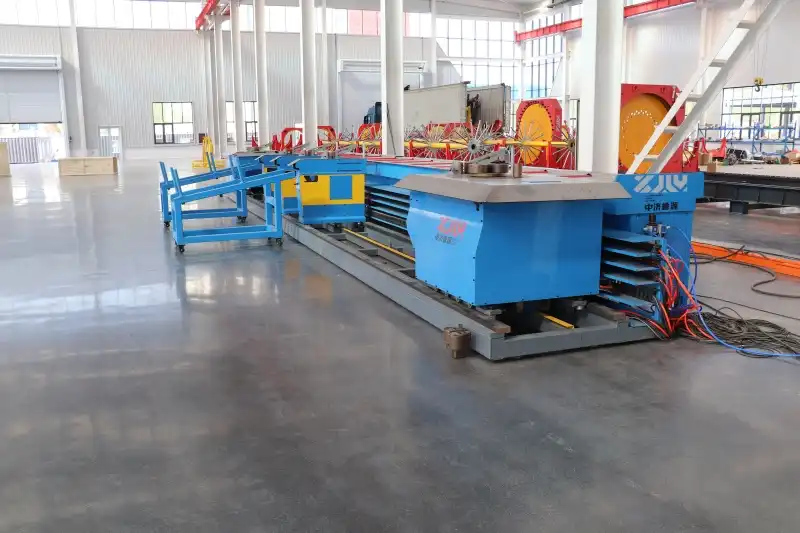
Understanding CNC Rebar Bending Machines and Their Role in Steel Fabrication
Before choosing any automated bending solution, it helps to understand what separates CNC-driven equipment from older methods and why that gap matters for real production targets.
What Is a CNC Rebar Bending Machine?
A CNC rebar bending machine is a computer-controlled piece of equipment that performs programmed bending sequences with great precision. The operator enters the specs, bar diameter, bend angle, form geometry, and the machine reproduces those specs on every single piece. This eliminates human variance that leads to rework and material loss in manual or hydraulic bending.
Common Machine Types and Their Applications
Single-axis CNC benders are used for simple stirrup shapes and bar types. Multi-axis models are used for complicated, multi-angled profiles needed in bridge pier reinforcement cages or tunnel lining constructions. Fully automated CNC lines integrate feeding, straightening, cutting, and bending into one continuous flow – the design that is most suited to high-output precast manufacturers and rebar distribution centers.
Why the Shift from Hydraulic to CNC Matters
Hydraulic bending machines wear down under constant stress and need periodic fluid maintenance. The rollers on CNC servo-driven equipment are made of high-alloy tool steel, and the cutters are made of tungsten carbide, usually heat-treated to a hardness of HRC 58 to 62. This resists abrasive wear during extended periods of 24/7 production. The consequence is longer service intervals and more predictable uptime – both of which are frequently ranked as top priorities by procurement managers.
Key Features of CNC Rebar Bending Machines That Boost Production Efficiency
Once workshops adopt CNC automation, several specific technical features drive measurable gains in throughput and part quality.
Precision Control and Spring-Back Compensation
Advanced CNC control systems incorporate spring-back compensation algorithms that adjust the bending angle in real time, keeping finished dimensions within ±2mm of the CAD specification. This matters especially in high-stakes applications like nuclear power plant rebar cages, where tolerances are non-negotiable, and rework carries serious schedule penalties.
Automated Batch Processing with Minimal Labor
Here are the core performance attributes that support continuous batch output:
- High-speed feeding: Feed rates of up to 110 m/min reduce idle time between bends, allowing a single operator to oversee multiple production cycles that previously required a three- to four-person manual team.
- Multi-program memory storage: Operators can store hundreds of shape programs and switch between them instantly, which is critical for rebar processing centers supplying multiple project types simultaneously.
- Integrated cutting systems: Pneumatic or hydraulic cutting units synchronized with the bending axis eliminate secondary handling steps, keeping parts moving through the line without manual transfers.
These capabilities directly cut labor costs and accelerate delivery schedules — two areas where large infrastructure contractors and EPC companies feel the most operational pressure.
Safety Systems and Operator Interface Design
Modern CNC rebar benders meet ISO 13849 safety interlock standards, with emergency stop circuits, protective enclosures, and fault detection built into the control panel. The PLC interface displays real-time monitoring data, including motor temperature and encoder feedback, so operators can identify issues before they cause unplanned downtime. CE certification for electrical safety confirms the CNC rebar bending machine meets international standards for industrial environments.
Operational Best Practices to Maximize Efficiency with CNC Rebar Benders
Owning the right equipment is only part of the equation. How teams operate and maintain it determines whether the investment pays off on schedule.
Optimizing Bending Sequence Programming
Grouping similar bend angles within a production batch reduces the number of axis repositioning steps per cycle. I've seen shops cut cycle times by 15–20% simply by reordering their program sequences rather than upgrading hardware. Programming tools built into modern CNC controllers make this sequencing straightforward, even for operators new to the system.
Preventive Maintenance Schedules
Running a continuous load test at full capacity for 48–72 hours during commissioning — checking for hydraulic leaks and electronic control system heat buildup — establishes a baseline for ongoing maintenance intervals. After that, scheduled inspections of the straightening rollers, cutting blades, and servo encoder feedback systems prevent the kind of gradual degradation that leads to cumulative dimensional errors during long production runs.
Operator Training and Skill Development
A well-trained operator does more than press start. They verify dimensional accuracy against design drawings, monitor encoder feedback for drift, and adjust straightening roller tension when processing different bar diameters — typically 5mm to 32mm depending on the model configuration. Structured training programs, like those provided by Zhongji Luyuan during equipment commissioning, reduce the learning curve and build in-house competency faster.
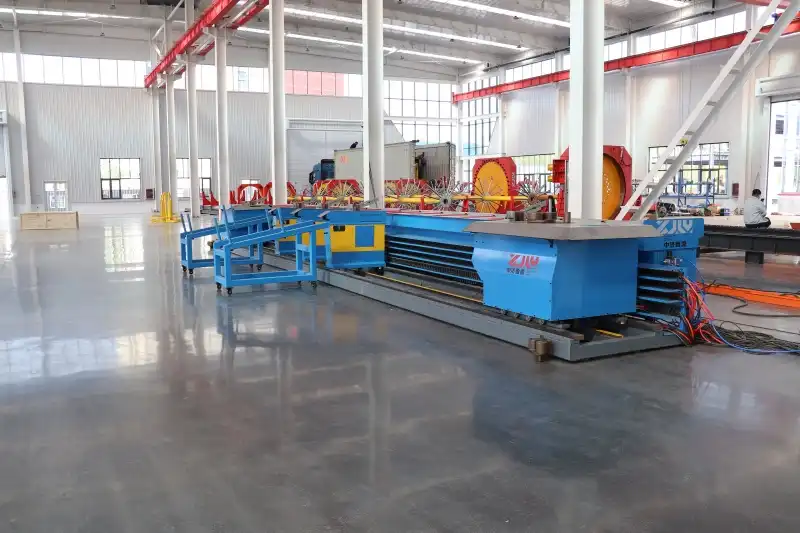
Comparing CNC Rebar Bending Machines: Choosing the Right Solution for Your Workshop
Not every workshop has the same income, floor space, or amount of work that can be done. By matching machine specs to the needs of the project, you can avoid both under-investment and over-specification.
Capacity and Bar Diameter Range
Most entry-level CNC stirrup benders can work with single-line rebar from 5 mm to 13 mm, which makes them perfect for standard commercial and residential construction. Heavy-duty single-line types can handle diameters of up to 32 mm, which is enough for bridge engineering and tunnel building, which use standard large-diameter structural bars. Double-wire models with 5mm to 16mm wire work well for high-speed stirrup production in distribution centers.
Energy Efficiency and Total Cost of Ownership
Because the servo engine only uses power when the CNC rebar bending machine is moving, servo-driven CNC machines use a lot less energy than hydraulic models of the same size and weight. In a project that lasts more than one year, those savings add up to a big chunk of the total cost, which is something that procurement managers and equipment buyers look at very carefully when choosing between suppliers.
After-Sales Support and Supplier Track Record
Check with the seller to make sure they can provide installation help, spare parts, and expert support within the time frame of your project before you commit to buying capital equipment. Zhongji Luyuan was started in 2016 with 50 million yuan in registered capital. It has since built a service network that includes nearly 100 countries. Working with China Railroad, China State Building, and China Nuclear Power Construction Corporation gives them project examples that building procurement teams can check out for themselves.
Case Studies: Real-World Efficiency Gains from CNC Automation
Mid-Sized Fabrication Shop: Scaling Stirrup Output
At a mid-sized rebar processing plant, a six-person crew bent the bars by hand. A twin-axis CNC stirrup bender replaced them for a regional highway project. Their failure rate reduced from about 8% to less than 1%, and their production per day increased by almost 60%. This means they can do a greater task without having to hire additional staff.
Large Infrastructure Contractor: Accelerating Bridge Construction
A bridge engineering business has installed automated CNC bending lines in its on-site production yard for a high-speed rail project. Producing huge bridge pier stirrups and reinforcement cage pieces with extremely fine tolerances, the machines reduced schedule delays due to rework. Switching to batch program storage at numerous cages lowered the daily setup time from hours to less than 30 minutes.
Precast Factory: Standardizing Modular Housing Components
A precast concrete business that manufactured modular houses employed CNC equipment to ensure that each piece of rebar fit into already-poured molds. Previously, adjustment time was spent on-site cutting or reshaping bars, but with a constant part shape, that time was no longer required. This immediately improved manufacturing production and its dependability in delivering to customers.
Conclusion
CNC rebar bending machines may help steel manufacturing businesses boost productivity, improve accuracy, and minimize personnel expenses per unit. The technique has been utilized effectively for constructing infrastructure, rail travel, concrete production, and specialist areas such as nuclear power — anyplace there is a requirement to manufacture things accurately and fast. When you choose the ideal machine configuration, maintain it in excellent repair, and train staff on how to use it properly, your hardware investment will translate into actual project outcomes. The performance statistics and project references available from well-known providers make the decision simpler than it may seem at first. When workshops are considering what equipment to purchase next,
FAQ
1. How does a CNC rebar bending machine differ from a hydraulic bender?
A hydraulic bender relies on fluid pressure to drive the bending arm, which responds relatively slowly and requires regular fluid system maintenance. A CNC servo-driven bender uses programmed control with encoder feedback, achieving bending speeds up to 180 degrees per second and maintaining angle precision of ±1°. The CNC system also stores multiple shape programs, enabling fast product changeovers without manual reconfiguration.
2. What bar diameters can CNC rebar bending machines process?
Standard CNC stirrup benders handle bar diameters from 5mm to 13mm in single-line operation. Double-wire models process 5mm to 16mm wire simultaneously. Heavy-duty single-line models reach up to 32mm, covering the large structural bars used in bridge piers, tunnel linings, and nuclear power plant foundations.
3. How long does equipment procurement and installation typically take?
Lead times vary by model and order volume. Standard configurations generally ship within four to eight weeks, with on-site commissioning completed in one to three days depending on workshop readiness. Zhongji Luyuan provides installation guidance and operator training as part of their standard delivery package.
4. Are CNC bending machines suitable for small or mid-sized workshops?
Compact single-axis CNC stirrup benders have a manageable footprint and low operator count requirements, making them practical for workshops processing moderate volumes. The programmable control system scales well — a small team can manage multiple production programs without additional staffing.
Partner with Zhongji Luyuan for Your Next CNC Rebar Bending Machine Purchase
With options ranging from 5mm to 32mm bar diameters and CE-certified safety systems, Zhongji Luyuan makes a full line of CNC rebar bending tools designed for 24/7 industrial production. We provide equipment backed by quick technical support and organized operator training as a reliable Cnc rebar bending machine supplier with partnerships across major infrastructure groups and export experience spanning nearly 100 countries. To get a product consultation or equipment quote, please email our team at sales2@shandongluyuan.com.
References
1. Benvenuto, M., & Bertetto, A. M. — Automation in Construction, 2019.
2. Building and Construction Authority — Prefabrication and Preassembly Adoption Guide, 2020.
3. Gao, S., & Liu, Y. — Journal of Construction Engineering and Management, 2021.
4. International Federation of Robotics — World Robotics: Industrial Robots Report, 2022.
5. Nawy, E. G. — Reinforced Concrete: A Fundamental Approach, 7th Edition, Pearson, 2009.
6. Peurifoy, R. L., Schexnayder, C. J., & Shapira, A. — Construction Planning, Equipment, and Methods, 9th Edition, McGraw-Hill, 2018.