How Can LYZD-WQ32 Full Automatic Bar Bending Center Improve Rebar Processing Efficiency on Construction Sites?
Oct 13, 2026
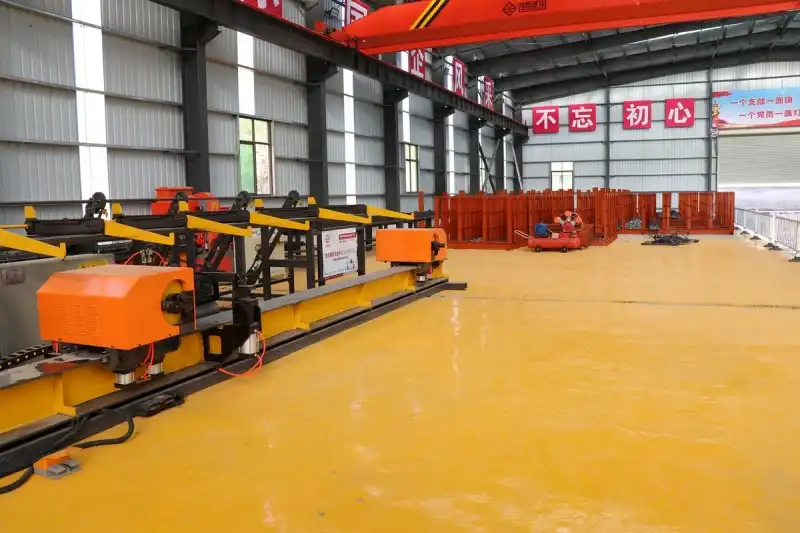
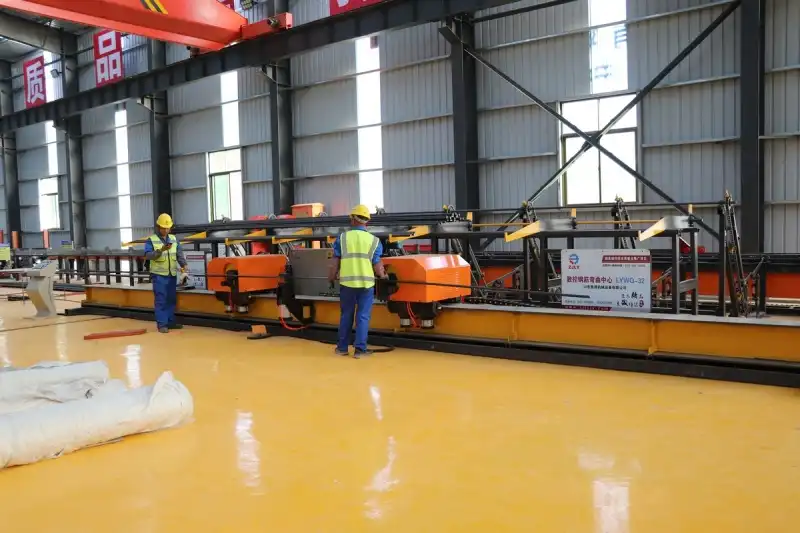
The Full Automatic Bar Bending Center LYZD-WQ32 improves rebar processing efficiency by replacing manual bending with a fully automated CNC-controlled workflow. It handles rebar up to 32mm in diameter, bends with ±1° precision, and moves at a trolley speed of 60m/min. By automating feeding, measuring, bending, and collecting in one continuous cycle, this machine cuts labor requirements, eliminates dimensional errors, and significantly increases daily output. For contractors managing large infrastructure projects, this means tighter schedule control, lower per-unit processing costs, and consistent structural quality across every bent bar.
Understanding Current Challenges in Rebar Processing
One of the most labor-intensive parts of civil building is making the rebar. On most sites, workers still use semi-automatic or manual tools for bending that need to be watched over all the time. This really causes issues, and knowing about them is the first thing that needs to be done to fix them.
Inconsistent Bending Quality
When bending by hand, mistakes can happen. It is impossible for a skilled worker to keep the same level of accuracy across hundreds or thousands of bars when adjusting angles by hand. On bridge or tunnel projects, even a 3° error can lead to expensive rework or weaken the structure when earthquakes happen.
Labor Cost Pressures
Labor costs for building projects in the US have been steadily going up. From 2019 to 2023, construction worker wages went up by more than 18%, according to the U.S. Bureau of Labor Statistics. For projects that use a lot of rebar, relying less on physical work is no longer a choice; it's a matter of money.
Production Bottlenecks on Large-Scale Projects
High-speed train, metro, and nuclear power projects need thousands of shaped bars every day. Normal ways of bending just can't handle that much volume. The whole project schedule changes when rebar fabrication is behind schedule, and each day of delay costs money.
The answer to all three of these problems is the same: automatic CNC rebar processing tools made for large-scale production.
Introducing the LYZD-WQ32 Full Automatic Bar Bending Center
The Full Automatic Bar Bending Center LYZD-WQ32 was made by Shandong Zhongji Luyuan Machinery Co., Ltd. to fill in the gaps in output left by human and semi-automatic machines. Zhongji Luyuan was founded in 2016 with 50 million yuan in registered capital. It has long-term partnerships with China Railroad, China State Construction, and China Nuclear Power Construction Corporation, and it has sent equipment to almost 100 countries.
Core Technical Specifications
The LYZD-WQ32 can bend HRB400 grade rebar up to a diameter of 32 mm, and the bending angle is accurate to within 1°. To quickly move between bending processes, the trolley can move at up to 60 m/min. Because it has two bent heads, it can bend in both directions at the same time, which cuts down on turn times for each piece. High-strength alloy steel is used for both the bent mandrels and the strengthened track rails in the machine frame, which is made to work continuously under heavy loads.
CNC Control and Software Integration
The custom CNC system can directly import CAD drawings and turn design files into bending programs without having to enter the data again by hand. Precision motor positioning is done by servo drives from Mitsubishi or Siemens, and bending angles are changed instantly based on the batch's elasticity thanks to a built-in springback adjustment database. The unit also has USB and Ethernet ports so that it can be synced with BIM or ERP platforms.
Safety and Energy Design
The control box is protected by IP54 standards, so it can be used on dusty and damp building sites. The built-in hydraulic system is made to work 24 hours a day, seven days a week, while keeping the heat output low. These design choices show a sensible approach to site safety and lower energy use, two important factors that buying teams consider very much when choosing capital equipment.
How LYZD-WQ32 Enhances Rebar Processing Efficiency
When you move to automatic rebar bending, you can see and measure the performance gains. Here are the main benefits this machine brings to building sites:
- Labor reduction: The automated feeding, measuring, and collecting cycle means one operator can manage output that previously required three to four workers. This directly lowers the cost per processed ton of rebar.
- Higher throughput: The dual bending head and 60m/min trolley speed allow the machine to process multiple bar segments per minute, sustaining output that manual equipment cannot match across a full shift.
- Geometric consistency: With ±1° bending precision and CNC-controlled positioning accurate to 0.1mm, every bar meets the same specification — critical for modular precast production where thousands of identical units are assembled.
- Reduced material waste: Accurate fixed-length measurement before each cut eliminates off-cuts caused by human measurement errors, directly improving material yield rates.
These benefits solve the most important production issues in big infrastructure projects. This machine changes labor costs and how much work needs to be done each day for project managers working on bridges or concrete plants that serve metro projects.
Over years of use, the machine's centralized lubrication system and organized daily maintenance routine (rail cleaning followed by automatic oiling) have kept the 0.1mm positioning accuracy. Standard upkeep should keep bending heads working for more than 10 years. The only parts that need to be replaced on a regular basis are the contact mandrels, which are based on the amount of work they are used for.
Comparing LYZD-WQ32 with Other Bar Bending Solutions
LYZD-WQ32 vs. Manual and Semi-Automatic Machines
Manual bending machines are cheap to buy, but they require a lot of work over time and produce inconsistent results. Semi-automatic models require some work from the operator, but the angle and bar positioning still need to be done by hand. Large building projects need a certain amount of output or accuracy in measurements, which neither type can meet. The LYZD-WQ32 automates the whole process chain, so the user doesn't affect the quality of the result.
LYZD-WQ32 vs. Competing Automatic Benders
A lot of automatic benders on the market can only bend in one direction, which slows down the bidirectional cycle speed. The LYZD-WQ32's two heads cut in half the number of times it needs to be repositioned for complicated forms with many angles. Its ability to load CAD files also cuts down on programming time compared to machines that need to enter each new bar shape by hand.
Cost-Benefit Analysis for B2B Buyers
A center that processes 50 tons of steel every day by hand might hire 8–10 people per shift. If you switch to the Full Automatic Bar Bending Center LYZD-WQ32, that number can drop to two or three workers while output goes up. In about 12 months, the savings on labor alone usually cover a big chunk of the equipment's cost. When combined with less material waste and lower costs for repairs, the ROI case for procurement managers is clear.
Procurement and After-Sales Support for LYZD-WQ32
How to Purchase
The LYZD-WQ32 can be bought through Zhongji Luyuan's direct sales network and approved dealers in other regions. Buyers can find out more about the product and see their setup choices at zjly2025.aixdb.cn. You can talk to the sales team about volume prices for large project sites that need to install multiple machines in bulk.
Delivery and Installation
As part of the usual supply package, Zhongji Luyuan offers professional fitting advice and help with commissioning. The company's service network includes both domestic and international deployments, and technical staff are on hand to set up the equipment and train operators after delivery.
Warranty and Spare Parts
Standard warranty terms cover most of the mechanical and electrical parts. Replacement bent mandrels and parts for servo systems are among the spare parts that are kept on hand and ready to be sent out quickly. The after-sales team of the company fixes technology problems so that busy project sites have as little downtime as possible.
Conclusion
How well rebar is processed on construction sites depends on the tools that are being used. With CNC-controlled automation, dual-head bending, and a 60m/min trolley speed, the Full Automatic reBar Bending Center LYZD-WQ32 can increase output in a measurable way. It is also built to work 24 hours a day, seven days a week, even when there are a lot of people on the job site. This machine solves the main problems that procurement managers, project directors, and equipment managers have when they are looking at investments in capital equipment for rebar manufacturing. These problems are labor cost, production volume, and accurate measurements. Zhongji Luyuan backs up the equipment with a service network that you can rely on and equipment that has been used successfully in building projects around the world.
FAQ
1. What is the maximum processing capacity of the LYZD-WQ32?
For HRB400 grade rebar, the machine can handle single bars up to 32 mm long. It also lets you bend more than one bar at the same time, like two 20mm bars or three 16mm bars, which speeds up production during high-volume runs.
2. How does the CNC system handle different steel elasticities?
A springback pay record is part of the system. When operators enter the specific qualities of a lot of material, the CNC instantly changes the bending angle to reach the desired shape, taking into account differences in steel sources or production batches.
3. What are the daily maintenance requirements?
As part of daily upkeep, the guide rails are cleaned, and the centralized automatic lubrication cycle is run. This process keeps the tracking accuracy at 0.1 mm and keeps the hardened track parts from wearing out too quickly.
4. Can the LYZD-WQ32 connect to BIM or ERP systems?
Yes. Standard USB and Ethernet data connections are built into the machine. This lets you send and receive data directly between the machine and project management and production tracking tools, so you can see the output in real time.
5. What is the expected service life of the bending heads?
If you keep up with regular upkeep, the heavy-duty bending heads should last for more than 10 years. The contact mandrels need to be replaced every so often, but not at set times. This is because they wear out over time.
Get Your Automated Rebar Processing Solution from Zhongji Luyuan
Zhongji Luyuan has been selling CNC rebar manufacturing tools to big builders in almost 100 countries since 2016. The Full Automatic Bar Bending Center LYZD-WQ32 we sell around the world comes with full fitting help, training for the user, and parts that will always be available. To get a quote or set up a product demonstration today, email sales2@shandongluyuan.com with the details of your project.
References
1. American Concrete Institute. ACI 318-19: Building Code Requirements for Structural Concrete. American Concrete Institute, 2019.
2. International Organization for Standardization. ISO 6935-2: Steel for the Reinforcement of Concrete — Part 2: Ribbed Bars. ISO, 2015.
3. U.S. Bureau of Labor Statistics. Occupational Employment and Wage Statistics: Construction and Extraction Occupations. U.S. Department of Labor, 2023.
4. Construction Industry Institute. Benchmarking and Metrics: Automation in Rebar Fabrication. University of Texas at Austin, 2021.
5. Freedonia Group. World Construction Equipment: Industry Study with Forecasts. Freedonia Group, 2022.
6. McGraw-Hill Construction. Prefabrication and Modularization: Increasing Productivity in the Construction Industry. McGraw-Hill Analytics, 2020.