How Can LYGL-350D Help Steel Fabrication Factories Achieve Faster and More Consistent Cage Welding?
Oct 22, 2026
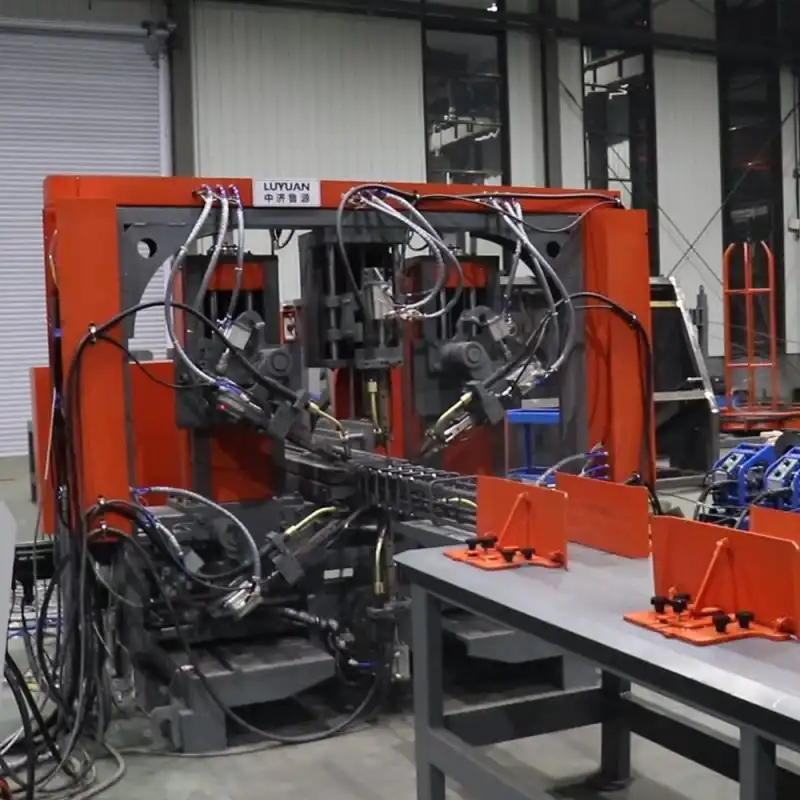
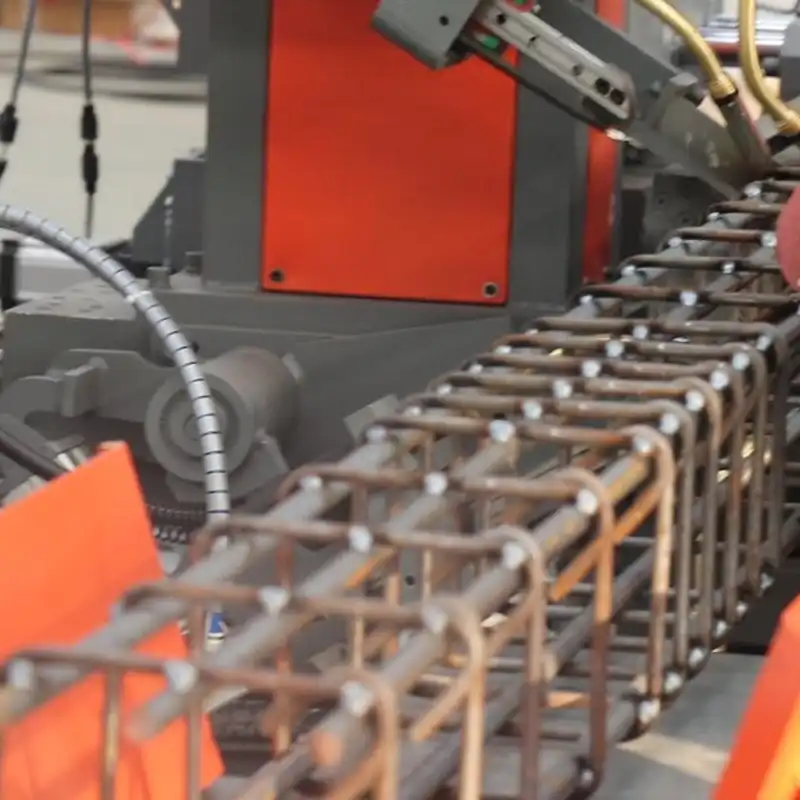
One of the most persistent problems in steel fabrication is how to make reinforcement cages quickly without losing accuracy in size. The Stirrup cage welding machine LYGL-350D solves this problem directly. This fully automatic, PLC-controlled system was made by Shandong Zhongji Luyuan Machinery Co., Ltd. It can handle stirrup bar diameters of φ6 to φ12 mm, cage diameters of 150 to 350 mm, and 10 to 20 finished cages per hour. One person can run the whole line, and when the cages come out of the machine, they are all straight, at the right angle, and not bent in any way, ready to be put together on site right away.
Understanding the Challenges in Traditional Cage Welding Processes
For decades, manual cage welding has been used in the construction industry. However, as project volumes rise, it becomes clear that this method has its limits. In recent years, automated technology has become very popular in bridge, train, and high-rise building projects. This is because it helps people understand where traditional methods fail.
Inconsistent Weld Quality
When you weld by hand, your skill is very important. Joint strength changes from cage to cage when workers switch jobs, get tired, or change the angle of the wire feed. In projects that follow GB/T 1499.2 or similar structural standards, welds that don't match up cause expensive inspection failures and rework cycles that push back already tight schedules.
Slow Throughput Under Project Pressure
A skilled team of people working by hand usually finishes a lot fewer cages in a shift than an automated queue. For big building projects like metro cut-and-cover sections, highway bridge props, and tunnel lining supports, hundreds of the same cages need to be delivered within a set time. Manual work can't keep up without adding more people to the crew, which drives up the cost of labour.
Safety and Operator Fatigue Risks
Overhead or side welding positions that are used over and over again can put stress on the muscles and joints and raise the risk of arc-flash accidents. In the US and many foreign markets, workplace safety laws make people responsible for a lot of money when they get hurt on the job. This makes the method that requires a lot of work both technically and financially risky.
How LYGL-350D Addresses These Problems: Core Features and Operational Principles
It wasn't changed from a general-use welding platform; the Stirrup cage welding machine LYGL-350D was made to make stirrup cages. Every part of its specs shows how focused it is. For techies, these are the main things that make this machine good:
- The operator uses a touch screen to set the cage's diameter, stirrup spacing (30 mm), main bar count (3–6 pieces), and length (standard 6 m, but can be changed). The machine is fully automatic and controlled by a PLC. Every weld cycle is done by the machine without any help from a person. From the first cage to the last, the stirrup diameter tolerance and angular position stay the same.
- When you use 100 KW of welding power and gas shielding, you can make clean, slag-free joints that go deep. With an estimated power usage of 14.5 KW, the system strikes a balance between the strength of the weld and the cost of energy, which is important for processing centers that work multiple shifts.
- Small 16 m × 3 m footprint: The machine has a known floor plan that fits normal manufacturing bays without major civil modifications, even though the length of the handling cage can be up to 6 m (customisable).
- Support for triangular, rectangular, and other custom-shaped stirrups: Most other systems only work with circular shapes. Because it is a CNC machine, the LYGL-350D can handle triangular designs. This means that one production line can make more types of structure parts.
These professional skills directly lead to measurable results in the work that is done. In 10 hours, the system can make 24 half-cages, each one 6 meters long. Because it only needs one operator and makes square and stable-sized cages, it doesn't need hours of fixing and rewelding by hand like the old lines do.
Comparing LYGL-350D with Other Welding Solutions in the Market
When purchasing automated equipment for reinforcement cages, teams usually look at three groups: manual welding crews, general-purpose robotic welding cells, and cage welding machines that are specifically made for cages. Each one is at a different point on the cost-performance curve.
Manual Welding Teams
Manual welding, which requires a lot of work, has the lowest initial equipment cost but the highest labour cost per unit over time. Every year, the payback period for automated equipment gets shorter because construction wages keep going up in North America and export markets. Manual welding also causes the quality variation we talked about earlier, which adds secret costs for repairs that don't show up in the first budget comparisons.
General-Purpose Robotic Welding Cells
Robotic arms are very flexible, but when the shape of the cage changes, they need a lot of programming time. Their initial cost is usually higher, and the complexity of integrating things like tools, fixtures, safety guards, and robot programming makes commissioning take longer. For rebar processing sites that only make a few different types of column and beam cages, that extra freedom doesn't add much value.
LYGL-350D Purpose-Built Cage Welding Machine
The Stirrup cage welding machine LYGL-350D is in the best spot for medium- to large-sized fabrication factories. It can work with leg bars that are 6 to 12 mm wide and main bars that are 10 to 20 mm wide. This means that it can handle most column and beam cage specs found in industrial and building projects. The power supply is a normal three-phase 380V/50Hz, the air supply pressure needs to be only 0.8 MPa, and the PLC interface lets you quickly change parameters between cage types without having to learn how to program. The end result is a system that can be run by a single trained technician for the whole shift.
Practical Guide to Implementing LYGL-350D in Your Factory
To get the machine up and running at full speed, there is a clear order to follow. Along with the delivery, Zhongji Luyuan provides detailed technical papers, helps you set up on-site, and trains the workers. A lot of people who have used it say they hit their output goals not long after installing it.
Site Preparation
A 16 m x 3 m floor area should be set aside. The floor should be level and strong. At the machine spot, make sure there is a 380V/50Hz three-phase power source and 0.8 MPa of compressed air. These are common tools that most production shops have, so the costs of civil preparation are usually very low.
Operator Training and Startup
One person is in charge of the whole job. People who train with Zhongji Luyuan learn how to set up the PLC, change the welding power based on the rebar's width, pick the stirrup's shape, and do regular maintenance checks. Even people who have never used a CNC before can quickly get to work because the touch-screen interface is simple to understand.
Routine Maintenance
A clear link exists between the state of the welding tool and the quality of the joint. As per the care plan, the wires should be regularly cleaned and checked for rust. Because the PLC system keeps track of operating cycles, it's easy to plan maintenance that will keep things running smoothly before they stop.
Making the Purchase Decision: How to Source the LYGL-350D?
The LYGL-350D is sold by Shandong Zhongji Luyuan Machinery Co., Ltd. in South Korea, Malaysia, Thailand, Kazakhstan, Israel, South Africa, and over 100 other places. The business has 50 million yuan in listed capital and works with China Railroad, China State Construction, China Communications Construction, and China Nuclear Power Construction Corporation. A quality management system called ISO 9001 is used, and each unit is tested for 48 hours straight before it is sent out.
People who want to buy can get an official quote, a detailed data sheet, or a demonstration of the equipment by calling the sales team directly. Direct bargaining lets you buy in bulk, change the cages' length, and set up tools just the way you need them for a job. At the proposal stage, shipping times and rules for service after the sale are agreed upon. This tells procurement managers what they need to know to plan the project budget planned.
Conclusion
As job requirements get stricter and wages go up, it makes more sense to use an automated system instead of cage welding by hand. With one person running the whole queue, the Stirrup cage welding machine LYGL-350D can make stirrup cages that are the right size and are built well faster than human teams can. It is a good choice for fabrication companies that work in the energy, rail, industrial, and infrastructure sectors because it has a PLC control system, 100 KW gas-shielded welding, can handle different stirrup geometries, and only takes up 16 m × 3 m of space. If buying teams are looking for tools to make reinforcement cages, the LYGL-350D is a good choice that has a lot of support.
FAQ
What production output can I realistically expect?
After 10 hours of work, the LYGL-350D moves 24 6-meter-long cage pieces. That means that, on average, 10 to 20 cages can be made every hour, depending on the size of the cage and the distance between the stirrups. These numbers are based on normal business conditions with one operator.
What cage geometries does the machine support?
The machine can handle stirrup arrangements that are round, triangular, rectangular, and other shapes. You can change the number of main bars from 3 to 6. The stirrup spacing starts at 30 mm, and the minimum main bar spacing is 100 mm. These factors cover most of the requirements for column stirrup cages and beam hoops in business and infrastructure building.
How many operators does the production line require?
The machine can handle stirrup arrangements that are round, triangular, rectangular, and other shapes. You can change the number of main bars from 3 to 6. The stirrup spacing starts at 30 mm, and the minimum main bar spacing is 100 mm. These factors cover most of the requirements for column stirrup cages and beam hoops in business and infrastructure building.
What maintenance does the welding system require?
Regular checks should be made on gas-shielded welding supplies and the condition of the electrodes. To support planned repair times, the PLC system keeps track of working cycles. Zhongji Luyuan sells original spare parts all over the world and offers remote technical support to keep downtime to a minimum.
Can the cage length be customized beyond 6 m?
Yes. The standard length of the cage is 6 m, but the machine can be set to any length needed for the job. When getting a quote, customers should say what lengths of cages they want so that the right configuration can be confirmed before the cages are made.
Ready to Upgrade Your Cage Welding Line? Contact Zhongji Luyuan
Zhongji Luyuan is a reliable company that sells the Stirrup cage welding machine LYGL-350D. It has been used in infrastructure, rail transit, and commercial construction projects in almost 100 countries. We have a sales team ready to give you project-specific technical advice, an official equipment quote, and setup suggestions based on the amount of work you need to do. You can visit us at shandongluyuan.com or email us at sales2@shandongluyuan.com with your question. Let's figure out what your business needs.
References
1. American Welding Society. Structural Welding Code — Reinforcing Steel (AWS D1.4). 2023.
2. American Concrete Institute. ACI 318-19: Building Code Requirements for Structural Concrete. 2019.
3. International Federation for Structural Concrete (fib). fib Model Code for Concrete Structures 2010. 2013.
4. Steel Construction Institute. Steel Designers' Manual, 7th Edition. Wiley-Blackwell, 2011.
5. Construction Industry Institute. Prefabrication and Modularization: Increasing Productivity in the Construction Industry. CII Research Report 171-12, 2012.
6. National Institute of Standards and Technology (NIST). Measurement Science Roadmap for Metal-Based Additive Manufacturing and Fabrication Processes. NIST Technical Note 1823, 2013.