Industrial Rebar Bending Machine Improves Efficiency for Railway, Bridge, and Energy Project Contractors
Sep 30, 2026
When large-scale infrastructure projects demand thousands of precisely bent steel bars daily, the right equipment decides whether a contractor meets the schedule or falls behind. An industrial rebar bending machine is a heavy-duty mechanical system that cold-bends reinforcement steel into the exact angles and shapes required by structural drawings. For railway contractors, bridge builders, and energy project developers, this equipment directly reduces labor costs, eliminates bending errors, and keeps production running at the pace that modern infrastructure demands.
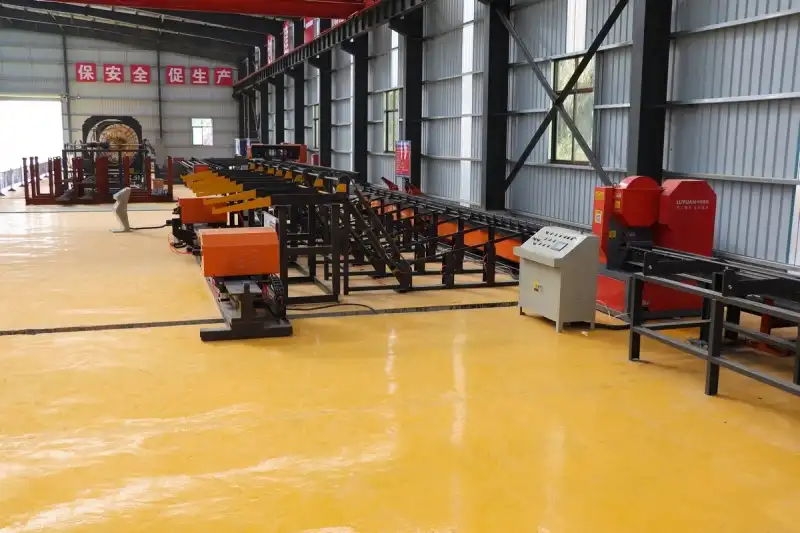
\How Industrial Rebar Bending Machines Enhance Project Efficiency
The volume needs of a high-speed train foundation or a nuclear power containment building are just too big for manual bending methods to handle. A modern steel bending machine completely changes the situation by replacing the need for manual work with high-speed, repeatable mechanical accuracy.
Eliminating Throughput Bottlenecks
A single CNC rebar maker can work with hundreds of bars at the same angle during a shift, while a group of workers could only make a few pieces of varying quality. A study from the McKinsey Global Institute says that building has been less productive than other industries for decades. One of the easiest ways for site managers to fix this is to automate the process of processing rebar.
Reducing Labor Dependency and Cost
Since 2020, the cost of construction labor in the US has gone up a lot. By giving machines the job of doing repeated bends, contractors were able to cut down on the number of skilled workers they needed on site without lowering output. One medium-sized bridge builder said that using CNC bending tools cut the number of hours spent handling rebar by 35%.
Maintaining Accuracy Across Large Batches
On CNC-controlled models, angles can be accurate to within ±1 degree. That level of accuracy is needed for seismic-resistant stirrups that are used in bridge piers or railroad viaducts; it's not a choice. A steady output over thousands of pieces also cuts down on material waste from discarded or modified bars.
These gains in accuracy, throughput, and cost control add up over the whole rebar span of a job. For a contractor whose work cycles last 12 hours, the measured time savings mean that milestones can be met earlier.
Comprehensive Guide to Types and Features of Industrial Rebar Bending Machines
We need different tools for different projects. Knowing the different types and how they work technically helps procurement teams make choices that meet the needs of the field.
Manual, Hydraulic, Electric, and CNC Models
Manual models are used for light-duty or low-volume jobs. Large-diameter bars can be bent with a lot of force on hydraulic bending tools, which is why they are often used on bridge and tunnel sites. For mid-range diameters, electric types strike a good mix between efficiency and lower energy costs. For precast component factories and metro train projects, industrial rebar bending machines are necessary because they have customizable angle control, spring-back compensation, and multi-shape memory.
Key Technical Parameters
Standard industrial benders can handle bar widths from 6mm to 55mm and are powered by motors ranging from 3kW to 7.5kW. High-quality bending pins and rollers have a Rockwell Hardness rating of HRC 58–62. This is because they are made by forging alloy steel and treating it with vacuum heat. This makes the service last longer than 10,000 hours of use. With oil-sealed gearboxes and dual-pedal bidirectional control, the machine can work 24 hours a day, seven days a week, even in harsh site conditions.
Mobile Versus Stationary Equipment
Stationary models work well in places with a set production line, like steel processing centers and concrete plants that work with a lot of steel. When rebar needs to be processed close to where it is being installed, like at highway interchanges, tunnel portals, and bridge abutment zones, mobile or semi-mobile units work better.
Matching the type of equipment to the layout of the site and the amount of work that needs to be done avoids both under-investment and over-specification. Contractors can avoid expensive equipment swaps in the middle of a job if they know these differences before they buy.
Key Considerations When Selecting Rebar Bending Equipment for Railway, Bridge, and Energy Projects
When you pick the wrong machine for a hard infrastructure job, you cause delays that are hard to fix. The process of choosing should be organized and based on clear project needs that can be measured.
Matching Capacity to Project Scale
Large bars that are bent to very tight tolerances are needed for a tunnel lining cage. For example, to build a nuclear power plant, HRB500 grade steel may need to be worked on, which requires tools with more force and longer life. Before buying, buyers should figure out how many bars they will need each day, the range of diameters they need, and the shapes of the bends they need for each stage of the job.
Hydraulic Versus Electric: A Practical Comparison
Because they make more torque at slower speeds, hydraulic benders work best with bars that are bigger than 40 mm in diameter. When the diameter is medium, electric types work better and cost less to maintain because they have fewer fluid components. For projects with a range of diameters, some builders choose an electric CNC model and add a hydraulic unit for heavy-section work.
Supplier Reliability and After-Sales Support
When equipment breaks down on a bridge project, it doesn't just stop work; it also changes when concrete is poured, when cranes are booked, and who works on what teams. That risk is greatly reduced by choosing a maker with a history of good after-sales service, readily available spare parts, and qualified user training. Before making a purchase order, buyers should make sure that the company is ISO 9001 certified, look at project examples, and make sure that the parts they need are available.
These three things—capacity fit, choice of drive system, and provider support—help you make a good decision about what tools to buy for any big infrastructure project.
Best Practices for Operation, Safety, and Maintenance to Maximize Machine Lifecycle
Owning the right machine produces results only when the team operates and maintains it correctly. Proper procedures protect both personnel and the equipment investment.
Step-by-Step Operational Guidance for New Operators
New operators should start with a no-load test run before processing any material. The CNC program should be verified against structural drawings before each batch. Operators must confirm that the center pin and bending roller are correctly sized for the bar diameter in use, and they should check the spring-back compensation setting for the material grade—HRB400 and HRB500 have different elastic recovery characteristics.
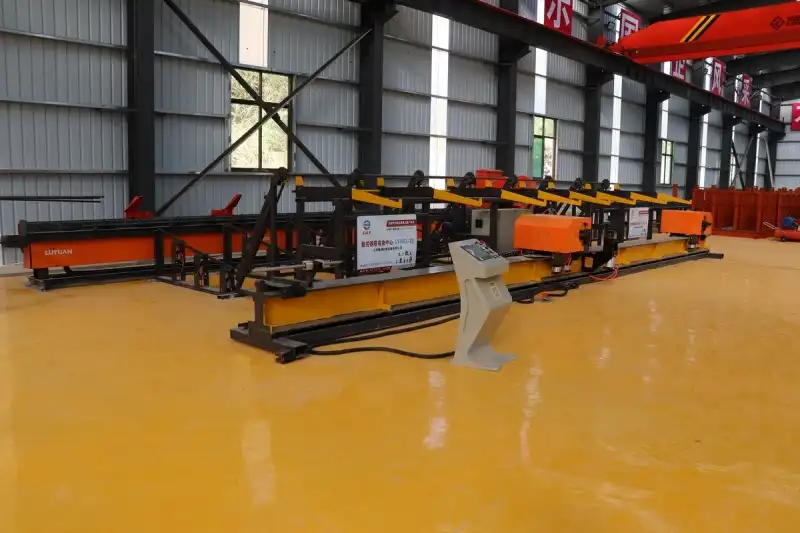
Safety Protocols That Protect Personnel
Operators must wear steel-toed boots and protective gloves rated for sharp steel edges. No personnel should stand within the swing arc of the bending arm during operation. Emergency stop buttons must be tested at the start of each shift, and the grounding continuity of the electrical panel must be verified weekly. OSHA construction site standards require these checks on all powered equipment.
Maintenance Schedule to Extend Service Life
Here is the recommended maintenance schedule based on manufacturer specifications:
- Every shift: Inspect bending pins for wear or deformation; check for oil leaks around the gearbox seal.
- Every 500 hours: Change gear oil for the first time after initial break-in; clean debris from the working disk channel.
- Every 1,500–2,000 hours: Perform a full gear oil change; calibrate the angle limit switch against a precision template; inspect motor brushes or inverter connections.
- Annually: Conduct a full load test at maximum rated capacity; verify insulation resistance on all electrical circuits; replace any worn tooling before it causes angle deviation.
Following this schedule consistently keeps the industrial rebar bending machine performing at rated capacity and prevents the unplanned stoppages that cost contractors more than the maintenance itself.
Why Investing in Advanced Rebar Bending Equipment Is a Strategic Move for Infrastructure Contractors
The financial case for upgrading from manual or outdated equipment goes beyond the per-piece labor savings. Advanced CNC steel processing machines deliver returns across multiple cost categories over a project's full lifecycle.
Precision Reduces Material Waste and Rework
When every bar bends to the correct angle on the first pass, scrap rates fall. On a large bridge project consuming thousands of tons of reinforcement steel, even a 2% reduction in scrap translates into tens of thousands of dollars saved. Precise bends also reduce rework time on-site, which affects crew scheduling and concrete pour timing.
Smart Technology Supports Project Management
CNC systems with PLC (Programmable Logic Controller) integration can log production counts, flag tooling wear, and interface with site management software. This gives project directors and equipment managers real-time data on processing output, which supports schedule forecasting and procurement planning.
Competitive Advantage in Tendering
Contractors who demonstrate automated, precision rebar processing capability in their project proposals often score higher on technical evaluation sections of competitive tenders. For government infrastructure tenders that include technical scoring alongside price, this distinction directly affects bid success rates.
Advanced bending equipment is not simply a cost item on a capital expenditure list—it is an operational asset that affects project margins, schedule reliability, and long-term business positioning.
Conclusion
Industrial rebar bending machine technology has come a long way since the days of using hand tools on building sites. When energy, railroad, and bridge contractors have to compete on both price and schedule, buying the right CNC bending equipment can help them get better results, keep costs down, and be more accurate. Zhongji Luyuan was formed in 2016 with 50 million yuan in listed capital. Its products are designed to meet the needs of large-scale infrastructure projects, and it works with companies like China Railway, China State Construction, and China Nuclear Power Construction Corporation. Their tools and knowledge are a perfect fit for the needs of the U.S. market.
FAQ
1. What is the difference between a CNC rebar bending machine and a conventional model?
A CNC model uses a programmable controller to set angles, adjust for material spring-back, and store multiple bend programs. A conventional model requires manual angle setting for each bend. For high-volume or multi-shape production, CNC equipment significantly reduces setup time and operator error.
2. What safety features should an industrial bending machine include?
Essential safety features include an emergency stop button, a dual-pedal control system, protective guards around the bending arm swing arc, and a grounded electrical panel with verified insulation resistance. Manufacturers should also provide operator training documentation and comply with applicable electrical safety standards.
3. Can one machine handle the rebar sizes used in both railway and bridge projects?
A machine rated for 6mm to 55mm diameter covers virtually all bar sizes used in railway track beds, bridge pier cages, and foundation mats. For bars above 40mm, buyers should confirm the motor torque rating and verify that the tooling hardness meets HRC 58–62 to handle high-tensile HRB500 grade steel without deformation.
4. How many bars can be bent simultaneously?
This depends on the combined cross-sectional area. A machine rated for 40mm single-bar capacity can typically process three 12mm bars or two 16mm bars simultaneously, provided the total area stays within the rated limit.
5. What power supply does the machine require?
The standard configuration is 3-phase 380V/50Hz. Manufacturers can supply motors configured for 440V or 60Hz to match North American industrial grid standards.
Get a Direct Quote from Zhongji Luyuan
Zhongji Luyuan has sold CNC rebar processing tools to contractors in almost 100 countries, some of whom are partners in big building projects. Get in touch with our team right away if your project needs a dependable industrial rebar bending machine supplier that has worked well in the past. You can email us at sales2@shandongluyuan.com to get prices and specs that are specific to your project.
References
1. McKinsey Global Institute. Reinventing Construction: A Route to Higher Productivity. McKinsey & Company, 2017.
2. American Institute of Steel Construction. Steel Construction Manual, 15th Edition. AISC, 2017.
3. International Organization for Standardization. ISO 9001:2015 Quality Management Systems — Requirements. ISO, 2015.
4. U.S. Bureau of Labor Statistics. Construction Labor Cost and Productivity Report. BLS, 2023.
5. American Concrete Institute. ACI 318-19: Building Code Requirements for Structural Concrete. ACI, 2019.
6. Occupational Safety and Health Administration. OSHA 29 CFR 1926 — Safety and Health Regulations for Construction. U.S. Department of Labor, 2022.