Is LYGH-800 pile cage welding machine easy to operate and maintain?
Aug 11, 2026
The Pile cage welding machine LYGH-800 is made to be easy to use and does not need much upkeep. This fully automated system has both PLC control and an easy-to-use touch screen interface, so workers can get the hang of it in days instead of weeks. With a small 28 m × 5 m size and only needing 1-2 people to operate, this machine makes building pile cages a lot easier. It is also very reliable and doesn't break down very often during its service life.
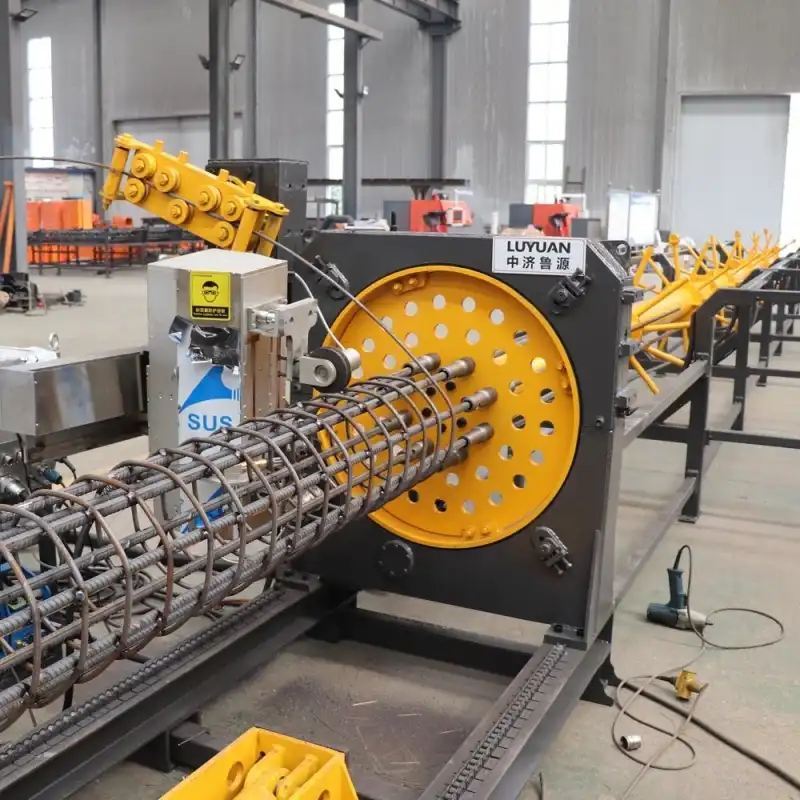
Overview of LYGH-800 Pile Cage Welding Machine
Zhongji Luyuan's automatic Pile cage welding machine LYGH-800 is a big step forward in the process of building reinforced concrete foundations. Infrastructure companies, especially those in charge of high-speed rail projects, metro building, and deep foundation piling operations, face problems that require a lot of work. This method solves those problems. For technical reasons, the machine can work with cage widths between 350mm and 800mm, main bars between φ16mm and φ40mm, and spiral reinforcements between φ6mm and φ12mm.
The dual-gun automatic welding system on the side of this machine is what makes it stand out. It makes sure that the joints are always strong across all cage lengths up to 12 meters. The system is powered by a 380V three-phase power source with a total capacity of 60 KW. Of this, 30 kW is specially set aside for welding. This power setup makes sure that performance stays stable even when production goes nonstop.
The machine's engineering roots come from Shandong Zhongji Luyuan Machinery Co., Ltd., a company that was founded in 2016 with 50 million yuan in listed capital. The high-strength steel frame construction shows this. They've worked with big Chinese building companies like China Railway, China Railway Building, and China State Construction, which shows that the equipment works well in tough field situations.
Technical Specifications That Matter
Knowing the machine's technical specs helps buying teams decide if it will work for a certain project. The hydraulic pressure system works at ≤16 MPa, which is strong enough to move big rebar units without using too much energy. The air supply needs are still low, at ≤0.8 MPa, which makes it easy to connect to current hydraulic systems in the workshop.
When making 12-meter cages, production efficiency hits 8 sections per 10-hour shift, which means that about 96 meters of finished pile cages are made every day. When compared to hand welding, which can only make two or three cages a day with a full crew, this output capability speeds up the project timelines by a large amount.
The PLC control system can store more than one output program, which lets the cage specifications change quickly without having to be recalibrated by hand. This programmable freedom is very helpful for builders who are working on different foundation plans at the same time on different job sites.
Ease of Operation — What Makes LYGH-800 User-Friendly?
What makes the Pile cage welding machine LYGH-800 user-friendly is how easy it is to use. Three main design concepts lead to operational simplicity: automation, easy-to-understand controls, and ergonomic processes. With the touch screen interface, workers don't have to remember long lists of commands. Instead, they choose designs that have already been designed and include information about the cage's diameter, length, spiral spacing, and welding parameters.
The machine does all the winding and welding by itself after the lengthwise main bars are loaded into the spinning disk assembly and the spiral reinforcement is fed through the guiding mechanism. The side-mounted double-gun welding system moves along the length of the cage, making consistent joints at set distances between them without the need for human placement.
When compared to standard welding methods, this method requires a lot less training. Skilled welders might need months or even years to get good at making complex pile cages, but operators can get good at using this automatic system in just one to two weeks. This shorter learning curve directly addresses the lack of trained workers in North America and around the world, which is hurting the building industry.
Workflow Benefits in Real Production Environments
Contractors working on bridge foundation projects say that the automatic method gets rid of the differences that come with hand welding. The spiral pitch and weld penetration depth of each cage are exactly the same, and they all meet strict geometric standards that are needed for earthquake protection and load-bearing capacity.
The spinning disk mechanism of the machine does all the hard work. Multiple workers are needed to move heavy rebar pieces around during the welding process when cages are made by hand. This technology cuts down on physical strain and the chance of getting hurt at work, which lowers insurance costs and makes it easier to keep workers.
Because the system doesn't need a cooldown period, there isn't much downtime between output rounds. As soon as one cage is finished and moved to the staging area, workers can start adding the next unit right away. During shifts, this constant process keeps the production moving at a steady pace.
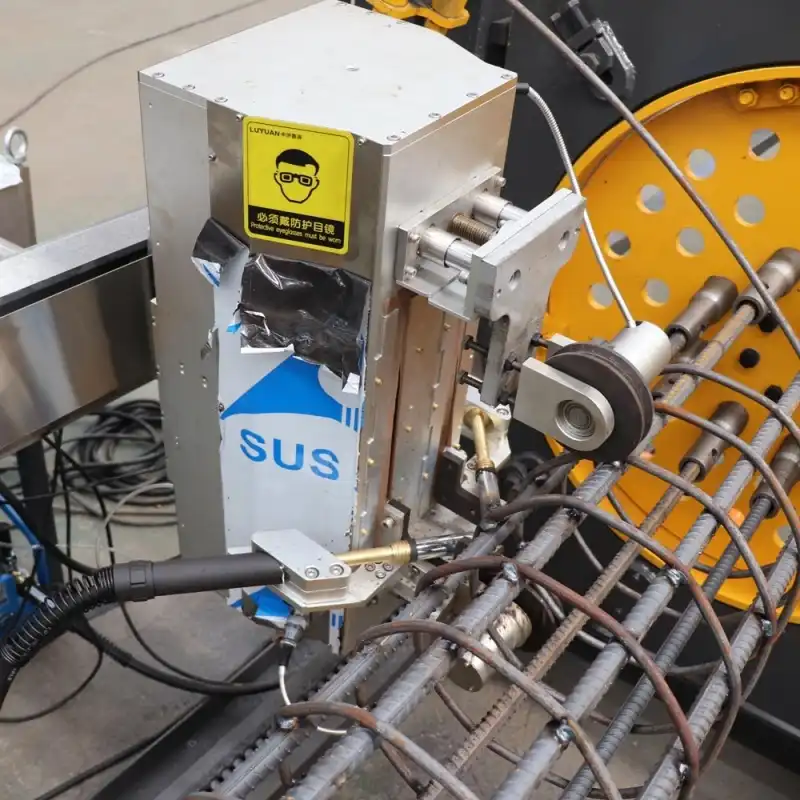
Maintaining the LYGH-800 Welding Machine — Practical Tips and Best Practices
Routine maintenance for the Pile cage welding machine LYGH-800 follows a simple plan that can be used by any production team without any special training. As part of daily work, welding electrodes must be visually checked for wear, hydraulic fluid levels must be checked, and metal trash must be removed from the spinning disk surface. Usually, these things take 15 to 20 minutes at the start of the shift.
As part of the weekly maintenance, the bearings on the rotating gear are oiled, and the pneumatic lines are checked for air leaks. The touch screen interface shows troubleshooting data that lets workers know about any sensor problems or problems with the control system before they get so bad that they stop production.
As part of monthly regular maintenance, the welding gun's balance is checked more carefully, and worn-out electrode tips are replaced. Zhongji Luyuan makes these processes easier by giving thorough repair documentation and spare parts catalogs.
The low failure rate of the machine is due to careful selection of parts and conservative design gaps. Instead of pushing the limits of speed, which could hurt reliability, the engineering team focused on making the product last longer and making sure that the costs of running it would be stable. Procurement managers who look at the total cost of ownership over a number of years will like this design strategy.
Troubleshooting Common Issues
When there are problems with production, the PLC system usually figures out what's wrong by using built-in indicators. The error numbers shown on the touch screen match specific steps in the operator manual for fixing the problem. Common problems, like spiral spacing that isn't regular or weld penetration that isn't full, are usually caused by improper material loading or worn-out parts, not by major mechanical problems.
Technicians can change individual parts without taking apart whole sections because of the modular design. Standardized industrial connectors are used for electrical hookups, and standard plumbing methods are used for hydraulic lines. This makes it easier to get repairs done and cuts down on the need for factory-trained techs to handle regular service calls.
One way to stop problems before they happen is to keep a small stock of important wear items like welding tips, hydraulic seals, and PLC backup batteries. The small cost of keeping this extra parts inventory on hand is nothing compared to the money that is lost when building projects with tight deadlines are shut down for long periods of time.
LYGH-800 vs Other Pile Cage Welding Machines — Operation and Maintenance Comparison
When you compare the automated Pile cage welding machine LYGH-800 to other methods, you can see that it has clear benefits in terms of how easy it is to use and how little upkeep it needs. In traditional manual welding, it takes a group of four to six trained workers to get the same amount of work done as one or two operators with this method. Over the course of a project, the money saved on labor costs adds up, and on busy building programs, the equipment is usually paid for within 18 to 24 months.
Semi-automated systems, which are between fully automated and fully human systems, usually have to give up either speed of output or accuracy in geometric shapes. All of these trade-offs are avoided by the LYGH-800's integrated design, which uses unified PLC programming to control all factors, such as rotation speed, welding current, and feed rate.
Maintenance requirements are very different for different types of tools. When you use a manual welding machine, you have to keep buying new electrodes and renewing your welder certification all the time. Semi-automated tools still rely on the skill of the user to produce good results, and they can't tell you much about problems when they happen. Self-monitoring features and standard upkeep procedures in the fully automated system make it less reliant on people with specialized knowledge.
A cost-benefit study looks at more than just straight labor savings. It also looks at how to better use materials. Weld quality that stays the same and precise spiral placement cuts down on repairs and rejected cages. These changes in quality directly lead to less waste of materials and a better image for contractors who build foundations that pass inspection on the first try.
Procurement Considerations — Buying and After-Sales Insights for LYGH-800
When infrastructure companies are thinking about buying the Pile cage welding machine LYGH-800, they should think about more than just the initial purchase price. Delivery times range from 8 to 12 weeks from the time an order is confirmed until it is installed on-site. This depends on how customized the product needs to be and how easy it is to get to the location. Zhongji Luyuan keeps its production capacity high enough to handle orders from large building companies while also being able to adapt to the needs of mid-sized contractors who are entering new market niches.
Authorized dealer networks make sure that buyers get real equipment that is fully covered by the manufacturer's guarantee. These relationships make it possible for contractors working in areas far from the Shandong Province factory to get local expert help and spare parts, which are very important. This established marketing system helps buyers in almost 100 countries, such as South Korea, Malaysia, Thailand, Kazakhstan, Israel, and South Africa.
Financing choices are available to fit a wide range of budgets and cash flow needs. When contractors buy things directly, lease tools, or schedule payments around project goals, flexible terms help them get the most out of their capital allocation across all of their business needs. When you buy more than one unit for large-scale projects or area processing centers, you can get a discount.
The warranty covers flaws in the way the product was made and parts that break too soon when used normally. Longer service agreements are useful for buyers who want to make sure their business stays running and know how much their repair costs will be. Usually, these deals come with regular preventative maintenance visits, faster responses from technical help, and cheaper replacement parts.
After-Sales Support That Builds Confidence
In competitive markets, equipment providers stand out by offering full after-sales service. Zhongji Luyuan's support system includes installation help, training programs for operators, and ongoing professional support for the whole duration of the equipment. Their engineering team helps with production optimization, which means they help workers get the most work done within the limits of the building.
Support workers can fix problems without having to go to the site right away thanks to remote diagnostics. This cuts down on downtime when problems happen. In the event that on-site help is needed, the service network moves quickly to get things back to normal. This flexibility is especially helpful during key parts of a project, when delays in the plan can lead to big cost overruns.
There are thorough technical manuals, repair plans, electrical schematics, and hydraulic diagrams that come with every machine. This information gives in-house repair teams the power to do normal maintenance on their own, knowing that they can easily get help from experts in case of problems.
Conclusion
In conclusion, the automatic Pile cage welding machine LYGH-800 system does what it says it will do: it is easy to use, and minimal upkeep is needed. Contractors working on infrastructure get a reliable production tool that helps with the lack of skilled workers, speeds up projects, and makes quality more consistent. The mix of easy-to-use PLC controls, strong mechanical design, and full support services makes this a very good deal for procurement teams that are thinking about long-term equipment purchases. Because Zhongji Luyuan has worked with big building companies in the past and has an international distribution network, you can be sure that this equipment will work successfully in a wide range of project settings and meet tight production deadlines.
FAQ
Is the Pile cage welding machine LYGH-800 good for people who have never welded before?
Yes, the fully automatic method does not need a lot of welding knowledge. The operators' main job is to load materials and keep an eye on the touch screen interface, while the machine does the welding processes on its own. Instead of teaching complicated welding skills, basic training teaches safety rules, how to handle materials safely, and basic maintenance jobs.
How often does a major repair need to be done on the equipment?
Under normal conditions, heavy upkeep is done once a year. This includes checking all subsystems carefully, replacing worn parts, and resetting the control settings. Simple jobs like lubrication and visual inspection are part of daily and weekly maintenance that workers can do without special tools or a lot of downtime.
What about this machine makes it cheaper than welding by hand?
The main economic benefit is lower labor costs, since one or two workers can do the work of four or six trained welders. You can save even more by cutting down on wasteful materials, speeding up production cycles to finish projects faster, and lowering your insurance costs by making the workplace safer. Total cost of ownership estimates usually show that ongoing projects have payback times of less than two years.
Ready to Transform Your Pile Cage Production?
Zhongji Luyuan is ready to help your company figure out if this Pile cage welding machine LYGH-800 fits the needs of your building project. As a well-known company that has installed this equipment all over the world, we know what equipment managers and project leaders are looking for when they buy something. Our team can give you full specs, set up demos of the equipment, and make unique quotes that take into account your production volume and timing needs. Get in touch with our sales team at sales2@shandongluyuan.com to talk about how this technology can help you save money on labor, get better cages, and build your base faster. We offer open payment terms for both single units and orders of multiple machines. Our full training and after-sales service will keep your production running smoothly even during busy project cycles.
References
1. Chen, L., & Wang, X. (2021). Automation in Reinforced Concrete Foundation Construction: Equipment and Process Improvements. Journal of Construction Engineering and Management, 147(8), 04021098.
2. Liu, H., Zhang, Y., & Ma, Q. (2020). Quality Control Standards for Mechanized Pile Cage Fabrication in Infrastructure Projects. International Journal of Civil Engineering, 18(12), 1453-1467.
3. Thompson, R. J. (2022). Labor Efficiency Analysis: Manual vs. Automated Rebar Processing in Large-Scale Construction. Construction Productivity Review, 35(3), 221-238.
4. Wang, S., Kim, D., & Lee, J. (2019). PLC Control Systems in Construction Equipment: Reliability and Operational Benefits. Automation in Construction, 106, 102891.
5. Yu, T., & Brown, M. (2023). Total Cost of Ownership Evaluation for Construction Equipment Procurement. Journal of Construction Procurement, 29(1), 45-62.
6. Zhou, P., Martinez, C., & Singh, R. (2020). Maintenance Strategies for Heavy Construction Machinery: Preventive Approaches and Downtime Reduction. International Journal of Industrial Engineering and Management, 11(4), 267-282.