The ingenious uses of the rebar cage welding workstation
Aug 28, 2026
Modern infrastructure projects demand speed, precision, and unwavering quality. A rebar cage welding workstation transforms how contractors fabricate reinforcement structures by automating a process that traditionally relied on manual labor and inconsistent techniques. These specialized systems integrate CNC control technology with advanced gas-shielded welding methods to produce cylindrical steel cages used in bridge piers, deep foundation piles, and high-rise construction. Unlike conventional manual assembly on trestles, automated workstations eliminate geometric errors, reduce material waste, and address the critical shortage of certified welders facing the U.S. construction industry today.
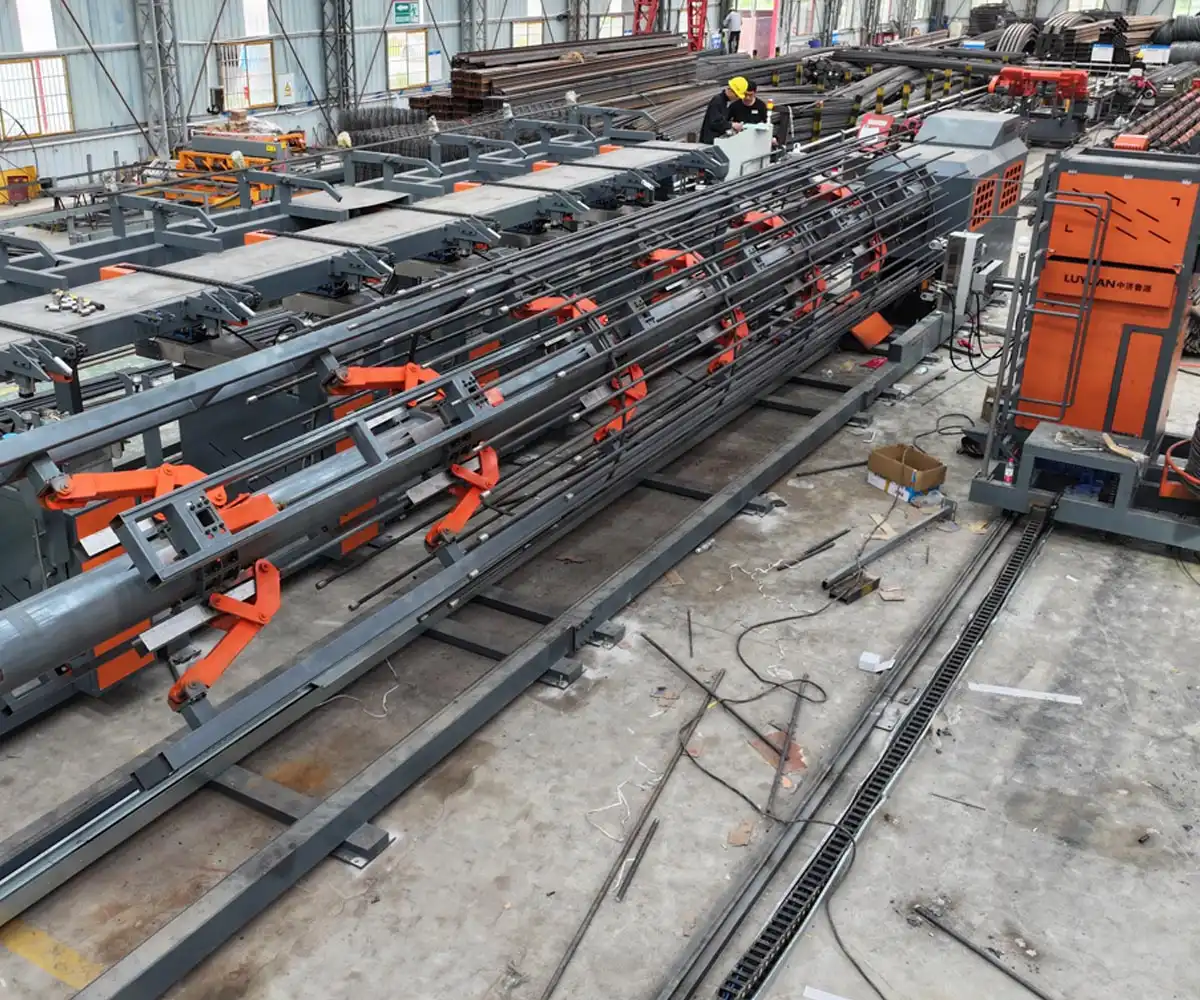
Understanding the Rebar Cage Welding Workstation
Core Functions and Automated Welding Processes
Automated equipment for making cages uses coordinated mechanisms to place longitudinal rebars and spiral cross-reinforcement at exact intervals. This method is shown by Zhongji Luyuan's LYZD-GJL2500 model, which can handle main bar diameters from φ18 to φ40 mm and spiral bars from φ8 to φ16 mm. The system uses a PLC touchscreen for control and gas-shielded welding technology to make 13 cages in a 10-hour shift, each one 12 meters long. This level of automation makes sure that every weld joint meets the standards of the AWS D1.4 structural welding code for reinforcing steel. This means that the entry depth and shear strength are the same at thousands of connection points.
Types of Workstation Configurations
There are three main versions on the market that are made for different operating scales. One person is all that's needed to run a fully automatic system, from bringing in the rebar to putting out the finished cage. Large contractors who build highway bridges or metro stations and need to make more than 10 cages a day should use these units. Semi-automated models strike a mix between cost and freedom by letting you change the spacing settings by hand while keeping the automated welding sequences. Smaller rebar processing centers that focus on custom orders with lots of changes to the specifications use systems that are integrated by hand. The diameter of the cage can be 300 mm for residential piling or 2500 mm for bridge foundation work. Modular frame designs let you add on to the length of the cage.
When looking at these choices, procurement managers need to make sure that the machine specs match up with the project schedules. If a nuclear power contractor needs very precise measurements, they would focus on servo-controlled positioning systems. On the other hand, a highway contractor that needs to produce a lot of things might focus on dual-drive motors and reinforced structural frames that can work continuously.
The Ingenious Uses and Benefits of Rebar Cage Welding Workstations
Enhanced Production Efficiency and Output Quality
Automated welding machines change the standards for how much rebar can be made. With a crew of five workers, traditional ways make about three to four cages per shift. With the LYZD-GJL2500, one user can make thirteen cages in the same amount of time. This efficiency comes from continuous spinning systems that keep the best welding speed at 2000 mm/min and automatic wire feed systems that don't need to stop to change the electrodes. The gas-shielded welding method stops oxidation and spatter buildup, which makes sure the joints are clean and will stick well to the concrete during pouring.
Another transformative benefit of a rebar cage welding workstation is quality consistency. Each cage comes out with a spiral pitch that is the same, within a tolerance of ±5 mm. This is important for distributing load in seismic zones. Automated systems also get rid of the variations that come with human welding. Things like tiredness, differences in skill level, and distractions in the work setting no longer affect the strength of the structure. For rail transit projects that need diaphragm wall reinforcement to be perfectly concentric, this consistency keeps expensive rework and schedule delays from happening.
Labor Cost Reduction and Operational Savings
When you look at how much labor costs for long-term building projects, the economic case for technology becomes strong. In the U.S. building industry, skilled welders make more than $35 an hour, plus costs for benefits, insurance, and training to make sure they follow the rules. Using manual methods, a normal bridge footing job that needs 500 reinforcement bars would cost about $70,000 in direct labor costs. This need is cut down to a single equipment user earning $28 an hour with automated desks, saving about $55,000 per project phase.
Besides saving on direct labor, operational efficiency also means lower site overhead. Construction plans are shortened when cages are made faster, which lowers the costs of temporary buildings, renting tools, and managing the project. The use of materials also gets better—automated cutting and positioning systems cut down on scrap by 15–20% compared to measuring and fitting by hand. For contractors who keep a steady flow of projects coming in, these combined savings usually pay off within 8 to 12 months, making the initial capital investment a smart business move.
Workplace Safety and Risk Mitigation
Handling rebar and welding by hand can cause injuries on construction sites, which costs a lot of money and lives. Automated workstations have built-in safety features that protect against a wide range of risks. Workers are protected from arc flash and UV light in enclosed welding zones with automatic shielding. Hydraulic support systems with a pressure rating of 16 MPa can handle the weight of the cage while it rotates, so structures that weigh several tons don't have to be lifted by hand. The PLC control system has emergency stop protocols that react within 0.3 seconds to problems that are noticed by sensors. This keeps equipment from getting damaged and keeps operators from getting hurt.
Long-term output is also increased by lowering the risk of repetitive strain accidents in the workplace. For long shifts, people who put together cages by hand have to constantly bend, lift, and place heavy steel parts. According to data from OSHA, this kind of physical work causes musculoskeletal disorders that make up 33% of workers' compensation claims in the construction industry. These accident rates drop by a huge amount when workers switch to automatic systems where they mostly just watch touchscreens and load materials at comfortable heights.
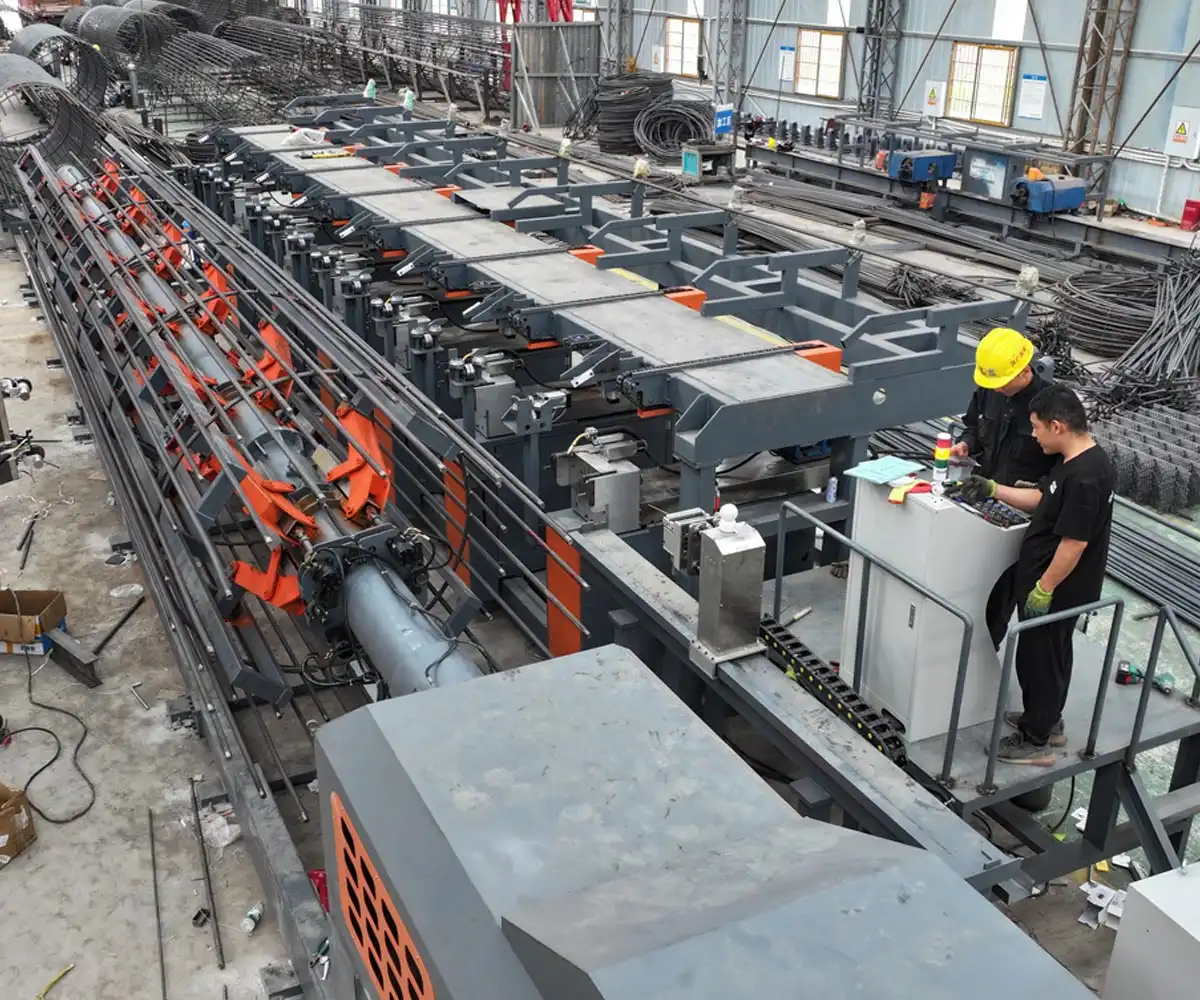
How to Choose the Right Rebar Cage Welding Workstation for Your Business?
Assessing Automation Levels and Investment Scope
Which plan to use—fully automatic or semi-automated—depends on how predictable the project number is and how much capital is available. Fully automatic systems like the LYZD-GJL2500 cost more to buy at first, but they save a lot of time and effort and produce consistent results. These units are good for known contractors who have ongoing infrastructure responsibilities, like building highways, public transit, or industrial facilities, and where the daily production needs are high enough to support the cost of the equipment. The 30-meter footprint and 30 kW power needs also mean that there needs to be stable three-phase electricity in dedicated fabrication facilities.
Semi-automated options for a rebar cage welding workstation are cheaper to get started with while still providing superior welding quality. More work needs to be done by an operator to move the cages and change the specifications, but these systems are good for businesses that are testing automation or taking on a lot of different custom orders. When looking at their choices, equipment managers should figure out the point at which they can break even by using the yearly cage needs. For projects that make less than 200 cages a year, semi-automated models may be more cost-effective. On the other hand, businesses that make more than 500 units a year benefit from the higher output of fully automated models.
Critical Selection Criteria and Performance Metrics
The uptime stability and long-term costs of running a machine are directly related to how long it lasts. Heavy steel frames keep the cage stable during high-torque rotation cycles. This keeps the cage geometry from becoming out of alignment. The Zhongji Luyuan systems' reinforced frame construction means they can be used continuously in harsh site conditions for years without losing their accuracy. People who want to buy should ask for load testing records that show readings of frame deflection at the highest reported capacity.
Patterns of energy use affect running costs over the span of an item of equipment. The 100 kW of power used for welding is mostly for welding itself. An extra 30 kW is used for hydraulic pumps, control circuits, and drive motors. Compared to older equipment, transformer designs that are more efficient and welding parameters that are better optimized can cut energy costs by 12 to 18%. Metrics for measuring production efficiency should take into account not only the theoretical welding speed, but also the actual cycle times for things like setup, welding, and cage removal. The LYZD-GJL2500 has been shown to be able to produce 13 cages per shift, which is a good baseline for planning capacity.
Evaluating Manufacturers and After-Sales Support
The technical ability of the supplier determines how well the equipment works in a variety of project conditions. The fact that Zhongji Luyuan has worked with China Railroad, China State Construction, and clients from almost 100 different countries shows that it can handle tough tasks. Purchasing managers should check that the maker has the right certifications, such as ISO 9001 quality management systems, and that they follow international welding standards. References to sites from similar industries can help you figure out how fast and uptime-efficient a service really is.
Full help after the sale saves the value of the investment after the initial commissioning. Important parts of service include training programs for operators that teach them about safety rules, regular maintenance, and how to fix problems. The warranty should cover structural parts, hydraulic systems, and control electronics, and there should be clear guidelines for how long technical support should take to respond. The length of downtime during repairs depends on how readily available parts are. Manufacturers who keep regional service centers and component inventories stocked minimize production interruptions. Setting up clear lines of contact with technical support teams makes sure that problems are fixed quickly when they come up.
Installation, Operation, and Common Troubleshooting Tips
Site Preparation and Initial Setup Requirements
Preparing the foundation correctly ensures stable workstation operation and increases the life of the equipment for a rebar cage welding workstation. The 30 m x 8.5 m area needs a level concrete floor that is at least 200 mm thick and has reinforcements that can hold 5,000 kg/m². The electrical system needs to provide steady 380V three-phase power and have grounding and circuit safety systems that meet NEC standards. During the welding process, compressed air supply lines with a pressure of 0.8 MPa support pneumatic control valves and cylinder actuators.
Installation teams should work with equipment suppliers to use laser measurement tools to check the alignment. To keep the cage from warping during fabrication, the central axis of the rotation mechanism must stay straight within 0.1 degrees. As part of completing a hydraulic system, all lines and connections are pressure tested to their maximum capacity. This makes sure that the support arms and cage clamping mechanisms work smoothly. To set up standard production templates, the PLC control system needs to be calibrated by entering specific cage parameters, such as the diameter range, spiral pitch choices, and main bar spacing.
Operator Training and Maintenance Best Practices
Full training programs shorten the time it takes to learn new things and stop mistakes that could hurt safety or the quality of the product. Operators need to know how to use the touchscreen to choose the parameters of the cage, start automated sequences, and respond to system alerts. Hands-on training should cover how to load materials, put longitudinal rebars in the right place in holding clamps, and run spiral wire through feed guides. Emergency shutdown measures and lockout/tagout processes for repair work keep people safe while equipment is being serviced.
Regular daily maintenance keeps things running smoothly between major service intervals. Welding nozzles should be checked for spatter buildup, gas diffuser screens should be cleaned, and wire feed tension settings should be checked. Rotation bearing assemblies and hydraulic cylinder pivot points don't wear out as quickly when they are oiled once a week. Positioning sensors and limit switches should be calibrated once a month to make sure that the accuracy of the measurements stays within the ranges set by the manufacturer. Writing down repair tasks in equipment logs helps find trends that show how parts are wearing down before they break.
Addressing Common Operational Challenges
Even systems that are well taken care of sometimes have problems that need to be fixed in a planned way. Gas flow problems are often the cause of inconsistent weld penetration. This problem can usually be fixed by checking the regulator settings, hose connections, and diffuser cleaning. If the cage diameter changes outside of the acceptable range, it could mean that the positioning sensor isn't aligned correctly or that the rotation drive components are worn out and need to be adjusted or replaced. Spiral pitch deviations are usually caused by problems with the wire feed mechanism, like worn-out tensioner springs or guide rollers.
When automatic processes don't start on a rebar cage welding workstation, PLC error codes help figure out what's wrong. Some common reasons are safety interlocks that aren't properly set, hydraulic pressure that isn't high enough, or program parameters that are damaged and need to be reloaded from backup files. Operators should keep detailed fault logs that list error codes, operating conditions, and the steps that were taken to fix the problem. This documentation helps technical support staff troubleshoot remotely and find problems that keep happening that need the manufacturer to step in. Knowing when to try to fix things yourself and when to call a professional keeps your equipment from getting damaged and your warranty valid.
Future Innovations and Trends in Rebar Cage Welding Technology
Industry 4.0 Integration and Smart Manufacturing
New IoT connection turns cage-making machines into networked production tools that send real-time data about how they're working. Newer workstations have sensors built in that check the welding current, rotation speed, hydraulic pressure, and temperatures of the parts. This data is sent to cloud-based platforms, where analytics algorithms look for performance issues that mean maintenance is needed before they happen. Early adopter reports from European infrastructure companies say that predictive repair cuts unplanned downtime by 25–30%.
Using machine vision cameras and thermal images, quality control systems that are run by AI look at the features of the weld joint. These systems can tell when there isn't enough penetration, too much spatter, or positional flaws that can't be seen by the naked eye. They then adjust the welding parameters automatically to keep the quality at its best. When you connect it to project management software, you can automatically schedule production based on when materials are available and when deliveries need to be made. This kind of connectivity gives equipment managers a whole new way to see how much their equipment is being used, how much it costs to maintain, and how efficient it is overall. This information helps them make decisions about strategy and capacity planning.
Sustainability Initiatives and Regulatory Compliance
As carbon reporting requirements get stricter for contractors, environmental concerns play a bigger role in the equipment they buy. When compared to older systems that use transformers, modern welding power sources that use inverter technology use 18% less electricity. Efficient gas shielding systems reduce the amount of CO2 that is used by improving flow rates and recycling options. These changes lower running costs and help companies meet their environmental goals and follow green building certification programs like LEED.
Regulatory changes also lead to new technologies in welding paperwork and quality control. Automated systems that include data logging keep detailed records of every cage's manufacturing factors, such as the number of welds, temperature profiles, and measures of its dimensions. This traceability meets stricter quality standards for important infrastructure projects, especially those that deal with nuclear power and building in seismic zones. Knowing about these changing standards helps people who buy things choose technology that stays compliant for as long as it's used, which keeps them from getting fined for obsolescence or not following the rules.
Conclusion
Automated cage manufacturing with a rebar cage welding workstation is a smart investment that will pay off in increased production speed, consistent quality, lower labor costs, and safer workplaces. Moving from manual welding to intelligent workstations solves some of the biggest problems that infrastructure contractors face, like a lack of skilled workers, tight project schedules, and strict quality standards. To choose the right equipment, you need to carefully look at the level of automation, technical specifications, manufacturer capabilities, and long-term support infrastructure. New technologies promise even better results by combining IoT, using AI to control quality, and making things more environmentally friendly in a way that fits with changing industry standards. Contractors who stay on the cutting edge of this technology have an edge in bidding efficiency, project delivery speed, and operational profitability.
FAQ
What diameter range can the automated system accommodate?
The LYZD-GJL2500 model can work with cage diameters between φ700 and φ2500 mm. It has main bar sizes between φ18 and φ40 mm and spiral reinforcement sizes between φ8 and φ16 mm. This makes it useful for a wide range of tasks, from home base piling to large-diameter bridge pier cages. For specific project needs, customization options make these ranges bigger.
How many operators are required for daily production?
One trained operator oversees the whole automatic production process, which greatly reduces the amount of work that needs to be done compared to traditional methods that require teams of four to five people. The easy-to-use touchscreen interface and automatic material handling systems make it possible for one person to easily oversee multiple production runs.
What maintenance intervals does the equipment require?
Welding nozzles and wire feed devices are checked every day, and spinning and hydraulic systems are oiled once a week. Regular monthly calibration checks make sure that the measurements stay accurate. Comprehensive maintenance plans usually only take two to three hours a week, which is very little when compared to the amount of work that can be done.
Can the workstation produce both single and double spiral configurations?
Through programmable PLC parameters, the system can work with both single and double spiral bar configurations. The touchscreen interface lets operators choose the pattern they want, and the automated feed system places reinforcements in the right places. This allows for a wide range of project requirements to be met without having to change the equipment.
Partner with Zhongji Luyuan for Advanced Reinforcement Solutions
Zhongji Luyuan has been providing automatic rebar processing systems to major building projects around the world for more than eight years, and our LYZD-GJL2500 is a leading rebar cage welding workstation. The machine is the result of years of research and development that focused on making it reliable, accurate, and easy for operators to use. We know the problems that equipment managers and project directors face when they have to buy things: weighing the cost of the purchase against the return on investment (ROI) over time; making sure that technical help is quick to respond; and keeping production going while meeting tight deadlines. Our technical team backs up their installation help with responsive service networks, operator training programs, and ongoing maintenance advice. Our mix of tried-and-true technology and customer-focused support makes us the best choice for contractors looking for a reliable rebar cage welding workstation provider. Email us at sales2@shandongluyuan.com to talk about the specifics of your project and find out how our solutions can help you make things better.
References
1. American Welding Society. (2020). Structural Welding Code—Reinforcing Steel (AWS D1.4/D1.4M). Miami: AWS Publications.
2. Chen, L., & Morrison, K. (2021). Automation in Construction: Rebar Fabrication Technologies and Industry Adoption Trends. Journal of Construction Engineering and Management, 147(8), 04021087.
3. International Organization for Standardization. (2015). Quality Management Systems—Requirements (ISO 9001:2015). Geneva: ISO Central Secretariat.
4. National Electrical Contractors Association. (2022). Industrial Power Systems for Heavy Equipment: Installation and Safety Guidelines. Bethesda: NECA Standards.
5. Occupational Safety and Health Administration. (2019). Construction Industry Safety and Health Standards: Welding, Cutting, and Brazing (29 CFR 1926 Subpart J). Washington: U.S. Department of Labor.
6. Zhang, H., Kumar, P., & Stafford, R. (2023). Economic Analysis of Automated Reinforcement Fabrication in Large-Scale Infrastructure Projects. Construction Management and Economics, 41(3), 245-262.