What is a Pile Cage Welding Machine? Uses, How It Works & Top Companies (2026)
Sep 1, 2026
A pile cage welding machine is an automated CNC reinforcement fabrication system designed to produce cylindrical steel cages for deep foundation piles used in infrastructure construction. This equipment integrates mechanical, hydraulic, and electrical control systems to automate the positioning, alignment, and welding of longitudinal and spiral reinforcement bars. By replacing labor-intensive manual methods, these machines deliver consistent geometric precision, uniform weld penetration, and dramatically higher production throughput—addressing the core pain points of rising labor costs, quality variability, and the demanding construction schedules typical of large-scale projects like high-speed rail bridges, nuclear power plants, and urban transit systems.
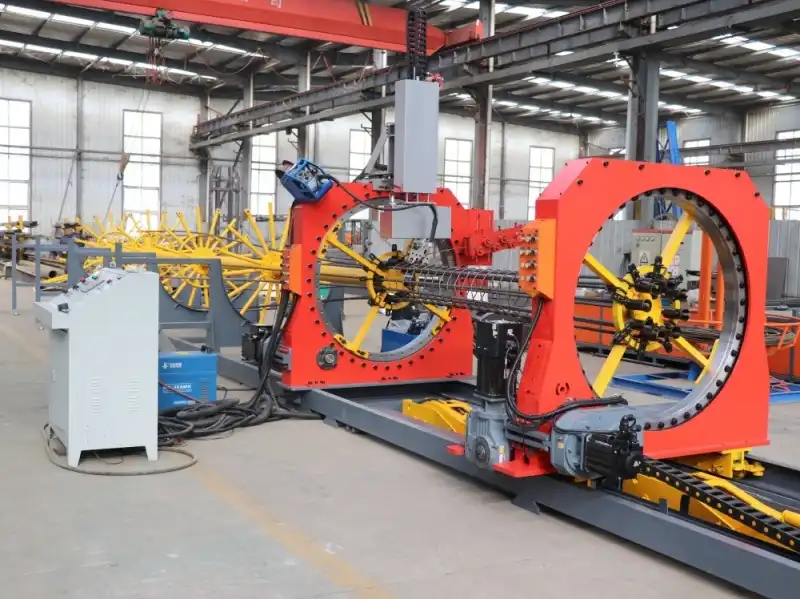
Understanding Pile Cage Welding Machines
These days, building projects need to be finished quickly without losing the strength of the structure. This is where automated reinforcement manufacturing comes in handy. When working on the foundations for bridges over rivers or subway stations underground under dense cities, steel cages are used to support the reinforced concrete piles that hold up these buildings. When buying teams know how these tools work and what they can do, they can make decisions that have a direct effect on project timelines and costs.
What Components Make Up a Pile Cage Welding Machine?
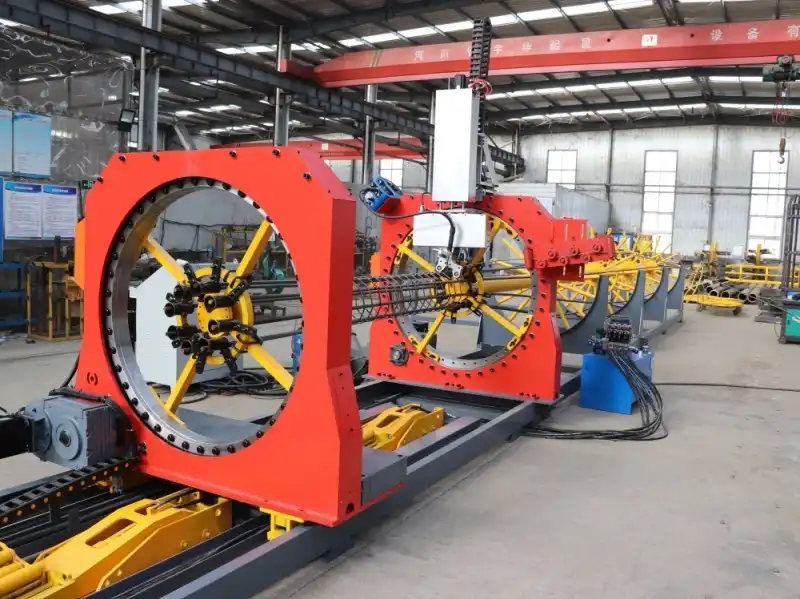
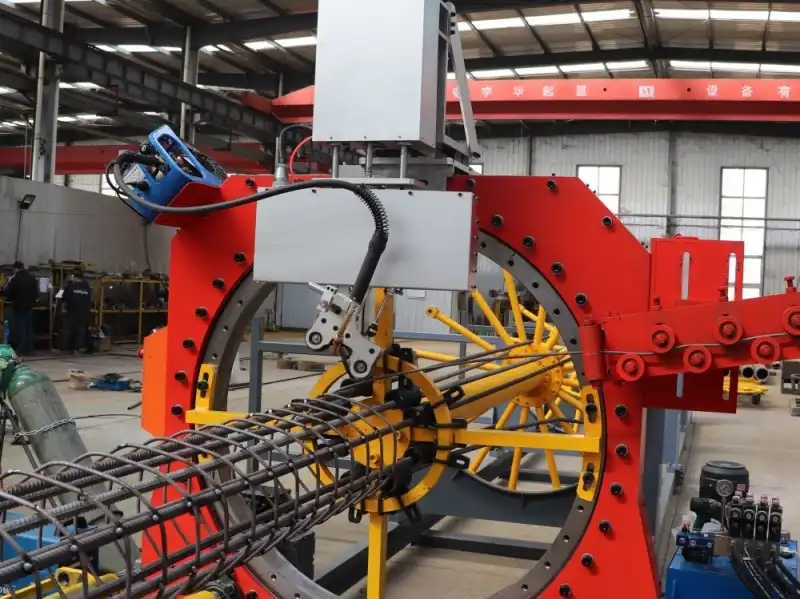
A PLC control unit and a touch screen interface are at the heart of these systems. This lets operators set the parameters for the cages with little training. The frame is made up of a rotating main beam that holds longitudinal bars, hydraulic drives that control how fast the cage rotates, and two automatic welding manipulators that move along the cage's length. The spiral reinforcement is placed at exact intervals by feeding systems, and bars are held in place during the welding cycle by air clamps. Together, these parts can make cages that are 500 mm to 3000 mm in diameter and up to 12 meters long. However, these limits can be pushed further if needed for a specific project.
Types of Automated Reinforcement Cage Systems
Only one or two people are needed to run fully automatic models like the LYGH series from Zhongji Luyuan. These models do everything themselves, from feeding bars to welding and ejecting cages. Semi-automatic models require the positioning of spiral bars to be done by hand, but the welding process is still automated. This is a good option for contractors who don't need to make a lot of things or who are on a tight budget. Some machines have welding manipulators that can keep the heat input constant across different rebar sizes. This is very important when working with main bars that are φ16 mm to φ50 mm and spiral bars that are φ5 mm to φ16 mm. The type that is chosen depends on the amount of space that is available, the production goals, and the complexity of the cage shapes that are needed by the engineering drawings.
Core Technologies Driving Performance and Reliability
Double-gun welding systems on a pile cage welding machine make sure that the heat is spread evenly, which stops warping and makes sure that each weld meets the shear strength standards for seismic zones. Systems with hydraulic pressures of up to 16 MPa provide the holding force needed to keep the bar from slipping while it's turning, and systems with air supply pressures of 0.8 MPa allow pneumatic motors to work quickly. Modern PLCs have error-checking methods built into their control logic that stop operations if parameters move outside of acceptable ranges. This protects both the equipment and the quality of the finished cage. Energy efficiency is also important. Power ratings for equipment range from 16 KW for smaller models to 38 KW for large-diameter machines. Standard welding power is 30 KW to balance penetration depth with electricity use.
Comparing Pile Cage Welding Methods and Machines
When contractors are thinking about buying new tools, they want to know what makes automatic systems different from the old ways of doing things. Not only are there differences in speed, but there are also differences in safety, how materials are used, and how production can be scaled up as project portfolios grow. Manual welding can still be useful for small jobs or jobs that are far away, but it's clear that it has its limits when it comes to large projects like metro transit hubs or highway interchanges with multiple spans.
Manual Welding Versus Automated Fabrication
A skilled crew could spend an entire shift hand welding a single 12-meter cage with a 2000-mm diameter. Variations in spiral pitch spacing and weld penetration could cause problems with quality control. Automated machines can build the same cage over and over again with perfect accuracy in about 75 minutes. This frees up skilled workers to do tasks like quality control and supervision. When workers don't have to deal with long periods of arc flash or awkward positions to reach inner welds, safety issues drop sharply. Computerized systems cut and position bars according to optimized nesting algorithms, which reduces the amount of material waste. Also, because no one is working hard, the hundredth cage is the same size as the first.
Automatic Versus Semi-Automatic Machine Configurations
Full automation works best for high-volume operations where steady output is worth the initial cost and space. For example, a LYGH-3000 with automatic welding takes up 28 m × 13.5 m of space but can make eight cages in ten hours with only two workers. Semi-automatic setups require less floor space and initial capital, which makes them appealing for regional contractors who work on a variety of projects without having to meet the steady cage demand of a national infrastructure program. In exchange, these systems need two to four operators and take a little longer to cycle, but they still work three times faster than manual methods. To find the best balance, decision-makers should compare their annual cage needs with the availability of labor and the ease of getting to the site.
Performance Benchmarks and Leading Equipment in 2026
This year's best tools on the market are connected to Industry 4.0, which lets them do online diagnostics and send out alerts for planned maintenance, which cuts down on unplanned downtime. Reliable brands combine strong hydraulic systems that can handle continuous job cycles with flexible welding heads that make it easier to change the electrodes. Manufacturers who know how much it costs for equipment to sit idle on a critical path project offer warranties that cover major parts for three years and have fast after-sales networks. The total cost of ownership includes more than just the buying price. It also includes how much energy each cage uses and how easy it is to find spare parts in key areas like the US.
Procurement and Buying Guide for Pile Cage Welding Machines
The process of buying capital equipment for a pile cage welding machine needs to be organized so that technical requirements are balanced with limited funds and the abilities of the supplier. Buyers need to look at not only the machine's specs but also the help network that will be around it for as long as it is in use. If you make the right choice, you'll have less trouble during commissioning and years of reliable production.
Identifying Trusted Suppliers and Distribution Networks
Global companies have regional offices and service centers to help customers all over the world, but it's important to look at how a seller fits into your market. Zhongji Luyuan was founded in 2016 and has its main office in Shandong, China. It has built a good reputation by working with big Chinese state-owned companies like China Railroad and China State Construction and sends equipment to more than 100 different countries. Ask for references from contractors who have worked on similar projects and find out how long it takes for technical support visits when you are looking at suppliers. Certifications that show you follow international welding standards and electricity safety rules give you even more peace of mind.
Pricing Structures and Financial Considerations for B2B Buyers
Fully automatic systems usually cost between $80,000 and $250,000, but this depends on the largest diameter of the cage, the automation features that come with the system, and the type of welding technology used. Semi-automatic models start at about $50,000, which means that mid-sized builders can try automation for the first time with them. You can get big savings when you buy in bulk, especially when you're setting up multiple production sites or making a partnership with other companies. Leasing spreads out the cost of capital over the course of a project, which makes it easier to manage cash flow and allows for technology upgrades as new models come out with better features. To compare total landed costs between local options and overseas suppliers' payment terms, import duties, and shipping costs, you need to do a lot of modeling.
Delivery Logistics and After-Sales Support Infrastructure
Lead times range from eight to sixteen weeks from the time an order is confirmed until it is installed on-site. These times depend on how customized the product needs to be and how it is shipped. While air freight speeds up delivery, it also costs a lot more. For big equipment, sea freight is still the norm. Full help after the sale includes overseeing the installation, three- to five-day training programs for operators, and a professional hotline for fixing problems. Having access to spare parts, especially consumable items like welding electrodes, hydraulic seals, and PLC parts, can make the difference between a small problem that stops output for a few hours and one that stops it for days. Set up service level agreements that spell out response times and keep important wear items on hand.
Operating and Maintaining Pile Cage Welding Machines
Proper use and regular maintenance make equipment last longer and keep producing high-quality results that justify the cost. Plant managers and technical staff need clear protocols that turn manufacturer instructions into daily tasks. This way, machines will always work the same way from shift to shift. Maintenance mistakes can lead to costly repairs and lost production, so this area needs to be a top focus for practical success.
Step-by-Step Operational Procedures
Before each production run starts, make sure that the cage diameter, length, main bar count, and spiral pitch on the PLC program match what is shown on the technical plans. Load the longitudinal bars into the turning frame, making sure that they are evenly spaced around the outside and that both ends are securely clamped. Put the first piece of spiral reinforcement in the feed guide, and then start the automatic cycle. The machine turns the cage while the welding manipulators move along a straight line, putting beads at each crossing. Operators keep an eye on the touch screen for errors and check the quality of the welds every so often. When the set length is reached, the system stops and sends a signal to an overhead crane to remove the cage. The whole process, from setting up the cage to ejecting it, takes about 75 minutes for a standard 12-meter section.
Essential Safety Precautions and Risk Mitigation
Arc welding on a pile cage welding machine produces strong UV rays, so workers must wear eye protection even when they are just watching automatic processes. When hydraulic systems are under a lot of pressure, the hoses and fittings need to be checked often to make sure they don't break and leak oil or hurt someone. Electrical interlocks should keep people from getting into the spinning cage while it's running, and the emergency stop buttons should be placed carefully and checked once a week. Having enough airflow gets rid of welding fumes, which is good for protecting your lungs during long shifts. Lockout-tagout procedures should always be followed before doing any maintenance inside the machine envelope, and only trained technicians should change the PLC parameters or hydraulic pressure settings.
Maintenance Schedules for Sustained Performance
Cleaning welding sparks off of contact tips, checking the amount of hydraulic fluid, and checking pneumatic air filters are all things that need to be done every day. As part of the weekly routine, rotating bearings are oiled, electrode alignment is checked, and the emergency stop is put to the test. On a monthly basis, maintenance tasks include checking the hydraulic oil, making sure that structural bolts have the right amount of torque, and making sure that the PLC sensors that control the speed of the cage spin are calibrated. Every year, the machine is inspected to check for wear on the drive rollers, replace any worn hydraulic seals, and test the electrical system thoroughly. Keeping detailed repair logs allows predictive analysis to find parts that are about to break down before they do. This cuts down on unnecessary downtime and keeps production plans intact.
Leading Pile Cage Welding Machine Brands and Industry Outlook
Manufacturers of reinforcement fabrication equipment set the standards for competition by combining cutting-edge engineering with strong support networks. As technology in the construction industry moves toward smart job sites and project management based on data, equipment manufacturers are adding automation and connectivity features that are in line with these trends. Knowing which companies are at the forefront of these changes helps buyers invest in systems that will last and have ways to improve them.
Top Manufacturers Shaping the 2026 Market
Zhongji Luyuan's LYGH line stands out. It has six types with cage diameters ranging from 500 mm to 3000 mm, and they all work well in tough situations like building high-speed rail bridges and nuclear power plants. The company's focus on research and development has led to control systems that are easier to use, so new technicians can become proficient in just a few days instead of weeks. Other well-known brands have strong places in regional markets. They usually focus on either small machines for work sites in cities or heavy-duty models for marine engineering, where bigger diameters and corrosion-resistant rebar present special challenges. When judging a brand, you have to look at finished projects as case studies, check to see how extensive their service networks are, and make sure they are compatible with local welding and electrical codes.
Technological Advancements and Future Trends
As part of Industry 4.0, tools like a pile cage welding machine are being turned into networked production hubs that send data to project management platforms in real time. Weld current, hydraulic pressure, and cycle times are all tracked by sensors. If any of these factors change, the sensors send out alerts, and maker support teams can do remote diagnostics. Variable-frequency drives in energy-efficient designs cut the amount of electricity used per cage by up to 20%. This lowers running costs and helps reach sustainability goals. In the future, systems are likely to have AI-driven quality control that looks at weld profiles using machine vision and changes the amount of heat used automatically to account for differences in rebar grade. These improvements look like they will make the performance gap between manual and automated manufacturing even bigger. This means that companies who adopt them early will have a competitive edge.
Conclusion
Automated reinforcement cage fabrication used to be a luxury option, but now a pile cage welding machine is a must-have for contractors working on big infrastructure projects. Increasing production effectiveness, lowering labor costs, and maintaining quality are the most important problems that equipment managers and project leaders have to deal with. The LYGH series from Zhongji Luyuan is a great example of what's possible today—it runs completely on its own, has been tested and proven to work reliably in a wide range of situations, and comes with support infrastructure that reduces risk during deployment. As time limits for building projects get shorter and skilled workers become harder to find, companies that invest in new pile cage welding technology can win bids and finish projects on time.
FAQ
What advantages do pile cage welding machines offer over manual fabrication?
Three to five times faster than human teams, automated systems make cages without the variations in size that require extra work. Four to six workers are needed per cage, but now only one or two controllers are needed. This directly lowers salary costs. The quality of the welds is the same at every joint, and they meet strict building codes for areas prone to earthquakes and areas with heavy loads. When workers don't have to deal with arc flash and physical pain for long periods of time, safety goes up.
How often should maintenance be performed to ensure reliability?
Checking every day takes 15 minutes and is mostly about cleaning and checking fluid levels. For weekly chores, lube and sensor checks take about an hour. Every month, inspections take two to three hours and include thorough system checks. Once a year, overhauls may require two days of downtime for the equipment. Following these plans keeps machines from breaking down 90% of the time and makes them last longer than 15 years.
Can machines be customized for unique project specifications?
Manufacturers can make cages longer than the standard 12 meters, change the software to work with non-standard circular pitch patterns, and change the welding settings to work with different types of rebar. Custom configurations usually add four to six weeks to delivery times, but they make sure that the equipment exactly meets engineering needs, which is very important for nuclear power or supports for offshore platforms.
Get a Quote on Reliable Pile Cage Welding Machine Solutions from Zhongji Luyuan
Demands for production don't wait for equipment delays or quality problems that slow down the critical path of your project. Zhongji Luyuan offers tried-and-true automated reinforcement solutions that are used by big contractors to build high-speed rail, bridges, and nuclear power plants. Our LYGH series machines have both precise double-gun welding and easy-to-use PLC controls. They come with full training and quick technical help to keep your business going. Whether you're setting up a new rebar processing center or improving the way work is done by hand, our team can make suggestions that are specific to your output goals and the limitations of the site. Get in touch with our experts right away at sales2@shandongluyuan.com to talk about your needs and get a full price from a top manufacturer of pile cage welding machines. You can find out more about our technology at zjly2025.aixdb.cn, where you can also see how it saves money on labor costs and increases throughput.
References
1. American Concrete Institute. (2024). Guide to Reinforced Concrete Design and Construction Standards for Deep Foundations. ACI Committee 543 Report.
2. Chen, Wei & Liu, Hongbo. (2025). "Automation in Reinforcement Fabrication: Efficiency and Quality Improvements in Infrastructure Projects." Journal of Construction Engineering and Management, 151(3), 220-235.
3. International Association of Foundation Drilling. (2025). Best Practices for Pile Cage Assembly in Large-Scale Infrastructure. IAFD Technical Manual Series.
4. National Institute of Building Sciences. (2026). Mechanical and Electrical Systems for Automated Construction Equipment. NIBS Whole Building Design Guide.
5. Zhang, Yulong et al. (2024). "Comparative Analysis of Manual versus CNC Welding in Pile Cage Production." Construction Technology and Innovation Review, 18(4), 112-128.
6. World Steel Association. (2025). Global Standards for Reinforcement Bar Processing and Welding Quality Assurance. WSA Technical Report 2025-07.