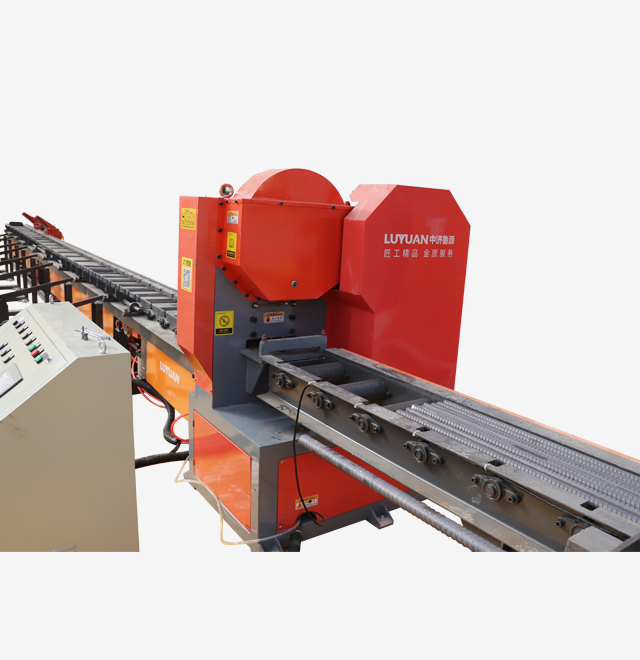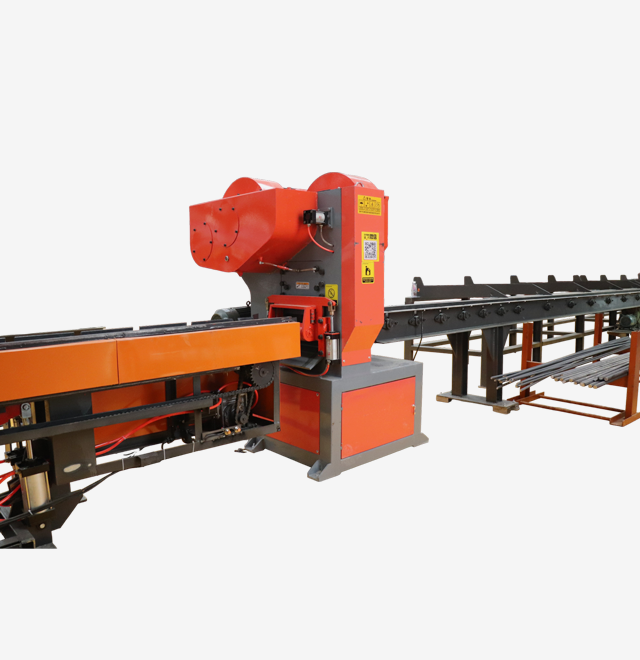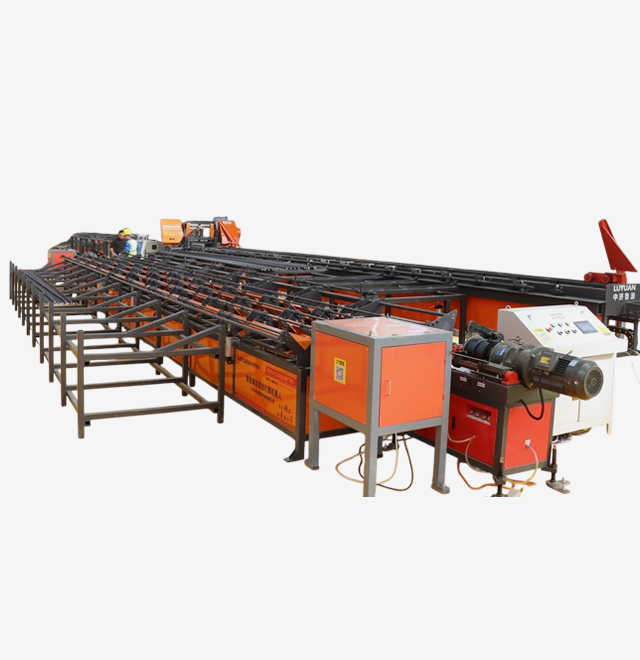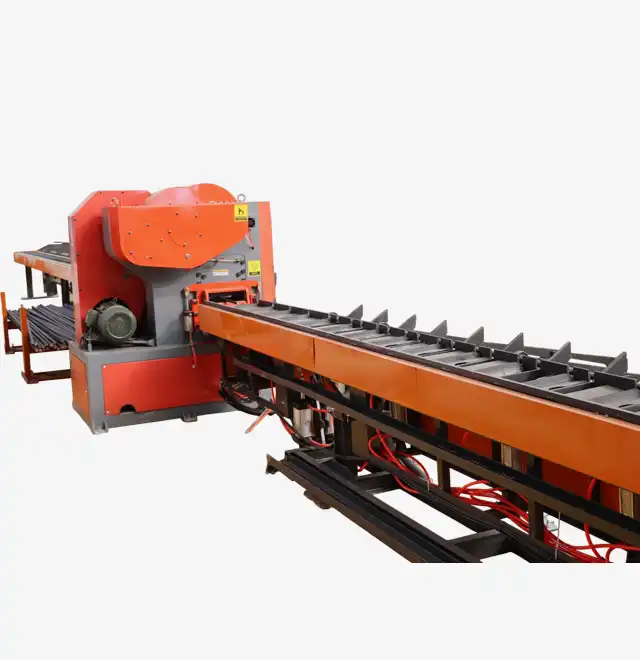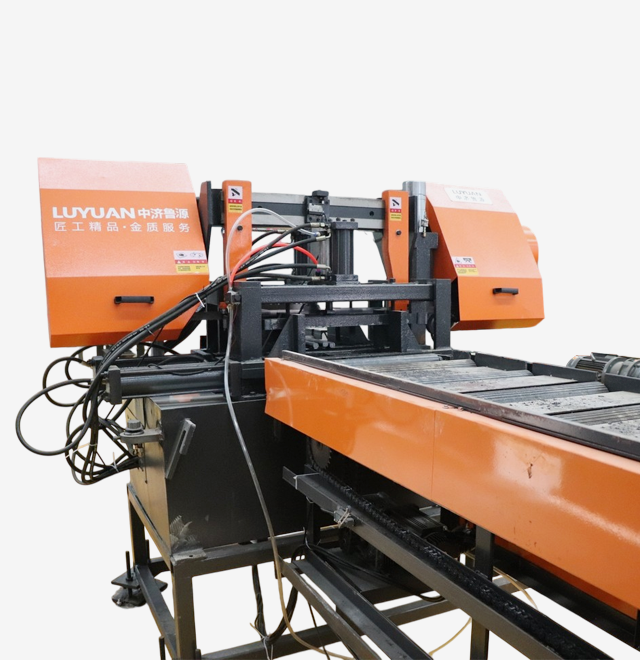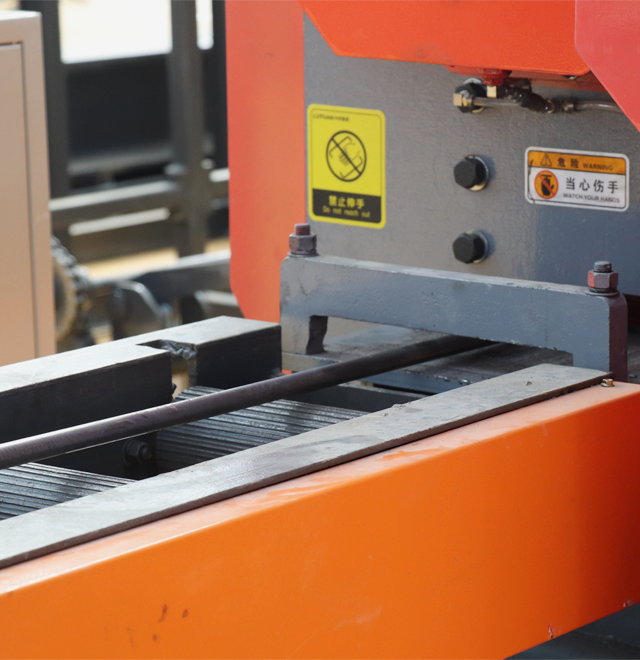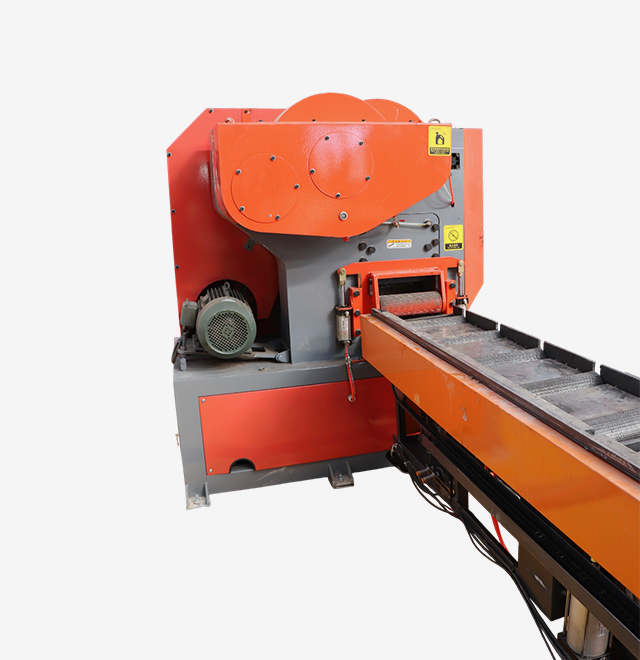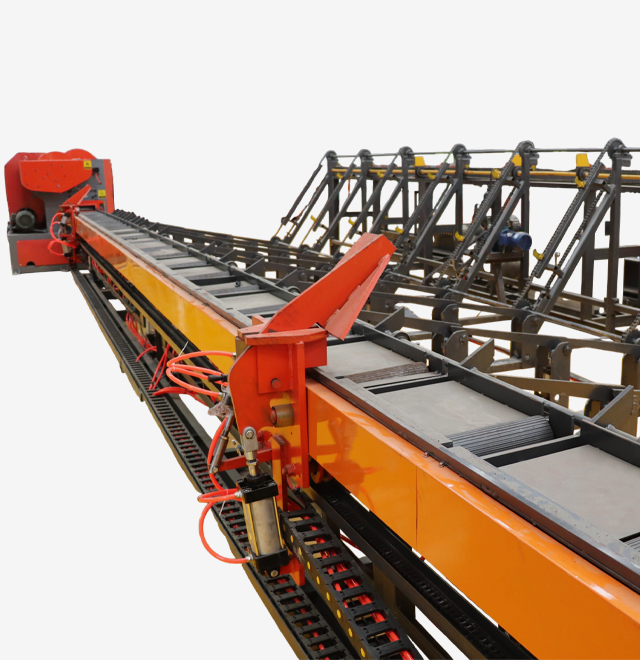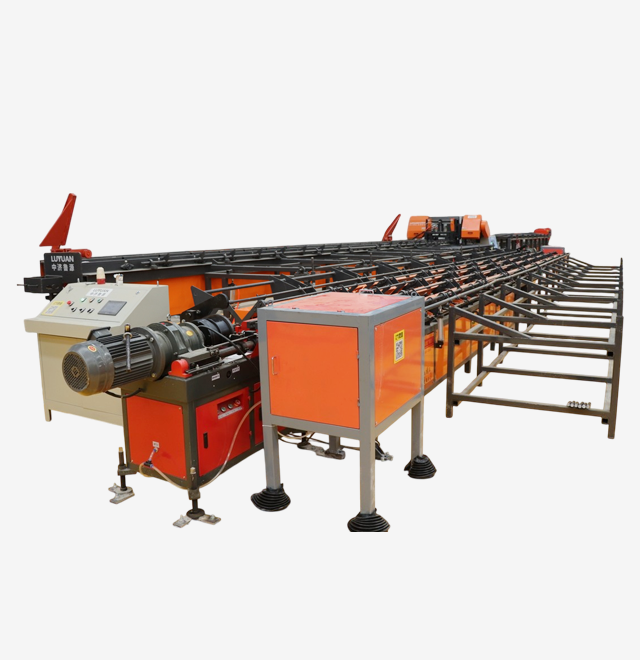
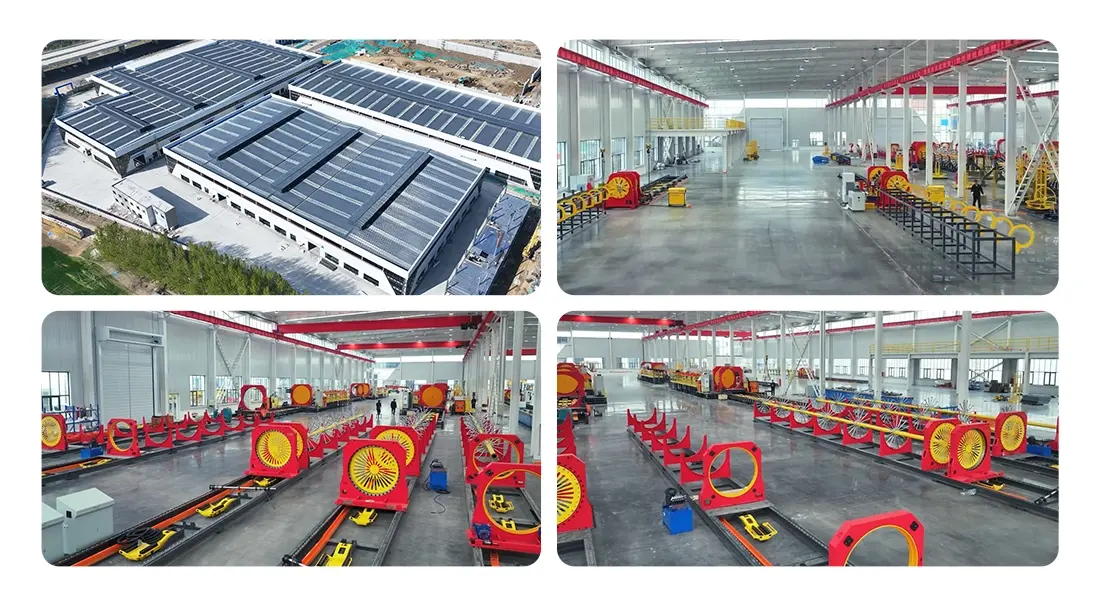
Industrial Steel Bar Processing Line
2.Operation Mode: Automatic servo CNC operation
3.Shearing Mode: Electric shearing system
4.Rebar Diameter Range: φ10–40 mm
5.Shearing Length Range: 0.7–12 m
6.Shearing Precision: ±2 mm
7.Power Supply: 380V / 50Hz / 3-phase
8.Control System: CNC touch screen interface
9.Production Efficiency: 80–120 pieces/hour
10.Main Materials: Industrial-grade steel structure
11.Application: Rebar processing for building construction
Product Description
Industrial Steel Bar Processing Line – Advanced CNC Rebar Automation for High-Volume Construction
Modern construction demands rapid, precision steel reinforcement fabrication at an industrial scale. The Industrial Steel Bar Processing Line from Shandong Zhongji Luyuan Machinery integrates automatic feeding, servo-driven straightening, CNC-controlled length measurement, and electric shearing into a unified production ecosystem. With a handling run of φ10–40 mm and a cutting exactness of ±2 mm, this framework conveys 80–120 wrapped up pieces per hour whereas keeping up reliable quality over multi-diameter group operations. Supported by a enlisted capital of RMB 50 million and about a decade of R&D in brilliantly rebar arrangements, our line diminishes labor prerequisites to fair one administrator and accomplishes fabric squander underneath 1.5% through progressed optimization algorithms.
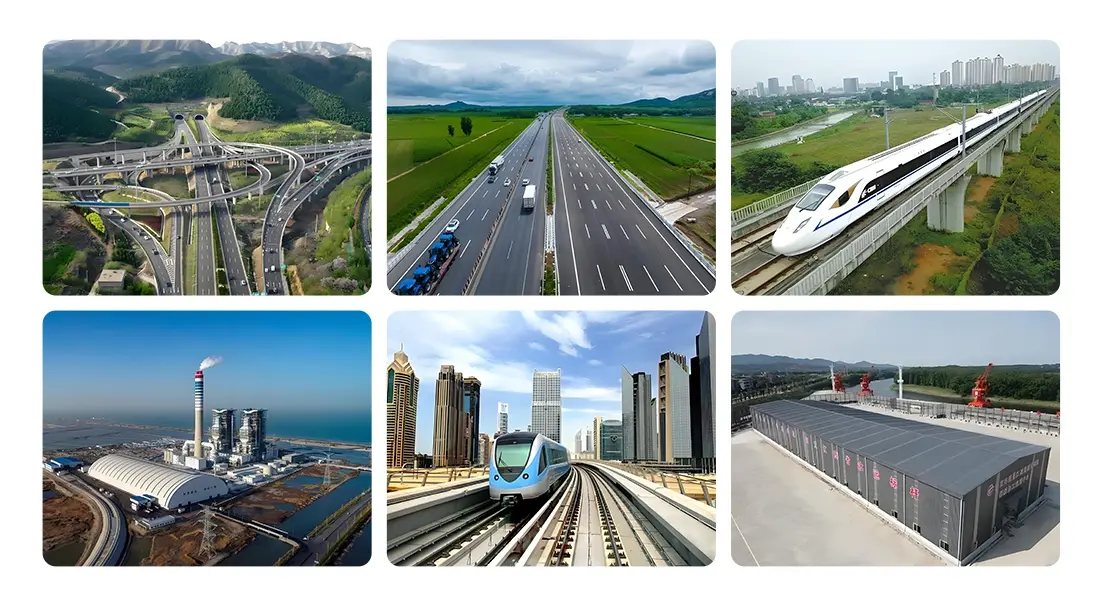
Exported to about 100 nations, our hardware serves major foundation temporary workers counting China Railroad Bunch, CRCC, and CSCEC over high-speed rail, bridge, burrow, and atomic control projects.
Why You Need an Automated Rebar Processing Solution
Manual rebar processing in large-scale construction creates three persistent challenges. First, inconsistent cutting dimensions result in on-site rework that delays concrete pouring schedules. Second, labor-intensive operations drive costs upward as skilled workers become scarce in emerging markets.
Third, material wastage from unoptimized cutting patterns erodes project margins when steel prices fluctuate. An Industrial Steel Bar Processing Line addresses these pain points by centralizing workflow control through a PLC touch screen interface that stores up to 200 cutting programs.
You pick up real-time perceivability into generation measurements, empowering data-driven choices to adjust throughput with vitality effectiveness. For precast production lines creating secluded building components, our system's 50 m/min passing on speed guarantees you meet forceful conveyance timelines without compromising dimensional accuracy.
Technical Specifications at a Glance
| Parameter | Value |
|---|---|
| Rebar Diameter Range | φ10–40 mm |
| Shearing Length Range | 0.7–12 m |
| Shearing Precision | ±2 mm |
| Production Efficiency | 80–120 pieces/hour |
| Shear Cycles | 20 cuts/minute |
| Conveying Speed | 50 m/min |
| Length Tolerance | ±5 mm |
| Total Power | 14 kW (including air compressor) |
| Equipment Footprint | 26 × 3.2 × 1.5 m (L×W×H) |
| Power Supply | 380V / 50Hz / 3-phase |
| Receiving Bins | 3×2 configuration |
Multi-Diameter Shearing Capacity (HRB400)
| Diameter | Bars per Cut | Diameter | Bars per Cut |
|---|---|---|---|
| 10 mm | 10 bars | 25 mm | 3 bars |
| 12 mm | 8 bars | 28 mm | 2 bars |
| 16 mm | 6 bars | 32–38 mm | 1 bar |
| 20 mm | 4 bars |
Core Advantages That Drive Your ROI
Full-Process Automation
From coil decoiling to final sorting, the Industrial Steel Bar Processing Line eliminates manual handling at critical stages. Your operator simply loads raw material and monitors the touch screen—straightening, measuring, and shearing execute autonomously. This reduces labor costs by up to 70% compared to traditional three-person crews.
Precision Engineering for Zero Rework
Our dual-roller straightening mechanism removes residual stress without damaging ribbed surfaces. The servo-controlled length measurement wheel achieves ±2 mm accuracy even when processing 12-meter spans, ensuring your rebar fits formwork templates on the first attempt.
Intelligent Batch Optimization
The PLC control system automatically sequences cuts to minimize remnant lengths. When processing mixed orders for columns, beams, and stirrups, the algorithm reduces scrap to less than 1.5% of total material—a critical advantage when handling high-strength steel priced above $650 per ton.
24-Hour Continuous Operation
Industrial-grade steel frame construction and sealed hydraulic systems enable round-the-clock production cycles. With an average power draw of just 8 kW/h and a low failure rate, you maintain uptime during peak construction phases when penalties for delayed rebar delivery can exceed $10,000 per day.
Flexible Diameter Changeover
Transitioning from φ16 mm to φ32 mm requires only 15 minutes for mechanical adjustment. Quick-change blade cassettes and tool-free guide rail positioning let you respond to last-minute design modifications without halting production for hours.
Real-World Applications Across Infrastructure Sectors
High-Speed Railway Viaducts
When constructing elevated sections for 350 km/h rail corridors, our line processes high-tensile φ32 mm bars for pier caps and foundation cages. The system's ability to maintain ±2 mm tolerances across 10-meter lengths ensures alignment with precast segmental box girders during assembly.
Urban Underground Transit Hubs
Complex metro station designs demand intricate stirrup geometries and varying longitudinal bar lengths. By storing project-specific cutting schedules in the CNC memory, you eliminate manual tape-measure errors that cause costly concrete honeycombing during pour.
Bridge Deck Reinforcement Mesh
For highway overpasses requiring thousands of identical 6-meter transverse bars, the 80–120 pieces/hour throughput keeps pace with automated welding mesh lines. The 3×2 receiving bin configuration automatically sorts output by length, streamlining downstream logistics.
Modular Precast Concrete Plants
Climate-controlled factories producing wall panels and hollow-core slabs rely on our line's consistent quality to meet tight architectural tolerances. The burr-free electric shearing system prevents surface defects that could compromise the concrete-steel bond in thin-section elements.
How the Processing Line Integrates into Your Workflow
Stage 1: Material Loading
Raw steel coils or 12-meter straight bars enter the powered decoiler or horizontal guide rack. Automatic sensors detect diameter and trigger the corresponding straightening roller gap adjustment.
Stage 2: Precision Straightening
Multiple sets of hardened rollers apply controlled pressure to eliminate coil memory and surface deformation. Exit sensors verify straightness within 0.5 mm per meter before advancing material to the measurement station.
Stage 3: CNC Length Control
A rotary encoder tracks bar travel with millimetric resolution. When the preset dimension is reached, pneumatic clamps immobilize the material while the shearing head descends. This closed-loop system compensates for thermal expansion in the steel during continuous operation.
Stage 4: High-Speed Shearing
The 200 mm effective blade width slices through up to 10 bars simultaneously (for φ10 mm) at 20 cycles per minute. Hardened tool steel blades maintain edge sharpness across 50,000+ cuts, reducing consumable costs.
Stage 5: Automated Sorting
Finished pieces drop into designated receiving bins based on programmed length categories. Optional RFID tagging integrates with your ERP system to track inventory in real time as material moves to the bending station or loading dock.
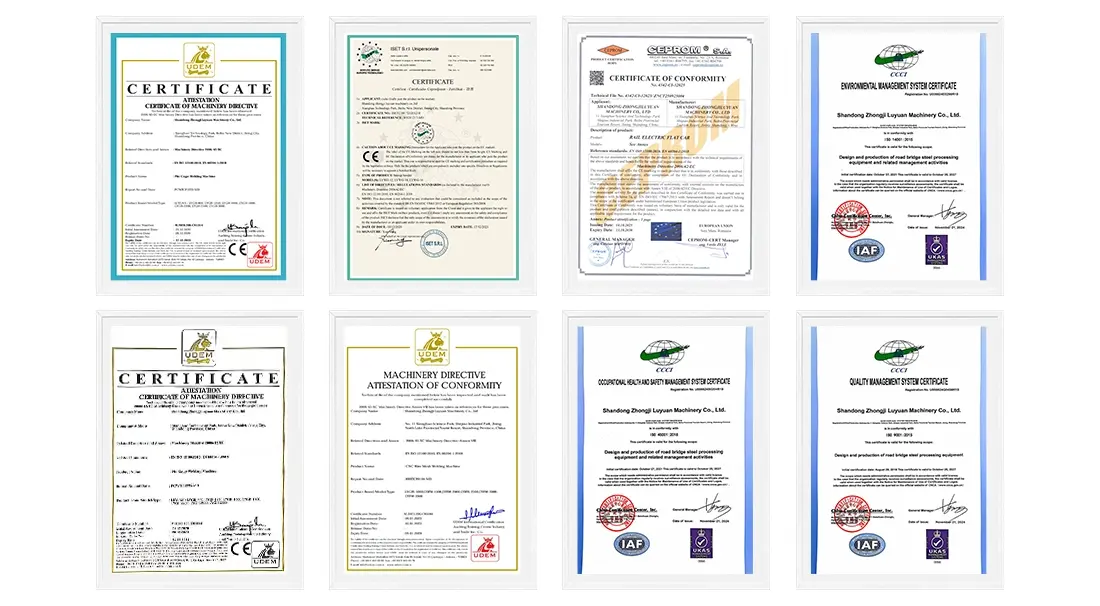
Quality Assurance and Global Standards Compliance
Every Line undergoes a 72-hour burn-in test at our 50-million-RMB facility before shipment. We verify:
- Dimensional accuracy across 500 consecutive cuts using laser interferometry
- Hydraulic system stability under maximum load for 48-hour cycles
- PLC logic integrity through simulated emergency-stop and power-failure scenarios
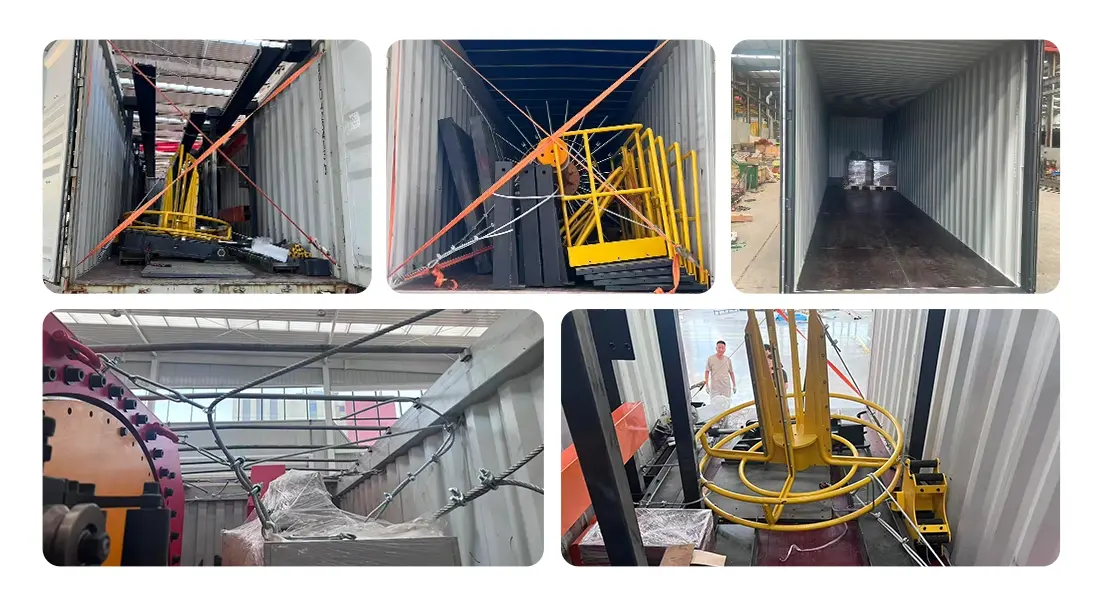
Our equipment adheres to ISO 9001 manufacturing protocols and meets CE safety directives for export markets. When you purchase from Shandong Zhongji Luyuan, you receive technical documentation including load capacity certifications for seismic zones and EMC compliance reports for installation near sensitive electronics.
Maintenance Best Practices for Maximum Uptime
Daily Checks (5 Minutes)
Lubricate straightening rollers with high-pressure grease and inspect shear blade alignment. Verify that the CNC touch screen displays no error codes related to encoder calibration.
Weekly Inspections (30 Minutes)
Measure blade wear using a digital caliper—replace when clearance exceeds 0.3 mm. Clean debris from the air compressor intake filter to maintain 1.0 m³/min flow rate for pneumatic clamps.
Monthly Servicing (2 Hours)
Recalibrate the length measurement wheel against certified standards. Check hydraulic fluid levels and test emergency stop functionality. Tighten frame bolts to counter vibration-induced loosening.
High-alloy components typically require replacement after processing 3,000–5,000 tons of steel. We provide a nationwide service network and remote diagnostics through IoT-enabled gateways, allowing our engineers to troubleshoot control system issues without on-site visits.
Frequently Asked Questions
Q: Can the line process both hot-rolled and cold-drawn rebar?
A: Yes, provided the tensile strength remains below 650 MPa for standard reinforced grades. For higher-strength alloys, consult our engineering team for custom straightening roller specifications.
Q: What happens if I need to cut lengths shorter than 750 mm?
A: The minimum automatic shear size is 1,200 mm to ensure measurement accuracy. For shorter stirrups, switch to manual mode where the operator can process down to 750 mm with reduced throughput.
Q: How does the system handle mixed-diameter orders?
A: The PLC stores up to 200 programs. You can queue jobs for φ12 mm, φ20 mm, and φ32 mm in sequence. Mechanical changeover takes 15 minutes between diameters, with automatic roller gap adjustment for φ10–25 mm.
Q: Is the shearing process loud enough to require hearing protection?
A: Peak noise during the cut reaches approximately 85 dB at one meter. We recommend ear protection in enclosed spaces and offer optional acoustic enclosures for noise-sensitive urban sites.
Q: What voltage requirements exist for international installations?
A: Standard configuration is 380V / 50Hz / 3-phase. For 60Hz or single-phase regions, we supply frequency converters and transformer recommendations during project planning.
Q: How quickly can remote technical support resolve control system errors?
A: Our IoT gateway enables real-time diagnostics. Software issues often resolve within two hours via remote login. For mechanical faults, we dispatch parts from regional warehouses with 48-hour delivery across major markets.
Contact Us for Custom Solutions
Ready to transform your rebar processing efficiency? Our engineering team will conduct a free workflow analysis to match the Industrial Steel Bar Processing Line configuration to your project scale and material specifications. Request a detailed ROI calculation and machinery layout drawings today.
Email: sales2@shandongluyuan.com