Advanced Pile Cage Machine Simplifies Automatic Cage Production
Sep 18, 2026
When it comes to foundation engineering, the pile cage machine has become one of the most consequential pieces of equipment on any large-scale construction site. An advanced automatic rebar cage welding workstation eliminates the bottlenecks of manual fabrication by synchronizing main bar placement, spiral bar winding, and gas-shielded welding into a single continuous process. For infrastructure contractors, metro builders, and bridge engineering firms operating in today's competitive environment, this technology directly translates into faster schedules, lower labor expenditure, and structurally consistent output that meets the most demanding engineering standards.
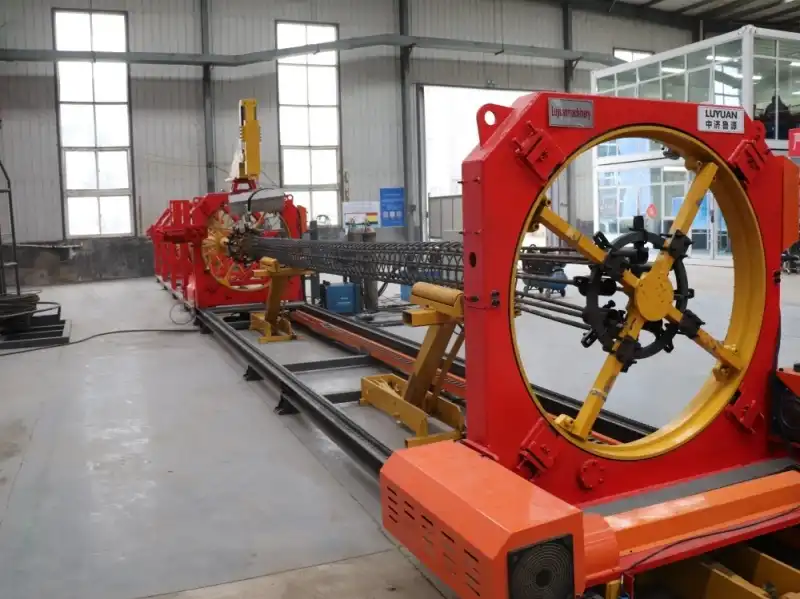
Understanding the Advanced Pile Cage Machine
What It Does and Why It Matters
A reinforced cage welding workbench is designed to make steel cages that are round and used for deep foundation piling, bridge piers, and tunnel supports. The Zhongji Luyuan LYZD-GJL2500 type has full-automatic PLC control and can handle cages with widths between φ700 mm and φ2500 mm and lengths of up to 12 meters. With 30 kW of fixed power and 100 kW of welding output, the system makes 13 full-length cages in a 10-hour shift, which is a level of output that manual teams can't even come close to.
From Manual to Fully Automatic
Cage fabrication technology ranges from rebar structures that are tied together by hand to fully automatic CNC welding tools and semi-automatic rolling machines. The difference is important. Some actual work is done by semi-automatic units, but each stage still needs more than one person. A totally automatic workbench, on the other hand, uses a touchscreen CNC interface to handle bar feeding, spiral pitch, and welding gun positioning. This means that only one person is needed per shift. That one fact changes the way the labor economics work for any project that uses deep foundation piles.
Comparing Traditional Methods with Advanced Pile Cage Machines
The True Cost of Manual Fabrication
Cage tying by hand is slow, hard on the body, and not always accurate. Workers have to keep the spiral spacing exact by eye, and the quality of each weld depends only on the skill of the individual. This kind of variation can lead to schedule delays, rework costs, and quality issues that cost a lot of money on big infrastructure projects that need thousands of piles, which is why a pile cage machine is increasingly adopted.
These problems are fixed at the process level by automated reinforcement cage systems, not at the supervision level. Which method is better based on the most important indicators for buying teams?
- Production rate: Manual teams typically produce 2–4 cages per day for medium-diameter specifications. The LYZD-GJL2500 delivers 13 cages per 10-hour shift at 12 meters per section, representing a genuine step-change in throughput for bridge and highway projects.
- Welding consistency: Gas-shielded welding under PLC control eliminates missing welds and false joints. Every weld point is executed at a calibrated voltage and pressure, producing uniform bond strength across the entire cage length without operator fatigue affecting the result.
- Labor requirement: Where manual fabrication ties up four to six workers per cage, the automatic workstation needs only one person to monitor the touchscreen interface — a reduction that directly addresses the rising skilled-labor costs facing U.S. construction firms.
Because these benefits can be measured, big companies working on metro train extensions and interstate highway bridge packages are switching from manual cage yards to CNC welding workstations all the time. The change isn't meant to get rid of jobs; instead, it's about moving people to tasks that really need human judgment.
Selecting the Right Pile Cage Machine for Your Business
Capacity, Configuration, and Customization
To pick the right automatic cage fabrication system, you need to make sure that the pile cage machine's specs meet the needs of your project. It can work with main bar diameters ranging from φ18 mm to φ40 mm and spiral bar diameters ranging from φ8 mm to φ16 mm. This means it can handle the reinforcement schedules that are common for high-speed rail foundations, highway bridge piers, and port engineering structures. The space between spiral bars can be programmed to be ≤300 mm, which lets different pitch zones fit inside a single cage. This is a feature that structural engineers ask for to handle seismic loads.
When looking for a seller of a reinforcement cage welding system, think about the following factors that are similar to how B2B buying teams choose capital equipment:
- Production output versus project demand: Confirm that the machine's rated throughput — 13 cages per 10-hour shift in the case of the LYZD-GJL2500 — matches your peak site consumption to avoid creating a new bottleneck.
- Customization depth: Main bar configurations supporting both single and double main bars, combined with single or double spiral bar options, provide the flexibility needed across diverse project specifications without requiring separate equipment purchases.
- After-sales infrastructure: Zhongji Luyuan maintains a comprehensive service team with in-field installation support, operator training, and spare parts availability. For equipment operating on a 380V / 50Hz / 3-phase supply, having a responsive technical contact reduces commissioning risk substantially.
- Footprint compatibility: The LYZD-GJL2500 occupies 30 m × 8.5 m. Verify that your processing yard or prefabrication facility can accommodate this before issuing a purchase order.
Buying high-value capital equipment from a well-known pile cage machine maker with project references instead of an unknown dealer greatly lowers the risk of buying it.
Safe Operation and Maintenance of Advanced Pile Cage Machines
Protecting People and Protecting the Asset
Handling heavy rebar by hand is the main way that people hurt their muscles and bones in traditional cage yards. Automatic operation under PLC control on a pile cage machine cuts down on this. Structured safety protocols are still necessary, though. Before working alone, operators should get training on how to run the machine properly, and everyone in the working area should follow lockout-tagout rules during any maintenance work.
Routine upkeep is easy to do and always happens at the same time. The main jobs are to grease the drive chains and guide rails every day, calibrate the encoder once a month, and check the welding electrode contact surfaces on a regular basis. The LYZD-GJL2500's modular frame design makes it easier to get to parts, which cuts down on the average time it takes to fix problems when wear parts need to be replaced. Both the hydraulic system pressure and the air supply pressure should stay below 16 MPa. The PLC dashboard checks both of these pressures in real time, so operators can see if there are any problems before they cause the production to stop.
Why Advanced Pile Cage Machines Are a Strategic Investment for Construction Businesses
In the US, there is a known shortage of skilled workers in the building business. In 2023, the Associated General Contractors of America said that 88% of construction companies were having trouble hiring craft workers. Automated equipment for handling reinforcement directly gets around this problem by focusing cage production in a single workstation directed by an operator instead of a group of people working together by hand.
The structural case for automation is just as strong as the labor case. Gas-shielded welding makes joints that are mechanically sound and have a consistent penetration depth. This is very important for cages that will support axial loads in bridge piers and the foundations of tall buildings. The steel usage rate goes up when exact cutting and controlled spiral winding are used to reduce material waste. This is important for projects where rebar makes up a big part of the total cost of materials.
The company Zhongji Luyuan was established in 2016 and has a registered capital of 50 million yuan. It works with China Railroad, China State Construction, and China Communications Construction and sends equipment to places like the US, South Korea, Malaysia, and Israel. Because of this wide range of operational experience, the LYZD-GJL2500's engineering is based on feedback from some of the world's toughest infrastructure projects.
Conclusion
One of the best examples of a return on investment (ROI) in modern building technology is advanced equipment for making reinforcement cages. A pile cage machine such as the LYZD-GJL2500 has a footprint of 30 m × 8.5 m and can certify 13 cages per shift. It only needs one person and makes welded parts that meet international structural standards. Those numbers should get a lot of attention from procurement teams that are looking at capital equipment while working with tight project budgets and tight schedules. Zhongji Luyuan is a dependable long-term equipment partner because it has a deep understanding of engineering, the ability to customize products, and a strong system for providing support after the sale.
FAQ
How many operators does a fully automatic cage welding workstation require?
The LYZD-GJL2500 is made for production with a single user. One person controls the touchscreen CNC interface, keeps an eye on the welding parameters, and makes sure that the right materials are loaded. This is a much lower level of work than manual or semi-automatic options.
What cage diameters can the LYZD-GJL2500 accommodate?
The machine can work with cage widths ranging from φ700 mm to φ2500 mm, which is a range of pile sizes commonly used in bridge, metro, and high-rise foundation projects.
Can the machine handle variable spiral pitch within one cage?
Yes. The PLC control system lets you set customizable pitch zones within a single production run. This lets engineers ask for tighter leg spacing in areas with a lot of stress without having to do it by hand.
What welding technology does the system use?
The workstation uses a gas-shielded welding method that ensures consistent fusion quality and gets rid of the mistakes and missed joints that come with tying things by hand.
Is customization available for non-standard project requirements?
Zhongji Luyuan can make combinations that are unique to each customer, such as double main bar sets, longer cage lengths, and changed rebar diameter ranges to meet exact engineering needs.
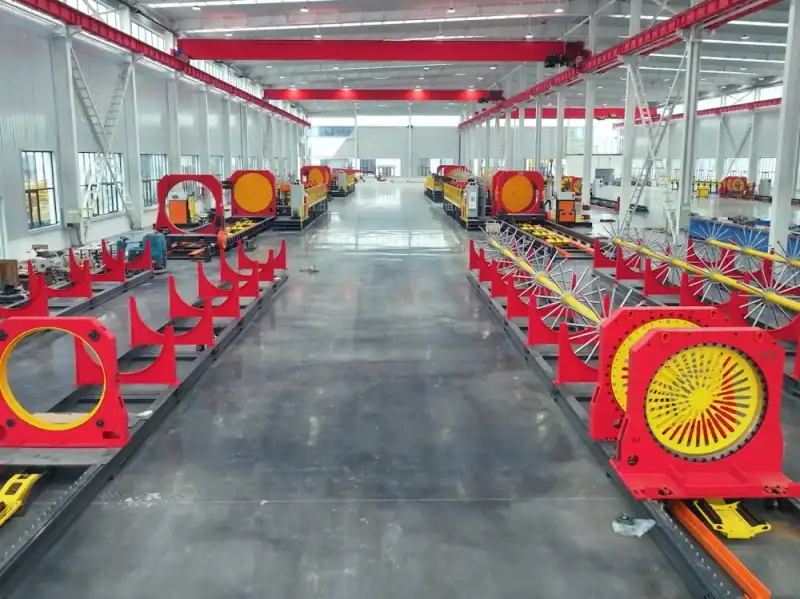
Connect with Zhongji Luyuan — Your Trusted Pile Cage Machine Supplier
Zhongji Luyuan designs high-tech support cage systems that are made to meet the needs of building projects in North America and other places. The LYZD-GJL2500 is a strong pile cage machine platform that blends PLC accuracy, single-operator speed, and proven welding quality. Get in touch with our technical team right away to get details, prices, and a solution that is specifically made for your project. You can email us at sales2@shandongluyuan.com or go to shandongluyuan.com.
References
1. Associated General Contractors of America. 2023 Workforce Survey Report. AGC of America, 2023.
2. American Concrete Institute. ACI 318-19: Building Code Requirements for Structural Concrete. ACI, 2019.
3. American Welding Society. AWS D1.4/D1.4M: Structural Welding Code — Reinforcing Steel. AWS, 2018.
4. International Labour Organization. World Employment and Social Outlook: Trends 2023. ILO, 2023.
5. Federal Highway Administration. Deep Foundation Design and Construction Guidelines. U.S. Department of Transportation, 2020.
6. National Institute of Standards and Technology. Manufacturing USA: Advanced Manufacturing Technology Report. NIST, 2022.