Automatic Rebar Cage Making Machine for Infrastructure Applications
Sep 18, 2026
When infrastructure projects demand speed, structural precision, and cost accountability, the rebar cage making machine has become the cornerstone of modern reinforcement fabrication. These fully automated systems wind, position, and weld steel reinforcement cages used in pile foundations, bridge piers, tunnel linings, and high-speed railway structures — replacing slow manual assembly with repeatable, high-output production. For procurement managers, equipment directors, and project engineers evaluating automated rebar cage welding equipment, understanding what separates a capable machine from a costly mistake is critical before any capital commitment.
What Is an Automatic Rebar Cage Making Machine and Why Does Infrastructure Need It?
Defining the Technology
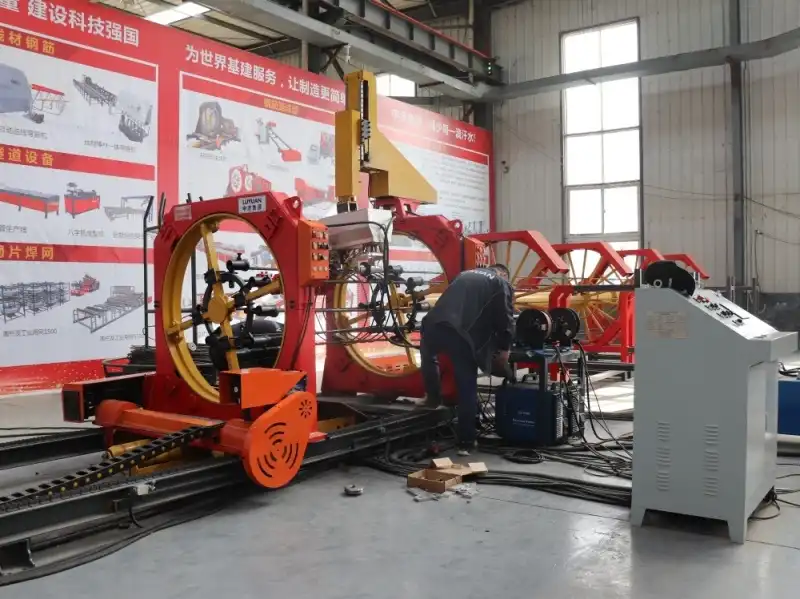
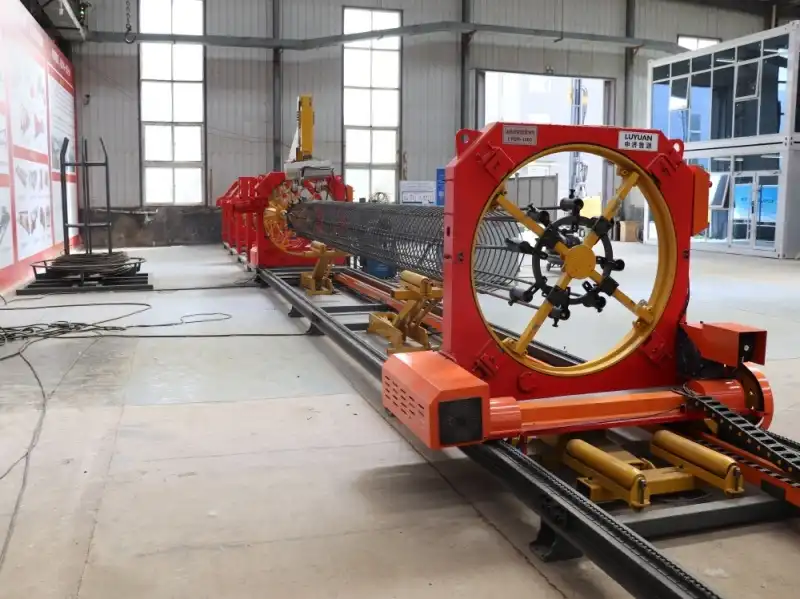
A CNC-integrated system that coordinates mechanical rotation, hydraulic support, and automated welding to make steel reinforcement cages that are cylindrical in shape is called a rebar cage making machine. It feeds long main bars through a rotating disk while a welding trolley winds and joins the spiral stirrup bar at the same time. This makes cages that are structurally stable and have tight tolerances for size.
Making cages by hand, which is still popular on smaller job sites, needs a lot of skilled workers, results in uneven weld spacing, and can't keep up with the speed of big building projects. For example, hundreds of cages may need to be built quickly for a single bored pile job for a highway junction. That pressure is directly met by automated cage production.
Where These Machines Are Deployed?
Equipment for making reinforcement cages is used for a specific set of important tasks in the building business, such as:
- Pile foundations for high-rise buildings, bridge abutments, and marine structures where load transfer into bedrock is mandatory.
- Bridge pier columns in long-span crossings, where cage diameter and spiral pitch precision directly affect seismic performance.
- Metro and subway bored piles, where prefabrication speed must match tunnel boring machine advance rates.
- High-speed railway foundations, where structural tolerances meet GB/T and international seismic safety standards.
This isn't a niche use case. The American Society of Civil Engineers' 2021 Infrastructure Report Card says that the U.S. alone needs to spend more than $2.5 trillion on bridges, transit, and highways over the next ten years. This means that there will be a steady need for high-output reinforcement fabrication, making a rebar cage making machine a wise investment.
Key Benefits of Automated Rebar Cage Welding Equipment
The difference in productivity between making cages by hand and using machines is clear and measurable. The LYGH-series machines from Zhongji Luyuan can make 8 cages in a 10-hour shift under normal site conditions, and they only need 1–2 operators when they are set up to do fully automatic welding.
Here are the main benefits these tools bring to businesses:
- High production throughput — Dual-capacity output versus manual methods, with gas-shielded welding eliminating inconsistent fusion or missed weld points.
- Dimensional consistency — PLC-controlled spiral pitch spacing and servo-driven rotation maintain cage geometry within tight tolerances, critical for structural compliance on regulated projects.
- Labor cost reduction — Automatic welding mode reduces crew requirements from 4–6 manual workers to 1–2 operators, directly cutting per-cage labor cost.
- Low failure rate — Heavy-duty steel frame construction and reinforced drive components are engineered for continuous multi-shift operation with minimal unscheduled downtime.
- Safety and compliance — Reduced manual intervention during welding operations lowers exposure risk, and the equipment meets international safety standards.
It has a high production rate, and a rebar cage making machine can produce two things at once, compared to human methods. Gas-shielded welding prevents uneven fusion and missed weld points.
LYGH-Series Product Specifications: Matching Equipment to Project Scale
LYGH is a line of six models made by Zhongji Luyuan. Each model has a different cage diameter, equipment power, and footprint (for auto welding). The LYGH-1500 is 500–1500 mm, 16 kW, and measures 28 m × 8.5 m. The LYGH-1800 is 500–1800 mm, 18 kW, and measures 28 m × 8.5 m. The LYGH-2000 is 600–2000 mm, 23 kW, and measures 28 m × 9 m. The LYGH-2200 is also 600–2000 mm, 23 kW, and the LYGH-2500 is 800–2500 mm, 25 kW, and the LYGH-3000 is 38 kW, and the LYGH-3000 is 800–3000 mm,
| Model | Cage Diameter | Equipment Power | Footprint (Auto Welding) |
|---|---|---|---|
| LYGH-1500 | 500–1500 mm | 16 kW | 28 m × 8.5 m |
| LYGH-1800 | 500–1800 mm | 18 kW | 28 m × 8.5 m |
| LYGH-2000 | 600–2000 mm | 23 kW | 28 m × 9 m |
| LYGH-2200 | 600–2000 mm | 23 kW | 28 m × 9.5 m |
| LYGH-2500 | 800–2500 mm | 25 kW | 28 m × 11.5 m |
| LYGH-3000 | 800–3000 mm | 38 kW | 28 m × 13.5 m |
The longest cage length that can be customized is 12 meters. The main bar diameter ranges from φ16 to φ50 mm; the spiral bar diameter ranges from φ5 to φ16 mm; the space between the spiral bars is 300 mm; the hydraulic pressure is 16 MPa; and the welding power is 30 kW for automatic mode. The power source can be changed to 380V/50Hz/3-phase. The PLC control system has a touchscreen HMI for entering parameters, programming pitches, and monitoring in real time. This makes it much easier to train operators.
For large-diameter bridges and energy infrastructure, a rebar cage making machine like the LYGH-3000 is the best choice. The LYGH-1500, on the other hand, is a small, affordable option for rebar processing centers and urban building projects.
Automatic vs. Manual: A Practical Comparison for Procurement Decisions
Production Rate and Labor Dependency
A crew of 4–6 workers making cages by hand on active construction sites usually makes two to three cages per shift. It depends on how tired the person is, how skilled they are, and the conditions of the work area. When set to automatic, the LYGH-series can make 8 cages in 10 hours with just one or two operators. This is a high enough output rate to justify the initial investment for medium to large project numbers.
Weld Quality and Structural Integrity
When LYGH-series equipment is used for gas-shielded welding, the fusion zones are cleaner and have less porosity than when hand arc welding is done on the job site. This is especially important for contracts related to nuclear power and energy infrastructure, as the contracts require weld paperwork and quality tracking.
Operational Cost Over Project Lifecycle
Purchasing managers often don't give the long-term cost difference enough weight. If a machine cuts the daily work of four workers over the course of a 24-month bridge project, the savings on labor usually cover the cost of the equipment within the first six to twelve months of use, based on the crew wage rates and the level of work.
How to Select the Right Reinforcement Cage Machine for Your Project?
In order to choose the right rebar cage making machine model, the cage diameter needs to match the production volume goals, the available site footprint, and the budget. This choice is based on a few useful factors:
- Cage diameter range: Confirm that the selected model covers your largest specified cage diameter with margin. Undersizing forces multiple production passes or compromises geometry.
- Automation mode: Projects with high volume and tight schedules benefit from full automatic welding. Lower-volume or multi-specification jobs may suit the welding manipulator or manual welding configuration.
- Site footprint: LYGH models range from 28 m × 8.5 m to 28 m × 13.5 m in full automatic configuration — confirm available yard space before specifying.
- After-sales support: Evaluate supplier response time, spare parts availability, and on-site commissioning capability. Equipment downtime on a bored pile program carries schedule consequences that dwarf repair costs.
Zhongji Luyuan was founded in 2016 with 50 million yuan in registered capital. It has sold tools for handling reinforcement to China Railroad, China State Construction, and China Communications Construction projects, and it also ships goods to more than 100 countries and regions.
Future Directions in Cage Fabrication Technology
The next wave of systems for making reinforcement cages is moving toward IoT-enabled production tracking, BIM data integration for automatic parameter import, and servo-driven motion control for accuracy down to the millimeter. The current LYGH line from Zhongji Luyuan comes with servo control systems and tablet CNC displays as standard, which puts it well on track with this trend. Modular structural design also makes it easier to do maintenance and replace parts in the field, which lowers the total cost of ownership for long-term operations.
Conclusion
Automated reinforcement cage manufacturing is no longer just a way to boost productivity; it is now a basic condition for winning building contracts in a competitive market. The LYGH series from Zhongji Luyuan, a rebar cage making machine line, has been shown to have a high output capacity, consistent welding, and high operational reliability for cage diameters ranging from 500 mm to 3000 mm. The technical specs, potential to reduce labor costs, and seller track record of this product line make a strong case for a long-term relationship for procurement professionals and project engineers looking at capital equipment investments.
FAQ
How long does an automatic rebar cage making machine typically last?
When properly maintained, LYGH-series equipment is built to work hard for a long time. This includes lubricating the guide rails and chains every day, calibrating the PLC sensors once a month, and doing regular hydraulic checks. The low-failure-rate drive system and strengthened steel frame are made to be used continuously over multiple shifts for long project lifecycles.
Can the machine handle different cage specifications on the same production line?
Yes. The PLC tablet control lets you quickly change the spiral pitch, cage width, and bar spacing between runs of production. The LYGH-series is useful for rebar processing centers that have to deal with multiple project requirements at the same time because it has a flexible structure that can be quickly reconfigured.
What safety features should buyers evaluate?
A few important things to think about are: reducing the amount of work that needs to be done by hand during welding; enclosed welding zones that keep the arc from touching other parts of the system; hydraulic system pressure limits (≤16 MPa); and following international safety standards.
Is operator training required?
The touchscreen CNC interface is easy for anyone to use, but for best efficiency and consistent output quality, it is suggested that you go through an organized training period that covers setting CNC parameters and safety rules.
Partner With Zhongji Luyuan for Your Next Rebar Cage Making Machine Project
For almost ten years, Zhongji Luyuan has been making specialized CNC reinforcement equipment, including every type of rebar cage making machine, for processing centers, infrastructure contractors, and companies that make rebar cages all over North America and the world. You can email our expert team at sales2@shandongluyuan.com or go to shandongluyuan.com to learn more about the LYGH-series products, ask for specs, or set up a consultation that fits the needs of your project. Our team helps with procurement from the first set of specifications to completion and beyond.
References
1. American Society of Civil Engineers. 2021 Report Card for America's Infrastructure. ASCE, 2021.
2. McKinsey Global Institute. Reinventing Construction: A Route to Higher Productivity. McKinsey & Company, 2017.
3. International Federation of Robotics. World Robotics Report: Industrial Robots in Construction Applications. IFR, 2022.
4. Building Research Establishment. Automated Reinforcement Fabrication in Civil Engineering Projects. BRE Press, 2020.
5. American Concrete Institute. ACI 318-19: Building Code Requirements for Structural Concrete. ACI, 2019.
6. National Institute of Standards and Technology. Advanced Manufacturing Technologies for Infrastructure Resilience. NIST, 2021.