Automatic ReBar Bending and Cutting Machine for Faster Rebar Processing on Construction Sites
Oct 19, 2026
If you manage rebar processing on large construction projects, you already know how much time and labor go into cutting and bending steel bars by hand. An automatic rebar bending and cutting machine changes that equation completely. By combining CNC-controlled feeding, measuring, cutting, and bending into one synchronized system, these machines process reinforcement steel with tolerances as tight as ±1mm — something manual crews simply cannot match at scale. For infrastructure contractors, precast plants, and rebar processing centers across the United States, this technology directly reduces labor costs, material waste, and project delays.
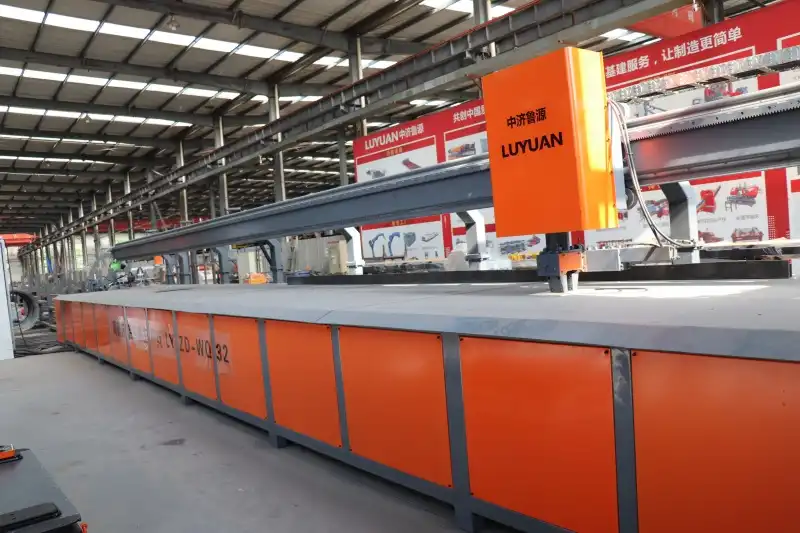
How Automatic Bar Bending and Cutting Machines Work?
Understanding the mechanics behind these machines helps procurement teams ask the right questions before purchasing. The core system integrates mechanical and electronic components that work together to deliver precise, repeatable output every cycle.
Core Components and Control Systems
Every high-performance rebar bending and cutting machine relies on a PLC (Programmable Logic Controller) or CNC controller as its operational brain. Servo motors drive the feeding rollers, while high-resolution encoders track bar length in real time. The cutting unit typically uses chromium-molybdenum alloy blades rated at 58–62 HRC for extended wear life. Together, these components coordinate each processing step without requiring constant operator input.
The Processing Sequence
Raw coiled rebar or straight bars enter the machine at the infeed station. The system then straightens, measures, and feeds the bar to the programmed length before executing the cut. After cutting, the bending unit rotates to the specified angle — up to 180° per second on high-speed models. This end-to-end sequence runs continuously, producing finished stirrups, hoops, and polyline shapes at volumes that manual benches cannot approach.
Safety and Operator Training
Modern rebar processing equipment includes emergency stop circuits compliant with EN 60204-1, physical guarding around rotating components, and audible cycle alerts. Operators need structured training on programming parameters, loading procedures, and fault-clearance steps. With proper training, a two-person crew can safely manage output that previously required six or more workers, significantly lowering site injury exposure.
Key Benefits of Using Automatic Bar Bending and Cutting Machines on Construction Sites
When you see how much is made, it's clear that technology is a good idea. You waste between 5 and 8 percent of the rebar you handle by hand because you mess up when you measure. That number drops by a huge amount when things are machine-run. Here are some of the best things about this tool for busy job sites:
- Labor cost reduction: A single automated line can replace four to six manual workers per shift, directly addressing the skilled labor shortage that contractors across the U.S. face today. Over a 12-month project cycle, this produces measurable savings on payroll and overtime.
- Processing accuracy: CNC-controlled length measurement holds tolerances within ±1mm, and bending angle accuracy stays within ±0.5° across 500 continuous cycles. This consistency eliminates costly rework on structural components.
- Production speed: High-torque servo drives achieve bending speeds of up to 180° per second, allowing continuous 24/7 operation in precast plants and centralized rebar fabrication shops.
- Workplace safety: automatic rebar bending and cutting machine automated feeding and bending remove workers from repetitive high-force tasks, reducing strain injuries and accidents associated with manual bar bending.
People who work will get paid less. Right now, businesses all over the U.S. can't find enough skilled workers. But one automated line can do the work of four to six people per shift. Over the course of a year-long job, this saves money on pay and overtime.
There are no more than ±1mm of errors in a length measurement system handled by a CNC, and there are no more than ±0.5° of errors in a bent angle system for 500 rounds in a row. This way, expensive repairs to important parts don't have to be done over and over again.
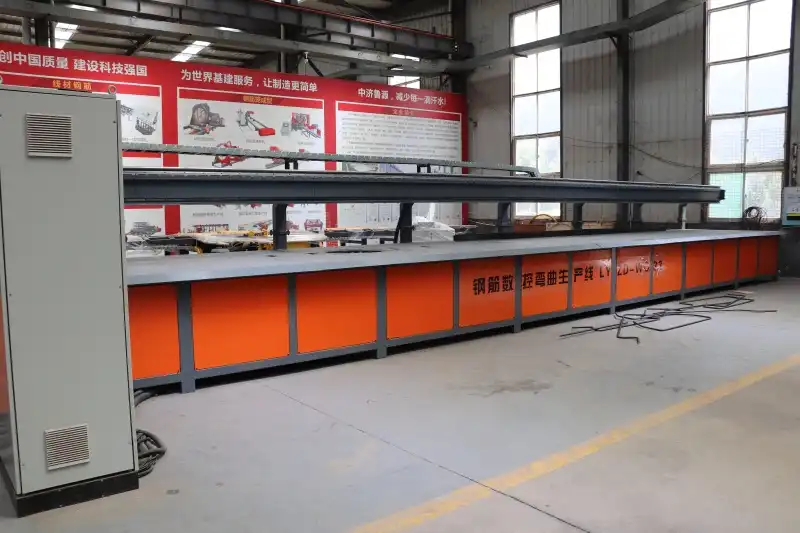
Types and Specifications of Automatic Bar Bending and Cutting Machines
Not every project needs the same machine. The right choice depends on bar diameter range, production volume, site mobility requirements, and available floor space.
Fully Automatic vs. Semi-Automatic Models
Fully automatic models handle the complete process — straightening, feeding, cutting, and bending — without operator intervention between cycles. Semi-automatic versions require manual loading or angle adjustment but still deliver faster output than fully manual methods. For high-volume precast plants or centralized processing centers, fully automatic lines are the standard choice.
Portable and Stationary Configurations
Portable rebar cutting and bending machines suit smaller job sites where moving equipment between work areas is necessary. Stationary industrial units anchor to a concrete floor and connect to three-phase power, supporting larger bar diameters — typically from 4mm up to 32mm — and continuous production schedules. For tunnel, bridge, and highway projects, stationary systems integrated into a site processing yard deliver the highest throughput.
Key Technical Specifications to Evaluate
When comparing machines, these parameters matter most to equipment managers and technical engineers:
- Processing diameter range: 4mm to 32mm covers most structural rebar grades used in U.S. construction.
- Bending speed: Up to 180° per second on servo-driven models.
- Cutting force: Hydraulic shear systems provide consistent force across the full diameter range.
- Electrical protection: IP54-rated electrical cabinets protect controls from construction site dust and moisture.
- Machine footprint: Relevant for sites with limited laydown space.
Choosing the Right Automatic Bar Bending and Cutting Machine for Your Business
It's not enough to just compare prices when you buy these big-ticket items. If you choose the wrong machine, it will take longer to make things, and it will cost a lot to keep up.
Assessing Your Production Requirements
Find out how many bars you need every day, what widths your projects need, and how hard the shapes are that you need to make. An automatic rebar bending and cutting machine helps a metro train contractor meet different requirements than a business building contractor. A commercial building contractor needs standard hoops that are square or rectangular. When the capacity of a machine is matched to the demand, there is no underinvestment and no wasteful spending of capital.
Evaluating Supplier Reliability
It's important to be able to trust the seller when you buy capital tools. Find companies that are certified by ISO 9001, follow CE rules, and have project references from companies that have worked on projects similar to yours. In 2016, 50 million yuan were used to start Zhongji Luyuan. China Railroad, China State Construction, and China Communications Construction all buy CNC tools from this business to work with steel. The company has sent goods to places like South Korea, Malaysia, Thailand, Kazakhstan, Israel, and South Africa.
After-Sales Support and Customization
When tools break down on a busy project site, it changes the plan right away. It's important to know how to set up and use something before you buy it. The seller should also offer extra parts and a clear time for technical help. At Zhongji Luyuan, there is a full service team that can set up tools to fit the needs of a job and get back to you quickly.
Maintenance Tips and Troubleshooting for Automatic Bar Bending and Cutting Machines
Your rebar grinding machine will last for a long time if you take good care of it. But if you don't do upkeep, there will be unexpected downtime that makes it hard to meet project goals.
Routine Maintenance Schedule
Every day, you should clean the cutting and bending areas of any metal scraps, check the oil on the moving parts, and see how the blade is doing. Your encoder should be checked once a week, as should the wheels' wear and the amount of hydraulic fluid. A trained professional checks once a month to see if there are any issues before they get worse.
Common Issues and How to Resolve Them
The bending angle can change if an encoder sends mixed signals or if the connections at the bending pin assembly are loose. Most of the time, cutting takes longer than planned when the blade sides wear down or the hydraulic pressure drops. Either problem can be fixed right away by someone who knows basic physics and has read the machine's technical instructions. So, people won't have to wait for plant repair people to come.
Safety During Maintenance
In order to fix the machine, it needs to be locked out and turned off. To change the blade, you need safety glasses and gloves that won't cut you. When the system is under pressure, people who work with the hydraulics should never try to free something that is stuck. With these steps, people are safe, and things don't get broken.
Conclusion
Automation is now used for rebar processing by any team that needs to keep labor costs low, meet tight deadlines, and keep structural tolerances on large-scale projects. Big contractors used to be the only ones who used it. Project managers can count on the results they get when they get the right automatic rebar bending and cutting machine. Making your rebar manufacturing yard more automated is a good business move, no matter where your processing happens. How quickly your project improves will depend on how well you choose the right tools and the right seller.
FAQ
How does an automatic bar bending and cutting machine improve site safety?
Automation removes workers from direct contact with high-force bending and cutting operations. Automated feeding eliminates repetitive manual handling, and integrated emergency stop systems halt the machine within milliseconds of a fault condition. This combination reduces the two most common injury types in rebar work: strain injuries and laceration incidents.
What is the typical service life of this equipment?
With proper maintenance, industrial-grade rebar bending and cutting machines from reputable manufacturers typically operate for 8 to 15 years. Service life depends on production intensity, maintenance frequency, and whether the machine runs within its rated diameter and speed specifications.
What rebar diameters can these machines process?
Most industrial models process bars from 4mm to 32mm in diameter, covering standard deformed rebar grades used across infrastructure, commercial, and energy construction in the United States.
Does Zhongji Luyuan offer customized configurations?
Yes. Zhongji Luyuan configures equipment to match project-specific diameter ranges, production volumes, and site layout requirements. Contact the team at sales2@shandongluyuan.com or visit zjly2025.aixdb.cn for technical consultation.
Get Your Rebar Processing Line Running at Full Capacity with Zhongji Luyuan
To meet the needs of large office and infrastructure building projects, Zhongji Luyuan creates and builds automatic bar bending and cutting tools. It's been a long time since we sold an automatic rebar bending and cutting machine that is now used in almost 100 countries. We back up every system with full installation help, training for users, and long-term service from experts. You can email sales2@shandongluyuan.com about your project or go to shandongluyuan.com to get a quote right away for setup.
References
1. American Concrete Institute. ACI 318-19: Building Code Requirements for Structural Concrete. 2019.
2. Construction Industry Institute. Automation and Robotics in Construction: Industry Benchmark Report. 2021.
3. Engineering News-Record. Labor Productivity Trends in U.S. Infrastructure Construction. 2022.
4. International Federation of Robotics. World Robotics Report: Construction and Manufacturing Applications. 2023.
5. National Institute for Occupational Safety and Health (NIOSH). Ergonomic Hazards in Rebar and Reinforcing Steel Work. 2020.
6. Precast/Prestressed Concrete Institute. PCI Design Handbook: Precast and Prestressed Concrete, 8th Edition. 2017.