Automatic ReBar Bending and Cutting Machine for Reinforcement Production in Precast Factories
Oct 27, 2026
In precast concrete manufacturing, reinforcement preparation directly determines structural quality and project delivery speed. An automatic bar bending and cutting machine is a CNC-integrated industrial system that straightens, measures, cuts, and bends raw rebar into precise shapes within a single workflow. For precast factories handling standardized beams, columns, and slabs, this equipment addresses the industry's most persistent problems: labor shortages, material waste rates exceeding 5–8% in manual processing, and inconsistent tolerances across high-volume production cycles.
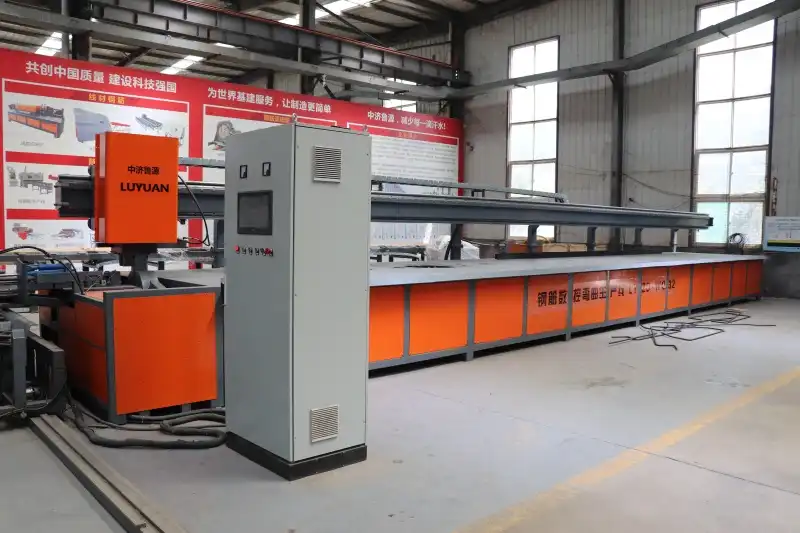
Understanding Automatic Bar Bending and Cutting Machines in Precast Production
How Do These Machines Work?
The four steps that a modern rebar bending and cutting machine performs are feeding, straightening, measuring, and forming. The machines are controlled by servo-motor drives and PLC or CNC systems. A digital screen lets the user set the length and width of the bars and the shape layout. The machine can then do each job without having to be moved by hand, and it can be accurate to within ±1mm in length and ±0.5° in angle.
Key Components and Their Functions
There are three parts that work together: the CNC controller, the bending head, and the hydraulic cutting unit. There are several shape programs that can be saved in the device at the same time. Serp motors with a lot of power let the bending head change positions up to 180° per second. Chrome-molybdenum alloy blades in the cutting unit are harder than 58 to 62 HRC. This means that even though they are used 24 hours a day, seven days a week, they last a lot longer.
Manual vs. Automatic: A Direct Comparison
Skilled people have to measure, mark, and place each bar by hand on both fully automatic and partially automatic systems. It takes longer to do things this way, people make mistakes, and more things get thrown away. When a fully automatic rebar manufacturing machine does the same steps over and over again, these things don't matter. Factories that fully automate their processes are 40–60% more productive and waste up to 6% less material than factories that still do things by hand.
Safety and Energy Efficiency
To follow health and safety rules at work, modern systems have emergency stop circuits that meet EN 60204-1 electrical safety standards and noise levels below 80dB. These machines can be used all the time on the factory floor because they have electrical boxes with an IP54 grade that keep the inside safe from dust and water.
Benefits of Using Automatic Bar Bending and Cutting Machines in Precast Factories
Processing reinforcements automatically in precast operations changes the amount of work that can be done, the cost structure, and the safety of the workers. The benefits are not just thoughts; they can be seen in the work and money that was spent.
When teams that buy concrete look at the main benefits, they always see these: Less staff means more work gets done. An automatic bar bending and cutting machine can process bars faster than people. On high-volume precast lines, the cost of payroll goes down because one operator can oversee work that used to be done by three or four people.
Measurements that are always correct: *After thousands of production runs, every leg, hoop, and longitudinal bar still meets the same standards. Fixing things that aren't the right size is less likely to happen, which is one reason why structural precast projects often take longer than planned.
- Higher throughput with fewer operators: Automated machines process bars at speeds that manual crews cannot match. A single operator can supervise output that previously required three to four workers, directly reducing payroll costs on high-volume precast lines.
- Consistent dimensional accuracy: Every stirrup, hoop, and longitudinal bar meets the same specification across thousands of production cycles. This reduces rework caused by dimensional non-conformance, which is a frequent source of delays in structural precast projects.
- Lower material waste: Automated measuring and cutting minimize off-cut scrap. Facilities processing 50+ tons of rebar per week report recovering thousands of dollars in material savings annually through precise cut optimization.
- Reduced occupational incidents: Removing manual bar handling from high-cycle cutting and bending operations lowers the frequency of operator injuries associated with traditional shear and bender equipment.
As a result of not having to handle bars by hand during high-cycle cutting and bending tasks, the number of injuries that happen to people who work with traditional shear and bender machines has gone down.
How to Choose the Best Automatic Bar Bending and Cutting Machine for Your Precast Factory?
Define Your Production Parameters
Start with the output data you already have. Find out what sizes of bars your plant can handle. A lot of high-end machines can work with sizes between 4mm and 32mm. Find out how many tons of material are needed every day and what shapes are needed. The factory needs tools that can do more than just stirrup production to make prestressed beams and double-wall panels. These tools need to be able to create polylines with more than one bend.
Evaluate Technical Specifications
The four main technical factors are the range of working diameters, the speed at which the parts are bent, the cutting force, and the type of control system that is used. Machinery with servo-driven bending heads is better than machinery with hydraulic-only systems when it comes to cycle speed and angle accuracy. Make sure the equipment has both an ISO 9001 certification and a CE marking. If it does, it means it meets quality and safety standards around the world.
Assess Supplier Support Capacity
When production is high, it's most important that equipment works well. Compare service providers based on how many extra parts they have, how long it takes for them to come to your location for service, how they train workers, and the terms of their warranties. Someone who has worked with big construction and infrastructure companies in the past is more likely to offer long-term support than someone you don't know who offers lower prices at first.
Best Practices for Using and Maintaining Automatic Bar Bending and Cutting Machines
Operator Training and Programming
Before they can work single shifts, operators should go through organized training on the automatic bar bending and cutting machine that teaches them how to set up the machine, respond to alarms, and do basic mechanical checks. Most computers today can hold between 50 and 100 shape programs. To cut down on the time it takes to switch between types of precast goods, training should cover how to handle programs and make plans for groups.
Routine Maintenance Protocols
The bending pins and guide rails should be oiled once a week, the hydraulic fluid levels and hose integrity should be checked, and the electrical connections should be visually checked. You should check the blade wear against the maker's limit level once a month. Compared to repair methods that are done after the fact, preventive maintenance plans greatly reduce unplanned downtime.
Safety Compliance on the Production Floor
They have to follow lockout/tagout procedures when they change blades or make mechanical adjustments. Before each shift, operators should make sure that the emergency stop works, that the guards are in the right place, and that the sensors are tuned. It is important to follow OSHA and EN machine safety rules every day so that production certifications stay up to date and workers are safe.
Emerging Technology Trends and Future Outlook in Bar Bending and Cutting Machines
CNC and Robotic Integration
CNC control systems and robotic arms are built into the newest rebar handling equipment. These systems feed bars automatically and stack finished parts. Here are the last few steps that no longer need to be done by hand. This means that large concrete plants can run overnight without any workers.
IoT Connectivity and Smart Factory Compatibility
Machines ready for Industry 4.0 send data about their production in real time to plant management systems. This data includes cycle counts, mistake logs, and the amount of material used. Teams in charge of buying things can keep an eye on how well output is doing from away and get maintenance alerts before a part breaks. This makes it easy for operations managers to see how well work is going and cuts down on unplanned breaks.
Sustainable and Energy-Efficient Design
Companies are switching from hydraulic to servo-electric drive methods to cut down on the energy used for each turn. Newer hydraulic versions use 20–30% less power than older ones, but they still have the same cutting force. Construction companies now have to report on sustainability in more detail, which means they have to buy equipment that uses less energy in addition to equipment that works well.
Conclusion
It is no longer possible for precast companies to use automated reinforcement processes if they want to stay on schedule and on budget. An automatic bar bending and cutting machine speeds up rebar processing, ensures accurate dimensions, and uses materials more efficiently. You should look at the technical specs, how well it works with other gear, and how much it will cost to run over its whole life to choose the right gear. As IoT connectivity and energy-efficient drive systems become more widespread, precast companies that are quick to adopt them will be ahead of their rivals who are still doing things by hand.
FAQ
How long does it take to recover the investment in an automatic rebar processing machine?
In 18 to 36 months, most precast companies get their money back on the tools they bought. How long it takes varies on how much they make and how much work cost before. Factories that make a lot of goods and run more than one shift usually see faster payback because the money they save on labor adds up quickly.
Is maintenance more complex on automatic machines compared to manual equipment?
Automatic tools need structured repair plans, but they aren't harder to keep up in general. Systems can now find and fix problems on their own before they break down. It's easier to plan when to do routine repairs than to deal with older machines that break down for no clear reason.
What bar diameters and shapes can these machines handle?
With diameters from 4mm to 32mm, these high-performance automatic bar bending and cutting tools can work with a lot of different shapes. They can make spiral ties, closed stirrups, open hoops, and polylines with multiple bends. More complicated shapes are possible for precast structural parts with heads that can bend in more than one direction.
Can the machine integrate with existing precast production line software?
Yes. There are standard ways for CNC machines that work with rebar to share data, which lets them connect to ERP or production management software. This makes it possible for precast factories to time when they pour concrete with when they make reinforcements.
Partner with Zhongji Luyuan for Your Precast Reinforcement Needs
Zhongji Luyuan was set up in 2016 with a registered capital of 50 million yuan. The China Railway, China State Construction, and major infrastructure groups in almost 100 countries trust this well-known company to manufacture automatic bar bending and cutting machine equipment. All of our products have been certified to ISO 9001 and CE, and we have a service team ready to help you after the sale. Email us at sales2@shandongluyuan.com or visit shandongluyuan.com to get a custom price for your concrete building.
References
1. Concrete Plant International — 2022
2. Construction Mechanization Journal — 2021
3. Engineering Procurement and Construction Management Review — 2023
4. International Journal of Advanced Manufacturing Technology — 2020
5. Precast/Prestressed Concrete Institute (PCI) Journal — 2022
6. Journal of Construction Engineering and Management (ASCE) — 2023