CNC Vertical rebar Bending Center LYWQ-32 Provides Precise Rebar Forming for Complex Construction Structures
Oct 28, 2026
When a bridge pier needs to hold thousands of tons of load, or a metro tunnel lining must withstand constant ground pressure, the accuracy of every bent rebar matters. The CNC Vertical Bending Center LYWQ-32, developed by Shandong Zhongji Luyuan Machinery Co., Ltd., is an automated rebar bending machine engineered to process steel bars up to 32mm (Grade III) with ±1mm length precision and ±1° angle accuracy. By replacing manual bending operations with servo-driven CNC control, it directly addresses the labor costs, processing errors, and schedule delays that challenge large-scale infrastructure contractors today.
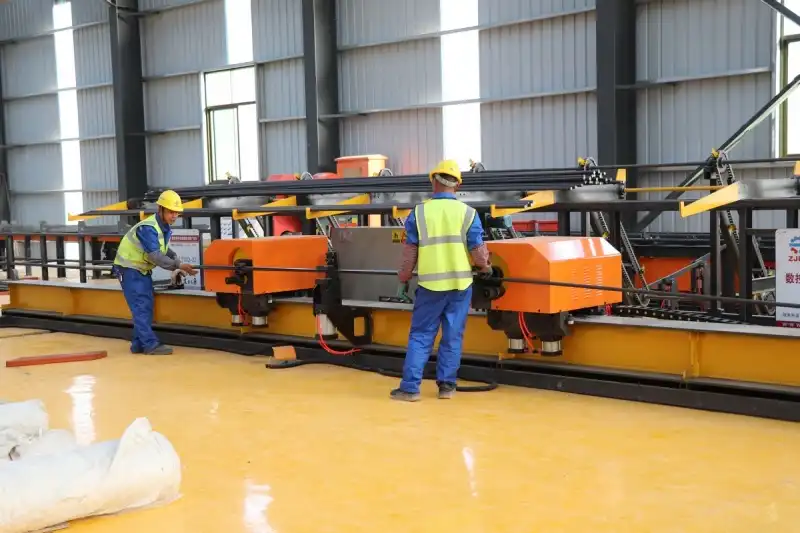
What Makes the LYWQ-32 a Purpose-Built Rebar Forming Solution?
Vertical Processing Orientation
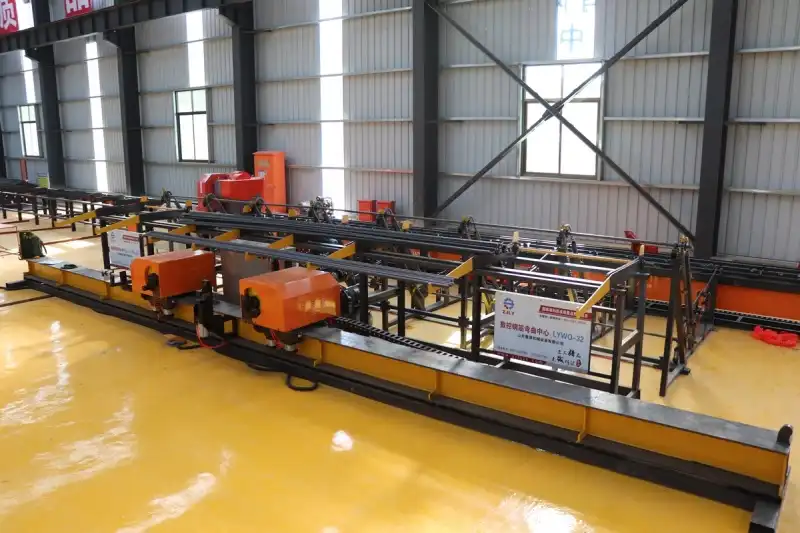
The vertical layout of this machine wasn't chosen just because it looks good. It directly makes moving materials easier by letting rebar feed and place itself in a way that keeps its gravity alignment. This keeps the bar from bowing during long-piece processing. When compared to horizontal bending centers, vertical processing makes it easier for operators to handle longer bars safely in small workshop spaces and puts less stress on their bodies.
Core Technical Specifications
The LYWQ-32 can work with rebar from Grade I to Grade III, and its largest bending diameter is 32mm. Bending speed can reach 60°/s, and the two heads make it possible to bend both sides of a bar at the same time, which greatly reduces cycle times. The control box has an IP54 rating, and the bent pins are made of wear-resistant alloy steel, which means they will last 30% longer than regular ones.
PLC Control and CAD Integration
The machine is controlled by a powerful PLC system and is fed by servos. Operators can bring CAD shape files right into the control interface, which gets rid of the need to measure things by hand and the mistakes that come with it. This feature alone clears up a big problem in the daily workflow for prefabricated concrete factories with high-volume production lines.
How the LYWQ-32 Compares Against Traditional and Other CNC Bending Equipment?
Manual Bending vs. Automated CNC Processing
In the old way of bending rebar by hand, skilled workers used simple automatic benders or hand tools. It is common for bends to have different angles, especially over a long shift. Dynamic angle repetition testing shows that the LYWQ-32 stays accurate to within ±1° over 1,000 bends. This consistency gets rid of the need for extra work that comes up when bars that aren't within tolerance get to the structural assembly stage.
LYWQ-32 vs. Larger CNC Models
The LYWQ-40 can handle diameters up to 40 mm and is best for the heaviest structural applications. However, it is too big and needs too much power for mid-scale processing centers. The CNC Vertical Bending Center LYWQ-32 takes up less floor space but can still handle most rebar diameters used in bridge construction, metro projects, and commercial buildings. This makes it the better choice for most B2B buyers in terms of operational flexibility.
Space and Cost Efficiency on Site
For contractors working on a big infrastructure project with many processing stations, the size of the machine footprint has a direct effect on the prices of site planning. When compared to horizontal center setups, the LYWQ-32's vertical form takes up less space on the equipment floor. When you add in the lower cost of running staff, the total cost per ton of processed rebar drops by a lot over the duration of a project.
Where the LYWQ-32 Performs: Real Construction Applications
The machine has shown its worth in three tough settings where the accuracy of rebar processing directly impacts the safety of structures and project schedules.
The main places where this vertical bending center consistently does its job are listed below:
- Bridge and Viaduct Construction: The LYWQ-32 produces pier reinforcement cages and complex stirrups where geometric accuracy is non-negotiable. Bridge contractors working on highway overpasses and river crossings depend on shape repeatability when assembling cage structures that must match structural drawings exactly.
- High-Speed Railway Infrastructure: Box girder fabrication and tunnel lining components require standardized rebar shapes produced at high volume. The machine operates reliably in dusty outdoor environments thanks to the IP54-rated control enclosure, maintaining processing consistency across extended shifts on remote construction sites.
- Prefabricated Concrete (PC) Factories: PC plants running automated production lines for housing components and precast wall panels benefit from the LYWQ-32's CAD import function. Production batches with varied rebar geometries can switch without manual reconfiguration, keeping lines moving without downtime between shape changes.
One thing that all three of these applications have in common is that they need to be able to handle continuous production pressure on processing volume, shape accuracy, and equipment uptime. With its servo-driven gears and strict factory quality testing, the CNC Vertical Bending Center LYWQ-32 meets all of these requirements. These include 48-hour hydraulic pressure stability tests and structural frame load tests at 120% of maximum capacity.
How to Select and Procure the Right Vertical Bending Center for Your Operation?
Assess Your Production Volume and Diameter Range
Before you call a provider, you should figure out how many tons of rebar you need every day on average and what thickness range your projects usually call for. For work mostly with 16mm to 32mm bars in infrastructure or transit projects, the LYWQ-32 has the whole range of sizes you need. The LYWQ-40 should be considered by processing units that work with heavy structural uses above 32mm.
Evaluate the Supplier's Technical and Service Capabilities
After-sales service turnaround time is always at the top of the list for procurement managers in the building equipment industry. Zhongji Luyuan offers remote diagnostic support through the LYWQ-32's built-in IoT module. They also offer installation, commissioning, and a 2-day certified operator training program on-site. The PLC and servo drive systems are covered by the 12-month industrial warranty.
Plan for the Full Procurement Cycle
There is a structured process for getting CNC rebar processing equipment: submitting an inquiry, getting technical advice, confirming the order, planning production, and installing the equipment on-site. Setting lead times early on in big infrastructure projects with set building plans keeps equipment supply from becoming a critical path bottleneck. Based on current production schedules, Zhongji Luyuan's sales team can confirm exact lead time estimates.
Conclusion
The CNC Vertical Bending Center LYWQ-32 solves a specific, expensive problem: making large amounts of physically correct rebar forms without a lot of work or rework. Because it can import CAD files and process materials vertically, its dual-head servo system solves the real operational problems that project managers and equipment buyers face on infrastructure, transit, and prefabrication projects. As it has been tested and proven to work in bridge building, high-speed rail, and PC factories, it is a good investment for contractors who need to make sure that their output schedule includes precise processing.
FAQ
How much rebar can the LYWQ-32 process per shift?
Depending on shape complexity, the machine processes 5–8 tons of rebar in a standard 8-hour shift. Simpler shapes with fewer bends per bar reach the higher end of that range.
Does it handle different steel grades?
Yes. The LYWQ-32 supports Grade I, II, and III rebar. The CNC software includes presets for different tensile strength grades, so operators do not need to manually recalibrate between material changes.
What does routine maintenance involve?
Daily checks cover hydraulic fluid levels, bending pin condition, and servo drive status indicators. The vertical layout provides easier access to hydraulic lines and the drive mechanism than horizontal configurations, which reduces mean time to repair when servicing is needed.
Is operator training required?
The interface supports direct CAD file imports and is designed for straightforward daily operation. However, a 2-day certified training course on CNC parameter settings is recommended to help operators extract full processing efficiency from the machine.
What warranty covers the electronic components?
Zhongji Luyuan provides a standard 12-month industrial warranty on the PLC and servo systems. The integrated IoT module enables remote diagnostics, allowing the technical team to identify issues without requiring an on-site visit in many cases.
Request a Quote for the LYWQ-32 from Zhongji Luyuan
Working with China Railroad, China State Construction, and China Nuclear Power Construction, Zhongji Luyuan has sold CNC rebar manufacturing tools to builders in almost 100 countries. Contact our team right away if your business needs a reliable CNC Vertical Bending Center LYWQ-32 supplier with a lot of technical knowledge and quick response times for after-sales support. You can email sales2@shandongluyuan.com or go to shandongluyuan.com to ask for a price, a product brochure, or a live demonstration of the tools.
References
1. American Concrete Institute. ACI 318-19: Building Code Requirements for Structural Concrete. American Concrete Institute, 2019.
2. International Federation for Structural Concrete (fib). fib Model Code for Concrete Structures 2010. Ernst & Sohn, 2013.
3. ASTM International. ASTM A615/A615M: Standard Specification for Deformed and Plain Carbon-Steel Bars for Concrete Reinforcement. ASTM International, 2022.
4. Construction Industry Institute. Prefabrication and Modularization: Increasing Productivity in the Construction Industry. Construction Industry Institute, 2012.
5. Engineering News-Record. Infrastructure Outlook: Automation Trends in Heavy Civil Construction. Engineering News-Record, 2023.
6. Occupational Safety and Health Administration (OSHA). Steel Erection: Final Rule on Construction Industry Standards. U.S. Department of Labor, 2001.