Automatic Steel Cage Welding Machine for High-Volume Construction Needs
Sep 23, 2026
When infrastructure projects demand thousands of reinforced cages within tight deadlines, an automatic steel cage welding machine becomes a strategic asset rather than a convenience. These systems integrate PLC automation, gas-shielded arc welding, and CNC control to fabricate rebar cages with consistent geometry and weld integrity. Compared to manual fabrication, they reduce labor dependency, eliminate weld inconsistency, and sustain output volumes that manual crews simply cannot match. For procurement managers and project engineers evaluating rebar cage welding equipment, understanding how these machines work and what separates quality systems is essential before committing to a capital investment.
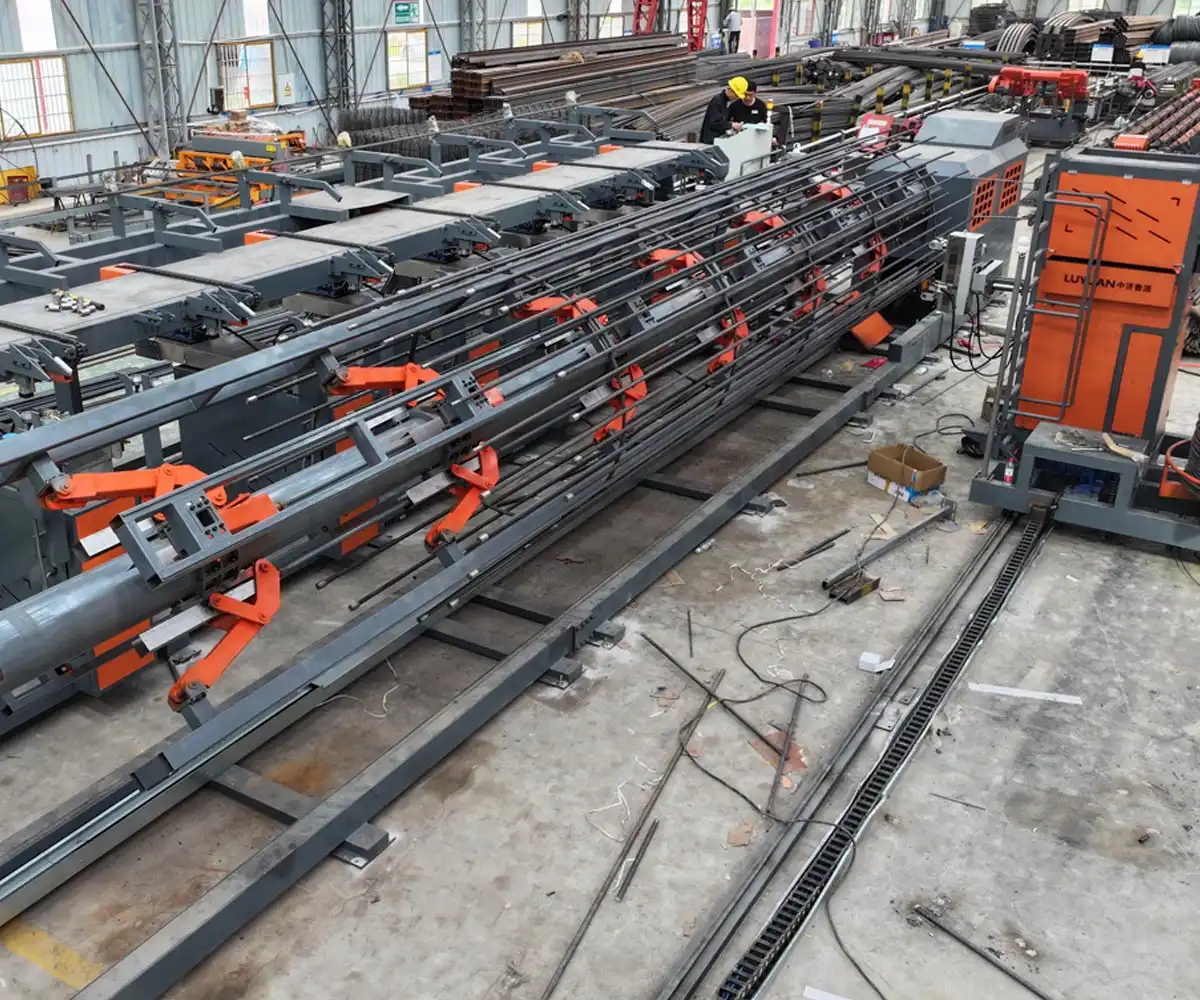
How Automatic Steel Cage Welding Machines Work and Their Core Benefits?
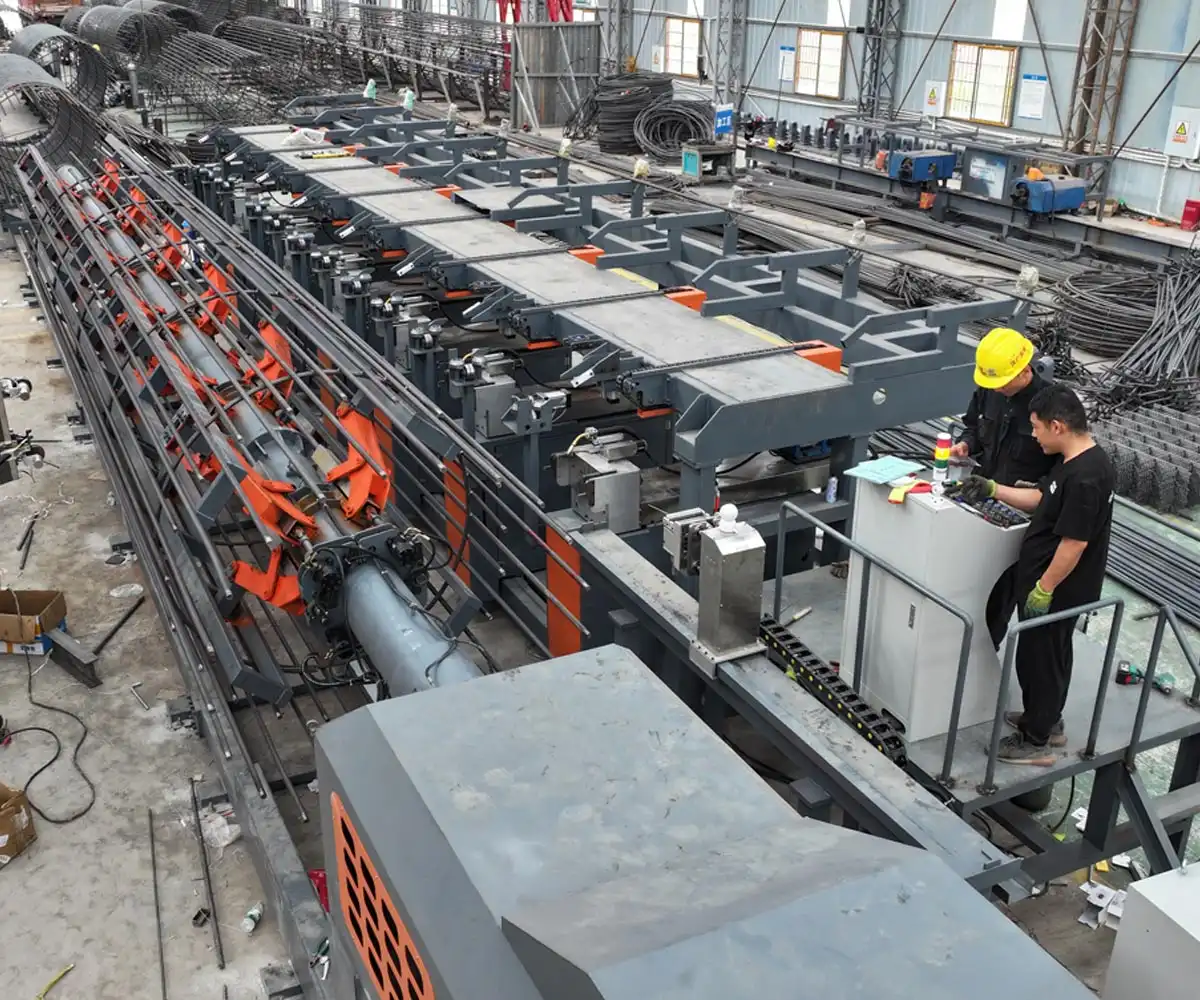
The mechanical, electrical, and hydraulic parts of an automatic rebar cage welding station work together to wrap spiral stirrups around longitudinal main bars and secure each crossing with constant gas-shielded arc welding. The operator puts main bars into template disks and enters cage specifications using a touchscreen HMI. After that, the machine does all the winding and welding by itself. The pitch consistency is kept to within ±10 mm, and the diameter error margins are kept to within ±5 mm. This meets the structural requirements set by standards like JT/T 736-2009.
Key Technical Components Worth Knowing
The Zhongji Luyuan LYZD-GJL2500 model has a fully automated PLC control system with a tablet HMI. It can handle cages with widths between 700 mm and 2500 mm and lengths of up to 12 m. The main bar diameter ranges from φ18 to φ40 mm, and the spiral bar diameter ranges from φ8 to φ16 mm. The total installed power is 30 kW, and the power for welding can reach 100 kW. The system only needs one operator, and it sends out 13 cages every 10 hours. Each section is 12 meters long.
Here are the main benefits this method brings to building sites:
- Fully automated production cycle: The PLC-controlled welding sequence eliminates reliance on skilled welders, reducing wage expenditure while sustaining output. One operator can manage the entire production process from loading to finished cage discharge.
- Zero missed or false welds: Top-mounted automatic welding torches maintain consistent contact pressure and angle, producing uniform weld penetration at every spiral-to-main-bar intersection. This directly prevents structural vulnerabilities that cause costly rework or quality rejections on-site.
- Scalable cage specification range: With cage diameters adjustable from φ700 mm to φ2500 mm and support for both single and double main bar configurations, the machine adapts across pile foundation, bridge pier, and diaphragm wall applications without requiring separate equipment.
These benefits of an automatic steel cage welding machine directly address the three biggest problems that come up when making a lot of rebar: high labor costs, inconsistent weld quality, and slow throughput that causes delays in construction schedules.
Comparing Automatic Steel Cage Welding Machines to Other Solutions
In ideal conditions, manual welding crews make three to five cages per shift. The quality of the welds depends on the skill level of each worker. Robotic welding cells can be very precise at very large sizes, but they need a lot of money, complicated code, and support staff who are only responsible for them. A practical middle ground is an automated rebar cage welding station. It gives CNC-level accuracy and consistent output at a price and level of operational complexity that mid- to large construction contractors and processing centers can handle.
Production Efficiency Comparison at a Glance
One person can run the LYZD-GJL2500 and get 13 cages done every 10 hours. A similar hand team of 4–6 workers could probably make 4–6 cages in the same amount of time, though the spiral spacing and weld strength would be different for each one. Over a 250-day project year, the efficiency gap directly leads to on-time completion and measurable savings in labor costs, making the case for automated solutions stronger in terms of return on investment.
Choosing the Right Rebar Cage Welding Station for Your Project
To choose the right tools, you have to match the machine's specs to the needs of the job. When making large-diameter pier cages, a bridge builder has different needs than when making diaphragm wall cages for a metro. The design choice is based on the cage diameter range, the main bar count, the spiral pitch tolerance, and the shift output goals.
Supplier Evaluation Criteria That Protect Your Investment
In addition to technical factors, buying managers should check the trustworthiness of suppliers of an automatic steel cage welding machine by looking at their certifications, project examples that are written down, and their after-sales support. A quality management system owned by Zhongji Luyuan is certified by ISO 9001. The company has provided equipment for projects run by China Railroad, China State Construction, and China Communications Construction. The company sells its products in almost 100 countries, such as South Korea, Malaysia, Kazakhstan, and Israel. It does this by giving verified performance data for a wide range of building settings. OEM customization options, such as double main bar setups, longer cage lengths, and different power source options, let buying teams match machine specs exactly to project needs instead of settling for compromises that come off the shelf.
Operation, Maintenance, and Troubleshooting for Maximum Uptime
As much as machine quality, consistent production output relies on how well routine maintenance is done. The LYZD-GJL2500 can only work with hydraulic pressures that are no higher than 16 MPa and air supply pressures that are no higher than 0.8 MPa. Keeping these factors within the limits of what is allowed keeps hydraulic actuators and gas clamps from wearing out too quickly.
Routine Maintenance Practices That Prevent Costly Downtime
Maintenance tasks on an automatic steel cage welding machine that need to be done every month include cleaning the sensors in the CNC system, lubricating the lead screws, inspecting the tips of the welding torches, and making sure that the placement of the spiral pitch is correct. To find electrode wear before it affects the depth of the weld, operators should compare the welding power output to the rated 100 kW welding capacity. The LYZD-GJL2500's modular construction lets parts be replaced without taking the whole system apart. This cuts down on repair time by a large amount. When welding problems like uneven pitch or incomplete fusion show up, the servo control system's diagnostic log gives usable error data. This lets the user or a worker working from afar find the problem without having to stop production for long periods of time.
Procurement and After-Sales Support — Making a Smart Investment
For this kind of large-scale capital equipment, decisions about purchase go far beyond the unit price. How long it takes to deliver, help with setup and commissioning, training for operators, and the availability of spare parts over time all affect how well a machine keeps producing over its entire life. Zhongji Luyuan offers full after-sales service, which includes on-site installation help, operator training programs, and quick technical support. The company's service and sales network covers both domestic and international markets. This ensures that clients in the US and other export regions get help when they need it without any problems.
The LYZD-GJL2500 has a 30 m × 8.5 m size, which makes it easy to plan the location of stable processing yards and semi-permanent precast facilities. For contractors who want to build long-term relationships instead of just buying one piece of equipment, Zhongji Luyuan's history of working with state-owned engineering groups and large EPC contractors gives them confidence in the supplier, which lowers the risk of the purchase.
Conclusion
Large-scale building projects can't handle the delays and differences that come with making rebar cages by hand. For serious contractors in charge of pile foundation, bridge, metro, and public works projects, an automatic steel cage welding machine such as the LYZD-GJL2500 is now essential for getting work done. The LYZD-GJL2500 has a proven mix of output capacity, consistent welding, single-operator efficiency, and the ability to adapt to a wide range of specifications. When procurement teams and project engineers look at rebar processing options, the best choice is to work with a maker that offers technical depth, proven references, and dedicated after-sales support. This will protect both project deadlines and capital investment.
FAQ
What is the maximum production output per shift?
Every 10-hour shift, the LYZD-GJL2500 makes 13 cages, and each one is 12 meters long. This result only needs one person, which makes it much more efficient than traditional ways of making things by hand.
Can the machine handle different longitudinal bar quantities?
The PLC system and template disk design allow for flexible main bar numbers. There are both single and double main bar arrangements, and double main bar arrangements can be made to fit specific structure forms.
What maintenance does the CNC control system require?
To stop positioning drift, maintenance should be done once a month and include cleaning the sensors, backing up the software, and lubricating the lead screws. These regular tasks keep the spiral pitch and cage diameter accurate for as long as the machine is in use.
Does the system support double spiral bar winding?
The LYZD-GJL2500 can handle both single and double spiral bar setups. The double spiral winding makes the structure denser and speeds up the cage reinforcement for heavy-duty uses.
What safety protocols apply during operation?
Operators should keep marked areas away from the spinning cage assembly, check the hydraulic and air supply pressures before each shift, and do maintenance while following lockout/tagout procedures. The automated cycle lowers the risk of handling things by hand, making the workplace safer than when welding was done by hand.
Partner with Zhongji Luyuan for Your Next Project
Large construction companies in almost 100 countries trust Zhongji Luyuan's automatic steel cage welding machine solutions because they work well in the industry. Our rebar cage welding equipment is made for workers who can't afford downtime. It comes with ISO 9001 certification, fully customizable setups, and dedicated after-sales support. You can email our team at sales2@shandongluyuan.com or go to shandongluyuan.com right now to get specifications, prices, or a custom solution plan from a top maker of automatic steel cage welding machines.
References
1. Construction Mechanization, 2022 — "Automation Trends in Reinforced Concrete Foundation Engineering"
2. Journal of Construction Engineering and Management (ASCE), 2021 — "Labor Productivity and Equipment Automation in Large-Scale Infrastructure Projects"
3. Steel Construction (British Constructional Steelwork Association), 2020 — "Advances in Automated Rebar Fabrication and Quality Assurance"
4. International Journal of Advanced Manufacturing Technology, 2023 — "CNC-Controlled Welding Systems: Precision Benchmarks in Structural Rebar Processing"
5. Concrete International (ACI), 2022 — "Reinforcement Cage Fabrication Standards and Inspection Protocols for Bridge and Pile Applications"
6. Engineering Procurement Construction Management Journal, 2021 — "Capital Equipment ROI Analysis for Automated Rebar Processing in EPC Project Environments"