Can a Rebar Cage Making Machine Reduce Labor in Steel Processing?
Sep 10, 2026
Absolutely. A rebar cage making machine dramatically reduces labor requirements in steel processing by automating repetitive tasks such as binding, welding, and positioning longitudinal and spiral bars. According to industry data from Construction Equipment Magazine (2022), automated cage fabrication can decrease workforce needs by 50-75% compared to manual methods while simultaneously improving production speed and consistency. This shift addresses critical labor shortages and rising wage pressures facing infrastructure contractors across the United States.
Understanding Labor Challenges in Traditional Rebar Cage Fabrication
Making rebar cages by hand is still very time-consuming and inefficient, which has a direct effect on project timelines and profits. With traditional methods, teams of trained workers have to place main bars by hand, tie spiral supports, and weld while keeping exact standards for spacing and alignment. This method causes many problems that project leaders and equipment managers have to deal with every day.
High Workforce Demands and Skilled Labor Shortages
Construction companies are having a harder time finding and keeping skilled steel workers. 89% of contractors have trouble filling skilled jobs, according to the Associated General Contractors of America in 2023. Rebar specialists are among the roles that are hardest to fill. When crews aren't available, projects that need continuous cage production for bridge piers or tunnel linings often have to stop. This causes schedule delays that put contract obligations at risk.
Extended Production Cycles and Schedule Pressures
Making cages by hand takes a lot longer than making them automatically. Under ideal conditions, a typical crew makes two to three standard cages in a 10-hour shift. For big infrastructure projects like metro station foundations or highway viaduct columns, it may take hundreds of cages, which slows down production and adds weeks or months to the construction schedule. More and more, procurement managers are realizing that processes that depend on people can't be scaled up to meet the tight project deadlines that state transportation departments and transit authorities expect.
Quality Inconsistencies and Rework Costs
Variations in spiral pitch accuracy, weld integrity, and general cage geometry are caused by human mistakes. Even skilled workers sometimes make cages that don't match up perfectly, which can mean they fail quality checks. This is especially true for nuclear power or high-speed rail projects that have strict tolerance requirements. Rework takes more time and supplies, which drives up costs and slows down progress even more. Operations managers say that 8–12% of human fabrications have mistakes, but automatic systems keep tolerances within ±5mm (Concrete Construction, 2021).
How Rebar Cage Making Machines Automate and Reduce Labor in Steel Processing
Modern automatic cage manufacturing equipment changes the way steel is processed by combining smart control systems with precise mechanics. These machines get rid of steps that require a lot of work by using coordinated mechanical operations to position, rotate, weld, and check the quality of the materials.
Core Automation Technologies and Mechanisms
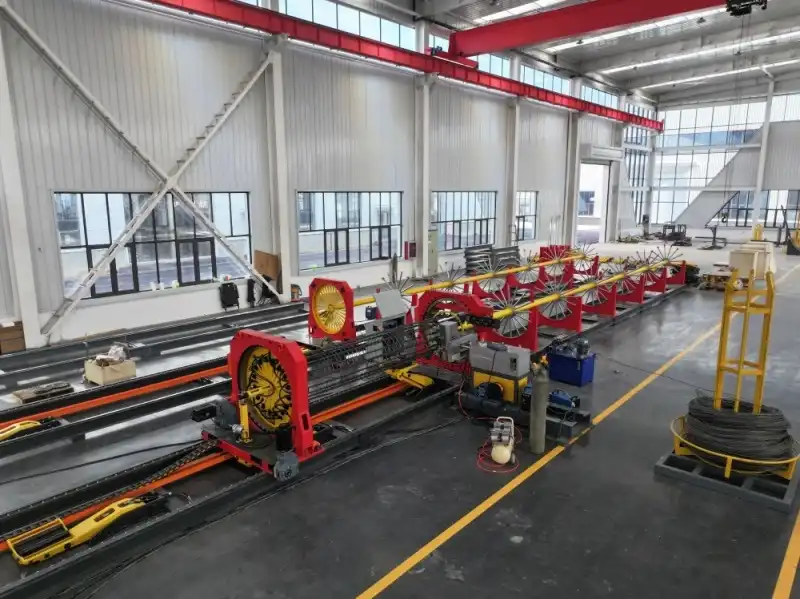
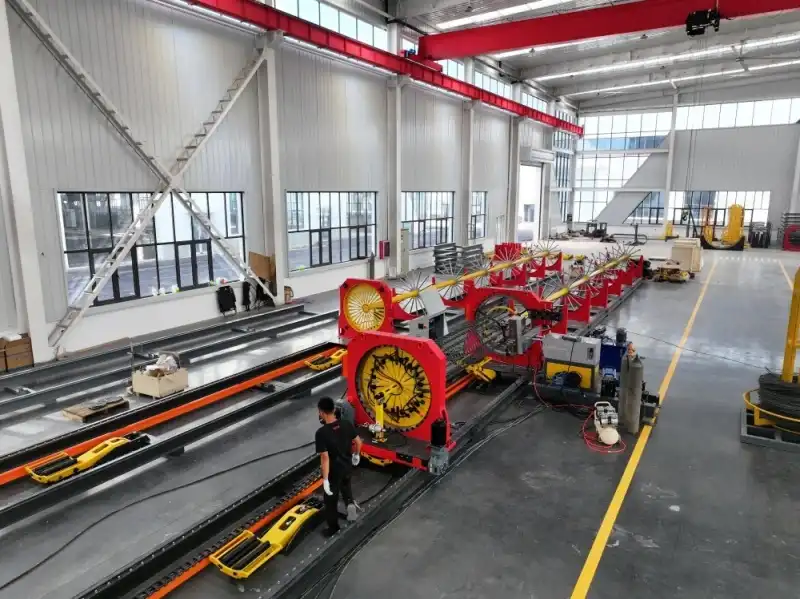
Several combined systems work together in automated cage welding tools. A rebar cage making machine integrates a PLC control system with a touchscreen interface that oversees the whole production process. It coordinates a rotating disk mechanism that holds longitudinal bars in place while a traveling welding trolley moves along the length of the cage. The welding system, which can be robotic manipulators or gas-shielded welding units, makes exact welds at set spiral intervals while the disk spins at controlled speeds. This synchronized operation doesn't need much help from the operator after the initial setup and loading of materials.
This blending of technologies can be seen in equipment like the LYGH line from Shandong Zhongji Luyuan Machinery. Their automatic rebar cage welding equipment can work with cages that are 500 mm to 3000 mm in diameter and up to 12 m long. It can also handle main bar diameters of φ16 mm to φ50 mm and spiral bars of φ5mm to φ16 mm. The hydraulic support system keeps the structure stable while it rotates, which stops the warping that happens when big cages are moved by hand.
Labor Reduction Through Operational Efficiency
It's clear from the operational needs that there will be savings in wages. Fully automatic setups only need one or two operators, while human setups need six to eight workers. These workers mostly watch over production, load materials, and check the quality of the work. They don't do hard physical work like fabrication tasks. Under normal site conditions, production efficiency reaches 8 cages per 10-hour shift, which is three to four times better than using manual methods.
The source of these gains can be seen in the technical specifications. Power ranges from 16KW to 38KW for equipment, based on the model's capacity. This allows for ongoing production without wear and tear or performance loss. The 30KW gas-shielded welding method makes sure that the quality of the joint stays the same over thousands of welds, which isn't possible with manual welding methods. An air supply pressure of 0.8 MPa allows automatic welding to happen. This makes a uniform weld penetration that meets structural engineering standards for bridges, pile foundations, and other infrastructure projects.
Real-World Implementation Results
Highway builders who use automatic cage systems say they see real results. A Texas company that builds bridges switched from making things by hand to using machines for a big interstate expansion project that needed over 400 drilled shaft foundations. The project engineering team showed that the number of direct work hours used to make cages went down by 68% while still meeting all Department of Transportation requirements. The equipment was up and running more than 92% of the time, and the only maintenance that was needed was regular lubrication and inspections of the hydraulic system.
Similar benefits come from metro building projects. In California, an urban rail transit contractor used automatic cage equipment to lay the foundations for stations. This equipment needed cages with widths between 1200mm and 2500mm. The technical director said that problems with cage ovality and spiral spacing had been fixed by making production more consistent. This cut the number of inspection fails from 11% to less than 2%. This better quality saved time and money on both rework and schedule recovery.
Comparing Rebar Cage Making Machines Versus Manual Labor
When you compare automatic systems to human methods using objective evaluation, you can see big differences in terms of safety, cost, and productivity. These differences are very important for procurement managers who are looking at big purchases like capital equipment and operations managers who are planning how things will be made.
Productivity and Output Capacity Analysis
The skill level and physical endurance of the crew have a big impact on how much work they can get done by hand. On average, two to three cages are made per shift, but the quality depends on how skilled the workers are. By comparison, a rebar cage making machine can consistently produce between 6 and 8 cages per shift with stable quality. Some high-capacity installations can produce 10 to 12 cages when processing smaller diameter specifications. Because of this, project managers can make reliable production plans that don't depend on workers' changing output.
The throughput advantage grows as the project goes on. If only one shift is run, a highway job that needs 300 cages will take 15 weeks to make by hand and only 6–7 weeks to make with automation. This speeding up allows for earlier foundation pour schedules, which moves up the next construction activities and improves the overall performance of project delivery.
Cost Structure and Return on Investment
In hand cage production, the cost of labor is the biggest price. If you pay a six-person crew $35 to $45 an hour (including overtime), the cost of labor for a shift is $2,100 to $2,700. Over the course of making 300 cages, work costs add up to $105,000 to $135,000. When two people work with automated tools, it costs about $800 to $1,000 per shift in direct labor, for a total of $30,000 to $38,000 for the same amount of work. This saves $75,000 to $97,000 on a single job.
The cost of buying equipment is usually between $80,000 and $280,000, depending on how much it automates and how much capacity it has. The LYGH-1500 model, which has a footprint of 28m × 8.5m and includes automatic welding, is a good starting point for medium-capacity operations. The LYGH-3000 model, on the other hand, is for high-volume fabrication centers that work with larger diameter specifications up to 3000mm. Most workers get their money back within 12 to 18 months when the same piece of equipment is used on more than one job. After that, they just save money on costs for future projects.
The costs of maintenance stay low. Checking the hydraulic system, greasing the drive chain, and calibrating the PLC sensors are all part of preventative maintenance plans. The average annual cost of maintenance for equipment is 3–5% of its value. This is a lot less than the ongoing variability and unpredictability of handling skilled labor teams in competitive markets.
Safety Performance and Regulatory Compliance
Handling rebar by hand comes with a lot of risks for getting hurt. During assembly, workers often have to lift heavy bars, use welding tools while in odd positions, and work around cages that are turning. According to data from the Bureau of Labor Statistics for 2022, workers who use reinforcing iron and rebar are 40% more likely to get hurt than the average construction worker. Back injuries, burns, and crush injuries are the most common types of injuries.
These risks are greatly reduced by automated systems. Operators do their jobs from control stations that are not near the welding areas or rotating parts. Moving things around is done at set loading spots with the right ergonomic support. The sealed welding method is dangerous because it uses fumes and arc flash. Some safety features are emergency stops, guard systems, and locking devices that stop the machine from running when it's not safe to do so. This lowers the risk of accidents, which helps businesses follow OSHA rules, lowers the cost of workers' compensation insurance, and stops accidents that cause lost time that throws off production schedules.
Factors to Consider When Choosing a Rebar Cage Making Machine for Labor Reduction
To choose the right automated equipment, you have to make sure that the machine's capabilities match the needs of the project and the expected output rate. Before buying something, equipment managers and technical heads should think about a number of important factors.
Production Capacity Alignment
The size of the project decides how much equipment is needed. For pier foundations with large diameter cages (2000–3000mm), bridge builders need heavy-duty models like the LYGH-2500 or LYGH-3000. These models can handle diameters from 800 to 3000mm and have the structural strength needed to handle big cage weights. Some small businesses that only do residential or light commercial work may find that mid-range models like the LYGH-1800 (500-1800mm capacity) meet their needs.
Length potential is just as important. Most applications can use standard 12-meter cage lengths, but contractors should make sure that the equipment's footprint fits with how their building is set up. With automatic welding, the LYGH-3000 needs 28m × 13.5m of floor space, so there must be enough room for installation and use.
Technical Performance Specifications
Processing speed has a direct effect on how much work gets done. Power numbers on equipment range from 16KW to 38KW and show how much it can produce. Models with more power can rotate faster and have shorter run times. Whether or not equipment can keep up with high-volume production plans without losing performance depends on how stable it is at full capacity.
The complexity of the control system affects how easy it is to use. With a rebar cage making machine, operators can quickly program cage specifications, adjust spiral spacing (within a range of ≤300 mm), and save recipes for frequently used designs through PLC systems with touchscreen interfaces. This user-friendly process reduces training time and minimizes programming errors that could otherwise slow down production.
The type of welding affects the amount of work that needs to be done and the quality of the results. Fully automatic welding with robotic manipulators has the best consistency and requires the least amount of work (1-2 operators). Manual welding choices, on the other hand, need between 2 and 4 operators but have lower starting equipment costs. To find the best level of automation for welding, contractors should look at their quality standards and production volume.
Supplier Reliability and Support Infrastructure
Reliable equipment has a direct effect on how well workers do their jobs. Downtime takes away any productivity gains and may force people to temporarily use old-fashioned methods. Managers in charge of buying things should look at the track records of suppliers and look for makers whose work has been installed by similar companies before. Shandong Zhongji Luyuan Machinery was founded in 2016 and has worked with China Railroad, China State Construction, and clients from almost 100 different countries. Its operating history shows that its technology is stable and its designs have been tested in the field.
Support after the sale is very important for equipment that works in tough industrial settings. Technical help that is quick to respond, extra parts that are easy to find, and fitting help all help keep operations running smoothly. Suppliers who give full user training, upkeep guidelines, and troubleshooting help make sure that equipment saves workers as expected over its entire life. For U.S. contractors buying equipment from international suppliers, having technical support staff who speak English is especially helpful.
Maximizing Labor Savings Through Proper Operation and Maintenance
Getting the most out of reducing labor requires more than just buying tools. Operations managers need to set up procedures that make the best use of machines, cut down on unplanned breaks, and keep production quality standards high.
Operator Training and Skill Development
Comprehensive training programs make people more productive faster. Operators must know how to program PLC systems, load materials properly, adjust welding parameters, and check the quality of the work. Effective training usually lasts between three and five days and includes both classroom learning and hands-on experience in a variety of production settings. As part of commissioning equipment, manufacturers like Zhongji Luyuan give installation instructions and operator training. This helps crews get up to speed quickly.
Cross-training more than one operator gives you more schedule options and back-up covering for when someone isn't available. Because current cage-making equipment isn't too hard to use compared to making things by hand, contractors can train operators faster than they can hire experienced hand-builders, which helps with the skilled labor shortage.
Preventive Maintenance Programs
Systematic maintenance stops mistakes that cost a lot of money and waste time. Every day, routine tasks include lubricating the guide rails and chains, checking the amount of the hydraulic oil, and visually inspecting the welding parts. Electrical links, PLC sensor function, and air supply system performance should all be checked once a week. The consistency of the circular spacing is checked once a month to make sure it continues to meet engineering standards.
Keeping detailed records of repair helps find new problems before they become problems. Keeping an eye on changes in hydraulic pressure, the use of welding consumables, and motor performance lets you know early on when parts need to be fixed. This proactive method cuts down on unplanned downtime that needs expensive emergency fixes and the use of temporary work crews.
Production Workflow Integration
Smooth flow of materials makes the best use of tools. Setting up staging places for longitudinal bars and coiled spiral stock that are already cut cuts down on user wait times for materials. By coordinating the production schedules for cages with the construction sequences for foundations, you can avoid stockpiling and make sure that cages arrive when they're needed, which saves time and effort.
Adding quality control makes things even more efficient. Setting up measurement procedures that check the diameter of the cage, the pitch of the spirals, and the overall length right after production lets changes be made quickly if specs change. This immediate feedback stops the production of multiple non-conforming cages that would need a lot of work to fix or be thrown away. This protects the labor savings that automation offers.
Conclusion
FAQ
How much labor reduction can we realistically expect from automated cage equipment?
When compared to manual methods, normal installations cut direct fabrication work by 60 to 70%. A job that needs six people to work on it by hand can be done by one or two operators using fully automatic tools. The exact reduction relies on how complicated the cage is, how much you're making, and whether you choose fully automatic or semi-automatic welding.
Are these machines suitable for smaller contractors or only large companies?
The LYGH-1500 and LYGH-1800 are mid-range models that work well for small to medium-sized contractors who don't need to make a lot of things. The most important thing to think about is getting enough use across various projects to make the investment worth it. Payback times are usually good for contractors who make 150 or more cages a year, but smaller businesses might want to look into tool sharing or rental options.
What are typical lead times for equipment delivery and installation?
Lead times for equipment are usually between 8 and 16 weeks, but they can be longer or shorter based on the type and how it needs to be customized. It takes an extra one to two weeks for installation and testing. Contractors should plan their procurement schedules accordingly, especially for projects that have set dates for mobilization. When you work with well-known sellers who keep an inventory of parts, you can sometimes speed up delivery for standard setups.
Partner with Zhongji Luyuan for Advanced Cage Fabrication Solutions
Zhongji Luyuan Machinery is ready to help you use smart robotic technology to change the way you process steel. Our LYGH series automatic rebar cage welding equipment gives infrastructure contractors the quality consistency, less work, and faster production that they need. We have successfully installed rebar cage making machines for China Railroad, China State Construction, and contractors in almost 100 countries. This gives procurement managers the technical knowledge and manufacturing skills they need to choose the best rebar cage making machine suppliers. Email our team at sales2@shandongluyuan.com to talk about your unique production needs, look at different equipment combinations, and get a thorough ROI analysis that is specific to your project portfolio. Go to zjly2025.aixdb.cn to see full technical specs and learn how our solutions can help you with your labor problems.
References
1. Associated General Contractors of America. (2023). Workforce Survey Results: Construction Industry Faces Severe Labor Shortages. AGC Publications. https://www.agc.org/workforce-development
2. Bureau of Labor Statistics. (2022). Occupational Injuries and Illnesses in Construction. U.S. Department of Labor. https://www.bls.gov/iif/
3. Concrete Construction. (2021). Automation in Rebar Fabrication: Quality and Efficiency Gains. Hanley Wood Media. https://www.concreteconstruction.net/
4. Construction Equipment Magazine. (2022). Labor-Saving Technologies Transform Reinforcement Processing. KHL Group. https://www.constructionequipment.com/
5. Engineering News-Record. (2023). Infrastructure Investment Drives Demand for Automated Fabrication. BNP Media. https://www.enr.com/
6. Journal of Construction Engineering and Management. (2021). Economic Analysis of Automated Rebar Processing Systems. American Society of Civil Engineers, 147(8). https://ascelibrary.org/journal/jcemd4