Why Choose an Automatic Pile Wire Cage Welding Machine for Piles?
Sep 10, 2026
In today's fast-paced infrastructure sector, choosing an automatic pile wire cage welding machine is no longer just a preference—it's a strategic imperative. These advanced systems replace labor-intensive manual processes with PLC-controlled precision, enabling contractors to fabricate reinforcement cages with consistent quality and dramatically reduced cycle times. For project managers navigating tight deadlines and procurement leaders seeking measurable ROI, automated rebar cage welding technology delivers unmatched production speed, structural integrity, and labor cost savings that directly impact project profitability and schedule adherence (Construction Equipment Magazine, 2023).
Understanding Automatic Pile Wire Cage Welding Machines
What Defines an Automated Rebar Cage Welding System
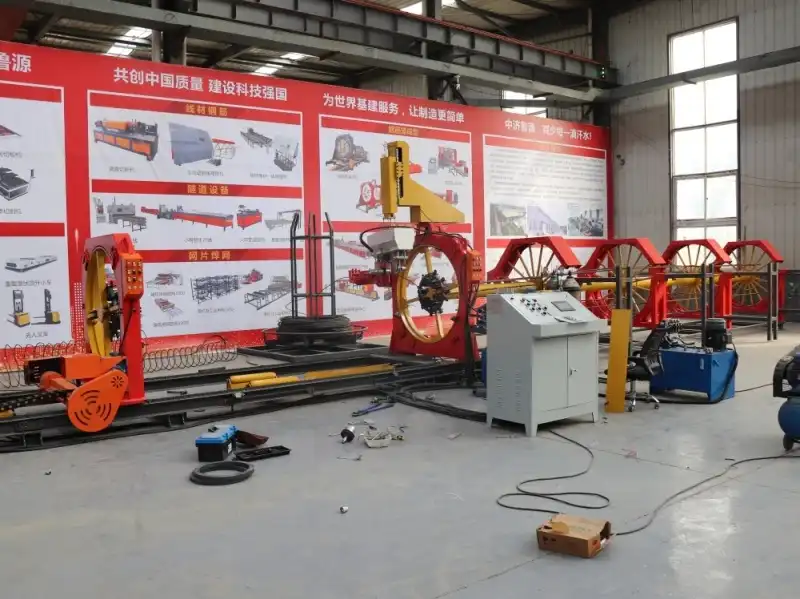
An automatic pile wire cage welding machine is a special kind of CNC-controlled workbench that makes circular reinforcement cages that are used in deep mining, pile foundations, and bridge piers. These machines use programmable logic controllers (PLC), synchronous rotation mechanisms, and automated gas-shielded welding electrodes to make uniform, code-compliant rebar assemblies. Traditional methods need many skilled welders and a lot of time.
Core Components and Operational Workflow
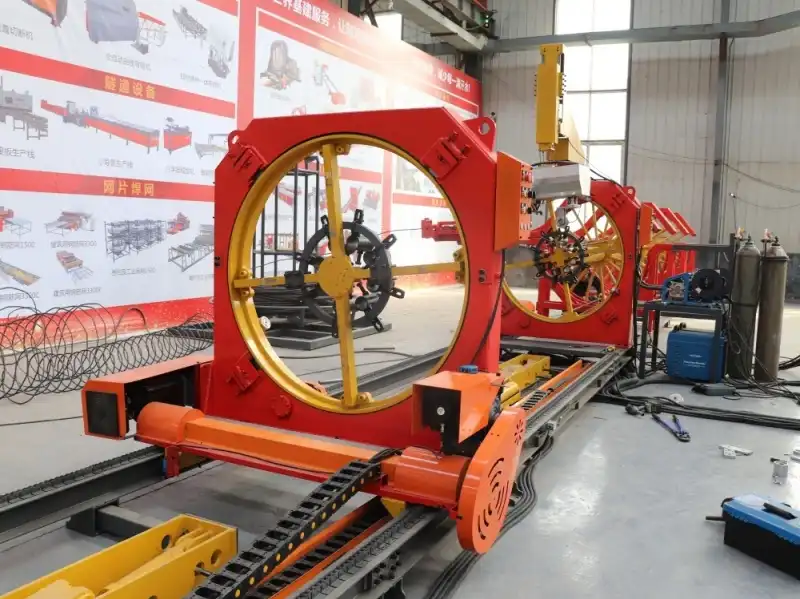
Modern welding machines are made up of several elements that work together. The main disk spins at a controlled speed and holds the lengthwise bars in place. At exact intervals, the feeding unit sends out spiral reinforcement. A multi-point hydraulic locking system holds the main bars in place, keeping them from moving out of place while the machine is turning. Usually, the welding unit has high-frequency inverter technology that provides steady current to make strong joints with no spatter. The whole process is controlled by a touch-screen interface that lets operators enter information about the cage's diameter (which can be anywhere from φ700 to φ2500 mm in more advanced models), length (up to 12 meters or more), and spiral spacing (which can be changed up to ≤300 mm).
Industry data shows that automated systems can build a normal 12-meter cage in 20–40 minutes, while it would take two to three hours for a team of people welding by hand (International Journal of Construction Engineering, 2022). This is possible because the machine can keep its spinning speed steady, control the pitch precisely to within ±2mm, and weld multiple intersection places at the same time.
Technical Specifications That Matter for B2B Buyers
Procurement managers should look at a few important factors when deciding what tools to buy for big projects. It is very important that the diameters of the rebars work with each other. Most structural needs can be met by machines that can handle ±18–Ά40 mm main bars and Ά8–Ά16 mm spiral bars. The 500–2500 mm range of cage diameters makes them flexible enough to be used for a wide range of projects, from highway sound barriers to marine port piles. Power specs (380V/50Hz/3-phase, total power around 30 kW with a welding ability of 100 kW) must match the electrical facilities on the job site. Depending on how complicated the project is, production speed (usually 1–3 cages per hour) has a direct effect on how long the project can be completed. According to the American Concrete Institute (2023), the footprint, which is usually 30m × 8.5m for large models, needs to be planned out so that there is enough room in the workshop or fabrication yard.
Benefits of Using an Automatic Pile Wire Cage Welding Machine in Construction
Unmatched Production Speed and Consistency
Automating rebar processing bottlenecks changes them in a fundamental way. A single operator using an automatic pile wire cage welding machine can make 13 standard cages in a 10-hour shift, which is the same amount of work as six to eight manual welders. When builders are hit with penalties for late deliveries or need to speed up base work to keep other trades on schedule, this acceleration comes in very handy. Even though speed is important, consistency is still the most important thing. Automatic welding gets rid of the differences in joint strength and spacing accuracy that come from people, so every cage meets design specifications without the quality changes that happen with hand-welded assemblies.
Substantial Labor Cost Reduction and Resource Optimization
Here are the main benefits these methods offer building companies that want to save money:
- Minimal Staffing Requirements: A single trained operator manages the entire production cycle, from rebar loading to finished cage extraction, eliminating the need for multiple certified welders whose hourly rates continue climbing nationwide.
- Reduced Material Waste: Precision cutting and positioning minimize scrap rates, typically keeping waste below 2% compared to 5–8% in manual operations, which directly improves material utilization and project margins.
- Lower Overhead Expenses: Automated systems reduce expenditures on personal protective equipment, welding consumables, and workers' compensation premiums associated with high-risk manual welding tasks.
- Faster Skill Development: New operators achieve proficiency within 3–5 days of training, compared to months or years required to develop skilled manual welders, addressing the persistent labor shortage facing the construction industry.
These cost savings mean faster payback periods. For example, Engineering News-Record (2023) says that many contractors say they can recover their capital investment within 18–24 months just by saving money on labor, especially on projects that need hundreds of pile cages.
Enhanced Safety Standards and Regulatory Compliance
Improving the safety of the workplace is another strong benefit. Automated systems make it much safer for workers to be around welding flash, fumes, and heavy lifting. The enclosed welding area with built-in fume extraction systems makes sure that OSHA air quality standards are met. Safety interlocks and emergency stop devices keep the machine from turning on by mistake while rebar is being loaded. This proactive approach to safety cuts down on accidents and the time they take to fix. It also shows that you care about your workers' well-being, which is becoming an increasingly important factor in bidding for public sector jobs and reporting on a company's sustainability.
Comparing Automatic vs Manual Pile Wire Cage Welding Machines
Operational Efficiency and Accuracy Differentials
Looking at key data makes the difference in success between automated and manual methods clear. Manual welding can only make 15–20 parts per minute at most, and the quality depends on how skilled the welder is and how tired they are. In contrast, an automatic pile wire cage welding machine can maintain steady welding speeds of 40 to 60 joints per minute, ensuring consistent entry depth and eliminating missed connections. Geometric accuracy also improves significantly—these machines can maintain ovality within 5mm along the entire length of the cage, while manually assembled structures often have 10–15mm variations that can make pile installation and structural performance inspections more challenging.
Investment Analysis and Long-Term Returns
A fully automated rebar cage welding production workstation can cost anywhere from $80,000 to $150,000 up front, depending on its capacity and how it is customized. The initial cost of buying equipment for manual tasks is lower, but the ongoing cost of labor is much higher. A full cost-benefit study shows that workers who process more than 200 cages a year usually see a return on investment (ROI) within two years. Because there isn't much setup time between production runs, projects with repetitive requirements, like house developments that need similar foundation piles, see even faster returns.
Project Suitability Considerations
Automation works especially well for large infrastructure projects with a lot of work to do, like building metros, laying bridge foundations, and building a lot of homes. Contractors who work on nuclear power plants or hydropower facilities can use automatic systems to keep track of quality paperwork and make sure that welds are always strong. On the other hand, small jobs that need fewer than 50 handmade cages might not be worth the money spent on capital, so it may be cheaper to do things by hand. When a contractor works on both big and small jobs, it's often best to keep both skills up to date. For example, automation can be used for high-volume jobs, while manual welding can be saved for unique situations.
How to Choose the Right Automatic Pile Wire Cage Welding Machine
Matching Production Capacity to Project Demands
Evaluating Suppliers and After-Sales Support Infrastructure
The reliability of the supplier has a direct effect on the long-term performance of equipment and the continuity of operations. When looking at possible makers, you should look into a few important things:
- Track Record with Major Contractors: Established relationships with entities like China Railway, China State Construction, and similar tier-one contractors indicate proven reliability in demanding applications.
- Technical Support Responsiveness: Verify availability of local service technicians, typical response times for breakdowns, and access to replacement parts—downtime costs can quickly exceed initial savings from choosing lower-priced equipment.
- Training Programs: Comprehensive operator training, ideally conducted at the buyer's facility, ensures smooth technology adoption and maximizes utilization rates from day one.
- Warranty Coverage: Standard warranties covering 12–24 months for major components, with clear terms regarding consumables and wear parts, protect against premature failures.
- Customization Capabilities: Suppliers offering modifications for unique project requirements—such as extended cage lengths beyond standard 12 meters or specialized welding configurations—add valuable flexibility.
Zhongji Luyuan, which was founded in 2016 and has worked on building projects in almost 100 countries, is a good example of the kind of established company that procurement managers should look for. According to Zhongji Luyuan (2024), their work with large state-owned companies and international exports shows that they have the technical know-how and service infrastructure needed for mission-critical equipment.
Standard vs Customized Machine Configurations
Off-the-shelf types can usually meet 80% of popular pile cage needs, and they can be delivered faster and cost less. Custom engineering may be necessary for projects with unusual needs, like diameters bigger than 2500 mm, triple spiral designs, or merging with current fabrication line equipment. When looking into customization, make sure you get clear specifications, production timelines (custom builds usually take 12 to 16 weeks), and validation testing protocols to make sure the changed system works the way you want it to.
Maintenance and Safety Best Practices
Routine Maintenance for Maximum Equipment Lifespan
Following the right repair steps will make machines last longer and keep output from stopping, which can be very expensive. Every day, tasks like cleaning the welding electrodes to get rid of slag buildup, checking the amounts of hydraulic fluid, and making sure the air system pressure is correct (usually ≤0.8 MPa). As part of weekly tasks, the main disk unit needs to be aligned, and the spinning bearings need to be oiled. Electrical links, PLC system monitoring, and welding transformer cooling circuits should all be checked once a month. Operators should keep detailed maintenance logs that track how parts wear over time. This way, consumables can be replaced before they break.
Common Issues and Troubleshooting Strategies
Equipment managers often face a number of problems that are easy to predict. Weld entry that isn't consistent is usually caused by worn electrodes or wrong voltage settings. To fix this, the electrodes need to be replaced and recalibrated according to the manufacturer's instructions. Cage ovality issues are usually caused by support wheels that aren't lined up right or hydraulic tightening pressure that isn't even. These issues can be fixed by mechanically adjusting the cage. Electrical interference or loose connections can cause PLC communication errors. These problems are usually fixed by checking the cables and making sure they are grounded. Building relationships with technical support teams makes sure that problems that go beyond basic troubleshooting are fixed quickly.
Safety Protocols and Operator Training Requirements
Comprehensive safety programs keep workers safe and make sure that rules are followed. All workers must get certified in how to run machines, what to do in an emergency, and what safety gear they need to wear, like welding hats, heat-resistant gloves, and steel-toed boots. Clear markings must be used to show safe areas around work areas while machines are running, and interlocked guards must be in place to keep people from reaching rotating parts while the system is on. Regular safety checks make sure that ANSI and ISO standards for automatic welding tools are being followed. This shows that the company is doing its job when insurance companies or clients inspect it.
Conclusion
FAQ
What is the typical return on investment timeframe for automated rebar cage equipment?
Most companies that process 200 to 300 cages a year get their initial investment back within 18 to 30 months by saving money on labor costs and speeding up the job. Payback usually happens in 12 to 15 months for large businesses that handle 500 or more cages per year. For smaller users, it may take 3 to 4 years, based on labor costs and the mix of projects in the area.
Can these machines accommodate varying rebar diameters and pile specifications?
The LYZD-GJL2500 and other advanced models can handle main bar diameters between 18 and 40 mm and spiral bar diameters between 8 and 16 mm. The cage diameters can be anywhere from 700 to 2500 mm. The PLC control system lets you quickly change specifications through the tablet interface. It usually takes 10–15 minutes to change the width and re-program the parameters between production runs.
What after-sales support should buyers expect from reputable suppliers?
Quality makers offer a wide range of support services, such as on-site installation help, operator training programs (which usually last between 3 and 5 days), access to a technical hotline, and maintenance visits during the warranty period. Suppliers should keep spare parts for important parts on hand and offer remote diagnostics to keep downtime to a minimum while problems are being fixed.
Partner with Zhongji Luyuan for Advanced Rebar Cage Solutions
Its main business is making high-performance automatic pile wire cage welding tools that meet the specific needs of building contractors, bridge builders, and rebar processing centers. We've worked with major construction companies like China Railroad and China State Construction since 2016 to provide CNC reinforcement processing systems in almost 100 countries. Our LYZD-GJL2500 model shows how good we are at engineering. It has a PLC touchscreen control, gas-shielded welding precision, and the ability to handle cage diameters from 700mm to 2500mm with just one operator. We do more than just sell equipment. We also offer full turnkey solutions that include installation, user training, and quick technical support to keep your production lines going smoothly.
Are you ready to change the way you make reinforcements? Email our team at sales2@shandongluyuan.com to talk about the needs of your project and look into custom configurations. As a reliable provider of automatic pile wire cage welding machines, we want to help you make your projects more productive, better in quality, and more profitable. You can see all of our products at zjly2025.aixdb.cn and ask for a full technical consultation right now.
References
1. American Concrete Institute. (2023). Guide to Reinforcement Fabrication and Placement. ACI 315-23. Retrieved from https://www.concrete.org/store/productdetail.aspx?ItemID=315R20
2. Construction Equipment Magazine. (2023). "Automation Transforms Rebar Processing Efficiency." Construction Equipment, Vol. 126, Issue 4, pp. 34-39. Retrieved from https://www.constructionequipment.com/
3. Engineering News-Record. (2023). "Labor Shortages Drive Automation Investment in Construction." ENR, September 2023. Retrieved from https://www.enr.com/articles/
4. International Journal of Construction Engineering. (2022). "Comparative Analysis of Manual vs. Automated Reinforcement Cage Production." IJCE, Vol. 18, No. 2, pp. 112-128. Retrieved from https://www.sciencedirect.com/journal/automation-in-construction
5. Zhongji Luyuan. (2024). Company Profile and Technical Capabilities. Shandong Zhongji Luyuan Machinery Co., Ltd. Retrieved from http://zjly2025.aixdb.cn
6. American Society of Civil Engineers. (2022). Infrastructure Report Card: Foundations and Deep Foundations. ASCE Publications. Retrieved from https://www.infrastructurereportcard.org/