CNC Bar Bending Machine for High-Volume Rebar Processing in Precast Concrete Plants
Oct 20, 2026
If you manage rebar production in a precast concrete plant, you already know how much pressure there is to hit daily output targets without sacrificing accuracy. A CNC bar bending machine addresses that pressure directly. By combining servo-driven automation with PLC-controlled programming, it processes rebar diameters from 6mm to 32mm at bending speeds up to 180°/sec, holding length tolerances within ±1mm. For precast producers handling thousands of bent pieces per shift, this level of consistency is not optional — it is the baseline for staying competitive.
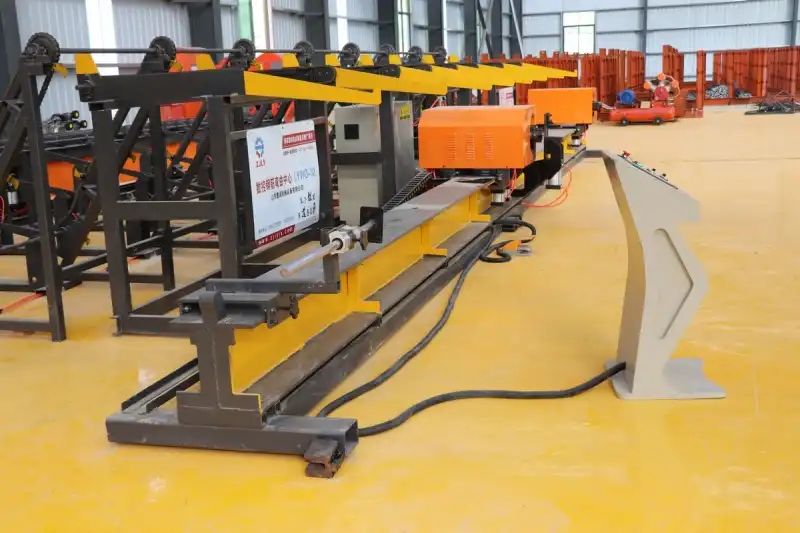
Understanding CNC Bar Bending Machines and Their Role in Precast Concrete Plants
What These Machines Actually Do?
A CNC rebar bending machine is a computerized system that takes digital shape plans and turns them into exact bends in metal. The user tells the CNC processor the length of the legs, the diameter of the bar, and the angle that needs to be made. The machine then feeds, measures, bends, and, on models with more than one function, cuts the bar without the operator having to do anything in between steps. This takes the place of a process that needed two or three operators at each station.
Types Used in Precast Applications
There are two main types of configurations used in precast plants: single-line heavy-duty benders, which are used for large bars (up to 32mm) that are used in wall panels and beams, and double-wire CNC stirrup benders, which work quickly on 5mm to 16mm wire for column ties and cage parts. Some factories use both sets of machines at the same time to make sure they have all the different types of reinforcements they need for all of their products.
CNC vs. Manual and Hydraulic Benders
Angles can vary between pieces by 3° to 5° when using manual benders, which depend on physical templates and the skill of the operator. Even though hydraulic benders are more consistent, they still need to be placed by hand. A CNC system can hold an angle's accuracy to within ±1° and keeps that level of accuracy throughout every cycle. Over the course of 10,000 stirrups, that difference in precision directly lowers the number of rework jobs and the amount of material that is wasted. These are two costs that eat away at project margins faster than most plant managers expect.
Core Features and Safety Considerations in High-Volume CNC Bar Benders
Key Technical Attributes to Evaluate
When choosing tools for making a lot of concrete, the following features are the most important:
- Bending speed: Look for servo-driven models reaching 180°/sec with smooth deceleration curves to avoid bar spring-back.
- Feed accuracy: Length precision of ±1mm ensures cut-and-bend pieces match design drawings without correction.
- Roller and pin hardness: High-hardness chromium-molybdenum alloy components heat-treated to HRC 58–62 resist abrasive wear during 24/7 operation cycles.
- Control interface: Touch-screen CNC controllers with stored program libraries allow operators to switch between part shapes in under two minutes, which is essential when precast plants run multiple product types per shift.
These specs tell you if a machine can meet production goals over a long period of time without needing to have many parts replaced.
Safety Mechanisms in Modern Equipment
CNC benders that are CE-certified have emergency stop circuits, controls that can be used with two hands, guards around the bending head, and servo drives that protect against overload. Internal quality controls at the production level are based on ISO 9001 manufacturing standards. cnc bar bending machine automatic fault detection with error code display cuts down on the time needed to figure out what's wrong and keeps maintenance teams updated without needing CNC experts to be on site all the time.
Practical Maintenance Guidance
Keeping the feed rollers oiled, checking the bending pins for surface wear on a regular basis, and updating the software on the CNC controls are the three most important maintenance tasks that can be done to make the machine last longer. Plants that write down and plan these tasks have a lot less unplanned downtime than plants that only do maintenance when something goes wrong.
Making the Right Investment: Buying Guide and Market Comparisons
Aligning Machine Specs with Plant Requirements
Before you ask for quotes, you should make a list of the types of rebar you usually work with, how many pieces you need to make each hour, and whether you need a cutting and bending unit that works together or separately. The needs of a plant that makes precast bridge beams are different from those of a plant that makes residential wall panels. A machine that is too small for the wrong profile will either not work well or cost too much to buy.
Evaluating Suppliers in 2024
Suppliers from Europe, Asia, and North America are all part of the global market. When buying something for a business, differences in reaction time after the sale, availability of spare parts, and on-site commissioning help are often more important than the main price. Suppliers with documented project references in infrastructure, rail transit, and precast, as well as export experience to your region, are less likely to mess up your project than those who don't have a track record that can be checked.
Total Cost of Ownership
The price you paid is shown on one line. Consumable parts (like bending pins and feed rollers), energy use, training time for operators, and the cost of downtime if service is slow are all part of the total cost of ownership. If a machine is priced 15% less but parts take 72 hours to arrive, it may cost more in lost production over three years than it saved in the first place. Before you make a purchase, get written confirmation of the guarantee terms, the price of replacement parts, and the expected average reaction time.
Integrating CNC Bar Benders into Precast Concrete Production – Case Studies & ROI
Documented Productivity Gains
When precast plants replace manual bending stations with cnc bar bending machine CNC automated benders, they consistently see 40% to 60% more work get done per operator hour. With just two CNC stirrup bending lines, a company that makes concrete panels can handle the same amount of work every day that used to need six human workers. At the current rate of labor in the U.S. market, the equipment usually pays for itself in 18–24 months just by cutting down on labor costs.
Accuracy and Waste Reduction
When a concrete infrastructure builder switched from hydraulic to CNC bending, they were able to cut scrap bar losses from 3.2% of all the materials used to less than 0.8% in the first quarter of production. That drop in price directly leads to project savings on any job that needs more than 500 tons of rebar when steel prices are above $0.80/lb.
Upcoming Technology Directions
CNC systems that work with rebar are going toward direct CAD/BIM file import, which gets rid of the need to enter programs by hand. It is also becoming common for software used at the plant level to be integrated. This gives operations managers real-time data on output by machine and shift. These features are already built into Zhongji Luyuan's current equipment lines, and they are useful for any precast operation planning a capital investment that will last for more than one year.
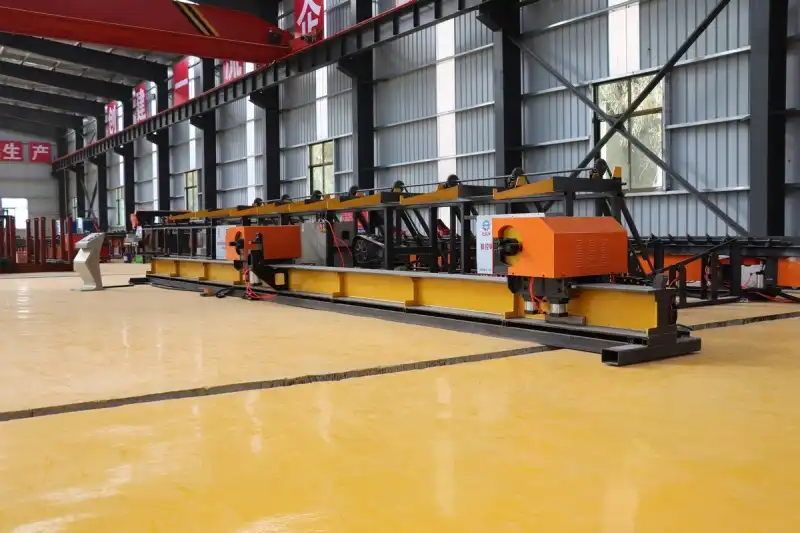
Procurement and Partnership: Sourcing CNC Bar Bending Machines with Confidence
Identifying Reputable Manufacturers
The 50 million yuan registered capital of Shandong Zhongji Luyuan Machinery Co., Ltd. was used to start the business in 2016. CNC rebar processing tools made by this company is used in high-speed rail, highway, bridge, tunnel, metro, nuclear power, and precast building projects. Its equipment is made using ISO 9001 quality management methods and has a CE mark on it.
Long-term business partnerships have been formed between Zhongji Luyuan and China Railroad, China Railroad Construction, China State Construction, China Communications Construction, and China Nuclear Power Construction Corporation. The equipment is sent to almost 100 countries, such as South Korea, Malaysia, Thailand, Kazakhstan, Israel, and South Africa. This shows that foreign users trust the company's shipping and customer service.
Bulk Purchasing and International Logistics
Zhongji Luyuan helps precast operations that need to buy more than one machine by setting up bulk orders, coordinating container shipping, and sending teams to the site to set up the machines. As part of the initial supply deal, spare parts packages and user training programs are available. This cuts down on the setup problems that often cause production to slow down after the equipment arrives.
You can look at full technical specs, product videos, and configuration options for all of the current equipment at zjly2025.aixdb.cn.
Conclusion
Making the switch to cnc bar bending machine CNC-controlled rebar bending is a clear way for precast concrete plants to improve their output speed, accuracy, and labor costs. The technology has been tried and tested, the return on investment (ROI) data is saved, and the supplier choices are clear. The choice comes down to finding the right machine specs for your production needs and picking a provider with the service infrastructure to support the equipment for as long as it works. Zhongji Luyuan is a good choice for precast producers looking for high-volume rebar processing equipment in the current market because of its wide range of products and track record of completed projects.
FAQ
What are the main advantages of a CNC bar bending machine over manual bending?
Every cycle, CNC systems keep the accuracy of angles to within ±1° and the accuracy of lengths to within ±1mm. When bending by hand, the angle can change by ±3° to 5°, and a lot depends on how consistent the person is. CNC bending cuts down on scrap, rework, and quality checking time in concrete plants that use standard designs on a large scale.
How often should maintenance be performed?
Every 40 to 60 hours of use, the feed wheel should be oiled. If work is going on all the time, bending pins should be inspected once a week. CNC controller software should be checked against the manufacturer's update plans, which are usually done every three months. Structured maintenance schedules help plants have less unplanned downtime, which can be measured.
What rebar diameters can these machines handle?
Most CNC benders used in the concrete market can work with walls that are 6 mm to 32 mm thick. Most double-wire stirrup models can handle wires between 5 mm and 16 mm. Heavy-duty single-line models are available for beams and wall panels that are 12mm to 32mm thick. Before you buy, you should always make sure that the seller knows exactly what width range you need.
Can the machine store multiple bending programs?
Yes. These days, CNC processors keep libraries of shape programs. Depending on the model, these libraries usually hold between 50 and several hundred programs. Touch-screen interfaces let operators choose and load programs, which makes it easy to switch quickly between different types of prefab components.
Get a Quote from Zhongji Luyuan — CNC Bar Bending Machine Supplier
Nearly 100 countries' contractors trust Zhongji Luyuan's Cnc bar bending machines. Our team will match the specifications of the equipment to the output needs of your plant, whether you need a single unit or a full production line. To get a technical consultation, product brochure, or demo video right away, email us at sales2@shandongluyuan.com or go to shandongluyuan.com.
References
1. American Concrete Institute. ACI 318-19: Building Code Requirements for Structural Concrete. ACI, 2019.
2. Precast/Prestressed Concrete Institute. PCI Design Handbook: Precast and Prestressed Concrete, 8th Edition. PCI, 2017.
3. Construction Industry Institute. Automation and Robotics in Construction. CII Research Report, 2021.
4. International Federation for Structural Concrete (fib). fib Bulletin 65: Model Code for Concrete Structures 2010. fib, 2013.
5. Modern Steel Construction. Rebar Fabrication Efficiency in Large-Scale Infrastructure Projects. AISC, 2022.
6. Engineering News-Record (ENR). Prefabrication and Industrialized Construction Trends in the U.S. Market. ENR, 2023.