CNC Rebar Bending Machine Supports Accurate Steel Processing for Bridges, Roads, and Commercial Buildings
Oct 26, 2026
When a bridge carries thousands of vehicles daily, or a commercial tower rises thirty stories above a city street, every bent rebar inside that structure has to be right. A CNC rebar bending machine makes that precision repeatable at production scale. These servo-driven systems process steel bar diameters from 5 mm up to 32 mm, hold angular tolerances within ±1°, and run continuously without the fatigue errors that manual bending introduces. For contractors working on highways, rail transit, or high-rise buildings, that level of accuracy directly affects structural safety, material cost, and project schedule.
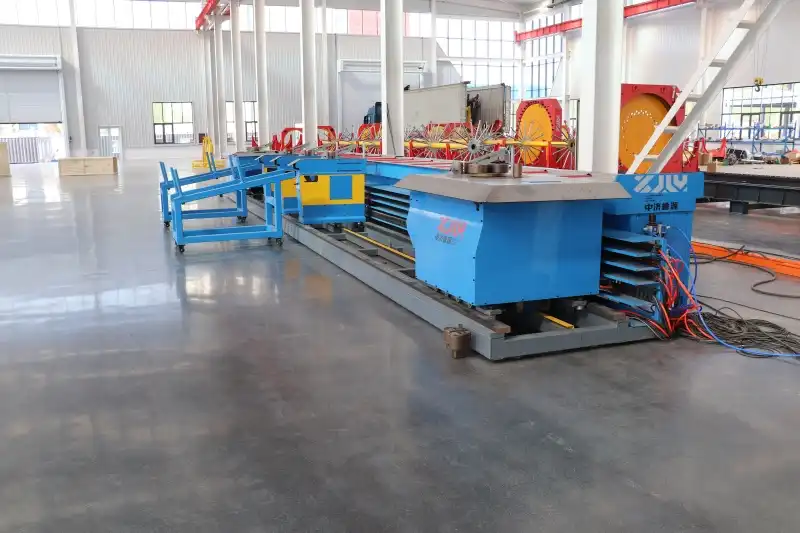
Understanding CNC Rebar Bending Machines: Features and Operational Principles
How Servo Drive Systems Deliver Precision
A servo drive with a lot of force is what makes an automatic rebar bender work. The motor powers the bar and turns it all at the same time. Any angle change in the bar is kept to less than 1°. It can bend up to 180° per second. Real-time input from the position encoder is sent to the controller. This lets the machine fix itself in the middle of a run instead of waiting for a worker to notice a problem.
Core Technical Parameters Worth Knowing
. Rebar up to 32 mm in diameter can be used with most heavy-duty single-line models. Stock from 5 mm to 16 mm can be used with double-wire models. When you heat alloy steel to an HRC of 58–62, the feeding rollers and bent pins become strong enough to handle the rough use that comes with 24-hour production runs. These days' machines have pneumatic or hydraulic systems that straighten the bar before it goes into the bending head. These systems remove the coil set. This keeps mistakes from building up in length over long production cycles.
Automation Levels and Machine Configurations
Small single-axis units that can be used on the go are in the range of tools. Large multi-axis CNC stirrup bending machines are used in precast plants. PLC control interfaces have programmable shape libraries built in. This means that an operator can quickly switch from a square bridge pier spike to a spiral column tie without having to change any tools. Standards like CE and ISO 9001, which are known all over the world, have approved the electrical safety design and production process.
Benefits of CNC Rebar Bending Machines in Large Infrastructure Projects
Structural Accuracy Reduces Rework
For bridge and tunnel work, the stirrups' shape has to be very close to what's shown on the engineering drawings. When making 500 units at a time, a CNC stirrup bender checks each finished piece against the CAD design over and over to make sure that the tolerances for size stay within ±2 mm. Because of this, there are no fit-up problems where crews have to re-bend or scrape bars on the job site. This keeps things from getting lost and keeps the plan on track.
Labor and Cost Efficiency at Project Scale
Worker wages in the U.S. have been slowly going up. The Bureau of Labor Statistics says that construction wages went up 4.8% year-over-year in 2023. A CNC rebar bending machine takes care of this challenge right away. There is only one person who needs to run a CNC line instead of four to six people who bend metal by hand. The machine works two or three shifts without getting paid extra for extra hours. In an infrastructure contract that lasts more than one year, the savings add up, and most mid- to large-sized contractors can see a return on their investment (ROI) in the first year of operation.
Safety and Uptime Improvements
Compared to manual bending tables, bending tables that meet ISO 13849 and have built-in safety interlocks and emergency stop circuits make it less likely that someone will hurt their hand or head. Facilities that are well run schedule maintenance like roller inspections, greasing cycles, and checks to make sure cutters are sharp to keep unplanned downtime below 2%. For project managers who are short on time, that reliability margin isn't just a small bonus; it's a direct defense against liquidated damage clauses.
This is even more true in three different business situations:
- High-speed rail and bridge pier stirrups: The machine produces large-format reinforcement cages designed to absorb seismic loads, maintaining consistent geometry across thousands of identical pieces per shift.
- Precast concrete factories: Standardized rebar components fit perfectly into pre-poured molds, reducing the hand-fitting time that drives up labor hours in modular housing production.
- Subway tunnel and underground utility corridors: High-strength bars shaped into complex multi-angle profiles meet demanding production schedules in confined facilities where manual operations would create safety and throughput bottlenecks.
– Stirrups for high-speed trains and bridge piers: The machine makes big strengthening cages that can handle the weight of an earthquake. It can do this while making thousands of identical pieces in a shift. Rebar parts that are all the same size fit perfectly into molds that have already been poured in precast concrete factories. The time needed for hand-fitting is cut down, which saves time. More work hours are needed to make modular homes. Heavy-duty bars bent into complicated, multi-angle shapes help meet tight production schedules in subway tunnels and underground utility passageways, where workers would have to take too long to do the work by hand. This is done to ensure safety and efficiency.
How to Choose the Right CNC Rebar Bending Machine for Your Construction Needs?
Match Machine Capacity to Your Rebar Specifications
First, figure out what sizes of bars you will need for your job. No small stirrup bender should be used on a highway bridge that needs #8 and #9 bars, which are about 25–29 mm. Instead, it should use a heavy-duty single-line machine. Make sure that the motor's maximum torque can handle the most weight, not just the normal load. This will keep the machine from getting too hot when it's working at full speed for a long time.
Evaluate CNC Control and Software Features
It is best to look for a controller with spring-back correction software that can figure out and fix the angle of elastic rebound that is right for each grade and thickness of bar. Without this, after every test bend, angle changes would have to be made by hand, which would take longer and make things less consistent. Also, check to see if the system can keep track of details about production. It is important to do this so that government and state-owned engineering contracts that use digital output records can meet their paperwork requirements.
Compare Total Cost of Ownership, Not Just Purchase Price
When you buy a cnc rebar bending machine, the price isn't even close to what it will cost to run. Think about how quickly the supplier can help you, whether spare parts are easy to find, and how often the cutters and rollers need to be replaced. If a cheaper machine doesn't have local expert help, it might cost more to fix when it breaks than a more expensive machine with better support. Before you agree, make sure the hydraulics are stable, and the computer controls are working right by asking for continuous load test data. This is usually 48 to 72 hours at full capacity.
Procurement and Supplier Guide for CNC Rebar Bending Machines
Verify Certifications and Manufacturing Standards
To be a real supplier, you need to be registered with ISO 9001 and have CE approval. Do not trust what someone says; instead, ask for proof. Every once in a while, internal checks make procurement managers at state-owned engineering groups and EPC companies buy certified tools. Having these papers with you when you buy something cuts down on wait times for project compliance reviews.
Assess After-Sales Service Infrastructure
Repair skills are just as important as the machine itself. Ask the company if they offer on-site commissioning, training for workers, and a set time for technical help calls to be answered. Contractors in the U.S. can buy with less risk when they work with suppliers who have experience exporting or who have established service networks in the area. This means having paperwork in English and being able to get spare parts without having to wait months.
Understand Customization Options for Project-Specific Needs
It's common for big building projects to need bar shapes and processing steps that aren't the norm. Before they send the plans to the customer, a good maker can set up the machine's shape library and tools to match the plans. Setting up a site takes less time with this service, and it's easier for new CNC workers to learn how to use the machines.
Operating and Maintaining CNC Rebar Bending Machines for Optimal Results
Programming Setup and Daily Operation
Users add bar sizes, bend angles, and form codes through the PLC's touchscreen interface. The form models are already on most new systems, so setting up most types of stirrups takes less than five minutes. Before each production run, check the gap between the leveling rollers and the grade of the material. This will stop the most common cause of length mistakes in continuous operation.
Routine Maintenance Procedures
A regular repair plan keeps the operator safe and the machine running for a long time. Make sure the cutting blades are in good shape, check the pressure in the hydraulic system, and make sure the encoder return accuracy hasn't changed. Also, compare the flattening roller's surface hardness to the HRC 58–62 standard. It is important to check how well a traction motor gets rid of heat when it is running as well as when it is not. This way, issues with managing heat can be found before they cause systems to shut down.
Tracking Technology Developments
As of now, the fastest way for this kind of equipment to grow is to improve servos and link PLCs to plant management systems. Managers of operations can keep track of output, find problems, and plan preventative repair without having to write down data by hand when machines send it out in real time. Contractors who are in charge of more than one area of a job can better decide where to put tools when they can see them.
Conclusion
Construction companies can meet accuracy standards and keep labor costs low by using a Cnc rebar bending machine. These machines can keep tight angular tolerances, work for a long time without breaking down, and connect to digital management systems. This tech can be used for projects that need to quickly and accurately work with a lot of steel, like bridges, highways, commercial buildings, and underground utilities. To choose the right machine, you should check that its size fits the needs of the project, that the provider can provide good service, and that the machine does what it says it will do by following written testing methods instead of just trusting what the company says.
FAQ
What diameter range can a CNC rebar bending machine handle?
Most heavy-duty single-line types can handle rebar that is 5 mm to 32 mm thick. Most designs with two wires can handle sizes from 5 mm to 16 mm. Always compare the rated diameter to the bar grades you need before you buy.
How accurate is a CNC stirrup bending machine compared to manual bending?
When making 500 or more pieces at once, CNC machines make sure that the angles are within ±1° and the sizes are within ±2 mm. People can change the limits when they bend something by hand based on their skill level and how tired they are. They also can't keep them for long runs.
What certifications should I require from a supplier?
The standard is CE certification for safety around power and ISO 9001 certification for regular production. When you buy something, make sure you get all the paperwork you need. This will help you pass internal compliance checks for U.S. government and state-owned project contracts.
How long does commissioning typically take?
A normal CNC rebar working line can take anywhere from two to five days to set up and train workers on-site, depending on the type of machine and how experienced the operators are. This can be cut down if the supplier loads shape libraries that are specific to the project before sending them.
What maintenance interval should I plan for?
A lot of manufacturers say that you should check the eyes every day, the rollers and blades every week, and the hydraulic system pressure every month. A full load speed test once every six months can help find wear and tear before it causes unplanned downtime.
Get a Direct Quote from Zhongji Luyuan
Since 2016, Zhongji Luyuan has sold Cnc rebar bending machines to builders in more than 100 different countries. China Railroad, China State Construction, and China Communications Construction are some of these partnerships. As a reputable company that makes Cnc rebar bending machines, we set up our machines to fit the needs of your project and help with both installation and training. Send us an email at sales2@shandongluyuan.com or visit shandongluyuan.com to get a quote on our unique tools.
References
1. American Concrete Institute. ACI 318-19: Building Code Requirements for Structural Concrete. ACI, 2019.
2. American Institute of Steel Construction. Steel Construction Manual, 16th Edition. AISC, 2022.
3. Bureau of Labor Statistics, U.S. Department of Labor. Construction Labor Cost and Wage Trends Report. BLS, 2023.
4. International Organization for Standardization. ISO 13849-1: Safety of Machinery — Safety-Related Parts of Control Systems. ISO, 2015.
5. Portland Cement Association. Design and Control of Concrete Mixtures, 17th Edition. PCA, 2018.
6. Federal Highway Administration. Steel Bridge Design Handbook: Structural Behavior of Steel. FHWA, 2021.