CNC Stirrup Bending Machine Provides Consistent Stirrup Fabrication for Precast Concrete Manufacturers
Oct 15, 2026
Precast concrete manufacturers face a daily challenge: producing stirrups that meet exact dimensional tolerances, batch after batch, without burning through labor budgets. A CNC stirrup bending machine directly solves this problem. By integrating rebar straightening, measuring, bending, and cutting into one automated cycle, it delivers dimensional accuracy within ±1mm for length and ±1° for angle. For precast facilities running tight production schedules, this level of consistency is not a luxury — it is a requirement that directly affects structural safety, material yield, and project profitability.
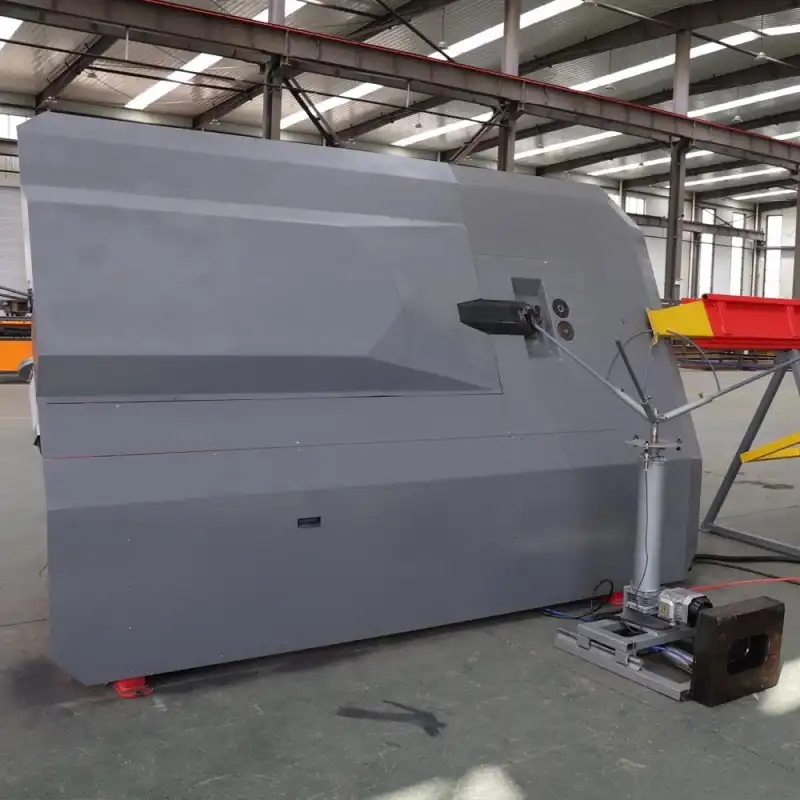
Understanding CNC Stirrup Bending Machines: Features and Working Principles
What the Machine Actually Does
A Cnc stirrup bending machine takes coiled rebar that is usually between 5mm and 13mm in diameter and goes through a fully automated process that includes straightening with multiple roller configurations, measuring with servo-driven encoders, bending with high-torque servo motors, and cutting with pneumatic or hydraulic shear mechanisms. The whole process is controlled by a programmable interface, so there is no need for manual measurement at all.
Key Technical Specifications to Know
When looking at a stirrup bender for concrete use, pay attention to these measured factors:
- Wire diameter range: Single-wire processing from 5mm to 13mm; double-wire capability for smaller diameters increases throughput for lighter stirrup designs.
- Traction speed: High-performance models reach up to 100–110 m/min, supporting continuous high-volume runs.
- Bending angle range: ±180 degrees, covering all standard stirrup geometries including closed rectangular, square, and polygonal shapes.
- Dimensional accuracy: ±1mm length tolerance and ±1° angular precision, verified through 500-piece continuous accuracy tests by quality auditors.
- Component durability: Straightening rollers and cutting blades manufactured from high-alloy tool steel, heat-treated to HRC 58–62 for extended service life under heavy loads.
Single-wire processing is possible for diameters ranging from 5 mm to 13 mm; double-wire processing for smaller diameters improves output for lighter stirrup designs.
Traction speed: High-performance types can go up to 100–110 m/min, which means they can handle high-volume runs that go on for a long time.
How CNC Control Improves Repeatability
The CNC control system can store more than one shape program at the same time, so workers can change stirrup designs without having to retool by hand. Real-time encoder input automatically corrects for rebar spring-back, which stops cumulative dimension mistakes during long production runs. This is a problem that can't be fixed as consistently by manual or hydraulic CNC stirrup bending machines.
Advantages of CNC Stirrup Bending Machines for Precast Concrete Manufacturers
Consistent Quality Across Every Batch
When stirrups are made by hand, measurements are subject to variation that gets worse when there are a lot of them. This uncertainty is completely eliminated by CNC technology. Each stirrup that is made has the exact shape that was designed. This is very important for precast parts where the structural support cages need to line up perfectly with the mold dimensions. Uniform stirrups also cut down on the number of repair jobs and the amount of material that is wasted when pieces are bent wrong.
Here are the main ways that this equipment makes concrete sites run better:
- Labor cost reduction: One operator can supervise the machine while it processes continuously, replacing the multi-person manual bending teams previously required for the same output volume.
- Production speed: Traction speeds up to 110 m/min mean a single machine can supply stirrups for multiple precast production lines simultaneously.
- Energy efficiency: Servo-driven CNC systems consume significantly less energy than hydraulic alternatives during idle periods, reducing overhead operating costs.
- Material utilization: Precise length measurement reduces off-cut waste, with some facilities reporting material savings of 3–5% compared to manual methods.
These benefits directly help with the problems that precast manufacturers most often talk about when they talk about production pressures: rising labor costs, tight delivery windows, and inconsistent quality control.
Long-Term Return on Investment
A CNC machine for handling rebar costs more to buy at first than a human bender. But when you look at the time it takes to save money on labor, get better material yields, and do less rework over 12 to 24 months, the payback period for most medium to large precast operations is within a range that can be considered acceptable by businesses. The danger of insurance and compliance is lower for equipment that meets ISO 9001 manufacturing standards and CE safety requirements.
Comparing CNC Stirrup Bending Machines: Making the Right Choice
CNC vs. Manual vs. Hydraulic
Manual benders are cheap to buy, but they need skilled users and don't always work well when used on a large scale. Hydraulic stirrup benders can make things faster than by hand, but the dimensions must still be controlled by the operator. Any precast plant that produces more than a few hundred stirrups per shift should use a CNC stirrup bending machine because it simplifies the entire process. In high-volume precast plants, the difference in productivity between CNC and non-CNC equipment gets much bigger as batch sizes get bigger.
Portable vs. Stationary Models
Smaller precast businesses or contractors who work on multiple sites might want to look into portable CNC stirrup benders. These machines are mobile, but they have a smaller processing diameter and can't bend as fast. Stationary high-capacity units are helpful for large concrete makers because they can handle wider diameter ranges, higher traction speeds, and dual-wire setups. The choice will rely on how much is being made, how the facility is set up, and whether the tools will stay in one place or be moved to different job sites.
What to Look for in a Supplier
When choosing a brand, you should look at its verified manufacturing records, project examples, and framework for after-sales service. Important questions to ask any company that makes or sells CNC stirrup benders are: Can they make configurations that are specific to certain stirrup shapes? How quickly do they get back to you with technical support? Is user training part of the deal for setting up the machine? You can be more confident in the quality of a supplier's products and services if they have long-term ties with big infrastructure contractors.
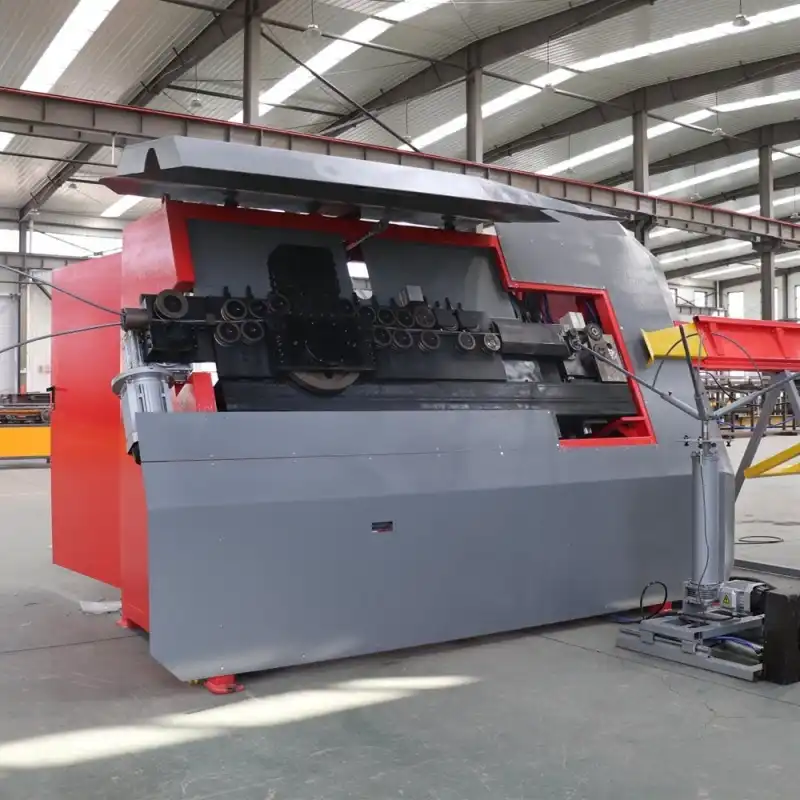
Maintenance, Safety Guidelines, and Best Practices for Optimal Use
Daily and Periodic Inspection Routines
Structured inspection schedules are necessary to keep a CNC stirrup bending machine running at its best. Every day, the straightening rollers and bent pins should have lubrication points checked, the cutter blade edges should be looked at visually, and the CNC interface should be checked to make sure it is reading encoder input properly. Roller surface hardness markers and hydraulic or gas cutting system pressure data should be checked every week as part of routine maintenance. With software changes every month, make sure that the spring-back compensation algorithms are always set up to work with the grades of rebar that are being handled.
Operator Training and Safety Compliance
To avoid material jams that put stress on mechanical parts, operators must be taught how to respond to an emergency stop circuit and the right way to add materials. CE-certified machines come with built-in safety enclosures and automatic stop triggers, but they will only work right if workers follow the instructions. Adding the bending machine to the general precast production process and combining its output with cage assembly stations cuts down on downtime even more and makes the line run more efficiently as a whole.
Extending Machine Service Life
Instead of waiting for failure, replacing cutting and straightening rollers on a condition-based timetable keeps dimensions within specs and stops unscheduled downtime. When compared to facilities that run equipment until it breaks, those that keep track of component wear data have much lower upkeep costs over a five-year period of operation.
Procurement Insights: Buying and Integrating CNC Stirrup Bending Machines
Understanding the Cost Structure
In 2024, the price of a CNC stirrup bender depends on how automated it is, how good the control system is, and the range of diameters it can work with. People who want to own a capital asset for a long time can buy it outright, or they can look into leasing options that spread costs out over several project billing cycles. When you buy in bulk for precast businesses with multiple sites, you can often get better prices from well-known makers.
Evaluating Supplier Credibility
Before making a purchase, B2B buyers should ask for 50-piece continuous test run data with records of length and angle deviation. Ask for a load test report that shows the motor and hydraulic systems are thermally stable over a period of 24 to 48 hours of continuous production. Check the recommendations of clients who have worked on similar precast or building projects. When suppliers give clear technical documents and project records that can be checked, procurement teams have the proof they need to defend capital investment decisions within the company.
Installation and Commissioning
Installing things quickly and correctly keeps production lines running smoothly. Reliable suppliers offer on-site commissioning help, training sessions for operators, and a clear warranty period that covers both mechanical and electronic parts. Make sure that the supplier's after-sales service team can get to your facility within a reasonable amount of time in case of a technical emergency. Once the machine is up and running, this is more important than price.
Conclusion
For companies that make precast concrete and only use hand or hydraulic stirrup production, there are clear ways to improve quality and productivity. In a single automated system, a Cnc stirrup bending machine solves the main problems in production, including uniformity in dimensions, worker dependency, material waste, and throughput. This equipment is a production tool that pays for itself and helps the facility grow for years to come if it is chosen based on checked technical specs, seller credentials, and long-term service capabilities.
FAQ
1. What wire diameters can a CNC stirrup bending machine process?
Most CNC stirrup benders can work with single-wire rebar that is between 5 mm and 13 mm in diameter. For smaller sizes, double-wire setups are available. This speeds up production for lighter stirrup forms that are used in precast wall panels and slab elements.
2. How accurate is automated stirrup bending compared to manual fabrication?
Standardized 500-piece continuous production tests show that CNC stirrup benders can accurately measure lengths to within ±1 mm and angles to within ±1°. This level of accuracy can't be reached by hand on a large scale, especially during long production runs.
3. What certifications should I require from a CNC stirrup bender manufacturer?
Ask for ISO 9001 certification that covers the manufacturing process and CE certification that shows the product meets safety standards. The production quality system and the machine's safety design both meet widely known standards, as shown by these qualifications.
4. How long does installation and commissioning typically take?
In a precast facility, commissioning a stationary CNC stirrup bending machine usually takes two to five days. This time includes installing the mechanical parts, setting up the CNC parameters, and training the first operator. The timeline changes depending on how ready the building is and how complicated the equipment is.
5. What maintenance tasks are most critical for long-term performance?
The most important upkeep jobs are to grease the straightening rollers and bending pins, replace the cutting blades based on their condition, and calibrate the CNC software on a regular basis. Facilities that stick to organized inspection plans have a lot less unexpected downtime.
Connect with Zhongji Luyuan for Your CNC Stirrup Bending Machine Needs
Zhongji Luyuan was founded in 2016 and has 50 million yuan in registered capital. They have provided Cnc stirrup bending machine solutions to contractors for high-speed rail, highway, bridge, tunnel, and precast construction projects in nearly 100 countries. China Railroad, China State Construction, and China Nuclear Power Construction Corporation are all our clients of ours. You can email our team at sales2@shandongluyuan.com to ask for technical details and a suggestion that fits your project from our engineering team.
References
1. American Concrete Institute. ACI 318-19: Building Code Requirements for Structural Concrete. American Concrete Institute, 2019.
2. Precast/Prestressed Concrete Institute. PCI Design Handbook: Precast and Prestressed Concrete, 8th ed. PCI, 2017.
3. International Organization for Standardization. ISO 9001:2015 Quality Management Systems — Requirements. ISO, 2015.
4. Construction Industry Institute. Automation and Robotics in Construction: Research Summary Report. University of Texas at Austin, 2021.
5. Engineering News-Record. Prefabrication and Modular Construction Trends in Infrastructure Projects. ENR, 2023.
6. American Society of Civil Engineers. ASCE 7-22: Minimum Design Loads and Associated Criteria for Buildings and Other Structures. ASCE, 2022.