Fully Automatic Rebar Cage Welding Workstation for Smart Construction
Sep 9, 2026
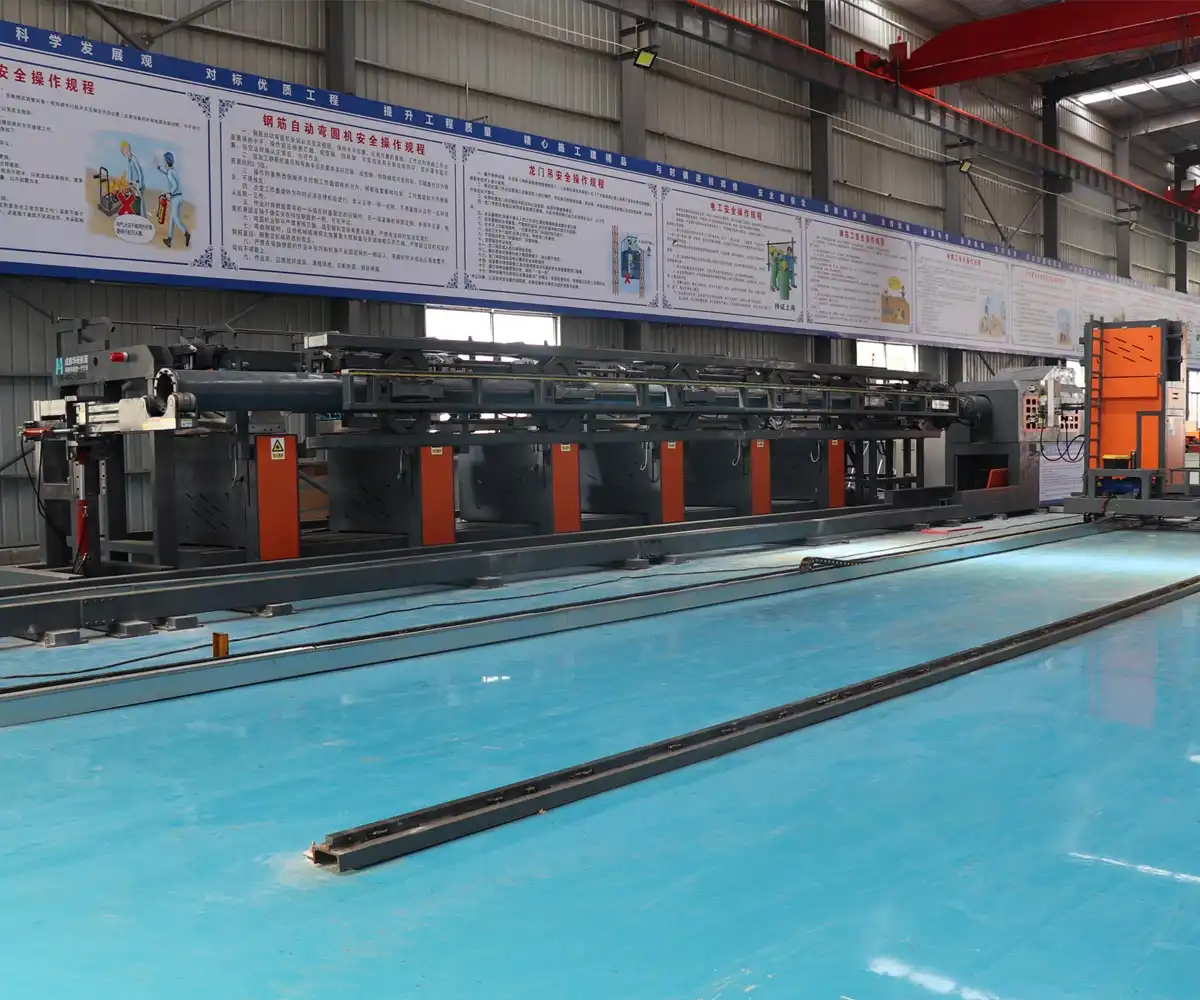
A fully automatic rebar cage welding workstation represents a transformative manufacturing cell that integrates PLC-controlled feeding systems, synchronized rotation mechanisms, and multi-axis robotic welding arms to automate the assembly and welding of cylindrical reinforcement cages used in deep foundations, bridge piers, and high-rise construction. Unlike traditional manual methods plagued by operator fatigue and inconsistent weld penetration, this digitalized production model ensures structural integrity while addressing critical industry pain points—escalating skilled labor costs, safety hazards from handling heavy rebar, and low throughput in traditional fabrication yards.
Introduction
For a long time, making reinforcement cages has been slowing down construction projects. There is more and more pressure on highway builders to finish building projects faster without lowering the safety of the structures. Manual cage welding requires workers to do a lot of heavy lifting over and over again, puts them at risk of burn injuries, and makes measurements inconsistent, which slows down checks. We've seen these problems personally while working with metro contractors and bridge-building firms across the US. They have to meet tight deadlines while keeping labor costs down, since skilled welders now charge more than $45 an hour in many places.
Smarter methods are needed for modern building. The way reinforcement cages are made for tunnels, utility corridors, and nuclear power plants has changed with the help of automated welding technology. This guide tells procurement managers, equipment managers, and project directors about the advanced systems' technical features, operational benefits, and strategic things to think about before putting them into use. We look at how PLC-controlled automation works with digital project workflows, compare the specs of the best equipment, and give infrastructure builders, rebar processing centers, and EPC companies that are investing in capital equipment useful buying advice.
Understanding Automated Reinforcement Cage Manufacturing Systems
Core Technology Architecture
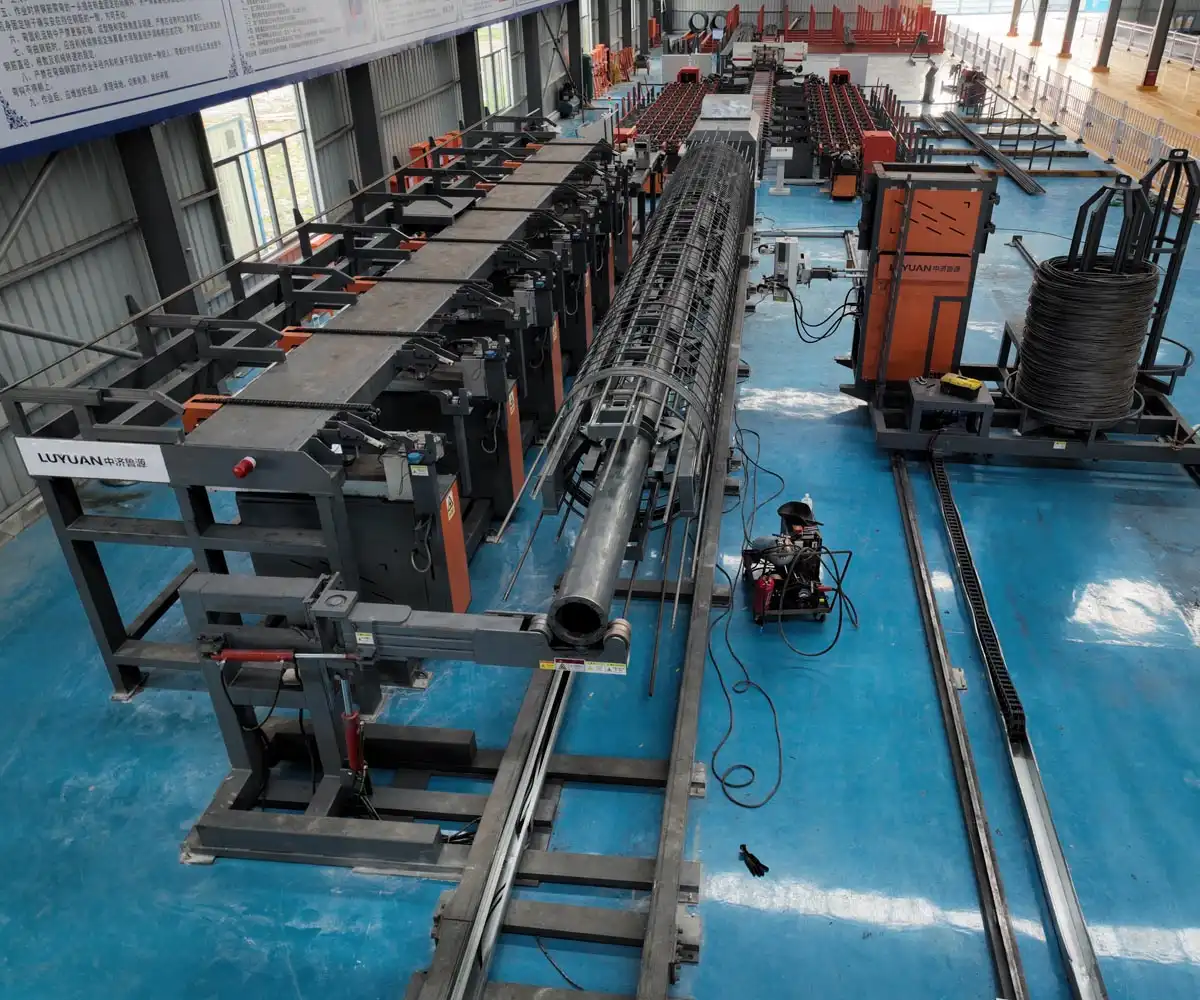
These manufacturing cells have smart controls and precise mechanical systems. The base is made up of a high-strength steel frame structure that is usually 30 meters long and 8.5 meters wide. It holds synchronized spinning sections that can handle cage diameters of φ700 to φ2500 mm. The LYZD-GJL2500 model is a good example of what can be done now. It can process main bars with a diameter of 18 to 40 mm and spiral reinforcements with a diameter of 8 to 16 mm, with spacing that can be changed down to 300 mm.
Gas-protected arc welding technology makes sure that different types of rebar are penetrated consistently. The system keeps the hydraulic pressure at 16 MPa, and the air controls at 0.8 MPa. This makes the conditions stable enough for good joints. When making 12-meter pieces, the machine can make 13 cages in ten hours, which is about three times as much as a human crew could do with just one trained operator.
Operational Control and Integration
Touch-screen CNC tools make it easier to change parameters for different cage sizes. Instead of changing mechanical stops by hand, operators use easy-to-understand options to enter the diameter, length, bar spacing, and material qualities. The PLC system coordinates the feed rates, rotation speed, and welding power (100 kW) in real time, taking into account small changes in the sizes of the raw materials. This closed-loop control keeps the cage's dimensions within ±1mm all the way along its length, which is important for meeting the design standards of ACI 318 and Eurocode 2 for infrastructure projects (American Concrete Institute, 2019).
Comparing Automated Systems with Traditional Fabrication Methods
Performance Metrics That Matter
Another strong benefit is that the weld quality is always the same. When welding by hand, the entry depth can change depending on how well the person does their job and how tired they are. Ultrasound research that doesn't damage the welds shows that there are void rates of 8–12% in industrial settings. By precisely controlling the amount of heat input and making sure that electrodes are always in the same place, automated systems keep void rates below 2%. This cuts down on repair and inspection failures that slow down concrete placement operations.
Labor Cost Analysis
When you look at the total amount of work that needs to be done, the business case becomes clear. A manual fabrication yard that makes 50 cages a week needs a crew of 12–15 welders and material handlers, which costs more than $900,000 a year in U.S. markets. Three operators and one repair technician are needed to set up three automatic workstations that produce the same amount of work. This cuts labor costs by 70% and improves safety by getting rid of most of the heavy lifting and burn hazards. Equipment managers like that projects with steady production volume usually have payback periods of 18 to 24 months.
Improvements in how materials are used add more value. Automated systems place reinforcements with millimeter accuracy, getting rid of the wasteful overlap that happens when things are put together by hand. On large-volume contracts, projects report using 4–6% less rebar overall, which saves a lot of money on materials that make up 35–40% of the total cost of making the cage.
Procurement Guide: Selecting and Buying Your Equipment
Assessing Project Requirements
Predicting the amount of production is the first step in choosing the right tools. Over the course of two years, building a highway bridge might need 500–800 cages, which suggests that one desk is enough. On the other hand, building a metro tunnel with more than 3,000 cages requires more than one station or models with more space. When figuring out how much capacity they need, we tell procurement managers to look at past project data and future contract flows.
Dimensional needs also play a role in choosing a model. When pile foundations for marine structures are needed, cages with diameters of more than 2,000 mm and lengths of up to 16 meters are often needed. The standard LYZD-GJL2500 can handle diameters up to 2,500 mm and lengths up to 12 meters. For larger requirements, customization is possible. As the cost of improving welding power systems for heavier rebar goes up, technical leaders should make sure that the main bar width range (φ18–φ40 mm) matches the designs of the structure.
Total Cost of Ownership Evaluation
The purchase price is only one part of the cost to spend. A fully automatic system can cost anywhere from $180,000 to $280,000 to set up. On top of that, procurement managers have to think about the costs of installation, training programs for operators, and ongoing maintenance. When suggested inspection plans are followed, annual maintenance usually costs 3–5% of the value of the equipment. This includes replacing things like welding wire, gas supplies, and guide rollers.
Energy use should also be taken into account. According to U.S. industry rates, the LYZD-GJL2500 uses 30 kW of power overall and can weld up to 100 kW. This means that it costs about $15 to $20 per hour to run. Energy costs hit $30,000 to $40,000 per year for a 2,000-hour work plan. This is a predictable cost of doing business that is used to bid on projects.
Supplier Evaluation and Support Infrastructure
Technical know-how and help after the sale are what set trusted makers apart from commodity providers. Shandong Zhongji Luyuan Machinery Co., Ltd. has been specializing in CNC reinforcement processing equipment for eight years, including the fully automatic rebar cage welding workstation designed for efficient and precise reinforcement production. Their installations have helped China Railroad, China State Construction, and clients in over 100 countries, including US infrastructure projects. This history shows the level of scientific refinement and field-proven dependability that equipment managers look for when they decide where to spend money.
Logistics for distribution and help with commissioning have an effect on project timelines. Suppliers with a good reputation offer full installation services, training programs for operators, and English-language technical documents. The lead time from order confirmation to on-site commissioning is usually between 60 and 90 days. This gives project teams time to coordinate the delivery of equipment with the setup schedules for the fabrication yard. Technical support that responds quickly, like sales2@shandongluyuan.com, makes sure that operational questions are answered quickly, preventing costly production interruptions.
Operation, Maintenance, and Safety Best Practices
Daily Operation Procedures
Every shift starts with a set of pre-start checks that include checking the levels of hydraulic fluid, the pressure in the pneumatic lines, and the inventory of welding supplies. The touch-screen interface leads the starting process and checks the system automatically before turning on production mode. When loading main bars into the feed mechanism, it's important to check that the stock is straight, since bent stock can cause measurement mistakes even with automatic correction systems in place.
Setup of parameters is based on technical models that show the sizes of the cage and when the reinforcements should be added. Through the CNC control panel, the operator types in the cage's diameter, total length, spiral bar spacing, and bar quantities. The system instantly figures out the spinning speeds and welding intervals and then tells you where to put the material. Once production starts, the operator manages restocking and checks the quality of the welds through viewing ports. This is a much less physically demanding job than traditional manual welding.
As part of quality assurance when operating a fully automatic rebar cage welding workstation, calibrated measuring tools are used to check the dimensions on a regular basis. It is suggested that the circularity of the cage be checked every 10 units and that measurement logs be kept for project paperwork. Visual weld inspection finds surface flaws that need to be fixed before the cages are put away, which stops quality problems later on when the concrete is being poured.
Preventive Maintenance Protocols
Welding system parts are the main topic of weekly upkeep tasks. Cleaning the electrode nozzles stops spatter from building up, which weakens the security of the spark. Checking the wire feed tightness makes sure that the filler metal is delivered consistently. Rotation assembly bearings should be oiled according to the manufacturer's instructions, which is usually every 40 hours of operation. This greatly increases the service life of the component.
As part of the monthly tasks, the hydraulic system needs to be inspected for leaks in the seals and dirty fluid. Guide roller wear assessment tells you when to replace them before their worn-out surfaces damage the rebar or make them stick together. The PLC system keeps operational data logs that maintenance technicians look over to find performance trends that could mean the system needs to be calibrated. This method of planning ahead stops failures from happening out of the blue during important project stages.
An annual service by trained technicians includes a full review of the fully automatic rebar cage welding workstation system. Thermography is used to look at electrical lines for growing hot spots. Verification of the structural frame's orientation makes sure that the turning mechanisms stay centered. Calibration of the servo motor encoder keeps the accuracy of positioning. When scheduled correctly, these heavy maintenance intervals keep equipment reliable above 95% of the time, meeting the strict production continuity needs of large infrastructure contractors.
Safety Compliance and Risk Mitigation
When compared to hand fabrication, automated systems greatly lower the dangers that workers are exposed to. During operation, physical walls keep people from touching spinning parts, and emergency stop controls let the machine shut down right away. When entry doors open, interlocked safety systems stop the motion of equipment, keeping maintenance workers safe during service procedures.
Operators are taught about the risks of spark flashes and how to properly use welding screens that contain UV rays in the work cell. With enough airflow, welding fumes are sucked out of the production area, keeping the air quality below the levels allowed by OSHA for metal fumes. These engineered controls get rid of the close-quarters exposure that comes with manual welding. This leads to better safety records that lower the cost of workers' compensation insurance (Occupational Safety and Health Administration, 2020).
The 380V three-phase power supply needs are taken care of by electrical safety protocols. Electrocution risks can be avoided by using the right grounding, circuit protection, and lockout-tagout methods during repair. When electrical parts are checked regularly, insulation that is wearing down can be found before it fails. Modern computerized systems meet strict safety standards, which is appreciated by project safety managers because it makes it easier to follow the rules in the United States' many different jurisdictions.
Applications and Future Trends in Smart Construction
Infrastructure Project Deployments
When used over and over again in large quantities, automated cage welding is very useful. When building a bridge's foundation, hundreds of identical pier pile cages are used. The way the dimensions are maintained has a direct effect on how the load is transferred to the structure. Stable production capacity keeps things moving smoothly during busy building times, which is good for highway projects that last for more than one year. The equipment easily adjusts to different needs; for example, one workstation can make 800 mm diameter tunnel support cages one week and then change its configuration to make 1,800 mm bridge pier cages the next. This gives the company enough working freedom to justify the investment in new equipment.
Nuclear power and water projects have strict quality standards that are easy for automatic systems to meet. Weld uniformity and dimensional accuracy that have been recorded are in line with the strict QA/QC standards that these businesses require. As a result of inspection data from the PLC system, production records can be checked, which makes it easier for nuclear companies to provide the regulatory compliance paperwork that is needed (U.S. Nuclear Regulatory Commission, 2022).
Digital Integration and Industry 4.0
The move toward connected construction tools is still changing the goals of buyers. These days, workstations can collect data that is then sent to project management tools to be used as output metrics. When project managers can see how the fabrication is going in real time, they can better plan when to place the concrete, which cuts down on wasted time and costs related to crew standby. Integration with Building Information Modeling (BIM) platforms lets you import reinforcement schedules directly from structural engineering software. This gets rid of the need for mistakes in manual data entry that lead to mistakes in production (National Institute of Building Sciences, 2023) (NIBS).
New IoT sensor technology makes it possible for predictive repair systems to help schedule services more efficiently. Before they break, temperature sensors on important parts find strange heat patterns that could mean that bearings are wearing out or there are problems with electrical resistance. Vibration research finds rotating parts that are becoming unbalanced. These features cut down on unplanned downtime, which is the main practical worry that equipment managers bring up when they look at automated production systems.
The next big thing is using artificial intelligence to check the quality of welds. Machine vision systems can look at the shape of a weld bead in real time and make changes to the parameters automatically to keep the best penetration characteristics. This closed-loop quality control gets rid of bad products before they are inspected by a person. This makes the process even more efficient and cuts down on waste. Even though these technologies are still new in the field of reinforcement fabrication, they show how continuous innovation is making automated systems more useful and less expensive.
Conclusion
FAQ
What production volume justifies automated cage welding equipment?
Projects that need 200 or more cages a year usually have payback periods of 18 to 24 months. The most value is gained by contractors who have steady pipelines that last for years. However, even single big building projects with 500 or more cages can benefit from better quality control and scheduling control compared to subcontracting hand fabrication services.
How does automated welding compare to semi-automatic systems?
Multiple operators are needed to position the material and start the welding process on semi-automatic equipment, which usually makes one cage every 40–50 minutes. Fully automatic systems finish production in 15–25 minutes with just one user, which means that they are 2–3 times more productive per hour of work and don't need to be coordinated with a group of people.
What operator training is required?
Comprehensive 3- to 5-day training classes teach how to use CNC controls, move materials, do quality checks, and fix basic problems. Operators with some experience in manufacturing usually get good at their job after two weeks of being watched. When compared to traditional machine tools, the touch screens make learning easier.
Can the equipment handle epoxy-coated or galvanized rebar?
For coated materials, welding parameters need to be changed, and to keep coatings from getting damaged, some applications use mechanical tying modules instead of fusion welding. During the buying process, technical specs should talk about coating types to make sure that the right system setup is used for coastal or corrosive environments.
Partner with Zhongji Luyuan for Advanced Cage Fabrication Solutions
Shandong Zhongji Luyuan Machinery Co., Ltd. is a reliable fully automatic rebar cage welding workstation manufacturer that infrastructure contractors can turn to. For eight years, we've been specializing in CNC reinforcement processing equipment for highway projects, metro construction, and bridge engineering in the US and 100 other countries around the world. The LYZD-GJL2500 model can handle 13 cages per shift with just one operator. It comes with full installation support, operator training programs, and quick technical support. Our engineering team works directly with equipment managers and project leaders to set up systems that meet the needs of each project, from the size of the cages to the amount of work that needs to be done. Get in touch with our experts at sales2@shandongluyuan.com to talk about your problems with fabricating reinforcements and get full specs, pricing information, and project references that show how well the materials work in real life. You can look at all of our tools at zjly2025.aixdb.cn and get to expert resources that help you make smart purchasing decisions. Zhongji Luyuan turns the time-consuming process of making reinforcements into a strategic economic edge.
References
1. American Concrete Institute. (2019). Building Code Requirements for Structural Concrete (ACI 318-19). Farmington Hills, MI: American Concrete Institute. https://www.concrete.org/store/productdetail.aspx?ItemID=31819
2. Construction Industry Institute. (2021). Automation and Robotics in Construction: Performance and Implementation. Austin, TX: Construction Industry Institute. https://www.construction-institute.org/resources/knowledgebase/knowledge-areas/automation-robotics
3. National Institute of Building Sciences. (2023). National BIM Standard - United States Version 3. Washington, DC: National Institute of Building Sciences. https://www.nationalbimstandard.org/
4. Occupational Safety and Health Administration. (2020). Safety and Health Regulations for Construction (29 CFR 1926). Washington, DC: U.S. Department of Labor. https://www.osha.gov/laws-regs/regulations/standardnumber/1926
5. U.S. Nuclear Regulatory Commission. (2022). Quality Assurance Criteria for Nuclear Power Plants (10 CFR Part 50, Appendix B). Washington, DC: U.S. Nuclear Regulatory Commission. https://www.nrc.gov/reading-rm/doc-collections/cfr/part050/part050-appb.html
6. World Economic Forum. (2021). Shaping the Future of Construction: An Action Plan to Accelerate Building Information Modeling (BIM) Adoption. Geneva: World Economic Forum. https://www.weforum.org/reports/shaping-the-future-of-construction-bim