How Can a Rebar Cage Welding Machine Improve Work Efficiency?
Sep 4, 2026
A rebar cage welding machine dramatically improves work efficiency by automating the entire fabrication process, eliminating the bottlenecks of manual tying and inconsistent arc welding. This equipment integrates PLC-controlled synchronization systems with robotic welding arms to produce reinforcement cages at speeds up to five times faster than traditional methods. By reducing reliance on skilled welders—whose availability continues to decline across construction markets—these machines ensure consistent spacing, superior weld strength, and predictable output, directly addressing project delays and labor shortages that plague infrastructure contractors today.
Understanding How Rebar Cage Welding Machines Work
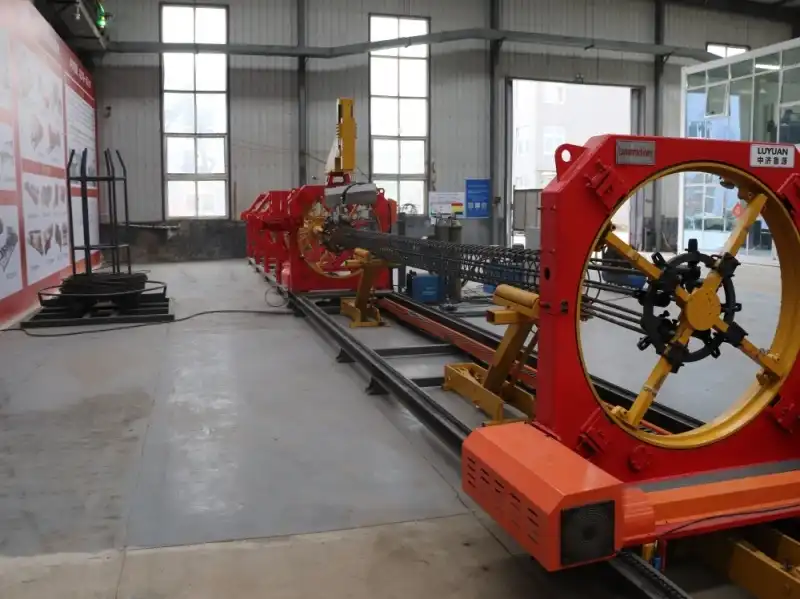
Compared to traditional building methods, modern automatic reinforcement manufacturing equipment is a big step forward in technology. These systems change how builders do foundation and structure work by combining high-tech welding with precise mechanics.
Core Mechanical Components and Integration
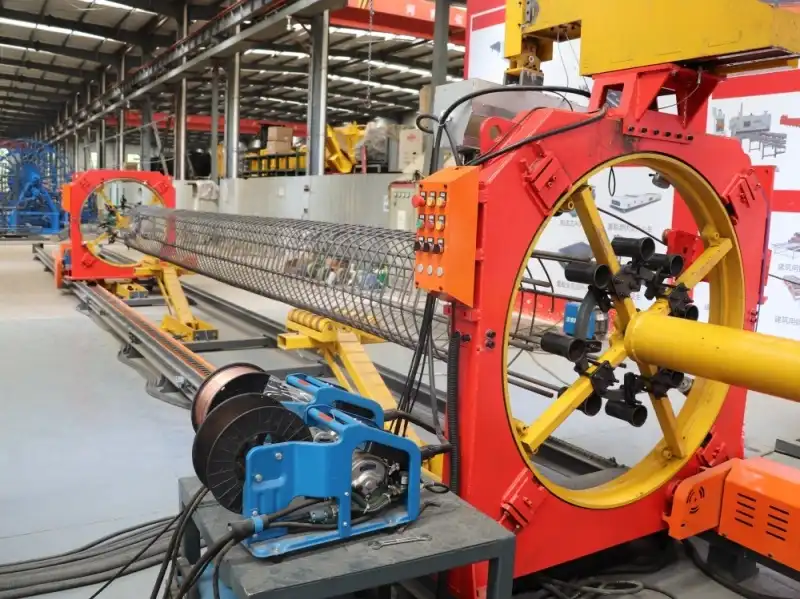
The basic structure of these systems is made up of automated feeding units and synchronized rotation mechanisms. A mainframe controlled by a PLC coordinates the movement of longitudinal bars while a welding carriage follows set paths to make uniform weld points at regular intervals. This integration replaces the unpredictable speed of manual labor with programmable consistency, which makes sure that every cage meets the exact engineering requirements without any mistakes made by people.
Welding Technologies Employed
Modern workstations use different types of welding methods depending on the needs of the project. Spot welding makes joints quickly, which is great for mass production, while seam welding makes continuous ties for cages that need to be more structurally sound. Robotic arms with multiple axs can make complex shapes, which is especially useful for bridge pier applications where shapes are often not straight. These technologies consistently make welds with deeper penetration and higher tensile strength than those made by hand. This meets the important safety requirements of infrastructure that is vulnerable to earthquakes.
Safety Features That Minimize Downtime
There are built-in safety systems that include emergency stop circuits, automatic power cuts when parameters change, and sealed welding zones that keep sparks and fumes out. These features cut down on accidents at work that used to hold up projects and make sure that operators can keep up uninterrupted production cycles without having to stop for safety reasons. Following safety rules in the workplace saves both workers and project schedules.
Key Benefits of Using Rebar Cage Welding Machines for Construction Projects
When construction companies switch to automated cage production, their operations get a lot better in a lot of ways. These benefits go beyond just making things go faster; they completely change how projects are priced and how they can be carried out.
Accelerated Production Speed and Precision
Automated machines like a rebar cage welding machine can make cylinder-shaped cages up to 12 meters long in 15 to 20 minutes, whereas doing the same thing by hand would take several hours. This speeding up is because machines can work continuously, meaning they can keep welding at the same speed without slowing down because of fatigue. The diameter tolerances stay within ±2mm along the entire lengths of the cages. This makes sure that the piles fit perfectly and avoids the costly rework that comes with mistakes in measurements. Contractors working on bridge projects with more than one pier say they can finish making the reinforcements 60% faster, which directly shortens the critical path.
Labor Reduction and Error Minimization
Teams of four to six trained workers are needed to put together a traditional cage. With automated systems, one trained technician is in charge of several production lines, which changes the way work is distributed in a fundamental way. This change will help the U.S. building industry get more qualified welders and cut down on mistakes made by people. Inconsistent stirrup spacing is a common quality control problem in human work, but machines that follow programd limits almost never make this mistake. When metro construction companies switched to automated production, the number of cage rejections dropped by 85%.
Long-Term Cost Savings and ROI
Depending on the capacity, the original investment in equipment can run from $80,000 to $250,000. However, the money starts coming in quickly. Because of precise cutting and positioning, material waste drops by about 12 to 18%, and labor costs drop by about 40 to 50 percent per cage unit. A medium-sized contractor that processes 200 cages every month usually gets their money back in 18 to 24 months. Along with direct savings, better structural soundness lowers guarantee claims and liability exposure, which protects finished projects' profit margins.
When speed, accuracy, and cost control work together, they create competitive advantages. This is especially true in bid-sensitive markets where contractors need to show they are both technically skilled and good with money.
Choosing the Right Rebar Cage Welding Machine for Your Business
To choose the right equipment, you need to carefully look at the technical specifications, operational needs, and project timelines. Because the choice will affect productivity for years, it is important to do a full evaluation.
Automatic Versus Semi-Automatic Systems
Fully automatic machines do the feeding, rotating, welding, and removal without any help from a person. This makes them perfect for processing centers that make hundreds of standard cages every week. These systems are worth the extra money because they can handle a lot of work and don't need a lot of workers. Semi-automatic models need help from an operator to load and position the cages, which gives contractors the freedom to work with different cage specifications on different projects. If a highway building company is in charge of more than one bridge site, they might choose semi-automatic equipment that can adapt to different pier designs without having to do a lot of updating.
Capacity Alignment With Project Demands
The specs for a machine must match the real amount of work it does and its size. Small models with processing cages that can be up to 6 meters long are good for home builders and smaller commercial projects. Heavy-duty systems that can be up to 15 meters long are better for infrastructure contractors working on deep foundation projects. Peak demand times should be taken into account when figuring out production capacity, which is usually given in cages per shift. Underestimating capacity can cause delays during important stages of a project, while overestimating capacity means spending money on things that aren't needed.
Supplier Reliability and Support Infrastructure
Working with well-known manufacturers guarantees getting replacement parts, technical help, and ways to upgrade for a rebar cage welding machine. Contractors should check the warranty terms for the most likely to break subsystems, such as hydraulic systems, welding units, and control electronics. When you buy a machine from another country, it's important that it has help in your own country so that you don't have to wait for parts or experts for a long time. Working with big Chinese state-owned construction companies shows that Zhongji Luyuan can be trusted in tough situations, and their growing presence around the world shows that they are dedicated to helping customers in other countries.
Practical Tips to Maximize the Efficiency of Your Rebar Cage Welding Machine
Ownership of equipment includes more than just buying it; it also includes the ways it is used, which determines its real output levels. Strategic maintenance and process optimization are the keys to getting the most out of a system.
Preventive Maintenance Protocols
Every day, the state of the welding tip, the amount of hydraulic fluid, and the strength of the rotation gear should all be checked. Lubrication plans that happen once a week keep moving parts from wearing out too quickly, and electrical system checks that happen once a month find broken connections before they break. Keeping maintenance logs lets you do predictive analysis. For example, keeping track of how long welding tips last helps you replace them during planned downtime instead of during the middle of a shift. Contractors say that unplanned outages have gone down by 30% since structured maintenance programs were put in place.
Operator Training and Workflow Design
Skilled workers are needed for even automatic systems to work at their best. Adjusting parameters for different bar diameters, fixing common error codes, and quality assurance procedures should all be part of training programs. Workflow design is just as important as the machine itself. Putting the machine close to where the materials are stored cuts down on the time needed to move them, and combining output with transfer to installation places cuts down on the need for extra storage. One tunnel contractor cut the time it took to make a cage by 22% just by changing how the yard was laid out around the workstation.
Leveraging Automation and Data Analytics
Modern PLC systems on a rebar cage welding machine produce operational data that shows patterns of efficiency. By looking at cycle times, you can find problems, like when feeding takes too long or when changing the welding parameters takes longer than expected. Some contractors connect their tools to business management systems, which lets them keep track of production and inventory in real time. This insight helps people make better choices about how to schedule projects and divide up resources. As smart manufacturing gets better, tools that offer remote diagnostics and performance optimization methods will become normal. This will make being able to work with data more useful.
Procurement Considerations for B2B Clients
When buying capital equipment, it's important to look at more than just the technical specs. Things like financial structures and logistics that affect the success of deployment must also be taken into account.
Purchase, Rental, or Leasing Analysis
Outright buy is best for contractors with steady long-term demand and access to cash, as it maximizes cost efficiency per unit over the equipment's lifetime. Leasing protects cash flow and gives companies access to newer technology during upgrade cycles, which is appealing to companies that want to keep their balance sheets as flexible as possible. Short-term rentals are useful for specific projects. For example, a contractor who wins a big bridge job might rent instead of buying for that one need. To find the best way to buy something, financial analysis should look at things like tax treatment, opportunity cost of capital, and equipment utilization rates.
Pricing Trends and Value Considerations
Prices on the market now represent how stable the supply chain is after the pandemic. Fully automatic systems cost between $150,000 and $300,000, based on their features and capacity. Starting price for semi-automatic tools is about $80,000. When you compare things economically, you need to look at more than just the purchase price. You need to look at the total cost of ownership, which includes things like energy use, upkeep needs, and expected lifespan. When buyers in large quantities build long-term relationships with suppliers, they often get better terms, like longer warranties and faster technical support.
Logistics and Localization Requirements
When you buy something from another country, things like shipping times, clearing customs, and voltage/frequency compatibility become more complicated. Shipping a machine from Asia usually takes 6–8 weeks by ocean and port handling, so project plans need to be planned ahead of time. Not only do electrical specifications need to be localized, but so do operator interfaces. For example, multilingual control panels cut down on the time and mistakes needed for training. Regional customization could meet certain code standards or work with equipment that is already in the manufacturing yard. Suppliers with U.S.-based expert teams and parts stocks greatly lower the risk of long downtimes, which is very important for contractors who are working to tight deadlines.
Conclusion
Automated production of reinforcement cages with a rebar cage welding machine completely changes how efficiently construction works by getting rid of worker bottlenecks, making sure measurements are accurate, and cutting down on project timelines. The technology solves important problems in the industry, like a lack of skilled workers, the need for consistency in quality, and rising costs, while also giving clear benefits like less waste, fewer workers needed, and more reliable structures. When contractors buy the right tools and have strong relationships with their suppliers and follow best practices, they can compete in infrastructure markets where speed and quality are becoming more important factors in awarding projects.
FAQ
What diameter range can these machines accommodate?
Most industrial workstations can handle longitudinal bars with a diameter of 12 mm to 40 mm and stirrup wires that are 6 mm to 12 mm. This is for the vast majority of base and building uses, such as bridge beams, building columns, and deep piles. For specific projects, these lengths can be made longer with custom setups.
How long does operator training typically require?
Basic operational skills are learned within three to five days of hands-on training that includes starting up the machine, entering parameters, and doing regular maintenance. Troubleshooting and improvement skills get better after two to three months of daily use. As part of commissioning tools, manufacturers usually give basic training.
What power requirements do these systems need?
Standard models use three-phase 380V–480V power at 50–60Hz and 30–60 kW of power, depending on how much they can weld and how automated they are. Sites must make sure they have enough electricity, and transformers may need to be upgraded so that more than one machine can run at the same time.
Partner With Zhongji Luyuan for Advanced Reinforcement Processing Solutions
China Railroad, China State Construction, and infrastructure builders in almost 100 countries trust Zhongji Luyuan's automated rebar cage welding machine technology. Our PLC-controlled workstations have both strong mechanical design and smart control systems. They make cages that meet the highest engineering standards while lowering the need for manual labor by a huge amount. We make sure that your investment in equipment brings long-term productivity gains by offering full after-sales support, including installation help, operator training, and quick expert service. Get in touch with our team at sales2@shandongluyuan.com to talk about your project needs and find customized rebar cage welding machine supplier options that fit your budget and production goals.
References
1. American Concrete Institute. (2021). Guide to Reinforcement Fabrication and Placement Automation in Construction. ACI Committee Report 315-21.
2. Construction Industry Institute. (2022). Labor Productivity Trends in Infrastructure Construction: The Impact of Automation Technologies. Research Summary 384-1.
3. National Institute of Standards and Technology. (2020). Precision Requirements for Reinforced Concrete Structural Elements in Seismic Applications. NIST Technical Report 1985.
4. Transportation Research Board. (2023). Automated Rebar Fabrication Systems for Bridge Construction: Quality and Efficiency Analysis. NCHRP Synthesis 589.
5. World Economic Forum. (2022). Advanced Manufacturing in Construction: Case Studies in Reinforcement Processing Automation. Industry Report Series.
6. Zhang, L., & Morrison, R. (2023). Comparative Analysis of Manual Versus Automated Rebar Cage Production in Large-Scale Infrastructure Projects. Journal of Construction Engineering and Management, 149(4), 04023018.