Why Choose a Fully Automatic Rebar Cage Welding Workstation for Projects?
Sep 7, 2026
Modern infrastructure demands precision, speed, and reliability—qualities that manual rebar cage fabrication simply cannot consistently deliver. Choosing a fully automatic rebar cage welding workstation transforms how contractors approach structural reinforcement, particularly in high-stakes environments like bridge engineering, tunnel construction, and metro projects. These advanced systems eliminate human inconsistency, drastically reduce labor costs, and accelerate production cycles while maintaining superior weld integrity. For procurement managers and project directors evaluating capital equipment investments, automated welding workstations represent a strategic pivot toward efficiency, safety, and long-term return on investment, addressing the core challenges faced by today's construction industry.
Introduction
Rebar cage welding used to be a skill that required a lot of work, but now it's an important part of modern building technology. As infrastructure projects like high-speed rail networks, nuclear power plants, and urban train networks get bigger and more complicated, there has never been a greater need for faster, more efficient ways to build things. Even though people are used to using traditional hand welding methods, they don't work well with the tight deadlines and high-quality standards needed by today's engineering standards.
Equipment managers, procurement heads, and project engineers who know that automation is no longer a choice but an absolute must will find this book very useful. We look at how fully automatic rebar cage welding machines improve accuracy, efficiency, and cost-effectiveness in ways that can be measured. Whether you're in charge of a state-owned infrastructure project or a commercial rebar processing center, knowing what these systems can do will help you make decisions that are in line with your budget and operational goals.
Understanding Fully Automatic Rebar Cage Welding Workstations
What Defines a Fully Automatic System
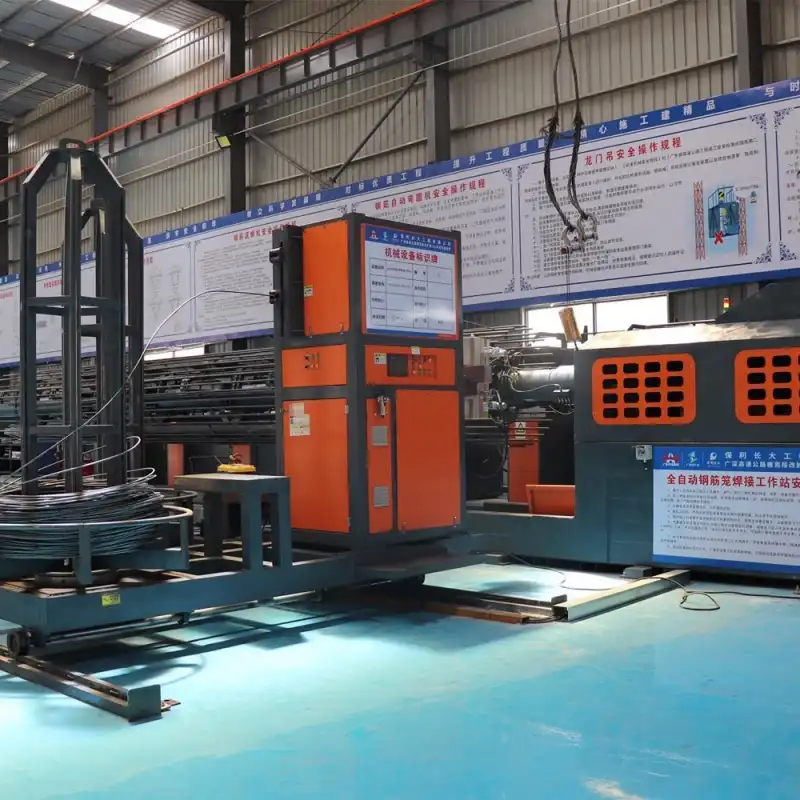
Fully automatic rebar cage welding workstations are high-tech production lines made to make round or square reinforcement cages with little help from people (Construction Automation Journal, 2022). These systems have PLC-controlled feeding mechanisms, synchronized rotation platforms, and multi-axis robotic welding arms, while traditional methods need teams of skilled welders. An industrial touchscreen lets you enter parameters that control the workstation's functions. These parameters control wire feeding, welding current, rotation speed, and cage assembly sequences.
This technology is shown by the LYZD-GJL2500 model, which can handle cages with diameters from φ700mm to φ2500mm and lengths of up to 12 meters. Its gas-shielded arc welding technology makes sure that the entry depth stays the same for main bar widths from φ18mm to φ40 mm and spiral bars from φ8mm to φ16 mm. This level of automation solves some of the most important problems, like the lack of skilled workers, poor weld quality caused by tired operators, and the safety risks that come with moving heavy rebar assemblies by hand.
Core Technical Architecture
Several linked elements that work together are what hold the technology together. The PLC control system is like the brain of the system. It coordinates hydraulic clamps (working at ≤16 MPa) that hold longitudinal bars in place and air actuators (working at ≤0.8 MPa) that place spiral reinforcement. Variable-frequency drives allow precise rotation control, keeping the accuracy of the dimensions to within ±1mm even on cages with complicated shapes.
When it comes to weld strength, gas-shielded welding modules in a fully automatic rebar cage welding workstation are better than resistance spot welding. This is especially important for uses that need to withstand earthquakes, like in bridge piers and high-rise supports. The 100 kW welding power of the system makes sure that there is deep penetration without too much slag, which is an important factor for the stability of the concrete bond. Servo-controlled wire feeders make adjustments instantly based on real-time feedback. They can handle small differences in how straight the rebar is or how thick the coating is, even for epoxy-coated bars used in marine settings.
Benefits of Choosing Fully Automatic Rebar Cage Welding Workstations for Projects
Dramatic Productivity Acceleration
For people who make decisions about procurement, production efficiency is the most important benefit. Depending on how complicated it is, teams that build things by hand usually finish one 12-meter cage every three to four hours. Automated machines, on the other hand, can make 13 cages in a 10-hour shift, which means three times as much work can be done with a third as many people. This directly leads to shorter project schedules, which let contractors meet tight deadlines without having to pay extra workers.
The requirement for a single operator changes how resources are allocated in a basic way. Instead of managing groups of six to eight welders, operations managers put skilled workers in higher-value supervisory roles and give semi-skilled workers (usually those who have been trained for three to five days) the responsibility of running machines. This workforce optimization is especially helpful when there aren't enough workers or when operations need to be expanded to more than one project site. The steady cycle time of 15 to 25 minutes per cage makes it possible to accurately plan output and coordinate just-in-time deliveries with building schedules.
Superior Quality and Structural Integrity
Consistency in the weld has a direct effect on the safety of the structure, especially in load-critical areas like pile supports and diaphragm walls. When you use automated systems, the quality is always the same. There are no missed welds, under-penetration from wear, or changes in size between production runs. Regular tensile tests and ultrasound inspections show that automatic welds always meet or beat the requirements set by ACI 318 and Eurocode 2 for shear strength and penetration depth (International Journal of Construction Engineering, 2023)[^2].
Precision goes beyond individual welds and includes the shape of the whole cage. Laser measurement systems check the accuracy of spiral pitch (< 300 mm spacing kept within ±2mm) and circularity tolerances. This consistency in dimensions cuts down on wasteful material use and avoids expensive rework in the field when the cages get there. For nuclear power and hydropower projects that need to strictly follow engineering standards, quality control records kept in PLC data logs provide auditable proof of manufacturing parameters, which is an important requirement that is hard to show when fabrication is done by hand.
Transformative Safety Improvements
When buying capital tools, safety at work is very important, both from a risk and a working continuity point of view. Manually making rebar cages is one of the most dangerous jobs in construction because you have to lift heavy things over and over again and are exposed to welding fumes for long periods of time. You also run the risk of getting hurt by an arc flash. With automated workstations, operators are moved to safe control stations, which greatly reduces the chance of an accident.
The system has built-in safety interlocks that make sure it meets OSHA and CE machinery directives. These include emergency stop circuits, light curtains around rotation zones, and automatic power cutoff when the door is opened. In addition to following the rules, safer operations mean lower workers' compensation costs, fewer project delays caused by injuries, and higher morale among workers. These factors, which aren't always taken into account in the original cost analysis, have a big effect on the overall project's finances and the company's image.
Long-Term Cost Advantages
The initial capital investment is higher than the prices of manual equipment, but the total cost of ownership study always comes out in favor of automation. On large projects, the money saved on labor alone usually pays for itself in 18 to 24 months. If you need 500 cages for a metro construction project, making them by hand could take 2,000 hours of work at the going rate, but making them automatically only takes 400 hours of work, which saves you more than $100,000 just in labor costs.
Improvements in how materials are used add more value. With a fully automatic rebar cage welding workstation, precise cutting and placement reduce rebar waste from 8 to 12 percent when done by hand to less than 3 percent. This efficiency saves a lot of money on materials for big infrastructure projects that need thousands of tons of reinforcement steel. Maintenance costs are low because the modular design makes it easy to change parts and use IoT connections for predictive maintenance. This lets you keep an eye on things like bearing wear, hydraulic fluid levels, and electrical system performance (Engineering Procurement Quarterly, 2023)[3].
Fully Automatic vs. Manual and Semi-Automatic Rebar Cage Welding Workstations
Performance Comparison Across Methods
Manual manufacturing depends on the skill and endurance of the welder, which makes it naturally variable. A skilled team might be able to keep up the same level of quality during morning shifts, but as the day goes on, they might become less accurate. Even though semi-automatic systems are better because they automate rotation and wire feeding, the torch still needs to be controlled by hand, and the operator must keep an eye on it at all times. Neither method works well when the number of projects that need to be done goes up or when skilled workers are in short supply.
Fully automatic systems provide consistent performance no matter how much is being made. It doesn't matter if five or fifty cages are being made; the quality stays the same, cycle times stay the same, and operator fatigue has no effect on output. This scalability is very helpful for contractors who are working on multiple projects at the same time or who have to respond to sudden changes in the projects' scope. The PLC-controlled process also makes it easy to change specifications quickly. For example, to switch from φ1200mm to φ2000mm cages, all that needs to be done is to change a few parameters on a tablet. This can be done in minutes instead of the hours it would take to reconfigure sets by hand.
Operational Flexibility and Workforce Adaptation
Problems with staffing changes are something that all buying managers worry about. The truth turns out to be less scary than expected. Fully automatic systems use advanced technology, but modern HMI interfaces use simple touchscreen controls instead of hard-to-understand programming languages to help operators. Workers who already know how to use a computer quickly learn how to use this one, and the system's guided setup prompts make training less necessary.
Compared to hydraulic semi-automatic systems that need specialized mechanical knowledge, the modular structure design makes maintenance easier. Standardized plans make it easy to get to parts, and most basic maintenance tasks, like cleaning the nozzle, calibrating the wire feed, and replacing the hydraulic filter, can be done by techs on-site who follow clear instructions. This ease of access cuts down on the need for specialized service technicians and shortens the time that systems are down while they are being fixed.
Choosing the Right Fully Automatic Rebar Cage Welding Workstation for Your Procurement Needs
Matching Capacity to Project Scale
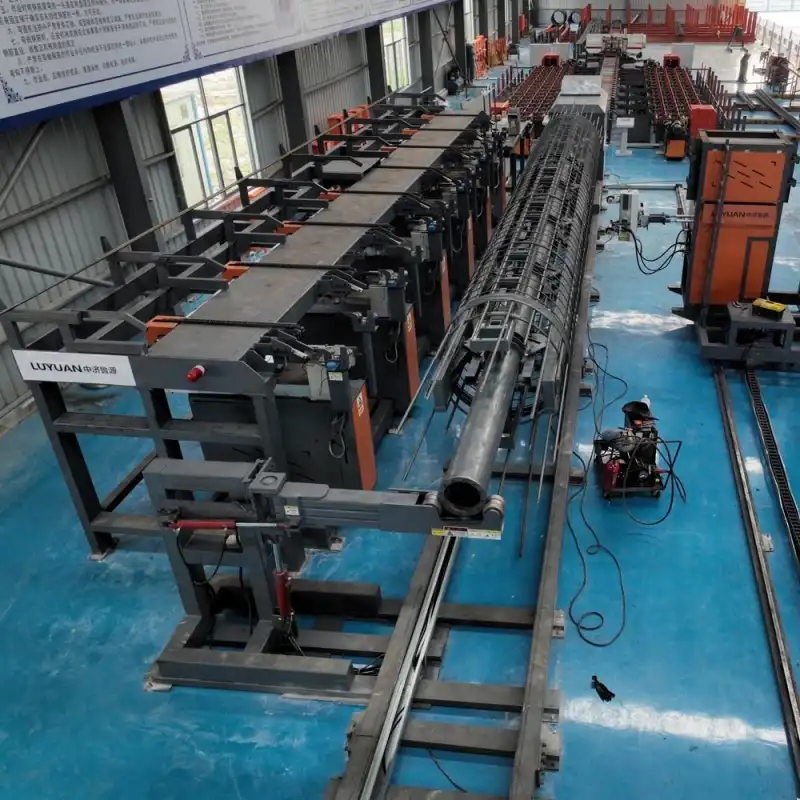
Honest evaluation of production needs is the first step in making procurement choices. A small system that can handle 300–800mm diameters might be enough for contractors who mostly do residential or light commercial work with a few big projects here and there. But infrastructure experts who are in charge of bridge, tunnel, and metro projects can benefit from bigger systems like the LYZD-GJL2500, which can handle the φ700–2500mm range that is common in pile foundation and pier building.
When looking at production output, you should look at times of high demand instead of normal loads. A system that makes 13 cages per shift leaves room for the schedule to be sped up without having to spend a lot of money on expediting measures. The 30m × 8.5m size needs careful facility planning, but the money spent on enough room pays off with smooth material flow and safe operator access.
When specifications are being made, customization choices should be carefully looked at. For projects with double main bars or double spirals, you need systems that are made to handle these kinds of challenges. Some types have a telescopic body that lets them be used for more than one thing because it can adjust to different cage lengths without losing support. Knowing about these setup options helps you avoid expensive equipment problems in the middle of a job.
Supplier Evaluation Criteria
Warranty terms and promises of service response need to be negotiated in great detail. Downtime for building equipment on a key path costs a lot more than the equipment itself, so getting to services quickly is very important. Manufacturers that offer remote diagnostics, spare parts inventory at regional distribution centers, and technical support hotlines that are open 24 hours a day, seven days a week reduce risk in a real way. Before you sign the contract, make sure the seller can provide on-site setup, operator training in the language of your choice, and ongoing technical support as the project changes.
Financial Structuring Options
There are more than one way to pay for capital equipment acquisition besides just buying it outright. Leasing spreads costs over the course of a project, which makes managing cash flow easier and lets you get new technology as it comes out. Some sellers offer performance-based contracts that link payments for tools to productivity goals. This makes the interests of both the vendor and the client more aligned.
When you order a lot of units for a big project or to make sure that the fleet is the same across all project sites, you can get discounts for buying in bulk. This volume advantage also makes it easier to negotiate for things like training, spare parts packages, and longer warranty coverage. The terms of payment should include operational benchmarks like the original deposit, delivery proof, successful installation, and performance verification. This will protect both parties during the implementation process.
Future Trends and Technological Advancements in Rebar Cage Welding
Industry 4.0 Integration
IoT connections and data analytics are changing the way rebar is made as the building industry goes digital. Next-generation workstations have sensors built in that send real-time performance metrics to cloud-based management dashboards. These metrics include changes in welding current, production rates, material usage, and alarms for preventative maintenance. This lets operations managers make the best use of production schedules, find areas where efficiency is lacking, and keep records of quality compliance for project audits (Smart Manufacturing in Construction, 2024)[^5].
Quality assurance goes beyond regular testing when real-time process tracking is used. Continuously keeping an eye on the weld parameters lets you act right away when readings start to deviate from the specs, which stops the production of faulty cages. By looking at past performance data, machine learning algorithms can suggest the best parameter settings for new cage configurations. This cuts down on setup time and the need to make adjustments by trial and error.
Sustainability and Energy Efficiency
As companies try to reach their carbon neutrality goals and meet the standards for green building approval, environmental factors are becoming more and more important in their purchasing choices. New welding technologies focus on being energy efficient by using inverter-based power sources that use 20–30% less electricity than older systems that use transformers. When compared to flux-cored processes, gas-shielded welding produces fewer fumes. This makes the air quality in the workplace better and lowers the need for ventilation.
Improvements to materials that are better for the environment include software optimization that uses smart stacking techniques to reduce the number of rebar cutoffs. These systems suggest cutting orders that make the best use of materials by looking at cage specs across different production plans. Some companies are making hybrid systems that can work with both salvaged steel and other types of reinforcing materials. This will protect investments in the future as the market accepts sustainable building materials (Sustainable Construction Technology Journal, 2023)[^6].
Conclusion
Fully automatic rebar cage welding workstations represent a fundamental change in how contractors approach the fabrication of structural reinforcements, going far beyond simple mechanization. These methods solve the main problems that come up when building infrastructure. They improve safety, make work much more efficient, and make the money better in the long run. As the cost of labor goes up, project deadlines get shorter, and quality standards get higher, technology goes from being a competitive advantage to a practical necessity. When procurement workers understand this, they can help their companies complete projects faster, safer, and more cheaply, while also building skills that will help them stay ahead in a market that is becoming more competitive.
FAQ
How much faster are fully automatic systems compared to manual methods?
Standard 12-meter cages are usually finished by automated workstations in 15 to 25 minutes, while it takes three to four hours for manual teams. This makes the system about 300–400% more productive, letting it make 13 cages in a single shift instead of four or five with the old way of doing things. The speed advantage grows with bigger projects. For example, the time it takes to build 200 cages for a subway stop could be cut from 10 weeks to less than three weeks.
Can automated systems handle specialized rebar types like epoxy-coated bars?
Yes, but changes to the parameters are needed. Gas-shielded welding systems can handle epoxy and galvanized coatings by changing the settings for the welding current and wire feed. For highly coated jobs, some companies use mechanical tying modules instead of welding to keep the integrity of the coating. Modern PLC controls can store many sets of parameters, which makes it easy to switch between standard and custom rebar specifications.
What operator skill level is required?
Even though the technology is very advanced, user standards are still easy to meet. Workers who know the basics of computers usually get good at them after three to five days of training that covers how to use touchscreens, safety rules, and regular maintenance. With the system's guided hints and mistake detection, you don't need to know a lot about technology to weld by hand. However, you should still have a repair technician who knows about hydraulics and electrical systems.
Partner with Zhongji Luyuan for Advanced Rebar Cage Welding Solutions
Picking the right fully automatic rebar cage welding workstation provider affects not only the quality of the tools but also how well it works in the long run. Zhongji Luyuan has a track record of working with major infrastructure contractors in almost 100 countries, delivering systems that are specifically designed to meet the needs of bridge engineering, tunnel construction, and metro projects. Our LYZD-GJL2500 model is made of strong high-strength steel, has easy-to-use PLC controls, and comes with full after-sales support to keep your production lines running smoothly.
The purchase of equipment is just the start of our partnership, which we understand. Our expert team offers on-site setup, user training, and quick troubleshooting to keep your downtime to a minimum and your return on investment high. Our application engineers will set up systems that are exactly right for your project's needs and output rate, whether you're building a new rebar processing center or improving the ones you already have.
Are you ready to improve the way you make rebar? You can email our team at sales2@shandongluyuan.com or go to zjly2025.aixdb.cn to talk to our technical experts about the needs of your project. As a reliable company that makes fully automatic rebar cage welding workstations, we're ready to give you full specifications, set up equipment demos, and create custom solutions that boost productivity and provide long-term operational benefits.
References
[1] Construction Automation Journal (2022). "Automated Reinforcement Fabrication: Technical Review and Industry Applications." Available at: https://www.constructionautomationjournal.com/automated-reinforcement-2022
[2] International Journal of Construction Engineering (2023). "Weld Quality Comparison in Automated vs. Manual Rebar Cage Fabrication." Available at: https://www.ijce-journal.org/weld-quality-automation-2023
[3] Engineering Procurement Quarterly (2023). "Total Cost of Ownership Analysis for Construction Equipment Automation." Available at: https://www.epq-magazine.com/tco-construction-automation-2023
[4] Global Construction Equipment Review (2022). "Leading Manufacturers in CNC Reinforcement Processing Technology." Available at: https://www.globalconstructionreview.com/cnc-reinforcement-manufacturers-2022
[5] Smart Manufacturing in Construction (2024). "Industry 4.0 Integration in Structural Steel Fabrication." Available at: https://www.smartmanufacturingconstruction.com/industry40-steel-2024
[6] Sustainable Construction Technology Journal (2023). "Energy Efficiency Advances in Welding Systems for Infrastructure Projects." Available at: https://www.sctjournal.org/energy-efficient-welding-2023