How Can a Steel Cage Welding Machine Ensure Accurate Cage Welding?
Sep 11, 2026
When we talk about building bridges, subway tunnels, or high-rise foundations, precision isn't optional—it's mandatory. A steel cage welding machine transforms how reinforcement cages are fabricated by eliminating human inconsistency and delivering repeatable, millimeter-level accuracy. These automated systems integrate PLC-controlled synchronization, hydraulic support mechanisms, and gas-shielded arc welding to produce cages that meet strict engineering tolerances. By replacing manual processes prone to misalignment and weld variation, modern rebar cage welding equipment ensures structural integrity while drastically reducing labor costs and production timelines.
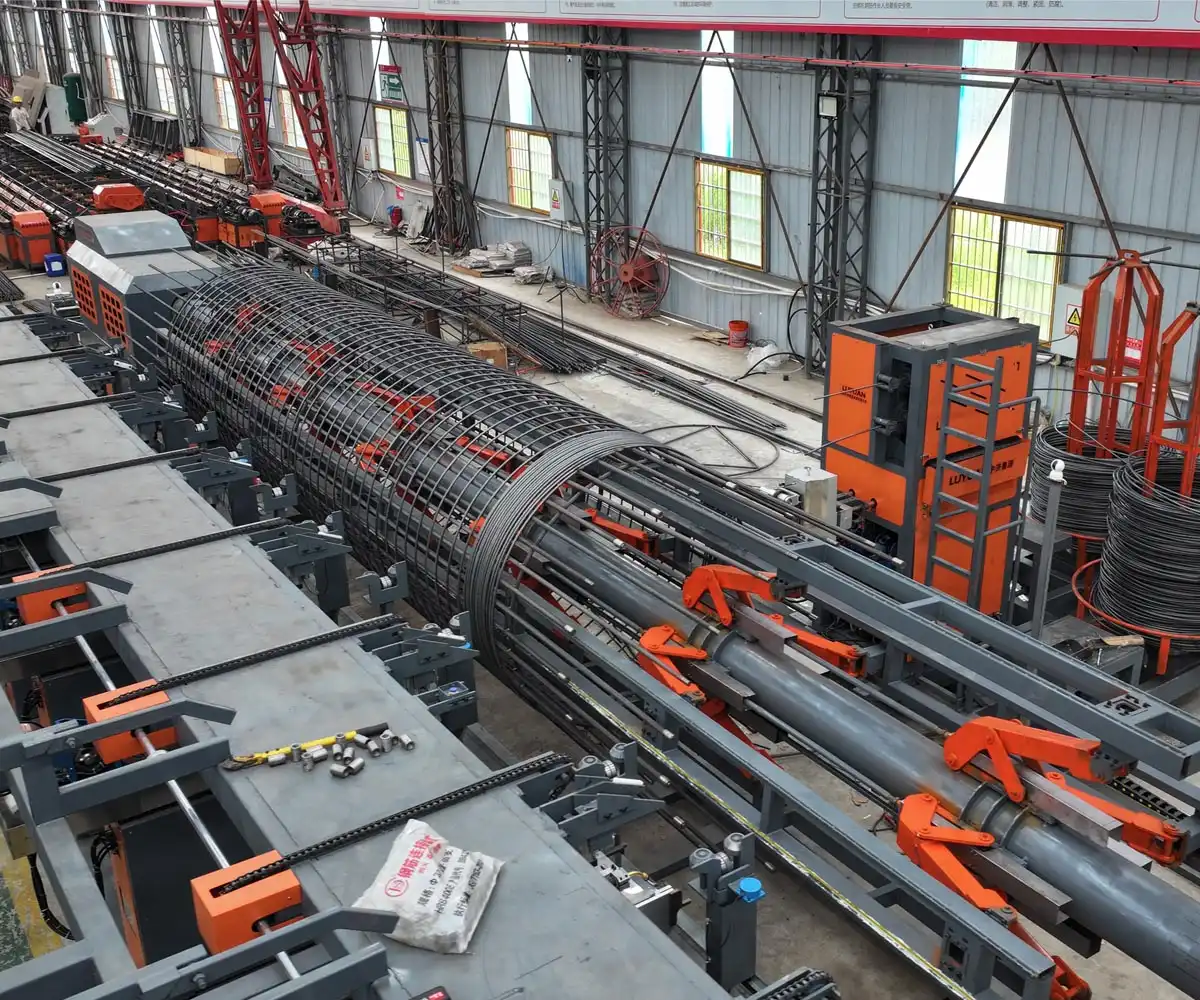
Understanding the Accuracy Challenges in Steel Cage Welding
Why Manual Welding Falls Short
Making reinforcement cages by hand is still popular on many building sites, but it adds a lot of variation. Different operators have different levels of skill, working long shifts makes you tired, and when the spiral bars are 12 meters long, it's almost impossible to keep the same distance between them. The American Concrete Institute (ACI) says that even small changes in where the rebar is placed can lower the bending strength of concrete by up to 15%[1]. When longitudinal bars move or spiral pitch changes, the cage can't evenly distribute loads. This is a major flaw in pile foundations that support highway overpasses or metro stations.
The Cost of Inconsistency
Aside from the structural risks, bad welding makes projects more expensive. Rejected cages need to be completely redone, which wastes materials and delays the building schedule. We've seen jobs get held up for three weeks because new cages couldn't be made fast enough after mistakes happened during manual welding. More and more, procurement managers in rail transit and bridge engineering know that investing in automated welding systems up front pays off by cutting down on rework, speeding up turnarounds, and making sure that prefabricated cage assemblies meet ASTM A1064 standards.
What Accuracy Really Means
For cage welding to be precise, the diameter must stay within a tolerance of ±3mm, the spacing between spiral bars must stay within ±5mm along the entire length of the cage, and the weld penetration depth must meet the requirements for shear strength. These factors have a direct effect on how well the concrete and steel join together and on how well the finished building stands up to earthquakes or changing traffic loads.
How Steel Cage Welding Machines Work to Ensure Precision
Automated Control Systems
The PLC-based control system and an industrial HMI touch screen work together to make the machine accurate. When workers put in the cage's diameter (500mm to 3000mm), length (up to 12 meters), and spiral spacing, the machine figures out the exact spinning speeds and travel rates for the trolley. The system syncs the movement of the welding manipulator with the rotation of the mobile disk, which spins longitudinal bars. This makes sure that each spiral wrap lands exactly where the engineering drawings say it should.
Gas-Shielded Arc Welding Technology
Real-Time Parameter Adjustment
During production, sensors built into the machine keep an eye on the welding current, hydraulic pressure (≤16 MPa), and cage shape. Moving from a LYGH-1500 model that can handle 500–1500 mm cages to a LYGH-3000 model that can handle 800-3000 mm cages, for example, causes the system to automatically change the positions of the support rollers to keep the cages from sagging. This adaptive response keeps concentricity even when heavy-duty cycles are run with 38 KW of equipment power.
Types of Steel Cage Welding Machines and Their Accuracy Features
Fully Automated Systems
Fully automatic rebar cage welding systems are the most precise way to make things. The LYGH series from Zhongji Luyuan is a good example of this type of product because it has telescopic body designs that can fit different cage diameters without having to be rearranged by hand. With just one or two workers, the LYGH-2500 model can make eight cages in a 10-hour shift using 25 KW of machine power and 30 KW of welding power. Its servo control system ensures positioning accuracy within ±2mm over 12-meter lengths, which is very important for containment structures at nuclear power plants where tolerances must be met.
Semi-Automated Options
Semi-automated tools are a mix of technology and human control. These systems automate the movement of the trolley and spiral winding, but joints need to be finished by hand at set times. Even though this method lowers output to about five cages per shift, it works well for contractors who need to be flexible for projects with constantly changing specs or cage shapes that aren't standard. Equipment managers like that the original investment is usually 40% less than for fully automatic lines, but the quality is still better than with human methods alone.
Modular Design Advantages
Modular designs in modern welding tools make it easier to maintain and change specifications. The strengthened steel frame, which is made of high-strength building materials, can handle heavy-duty use for a long time. Technicians can change the drive rings and adjust the hydraulic support brackets in 45 minutes when they switch from making 600mm diameter cages for building piles to 2000mm diameter cages for bridge piers. Because the equipment is flexible, it can be used on a variety of projects, which increases the return on investment (ROI) for rebar processing centers that work with a wide range of clients.
Understanding these design philosophies before buying equipment helps procurement teams match the capabilities of a steel cage welding machine to the needs of production. For example, a highway builder that makes piles over and over again would benefit most from fully automated systems that boost throughput. On the other hand, an EPC company that works on a variety of infrastructure projects might value semi-automated freedom.
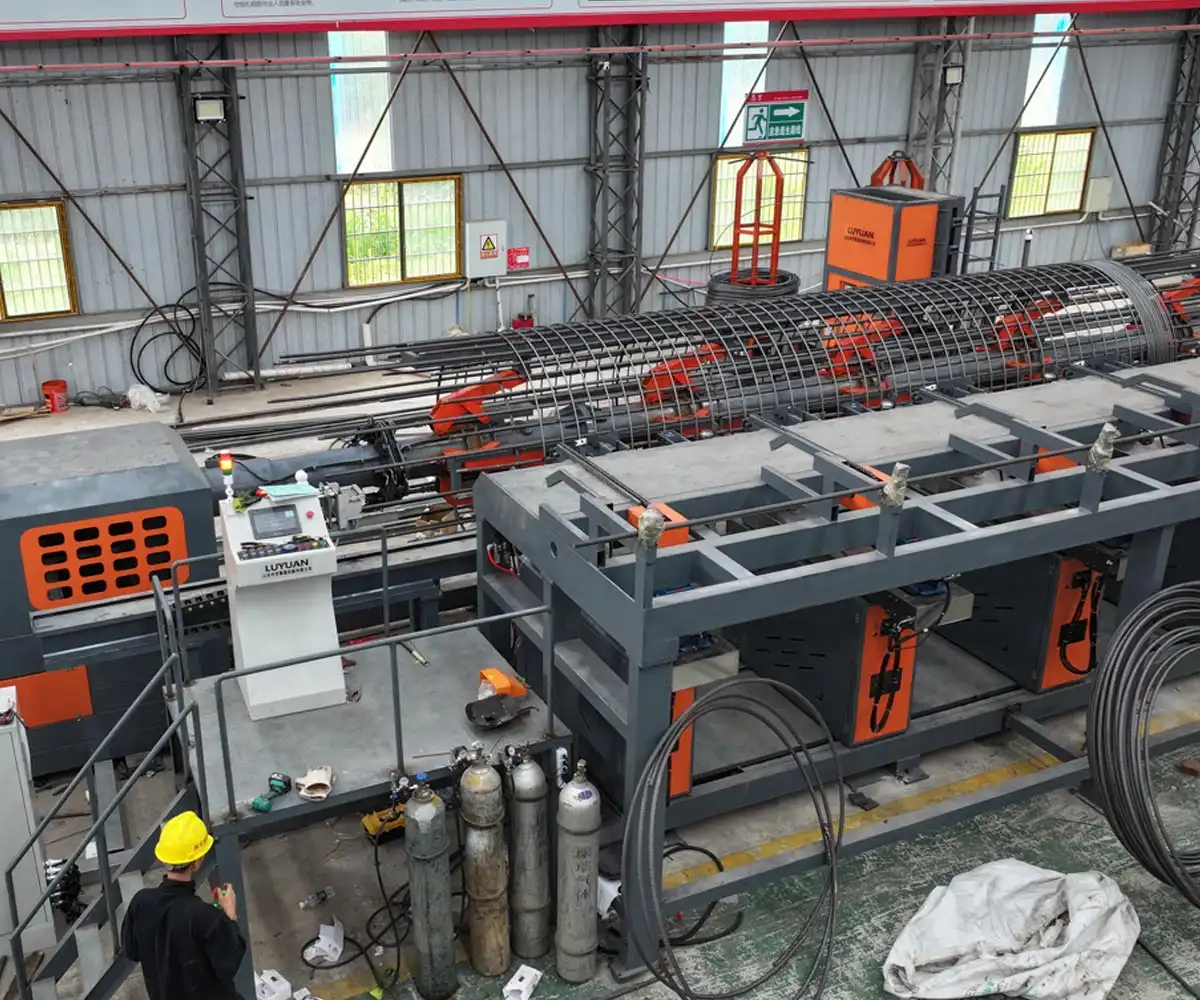
Best Practices to Maintain and Operate Machines for Consistent Accuracy
Calibration and Preventive Maintenance
To keep the accuracy, calibration must be done on a regular basis every 500 operating hours. Using laser alignment tools, technicians check that the fixed and mobile disks are centered and make sure that any variation stays below 1mm. We also check the cooling systems for welding transformers. If the water tubes get clogged, the transformer gets too hot, which makes the weld less strong. Dressing the electrode tips every 200 cages keeps the current flow steady, and hydraulic oil filters need to be changed once a month to keep the pressure from changing, which could make the support rollers unstable during long cage fabrication runs.
Operator Training Protocols
Even automated systems need skilled workers who know how to read error codes on the HMI interface and understand PLC logic. Emergency stops, parameter input checking, and simple troubleshooting should all be part of thorough training programs. When operators know that strange noises coming from the drive mechanism mean that the bearings are wearing out, they can avoid catastrophic failures that could stop production for days. Technical leaders at prefabricated building companies say that well-trained crews make 60% fewer mistakes than crews that use tools without formal training.
Addressing Common Issues
Usually, alignment issues are caused by a foundation that settles unevenly or mounting bolts that are too loose. These problems are found by regular checks before they lead to "banana-shaped" cages with bars that aren't aligned. If you don't clean the sensor right away, it can stop working properly, which is often caused by welding spatter. Setting up daily routines with things like cleaning the sensor lens, checking the integrity of the grounding wire, and checking the PLC backup file keeps machines running within specs and extends their service life past 15 years.
These maintenance tasks have a direct effect on the bottom line. A tunnel builder we work with found that careful calibration cut material waste from 8% to less than 2%. This saved $47,000 a year on a single project while still meeting the tight deadlines required by government building plans.
Procurement Considerations for Steel Cage Welding Machines Ensuring Accuracy
Evaluating Control Technology
Production Efficiency Analysis
It's more important to use realistic efficiency forecasts than theoretical maximums. Depending on the specs, the LYGH series can build one to three cages per hour, which translates to about eight units in a 10-hour shift on the job site. This speed—three to four times faster than teams working by hand—allows for just-in-time delivery for deep foundation projects where the safety of the shaft limits the amount of time that can be stored. When project managers figure out the return on investment (ROI) for labor, they find that one machine can replace six to eight manual welders and produce more consistent results. On active infrastructure portfolios, this usually means that the machine pays for itself within 18 to 24 months.
After-Sales Support Infrastructure
Supplier support networks play a big role in how reliable equipment is. Zhongji Luyuan has expert service teams that can react within 48 hours to help with installation, commissioning, and training for operators in almost 100 countries. This help is very important in the first 90 days of operation, when crews are getting used to the touch-screen controls and figuring out how to best use the parameters. The warranty should cover both mechanical parts (for at least two years) and electrical systems, and it should be clear that extra parts will be easy to find, especially for parts like welding manipulators and hydraulic cylinders that get worn out the most.
Customization Capabilities
Large contractors often need configurations that aren't standard. If the length of the cage needs to be longer than the usual 12 meters, it needs to be able to connect to existing concrete batching plant systems, or it needs to be able to adapt to harsh conditions like desert heat or arctic cold; suppliers need to be able to be flexible with their engineering. Companies that offer modular systems, like Zhongji Luyuan, which can change power supplies from 380V/50Hz to 440V/60Hz, show that they have the technical know-how that is needed for foreign projects. Before making a final choice on equipment, procurement teams should ask for detailed customization case studies and contact information from similar-sized implementations.
Ultimately, the choice between semi-automated and fully automated systems depends on how predictable the project volume is and how much labor costs. Fully automated lines running 24 hours a day, seven days a week are best for a rebar processing center that works with many contractors. On the other hand, semi-automated equipment that can make design changes more quickly may be best for a bridge engineering firm that only needs cages sometimes to save money.
Conclusion
FAQ
How does automation improve weld accuracy compared to manual methods?
Human factors like tiredness, inconsistent skill, and bad judgment that lead to spacing differences and weak joints are taken care of by automated systems. PLC controls make sure that the spinning of the cage and the movement of the welding torch are always exactly in sync with each other. This makes sure that the spiral bars hit within ±5mm of where they should on all cage lengths, and gas-shielded methods make sure that the penetration depth is uniform and meets ASTM standards.
What maintenance preserves machine precision long-term?
Every 500 hours, the sensor and disk are calibrated to make sure they are accurate and centered. Electrode tip treatment keeps the flow of current steady, and checks of the hydraulic system keep the pressure from changing. Logic mistakes can be avoided by cleaning welding sparks off of sensors and making sure they are properly grounded. For more than 15 years, these habits have kept technology working as it should.
Can one machine handle multiple cage specifications efficiently?
Yes, with the help of servo controls and modular design. With customizable templates and adjustable drive rings, the LYGH series can adjust from 500mm to 3000mm diameters. It takes less than 45 minutes to make changes to the specifications. This adaptability is good for workers who work on bridge piers, building piles, and tunnel projects and don't want to keep different tools for each job.
Partner With a Trusted Steel Cage Welding Machine Manufacturer
With automated rebar cage welding systems it has given to China Railroad, China State Construction, and nuclear power companies since 2016, Zhongji Luyuan Machinery has supplied infrastructure projects in over 100 countries. With our LYGH series, we use gas-shielded arc welding and PLC precision control to make cages that meet exact engineering standards while lowering labor costs by 60%. We can provide scalable solutions for energy, rail transit, and highway projects. Our equipment has power ranges from 16 KW to 38 KW, and we can make up to eight cages per shift. Our expert teams offer help within 48 hours, installation training, and customization for specific voltage requirements or harsh working conditions. Talk to sales2@shandongluyuan.com about how our steel cage welding machine options can help you process reinforcements more efficiently and get a better return on your investment (ROI) on your projects.
References
[1] American Concrete Institute (ACI). (2019). Building Code Requirements for Structural Concrete (ACI 318-19). Farmington Hills, MI: ACI. Retrieved from https://www.concrete.org/store/productdetail.aspx?ItemID=318U19
[2] American Welding Society (AWS). (2018). Structural Welding Code – Reinforcing Steel (AWS D1.4/D1.4M:2018). Miami, FL: AWS. Retrieved from https://www.aws.org/standards/page/d1-4-d1-4m-2018
[3] Construction Industry Research and Information Association (CIRIA). (2020). Quality Control in Reinforced Concrete Construction. London: CIRIA Publishing. Retrieved from https://www.ciria.org/CIRIA/Memberships/Publications/Publications.aspx
[4] International Organization for Standardization (ISO). (2021). ISO 9001:2015 Quality Management Systems – Requirements. Geneva: ISO. Retrieved from https://www.iso.org/standard/62085.html
[5] National Institute of Standards and Technology (NIST). (2020). Automation in Construction: Precision Manufacturing for Infrastructure. Gaithersburg, MD: NIST. Retrieved from https://www.nist.gov/topics/manufacturing/automation-construction
[6] The American Society of Civil Engineers (ASCE). (2017). Seismic Design of Piers and Wharves (ASCE/COPRI 61-14). Reston, VA: ASCE. Retrieved from https://ascelibrary.org/doi/book/10.1061/9780784413487