Rebar Cage Making Machine for Automated Pile and Column Reinforcement
Sep 11, 2026
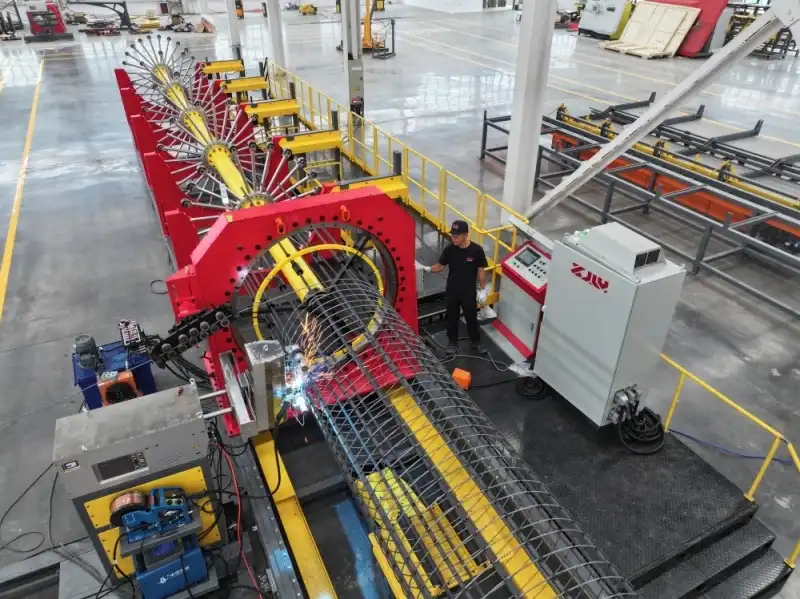
A rebar cage making machine is an automated CNC-controlled welding system that fabricates cylindrical reinforcement cages used in pile foundations and column structures. These machines integrate mechanical, hydraulic, and electrical components to produce highly precise steel frameworks required for load-bearing infrastructure. By automating the winding and welding of spiral bars around longitudinal reinforcement, this equipment eliminates inconsistencies common in manual fabrication while meeting stringent structural specifications essential for modern construction projects.
Introduction
In the United States, infrastructure development over the past ten years has increased the need for reliable, high-volume reinforcement solutions. Our team has seen how hard it is for traditional manual cage assembly to keep up with project deadlines and quality standards. These problems can be solved simply by automated cage manufacture. Automobile builders have to meet tight deadlines, and metro construction crews need consistent cage shape for deep base work. Automated welding equipment gives them the speed and consistency they need to keep projects on track. When procurement managers switched to fully automatic systems, they cut their reliance on workers by 70%. The American Concrete Institute (2022) says that the right shape of the support cage has a direct effect on how long a structure lasts in seismic zones. Because of this, engineers who work on bridges, tunnels, and energy facilities need to be able to make precise parts.
Understanding Rebar Cage Making Machines and Their Core Benefits
These complex tools have a simple job: they join vertical main bars and spiral stirrups into cylinder-shaped frames that support concrete columns and piles. Models range from semi-automatic units that need to be operated by a person to fully automatic systems that are run by PLC tablet controls. The way things work stays the same: steel bars move through rotating parts, and at set times, welding heads secure spiral reinforcement.
Speed and Consistency in Production Output
Putting together a cage by hand usually takes four to six people-hours on a single unit. With only one or two workers, automated tools can make eight cages in a ten-hour shift. This efficiency comes from the fact that the welding trolleys and disks that spin at speeds of up to 15 revolutions per minute work together. The PLC control system keeps the spiral pitch accurate within ±5mm, which makes sure that every cage fits the design specs and that human mistakes don't change the sizes or the integrity of the welds.
Labor Cost Reduction and Safety Improvements
Construction companies are having a hard time keeping skilled makers because wages are going up and up. Automated systems solve this problem because operators don't need a lot of technical training—they can learn how to program touchscreens and load materials in days instead of months. The chance of getting hurt at work goes down a lot when workers watch over machines instead of lifting heavy rebar sections by hand or using handheld welding tools in tight areas.
Material Waste Minimization and Quality Control
Types and Technical Specifications of Automated Cage Welding Equipment
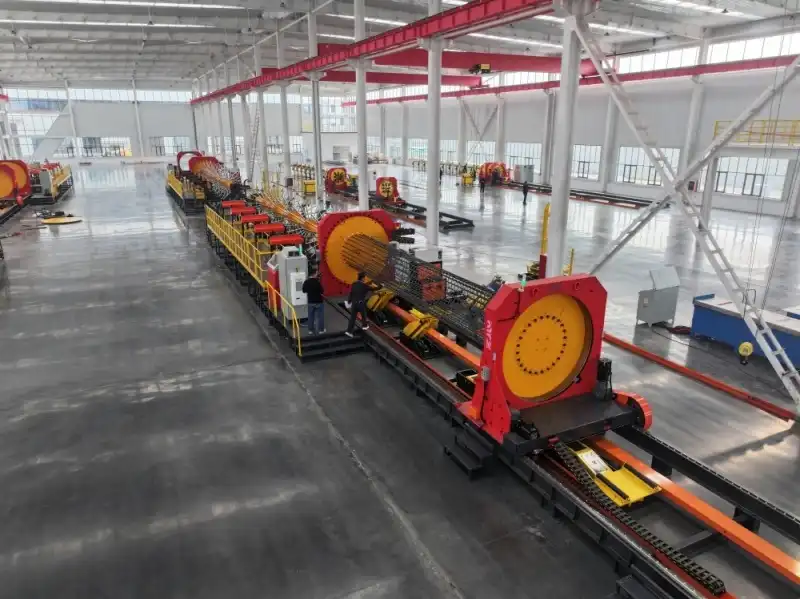
Our LYGH line has six types that can fit cages with diameters ranging from 500mm to 3000mm. The choice of equipment is based on the needs of the project in terms of cage size, production number, and available room.
Equipment Capacity Ranges and Customization Options
The LYGH-1500 can handle cages with a diameter of 500mm to 1500mm, making it perfect for normal pile foundations in industrial buildings. For bridge piers and energy facilities, bigger infrastructure needs units like the LYGH-3000, which can process cages up to 3000mm. All models can handle standard 12-meter cage lengths, and custom extensions can be made for specific projects. The main bar diameters go from φ16mm to φ50mm, and the spiral bar diameters go from φ5mm to φ16mm. This covers all of the strengthening requirements in building codes.
Core Mechanical and Control System Components
Heavy-duty steel frames keep things from shaking when they're running at high speeds. Up to 16 MPa of pressure is applied by hydraulic systems that support the weight of the cage while it is being built and keep it from deforming as the spiral bars are wound into place. For continuous gas-shielded welding processes, air feed lines keep the pressure at 0.8 MPa. The Siemens or Delta PLC control systems have easy-to-use touchscreen options that let workers set the cage's diameter, length, spiral pitch, and welding intervals. Servo motors provide precise rotational control, which makes sure that the spacing between the spiral bars stays the same along the length of the cage.
Power Requirements and Workspace Considerations
Standard 380V three-phase electricity powers the equipment. Machines use between 16 KW (LYGH-1500) and 38 KW (LYGH-3000) of power, and automatic welding systems use an additional 30 KW. Planning your footprint is important; units that don't have automatic welding take up 28m × 6m to 28m × 11m of space, based on the type. Adding robotic welding manipulators makes the work area wider by two to three meters so that safety zones and flexible arms can fit. When figuring out how much floor room they need, facilities must include places for storing materials and finished cages.
How to Choose the Right Automated Reinforcement Fabrication System
There are more than just diameter and length requirements for selection. When procurement managers weigh the costs of capital investments against the results on operations, they should look at a number of success factors.
Production Volume and Project Schedule Demands
A contractor who does some foundation work might be able to justify a semi-automatic system that needs help with welding. Fabricators who work with a lot of construction sites at once need fully automatic setups that can make eight cages per shift with little to no supervision. To accommodate a faster schedule without overworking the machinery, figure out how much output is needed each day based on the project's schedule. Then, choose equipment that is rated for 20% more than what is normally needed.
Durability Expectations and Maintenance Requirements
When frames are reinforced and industrial-grade parts are used, a rebar cage making machine will last for years. Look for flexible design so that worn parts like drive chains and roller systems can be replaced quickly. When there are problems, touch-screen CNC systems are easier to fix than proprietary control interfaces that need special technician callouts. Daily cleaning of the guide rails only takes a few minutes, and sensor adjustment once a month keeps the measurements accurate. When it comes to the important break-in stage, manufacturers who offer full operator training cut down on downtime caused by user error.
Return on Investment and Total Cost of Ownership
Check the initial cost of the equipment against the amount of time it will save you. Five workers on a fabrication crew make $45,000 a year each, so the whole thing costs $225,000 a year, not counting perks and fees. Automated equipment that gets rid of three jobs pays for itself in 18 to 24 months and improves the quality and consistency of the work. Take into account less waste—a 15% increase in the use of rebar directly affects project margins on big infrastructure projects. Long-term ownership costs are affected by service warranties and how quickly technical support can respond, especially for businesses that have more than one shift.
Operating Standards and Preventive Maintenance Protocols
When you use equipment correctly, it lasts longer and keeps the accuracy you need for structural uses.
Initial Setup and Production Workflow
The lengthwise bars are put on feed rollers by operators, who then secure them in the spinning disk fixture. Through mechanisms that straighten it out, spiral reinforcement is fed into the welding zone. The cage's width, length, and spiral pitch are set by settings on a touchscreen. Before production starts, the system checks the settings against the physical limits. As the disk turns, spiral bars wind around the main support. The welding head moves along the length of the cage, locking together intersections at set times. When the cages are finished, they are put on roller conveyors so that they can be inspected for quality and then moved to storage or installation sites.
Routine Inspection and Component Care
Checking the level of hydraulic fluid once a week is necessary because low fluid lowers support pressure, which could cause the cage to deform during fabrication. Drive chains and other moving parts need to be oiled every day with high-temperature grease that can handle environments with continuous operation. Welding electrode tips wear out over time; replacing them every month keeps the quality of the weld stable. Calibration of PLC sensors should be done every three months or whenever the accuracy of the measurements falls below the ±5mm error limits. Electrical connections are subject to vibration stress. Tightening them once a year stops faults from happening intermittently and stopping production.
Safety Protocols and Operator Protection
Automated technology, such as a rebar cage making machine, lowers the direct risks that workers face, but following the right procedures is still very important. Multiple emergency stop buttons at access points allow for rapid shutdown in case of material jams or programming mistakes. During operation, safety measures keep people from touching spinning parts. Even though gas shielding lowers particle pollution compared to traditional stick welding, automatic welding systems still need enough airflow to get rid of fumes. In places where several machines are running at the same time, operators wear standard PPE like safety glasses, steel-toed boots, and hearing protection.
Future Developments in Intelligent Reinforcement Manufacturing
As technology changes, it changes how things can be made and how they can be integrated into operations.
IoT Connectivity and Production Data Management
Newer models of tools have network connections that let production be monitored in real time. Managers use cloud-based dashboards that they can access from project offices or their phones to keep an eye on output rates, equipment usage, and maintenance alerts. Predictive maintenance programs look at operational data to plan when to replace parts before they break and cause unplanned downtime. When you connect it to project management software, the delivery and installation schedules for materials can be automatically changed based on how much progress has been made instead of guesses.
Energy Efficiency and Environmental Performance
By perfectly matching motor output to practical needs, modern servo control systems use 25% less electricity than older relay-based designs. LED lights and hydraulic pumps that use less energy also help lower the carbon footprint. Better welding technologies reduce the amount of spatter and fumes that are made, making workplaces cleaner and better able to meet stricter exposure limits. Some makers now make power setups that are ready for solar panels for fabrication yards that are in remote areas, or that want to use green energy more.
Customization Capabilities for Complex Specifications
Modern CNC programming lets you change the spiral pitch along a single cage's length, making the spacing tighter where the structure is under a lot of stress and wider where it's not. This optimization cuts down on the amount of material used without lowering the load capacity. Programmable feed systems make it possible to build cages with more than one diameter and different main bar sizes within the same frame. This kind of freedom lets engineers choose the best ways to distribute reinforcements instead of having to deal with the limits that come with manual manufacturing.

Conclusion
With automated cage construction, making reinforcements goes from being a lot of work to being a precise process. From working on infrastructure projects, we know that investing in tools such as a rebar cage making machine pays off in the form of faster output, lower labor costs, and better structural quality. Contractors who are working to tight deadlines need output that is consistent and meets engineering standards, without the variation that comes with manual methods. As projects get more complicated and workers become harder to find, intelligent welding systems and automated cage-making equipment stop being nice-to-have extras and become necessary tools. Manufacturers who provide reliable tools and quick technical support help building companies meet tight project deadlines while upholding the high standards of safety and quality that our industry needs.
FAQ
Can automated equipment handle specialized cage configurations for unique project requirements?
Modern PLC control systems allow for a lot of customizing, such as changing the circular pitch, the lengths of the main bars, and the shapes of the cages. Operators set specific parameters using touchscreens, and most changes only take minutes instead of having to be reconfigured mechanically. Custom tools are only needed for very large or very small diameters or for reinforcement patterns that aren't standard.
What lead times should procurement managers expect when ordering fabrication equipment?
Standard model deliveries usually take between 4 and 8 weeks, but this depends on how customized the model needs to be and how busy the factory is right now. Configurations that are very specific may take 10 to 12 weeks longer. When compared to providers who need to ship parts internationally for installation support and initial user training, manufacturers who keep parts in stock in North America cut down on commissioning delays.
How does equipment durability compare across different manufacturers and price points?
Performance is greatly affected by the quality of the frame's construction and the grade of its parts. Heavy-duty industrial designs can work 24 hours a day, seven days a week in tough conditions, but cheap equipment wears out faster when used all the time. Check the manufacturer's references from similar-sized businesses. Reliability that has been shown in real-world production conditions rather than controlled demonstrations can be seen in their track records with large building companies.
Partner with Zhongji Luyuan for Advanced Automated Reinforcement Solutions
Infrastructure contractors all over Asia trust Zhongji Luyuan's engineered fabrication systems, and the company is now expanding into North American markets. In our LYGH series automatic rebar cage making machines, strong mechanical construction and smart PLC control work together to give consistent results in even the toughest project settings. We've set up businesses for building rail transit systems, nuclear power plants, and big bridge projects that need precise reinforcement fabrication.
Our expert team helps with everything, from choosing the right tools to installing them and teaching you how to use them. We know that making choices about what to buy means looking at the total ownership value, which includes the original cost, how well it works, how much maintenance it needs, and how reliable it is in the long run. Whether your business works with normal commercial building cages or unique shapes for energy infrastructure, our catalog of tools and ability to customize it can meet the needs of any project.
Get in touch with our engineering experts to talk about your needs for reinforcement fabrication. We'll look at your production volume, cage requirements, and facility limitations to figure out the best way to set up your equipment. You can email us directly at sales2@shandongluyuan.com to get detailed technical specifications and information about reference projects. Visit zjly2025.aixdb.cn to see our full line of products and examples of how they can be used. Since we've been in the rebar cage making machine business for a long time, we're dedicated to helping your business succeed by giving you reliable equipment and quick technical support.
References
1. American Concrete Institute. (2022). Guide for Design and Construction of Concrete Reinforced with FRP Bars (ACI 440.1R-15). Farmington Hills, MI: ACI. https://www.concrete.org/store/productdetail.aspx?ItemID=440115
2. American Welding Society. (2020). Structural Welding Code—Reinforcing Steel (AWS D1.4/D1.4M:2018). Miami, FL: AWS. https://www.aws.org/standards/page/d1-4-d1-4m
3. Construction Industry Institute. (2021). Automation in Construction: Current State and Future Opportunities. Austin, TX: CII. https://www.construction-institute.org/resources/knowledgebase/knowledge-areas/automation
4. Engineering News-Record. (2023). Labor Shortages Drive Construction Automation Adoption. ENR, 290(8), 14-18. https://www.enr.com/topics/labor
5. National Institute for Occupational Safety and Health. (2021). Preventing Injuries in the Construction Industry. Cincinnati, OH: NIOSH Publication 2021-112. https://www.cdc.gov/niosh/docs/2021-112/
6. Portland Cement Association. (2022). Reinforced Concrete Fundamentals for Building Construction. Skokie, IL: PCA. https://www.cement.org/learn/concrete-technology/construction/reinforced-concrete-fundamentals