How Can CNC Stirrup Bending Machine Improve Stirrup Production for Residential and Commercial Projects?
Oct 8, 2026
Stirrup production directly affects the structural safety of every concrete column, beam, and wall in both residential and commercial buildings. A CNC stirrup bending machine improves this process by automating the full cycle of straightening, measuring, bending, and cutting steel bars in one continuous operation. With servo-driven precision, these machines deliver angular accuracy within ±1° and length tolerance within ±1mm, eliminating the dimensional errors common in manual production. For contractors managing tight schedules and rising labor costs, this level of consistency translates into fewer material rejections, shorter production cycles, and measurable savings across the entire project.
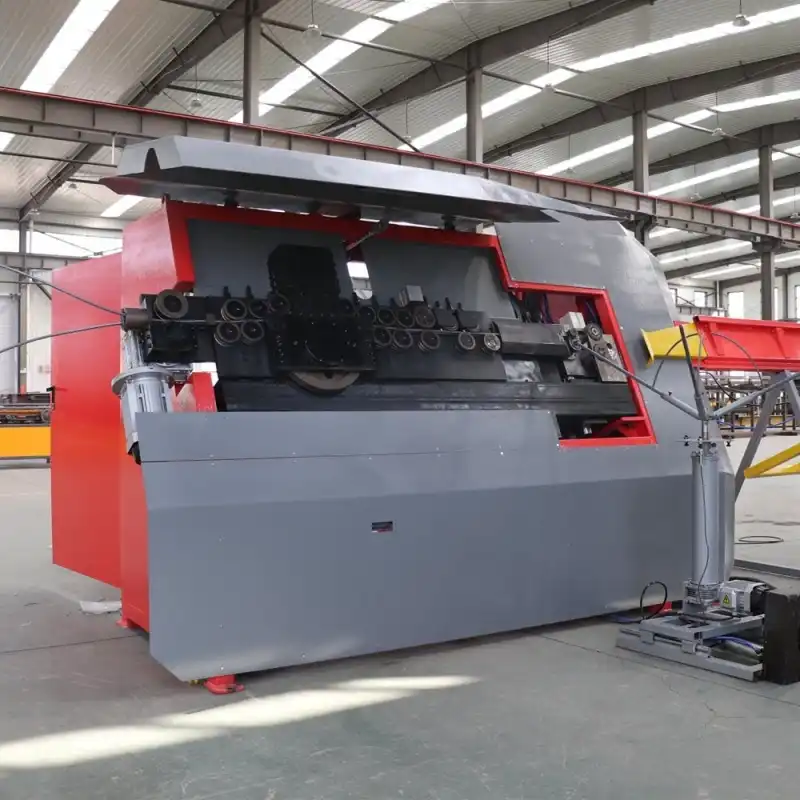
Understanding CNC Stirrup Bending Machines: Features and Working Principles
What Makes Up the Core System
A high-speed cutting head, servo-driven pulling mechanism, multi-roller straightening assembly, and customizable control unit are all integrated into a CNC stirrup bending machine. Each part talks to the others in real time so that the bends are done exactly as the computer program says they should be. Through the CNC interface, the user enters the shape of the stirrup, and the machine copies that shape without having to be moved by hand between pieces.
Processing Range and Speed
Most production-grade models can handle single-wire rebar with a diameter of 5 mm to 13 mm, and some models can handle smaller gauges with dual-wire feeding. Traction speeds of up to 100 meters per minute allow for high output that can't be reached with a manual bench press. With this much capacity, the equipment works well for big apartment buildings, business towers, and infrastructure projects that need rebar all the time.
Quality Standards and Material Durability
In order to be considered reliable, tools must meet the manufacturing standards set by ISO 9001 and have a CE safety approval. High-alloy tool steel is heated to HRC 58–62 to make the straightening rollers and bent pins resistant to wear during long production runs. Cutting blades often have tungsten carbide tips that make them last longer between repairs and reduce the number of times they need to be replaced. This keeps project sites running smoothly.
Key Benefits of CNC Stirrup Bending Machines for Residential and Commercial Projects
Moving from bending rebar by hand to automatic rebar stirrup handling has benefits that go beyond just making things go faster. You should buy these tools because of the following main benefits:
- Dimensional consistency at scale: The servo encoder provides closed-loop feedback, preventing cumulative length errors during long production runs. A 500-piece continuous bending accuracy test consistently confirms angle deviation stays within ±1°, which reduces rework rates and material scrap.
- Labor cost reduction: One operator can manage Cnc stirrup bending machine programming and output monitoring, replacing a team of manual benders. According to industry data, automated rebar processing can cut direct labor input by 40–60% compared to fully manual workflows.
- Production speed: Traction speeds reaching 110 meters per minute allow construction teams to fulfill large stirrup orders within a single shift, supporting tight project schedules without overtime expenditure.
- Integrated safety design: Emergency stop circuits, protective enclosures, and real-time fault alerts protect operators. QC protocols include verifying emergency stop response time to ensure compliance with workplace safety regulations.
The problems that equipment managers, project leaders, and procurement teams in the infrastructure and business building sectors have been pointing out can be solved by these benefits. Lower rates of scrap improve the use of materials, and faster cycle times cut down on the time between delivering rebar and installing it on-site.
Comparing CNC Stirrup Bending Machines with Traditional Manual Machines
Production Speed and Output Capacity
Manually adjusting stirrups depends on how skilled and fit the person is. A skilled worker could make 200 to 300 pieces per shift. Depending on the size and shape of the stirrups, a single automated rebar bending machine that works at 100 meters per minute can make several thousand pieces in the same amount of time.
Accuracy and Structural Compliance
Changes in angle that happen over thousands of pieces when they are bent by hand create a compliance risk for engineered structures. The rebar's elasticity is taken into account instantly by CNC-controlled spring-back compensation software, so every piece meets the design specs without having to be adjusted by hand.
Return on Investment for Contractors
Contractors who have switched to CNC stirrup production say the payback time is between 12 and 24 months. This is because they save money on labor and waste less material. This ROI profile means that for big business developers and infrastructure builders, buying automated bending equipment is a simple budget decision instead of a choice.
How to Select the Best CNC Stirrup Bending Machine for Your Needs
Evaluate Processing Parameters Against Project Requirements
Write down your usual wire diameter range, the types of stirrups you need, your daily output goals, and the amount of floor space you have available before you contact a seller of a Cnc stirrup bending machine. Machines vary in how many wires they can handle (single or dual), how far they can bend (up to ±180°), and which computer interfaces they support. By matching specs to the needs of the job, you can avoid buying too much or too little.
Assess Control System and Software Capability
The CNC control interface should be able to import CAD data, watch production in real time, and program spring-back compensation. Advanced PLC-based systems keep track of production data that operations managers can look over to see how well the system is working and plan repairs ahead of time. Check to see if the supplier offers software updates and technical support for the control system for the entire lifecycle of the equipment.
Verify After-Sales Service and Supplier Track Record
When construction equipment breaks down, real money is lost. Make sure that the company has a quick after-sales team, keeps spare parts in stock in the United States, and offers installation, commissioning, and user training. It is more likely that a supplier will be able to provide long-term support if they have worked with major engineering groups and exported to more than one country.
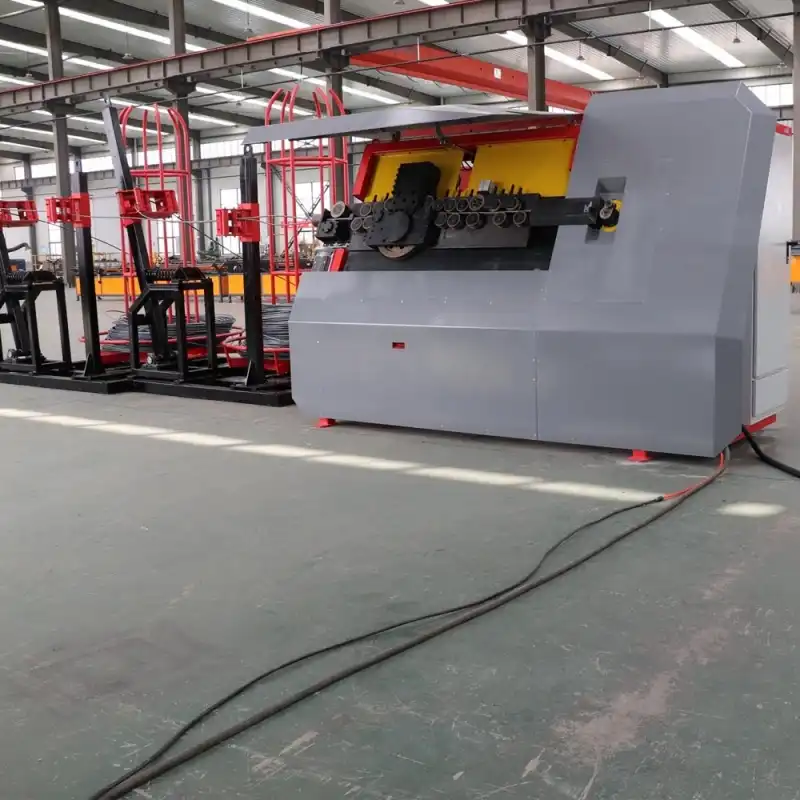
Implementation and Optimization Tips for Maximum Productivity
Installation and Commissioning Best Practices
Correctly leveling and aligning the base during the first placement has a direct effect on how accurately the beam bends. For the first setup, have the manufacturer's commissioning team help. Write down baseline performance readings, such as traction speed, cutting cycle time, and angle consistency, so you can use them when you do maintenance checks in the future.
Operator Training and Programming Efficiency
Training should cover how to program the CNC interface, read error codes, and do regular inspections. Operators who are well-trained can change stirrup programs quickly, which cuts down on the time it takes to switch between shapes. During commissioning, a constant load test that lasts 24 to 48 hours proves that the servo motors and hydraulic cutting systems will be thermally stable in production settings.
Maintenance Scheduling for Equipment Longevity
Make sure the straightening rollers and traction wheels are oiled at the times suggested by the maker. Watch how the cutter blades wear down and change them before the accuracy of the measurements starts to slip. Putting the machine's performance data into a digital repair log helps production managers figure out when to replace parts and avoid stopping work without planning to.
Conclusion
High labor costs, inconsistent manual accuracy, material waste, and slow output processes are the main production issues that building teams face. A Cnc stirrup bending machine solves these issues. This equipment meets the needs of both residential and commercial projects with its accuracy in angles of up to ±1°, processing speeds of up to 110 meters per minute, and built-in safety and monitoring systems. When contractors invest in automated rebar processing, they see real improvements in output, schedule reliability, and the cost of production per unit. This sets their operations up for bigger projects without having to hire more people or spend more money on materials.
FAQ
1. How long does it take to receive a CNC stirrup bending machine after ordering?
Lead times depend on how the model is set up and whether special instructions need to be added. Usually, standard production models are sent out within 4 to 8 weeks. It could take 8–16 weeks for customized setups with specific control ports or processing ranges. By checking with the supplier about shipping times during the procurement stage, project teams can make sure that the arrival of tools doesn't interfere with the plan for building.
2. Can these machines handle non-standard stirrup shapes?
Yes. The CNC programming interface can work with stirrup shapes that are square, round, polygonal, or spiral. The shape measurements and bend angles are entered by the operator, and the machine accurately executes the geometry. It only takes a program selection to switch from one stirrup shape to another. There is no need for mechanical reconfiguration, so the changeover time is very short.
3. Are CNC rebar bending machines more energy-efficient than hydraulic models?
Traditional hydraulic machines run pumps all the time, but servo-driven CNC models only use power during active processing cycles. In real-world production settings, servo-based automatic rebar bending equipment uses 30–50% less energy per processed unit than hydraulic options. This helps meet goals for cost savings and environmental sustainability.
Connect With Zhongji Luyuan — Your Trusted CNC Stirrup Bending Machine Manufacturer
Zhongji Luyuan, founded in 2016 with 50 million yuan in registered capital, provides companies in the infrastructure, rail transit, industrial building, and nuclear power industries with production-proven Cnc stirrup bending machine equipment. Our machines have been certified by ISO 9001, have a dedicated after-sales team, and are currently being used in almost 100 countries. You can email us at sales2@shandongluyuan.com to get a price on a configuration, product specs, or a meeting with our technical team.
References
1. American Concrete Institute. ACI 318-19: Building Code Requirements for Structural Concrete. ACI, 2019.
2. Construction Industry Institute. Automation and Robotics in Construction. CII, 2021.
3. Engineering News-Record. Prefabrication and Modular Construction Trends. ENR, 2022.
4. International Organization for Standardization. ISO 9001:2015 Quality Management Systems — Requirements. ISO, 2015.
5. National Ready Mixed Concrete Association. Reinforcing Steel Fabrication and Placement Standards. NRMCA, 2020.
6. Structural Engineering Institute. Quality Control in Reinforced Concrete Construction. ASCE/SEI, 2023.