How Can Industrial Rebar Bending Machine Meet High-Volume Requirements in Construction Manufacturing?
Oct 12, 2026
An industrial rebar bending machine meets high-volume construction requirements by combining CNC precision control, high-torque drive systems, and continuous-duty mechanical design. These machines process reinforcement bars ranging from 6mm to 55mm in diameter at repeatable angle accuracy within ±1 degree, supporting uninterrupted production across bridge, tunnel, metro, and commercial building projects. Where manual bending creates bottlenecks and inconsistency, automated bending equipment delivers the throughput speed and dimensional accuracy that large-scale infrastructure schedules demand—without proportionally increasing labor headcount.
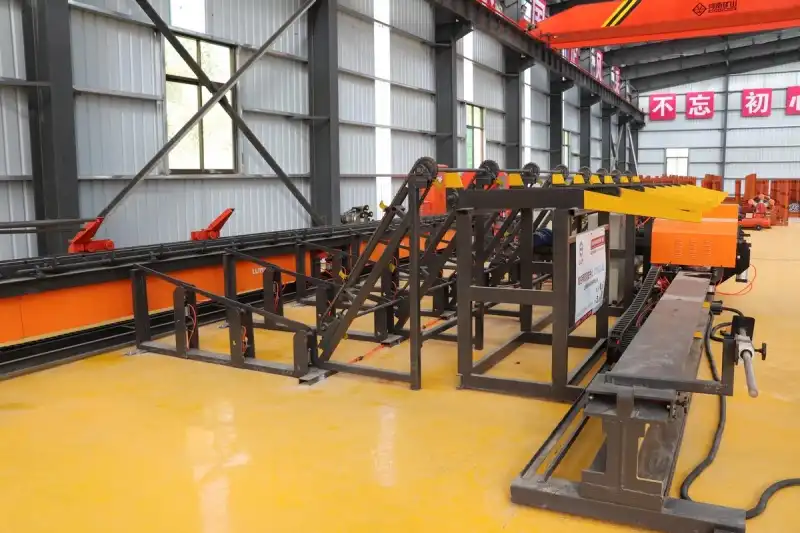
Understanding Industrial Rebar Bending Machines and Their Capacities
It is essential to have a comprehensive understanding of the construction of the fundamental kinds of machines as well as the qualities that are contained within them in order to be able to make an educated choice about the purchase of any instruments for bending steel bars. There are a number of different types of machines that may be used for this purpose. As soon as you have all of this knowledge, you will be able to make a choice that is well-informed and without any uncertainty. This is something that is absolutely important in order to achieve the objective of being able to make a decision that is well-informed.
Hydraulic vs. Electric Drive Systems
Because they can make a lot of torque at low speeds, hydraulic bending tools are great for working with big bars like the 40mm–55mm stock that is used in pier caps and foundation cages. Electric motor-driven machines, which usually have a rating of 3kW to 7.5kW, can turn small to medium-sized bars faster and are better for high-cycle concrete production lines. Different types of drives need different amounts of upkeep and use different amounts of energy, which changes the total cost of running the equipment over its lifetime.
Key Performance Indicators to Evaluate
The maximum bar diameter, the single-cycle bending speed, and the sustained hourly output are the three things that show if a machine can handle your actual production volume. With the right settings, a CNC rebar bender can bend 16mm bar 180 degrees in less than 3 seconds. It is possible to make working disks and bending pins out of vacuum-heated alloy steel that has a Rockwell Hardness of 58 to 62. These parts can last more than 10,000 hours of continuous use.
OEM Customization and Configuration Options
Standard catalog machines don't always meet the needs of a project. Most trustworthy makers let you change the setup in a number of ways, such as by changing the geometry of the bending arms, adding dual-pedal bidirectional control, and customizing the PLC parameters so that the machine automatically adjusts for spring back depending on the type of material used, like HRB400 or HRB500. With these setup choices, procurement teams can directly match industrial rebar bending machine output to the structural engineering tolerances shown on project plans. This cuts down on wasteful rework and material use during the first production shift.
Overcoming Production Challenges with Industrial Rebar Bending Machines
When there is a constant high volume, even the pieces of equipment that have been picked with the utmost care are susceptible to experiencing friction while they are being utilized. The reason for this is that friction produces friction, which in turn generates heat. Teams are better equipped to stay one step ahead of issues when they are aware of the typical failure locations that exist inside their organization. The issue in question is sometimes referred to as "typical failure spots."
Managing Mechanical Wear and Angle Deviation
The most frequent accuracy issue in continuous rebar bending production is angle deviation caused by a worn center pin or a shifting limit block. Regular calibration of the encoder or angle limit switch against certified precision templates is required. Replacing center pins at scheduled intervals—rather than waiting for visible wear—prevents batch-level inaccuracy that only surfaces during structural inspection, which costs far more to correct.
Maintenance Schedules That Protect Uptime
A structured maintenance plan is the most direct way to protect production continuity. Here is a practical schedule based on industry operating standards:
- Daily: Inspect bending arm fasteners, verify limit switch position, and check for unusual motor temperature.
- Weekly: Lubricate guide rails, inspect the power cable routing, and clear metal debris from the work table.
- Monthly: Conduct a full geometric calibration, inspect gearbox seal integrity, and test all safety interlocks.
- Every 500 hours: Perform the initial gearbox oil change; subsequent changes at 1,500–2,000-hour intervals prevent abrasive wear on high-torque gear surfaces.
Following this schedule consistently extends equipment service intervals and reduces unplanned downtime that disrupts project timelines.
Operator Training and Workplace Safety
Modern CNC bending equipment includes automated safeguards such as emergency stop circuits and overload protection relays. These features only protect workers when operators understand how to use them correctly. Structured onboarding that covers PLC parameter entry, material grade selection for spring-back compensation, and emergency stop procedures reduces both workplace incidents and programming errors that cause scrap.
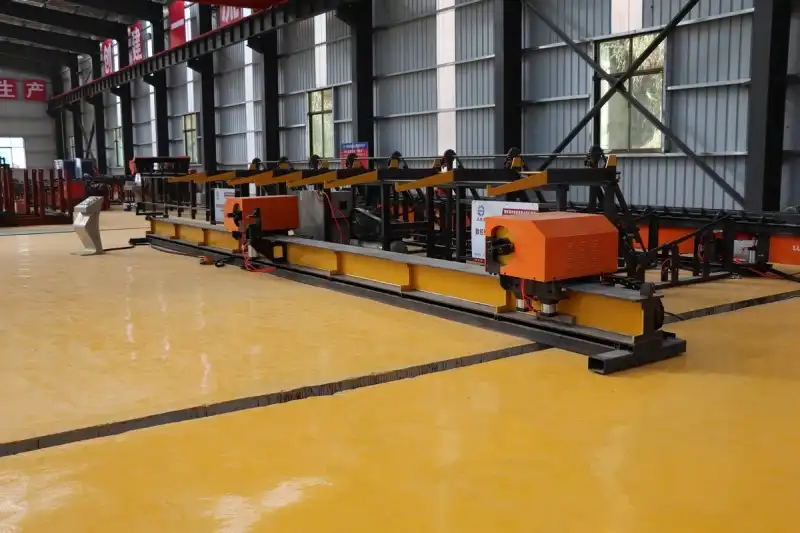
Comparing Solutions: Why Automated Rebar Bending Equipment Is Essential for High-Volume Manufacturing
On any significant construction site, the difference in productivity that can be seen between bending objects by hand and using machines may become apparent within a few days. This difference may be seen regardless of the kind of building site. One may see this difference in the level of production shown by the workforce. There is no correlation between the size of the building site and the contrast that may be seen between the two construction sites.
Manual Bending vs. CNC Rebar Bending: A Practical Comparison
Manual bending tools need skilled workers who work in shifts, make angles that aren't consistent across a large batch, and can't bend bars bigger than 25 mm without mechanical help. A CNC steel bar bending machine can work with the same batch, repeat angles within ±1 degree, work without shift rotation limits, and handle widths up to 55 mm without the need for extra staff. For a subway station improvement project that needs 5,000 stirrups every day, the difference in output is not small—it determines whether or not the deadline is met.
Hydraulic vs. Electric: Choosing by Project Type
Both types of drives are useful in some situations. When working with big diameters and smaller cycles, torque is more important than speed, so hydraulic tools are better. Electric machines can work faster, use less energy per unit for standard diameters, and are quieter when they're in enclosed fabrication facilities. If you want to buy something, you shouldn't just look at the machine price; you should also look at the real diameter spread in your project's bill of materials.
2024 Market Performance Benchmarks
Three performance factors keep coming up in the feedback from procurement workers in the infrastructure and precast building sectors: angle accuracy, continuous-duty thermal stability, and PLC system reliability. Load testing protocols that include 48 hours of no-load runs followed by full-capacity trials show that industrial rebar bending machines that keep their operating temperatures stable during 24/7 shifts have the thermal management design needed for long-term production.
Procuring the Right Rebar Bending Equipment for High-Volume Requirements
Comparing price sheets is not sufficient for the purpose of arriving at a choice on the purchase of capital equipment of this sort based solely on the information that is supplied. This is because the information that is presented is not sufficient. To be more explicit, this is due to the fact that the level of information that is provided is insufficient. It is because of this that this issue exists.
Evaluating Supplier Capability and After-Sales Infrastructure
A supplier's after-sales network directly affects your production continuity. Verified technical support response times, availability of spare parts inventory, and documented installation and commissioning services all reduce the risk of extended downtime after delivery. Suppliers who have established cooperative relationships with large-scale construction groups—verified through project references—provide stronger assurance than price alone.
Customization, Logistics, and International Sourcing
International buyers sourcing reinforcement processing equipment need to confirm motor voltage compatibility (standard configurations ship at 3-phase 380V/50Hz, with custom builds available for 440V/60Hz systems common in North American facilities), shipping dimensions for port clearance, and whether the supplier provides on-site commissioning support. These logistics details determine actual landed cost and time-to-production, both of which affect project ROI calculations.
Cost-Benefit Analysis: ROI in High-Volume Operations
Capital investment in automated bar bending equipment typically returns through three channels: direct labor cost reduction, lower material scrap rates from angle accuracy, and reduced rework costs from structural non-compliance. Projects processing high daily volumes—such as highway bridge decks or metro tunnel lining—generally achieve payback within 12 to 24 months when full labor and rework savings are accounted for.
Future Outlook: How Technology Is Advancing High-Volume Rebar Processing
IoT Integration and Production Data Visibility
Production managers have the ability to do real-time monitoring of error rates, machine temperatures, and output rates by using a single dashboard that is connected to Internet of Things (IoT) bending systems. This allows for the monitoring of these metrics in real time. The availability of this accessible data makes it possible to make judgments on proactive scheduling, which in turn minimizes the length of time it takes for repair to respond to a mechanical problem.
AI-Assisted Predictive Maintenance
Diagnostics powered by AI look at shaking patterns, motor current draw, and differences in cycle time to find parts that are about to break down before they cause unplanned stops. This feature is being added to next-generation CNC systems for handling reinforcements, and it makes upkeep less dependent on just checking the calendar.
Energy Efficiency and Sustainability Compliance
Compared to older hydraulic designs, newer electric drive configurations use less energy per processed bar. Construction companies have to report project carbon footprints more accurately, so lower per-unit energy use in fabrication is now a factor in choosing tools, along with production rate.
Conclusion
Rebar manufacturing operations are really put under a lot of stress during big building projects. Tight deadlines, strict structural tolerances, and a lack of skilled workers all push teams toward automated solutions. These stresses can be handled by CNC-controlled bending equipment that is mechanically reliable, accurately measures angles, and keeps up production speed. To choose the right industrial rebar bending machine, you need to match the drive type and diameter capacity to your project's bill of materials, look at the supplier's after-sales service, and start planning maintenance schedules right away.
FAQ
Q1: What factors determine the capacity of an industrial rebar bending machine?
The highest bar width that the machine can handle, the bending cycle speed, and the steady hourly output all affect the capacity. How much the machine can process at once depends on the motor's power output (usually 3kW to 7.5kW), the gearbox's torque rate, and the hardness of the working disk. How much automation there is—manual, semi-automatic, or full CNC—also affects how much capacity can be maintained over multiple shifts without operator fatigue becoming a problem.
Q2: How often should rebar bending machines be maintained to avoid downtime?
The basic plan includes checking the bolts and motor temperature every day, lubricating them once a week, and calibrating the geometry once a month. The oil in a gearbox needs to be changed for the first time after 500 hours of use and then again every 1,500 to 2,000 hours after that. According to ISO 9001 guidelines, full electrical safety checks should be done once a year, including insulation resistance tests and grounding continuity checks.
Q3: Can rebar bending equipment be configured for specific project requirements?
Yes. Manufacturers offer different setup choices, such as PLC spring-back compensation settings based on material grade, dual-pedal bidirectional control, changed tooling shape, and the ability to change the motor voltage for power sources that aren't standard. These changes make it possible for the tools to meet the structural engineering standards for the project from the first production runs.
Partner with Zhongji Luyuan for Your Next High-Volume Project
Zhongji Luyuan was established in 2016 with 50 million yuan in registered capital. It makes CNC equipment for processing reinforcements that is trusted by China Railway, China State Construction, and partners in almost 100 countries. We have been making industrial rebar bending machines for a long time and can provide proven expert support, on-site commissioning, and unique designs for energy, infrastructure, and precast projects. To get a consultation or a product specification sheet, email our team at sales2@shandongluyuan.com.
References
1. American Concrete Institute. ACI 318-19: Building Code Requirements for Structural Concrete. American Concrete Institute, 2019.
2. Concrete Reinforcing Steel Institute. CRSI Manual of Standard Practice, 29th Edition. Concrete Reinforcing Steel Institute, 2021.
3. International Organization for Standardization. ISO 9001:2015 Quality Management Systems — Requirements. ISO, 2015.
4. American Society of Civil Engineers. ASCE 7-22: Minimum Design Loads and Associated Criteria for Buildings and Other Structures. ASCE, 2022.
5. Construction Industry Institute. Automation and Robotics in Construction: Industry Benchmarking Report. Construction Industry Institute, 2023.
6. McKinsey Global Institute. Reinventing Construction: A Route to Higher Productivity. McKinsey & Company, 2017.