How Can LYWQ-32 CNC Vertical Bending Center Optimize Rebar Production for Building Contractors?
Oct 12, 2026
The CNC Vertical Bending Center LYWQ-32 directly addresses the most persistent bottlenecks in rebar production: slow cycle times, inconsistent bend angles, and excessive labor dependency. By integrating PLC control with servo-driven feeding and a dual-head vertical bending configuration, this machine processes rebar up to 32mm in diameter with ±1mm length precision and ±1° angle accuracy. For building contractors managing high-volume infrastructure projects, that level of consistency translates into fewer rework cycles, reduced material waste, and a measurable improvement in daily output—processing up to 5–8 tons of rebar per 8-hour shift.
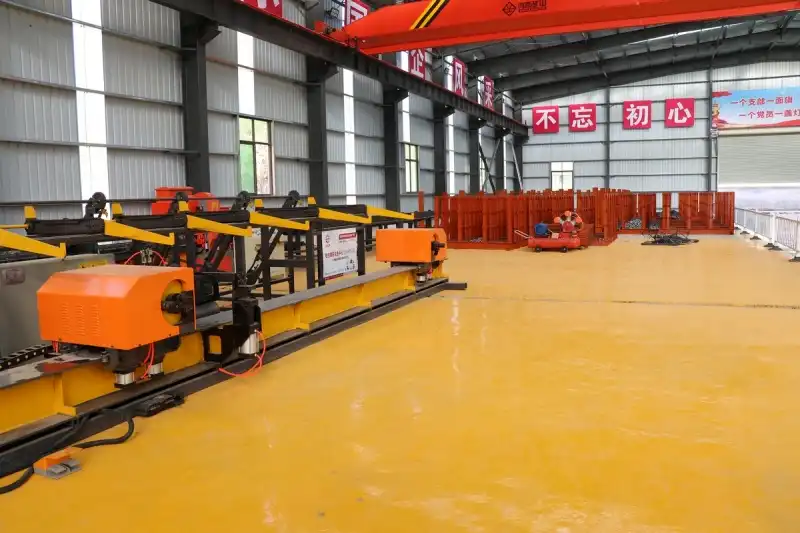
Understanding the LYWQ-32 CNC Vertical Bending Center
Procurement teams need to have a clear picture of what they're getting before they can decide whether to buy capital tools. Here is a description of the machine's main structure and how it works.
Core Design and Processing Capacity
With a maximum bending diameter of 32mm, the LYWQ-32 can handle Grade I, II, and III rebar. Its vertical processing position makes it easier for workers to keep track of materials and lessens physical strain compared to horizontal layouts. The fastest it can bend is up to 60°/s, which keeps the production lines going without affecting the quality.
Dual-Head Configuration and Servo Mechanics
The fact that this vertical bending center has two heads makes it stand out. It is possible to bend both sides of a rebar at the same time, which greatly reduces cycle times for large-scale production. The feeding system is powered by high-torque servo motors, and a stronger hydraulic clamping device keeps the bar from slipping during high-tensile operations, which is a typical place where older equipment breaks down.
CNC Control System and CAD Integration
The machine is controlled by a powerful PLC system that can directly import CAD data. This feature gets rid of the need to measure things by hand in factories that make prefabricated concrete and other places where shapes vary a lot. The IP54-rated control cabinet keeps electronics safe from dust and water, which is important for construction sites on highways and railroads that are outside.
Challenges in Traditional Rebar Bending and How LYWQ-32 Addresses Them
A lot of builders still use bending tools that are either operated by hand or only partially automated, which causes big problems. These problems aren't just ideas; they have real effects on project schedules and cost control.
Manual Inefficiency and Labor Dependency
For traditional bending, trained workers have to measure, place, and check each bent by hand. This process leads to mistakes and delays on big bridge or metro projects that need thousands of identical stirrups every day. The problem is made worse by a lack of workers, especially in places where skilled ironworkers are getting harder to find.
Precision Gaps and Material Waste
Normal machines often make bends that aren't within tolerance because they don't have automated angle feedback. Even a difference of 2° to 3° can lead to rejected parts that need to be reprocessed or thrown away. China's construction industry says that measurement mistakes cause up to 15% of rebar material waste on big projects. These mistakes are always being fixed by automated CNC systems.
Safety and Compliance Risks
When people bend by hand, they can get repetitive strain injuries and quick bar release accidents. These risks are dealt with by the CNC Vertical Bending Center LYWQ-32 's built-in anti-collision algorithms and emergency stop system with verified response times. These two features directly help contractors follow safety rules on U.S. job sites and their foreign versions.
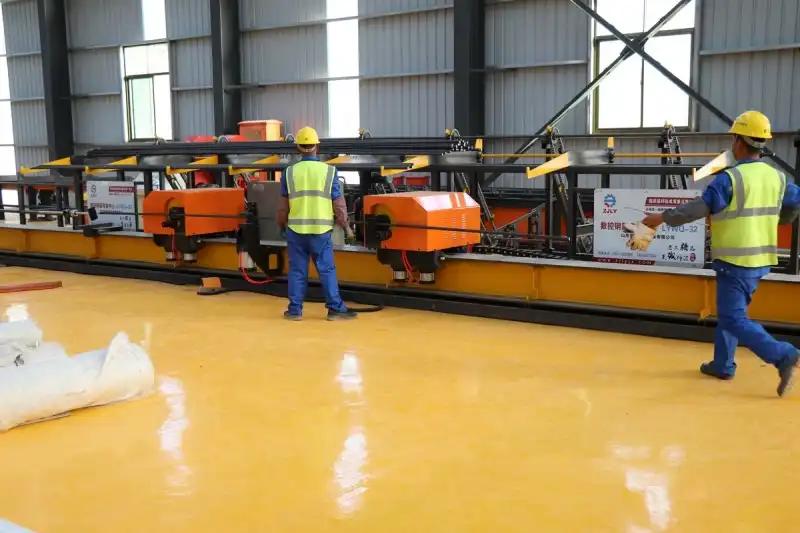
Optimizing Rebar Production with LYWQ-32: Best Practices and Applications
For this vertical rebar bending machine to work at its best, its features need to be matched with the right output situations. The best results are seen in the following main applications:
- Bridge and Viaduct Construction: The LYWQ-32 produces large-scale pier reinforcement cages and complex stirrups where structural integrity standards are strict. Its consistent angle output meets the requirements of bridge engineering specifications without manual verification after each cycle.
- High-Speed Railway Infrastructure: The machine fabricates standardized rebar components for box girders and tunnel linings. Its IP54-rated enclosure and wear-resistant alloy steel bending pins—rated for 30% longer service life than standard alternatives—hold up in dusty outdoor construction environments.
- Prefabricated Concrete (PC) Factories: CAD data import lets production teams switch between rebar shapes without manual reprogramming downtime. This makes it a practical fit for automated PC lines producing standardized housing components at scale.
CAD data import lets production teams switch between rebar forms without having to reprogram everything by hand, which saves time. Because of this, it can be used in automated PC lines that make a lot of standard housing parts.
All of these uses have one thing in common: they need a lot of volume, very tight limits, and little room for stoppages. The quality assurance procedure on the CNC Vertical Bending Center LYWQ-32 makes that trustworthiness even stronger. A 1,000-bend dynamic angle accuracy test (with variation of less than 0.5°), a 48-hour hydraulic pressure stability test, and a final real-material test with Grade III 32mm rebar against GB/T 1499.2 standards are all done on every unit before it leaves the plant.
Comparing the LYWQ-32 with Other Bending Equipment
When purchasing managers look at this machine, they often compare it to hydraulic press-type benders, older manual CNC models, or the LYWQ-28, which is a smaller unit from the same family.
It can work with rebar up to 28 mm thick and is good for medium-sized commercial building projects. With its larger diameter and two heads, the LYWQ-32 is perfect for builders who work with infrastructure-grade amounts and need to meet higher bar size and daily throughput standards. LYWQ-32 is better than hydraulic press-type alternatives because it can handle tighter angle tolerances and changeovers faster thanks to software programming instead of physical tooling adjustments.
Even though traditional manual benders are cheaper up front, they have hidden costs like labor, scrap rates, and rework that eat away at any savings over the course of 12 to 18 months. The LYWQ-32's automated feed and clamping system lowers variation caused by operators. This makes it a better long-term investment for contractors who are in charge of multiple project pipelines.
Procurement Guide and After-Sales Support for LYWQ-32
As of 2016, Shandong Zhongji Luyuan Machinery Co., Ltd. had a registered capital of 50 million yuan and did business with China Railroad, China State Construction, China Communications Construction, and China Nuclear Power Construction Corporation. They sold CNC reinforcement processing equipment to contractors in almost 100 countries and regions.
The buying process for people in the U.S. and North America goes through Zhongji Luyuan's foreign sales team. People who want to buy can get price information, equipment setups, and product catalogs by going to zjly2025.aixdb.cn on the company's website or emailing sales2@shandongluyuan.com. Before buying, the team gives expert advice to make sure that the machine's specs match the needs of the job.
After the sale, there is on-site installation help, a suggested 2-day certified operator training program that covers setting CNC parameters and CAD import processes, and an industrial guarantee that covers the PLC and servo systems for 12 months. The machine's built-in IoT feature lets the support team do remote tests, which lets them find problems without having to go to the site most of the time. To support long-term operational continuity, spare parts are kept on hand.
Conclusion
The CNC Vertical Bending Center LYWQ-32 is a production tool for builders that can keep up with the speed and accuracy needed for today's infrastructure projects. From CAD integration to IP54-rated field robustness and dual-head simultaneous bending and servo-driven feeding, the machine fills in the gaps that slow down rebar production on real job sites. Because Zhongji Luyuan has a history of success in high-speed rail, bridge building, and making premade concrete, this is a good capital investment that will lead to lower labor costs and more consistent output.
FAQ
1. What is the maximum processing output per shift?
Depending on shape complexity, the machine can process 5–8 tons of rebar in an 8-hour shift.
2. Can it handle different rebar grades?
Yes. The system supports Grade I, II, and III rebar with software presets calibrated for different tensile strengths.
3. Why does the vertical design matter for maintenance?
The vertical layout gives technicians direct access to the hydraulic lines and driving mechanism, which reduces repair time compared to horizontal bending centers.
4. Is operator training required?
The interface supports CAD imports and is straightforward to operate. A 2-day certified training program is recommended for CNC parameter settings and production workflow setup.
5. What warranty covers the control systems?
Zhongji Luyuan provides a 12-month industrial warranty on the PLC and servo systems, with remote diagnostic support through the machine's built-in IoT module.
Get a Direct Quote on the LYWQ-32 from Zhongji Luyuan
From 2016 to now, Zhongji Luyuan has sent CNC rebar bending machines to companies in almost 100 countries. As a reputable CNC Vertical Bending Center LYWQ-32 manufacturer, we guarantee the quality of every machine and offer quick technical support after the sale. Get in touch with our international sales team right away to get pricing information, a catalog of our products, or a custom set-up of equipment that fits the needs of your project.
Email addresses: sales2@shandongluyuan.com
References
1. American Concrete Institute. ACI 318-19: Building Code Requirements for Structural Concrete. American Concrete Institute, 2019.
2. Construction Industry Institute. Automation and Robotics in Construction: Industry Benchmarking Report. Construction Industry Institute, 2021.
3. Engineering News-Record. Labor Productivity and Prefabrication Trends in U.S. Infrastructure Construction. Engineering News-Record, 2022.
4. International Federation for Structural Concrete (fib). fib Bulletin 72: Reliability and Optimization of Structural Systems. International Federation for Structural Concrete, 2014.
5. Modern Steel Construction. CNC Rebar Fabrication: Precision Standards and Efficiency Metrics in Large-Scale Projects. Modern Steel Construction, 2023.
6. National Institute of Standards and Technology (NIST). Advanced Manufacturing Technology for Construction Applications. NIST Technical Note, 2020.