What Makes Pile Cage Resistance Welding Machine LYGH-400D Different?
Oct 9, 2026
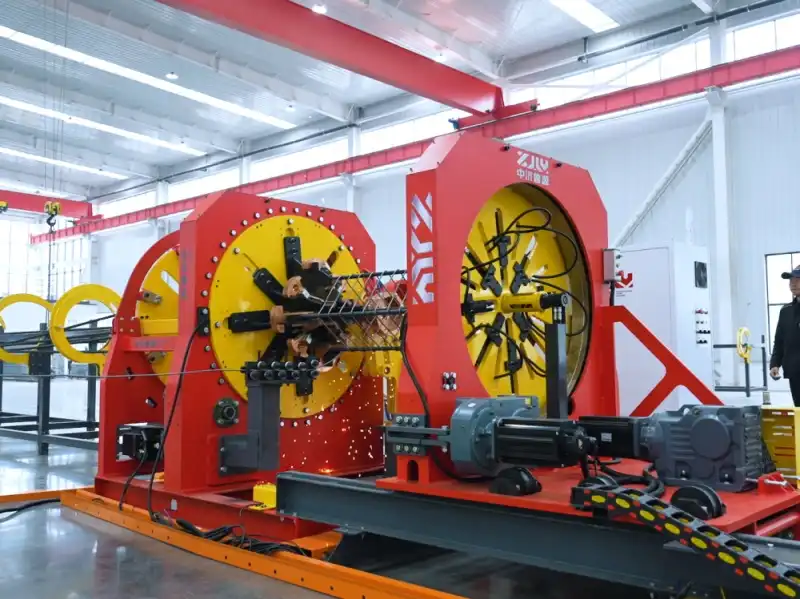
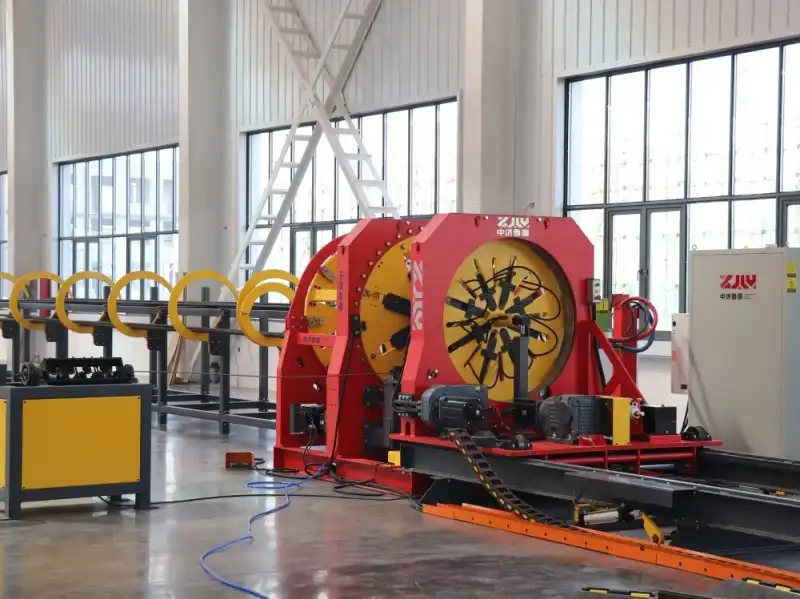
The pile cage resistance welding machine LYGH-400D from Zhongji Luyuan is a fully automatic reinforcement cage fabrication system built for high-volume infrastructure projects. Unlike manual or semi-automatic alternatives, it integrates PLC control, high-power resistance welding, and hydraulic clamping into a single, compact production line. With a cage diameter range of φ250–φ400 mm, cage lengths up to 16 m, and a verified output of 8 sections per 10-hour shift, it delivers the consistency and speed that modern construction schedules demand — all operated by just one person.
Understanding the LYGH-400D Resistance Welding Machine
How Resistance Welding Works in This Machine
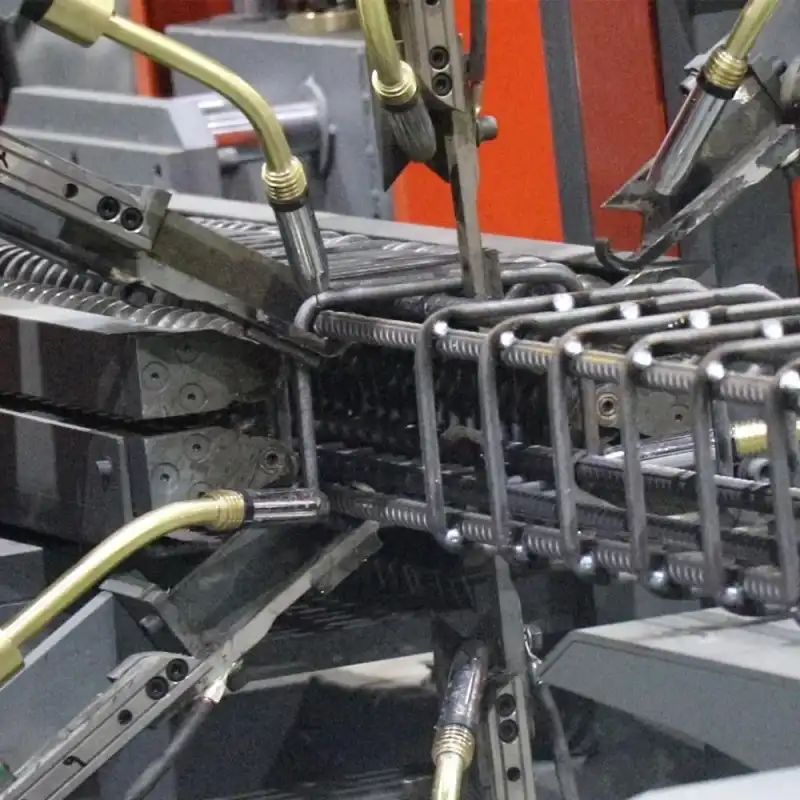
Electrical current and mechanical pressure are used in resistance welding to heat the place where the spiral bar meets the main rebar. There is no protective gas, filler material, or open flame. So, you end up with a clean, metallurgically bonded weld that can handle structural load and concrete vibration. This method gets rid of common flaws that traditional arc welding often causes, such as burn damage or slag inclusion.
Key Technical Specifications
With a total power of 60 kW, the LYGH-400D runs on a 380V/50Hz three-phase power source. It can hold main bars with diameters between φ12 and φ25 mm and spiral bars with diameters between φ6 and φ12 mm. The distance between spiral bars can be set to 200 mm, the hydraulic pressure can go up to 16 MPa, and the air supply pressure stays at 0.6 MPa. The machine takes up 35 m × 3 m of space, which is small enough for most manufacturing yards.
Production Speed and Throughput
The name of this machine comes from how fast it is. In a normal 10-hour shift, it makes 8 cage sections, each 12 m long. When buying, teams are under a lot of time pressure; this output rate—achieved by a single operator—means lower labor costs and faster project delivery. Teams that do manual welding usually need four to six workers to get the same amount of work done, and the quality of the welds isn't always consistent.
Comparing LYGH-400D with Other Pile Cage Welding Machines
Limitations of Conventional Manual and Semi-Automatic Methods
The skill level of each welder affects the pitch spacing, joint strength, and cycle time when manual arc welding is used. Even though semi-automatic machines are more consistent, they still need to be tended to by more than one person and calibrated often. When a project needs hundreds of uniform cages to fit into a small space, neither method works. Large building projects often find these problems during weld quality checks and mark them as rework risks.
Where the LYGH-400D Outperforms
Here are the main reasons why this machine is better than others on the market:
- Full automation with PLC + touch screen control: Operators set cage parameters digitally, and the machine executes the full cycle — winding, welding, and advancing — without manual intervention. This removes operator dependency from the production equation.
- Resistance welding instead of arc welding: The process is 3–5 times faster than CO₂ shielded welding, produces no harmful fumes, requires no consumables like wire or gas, and leaves no slag. Weld penetration passes macro-etching and shear tests that many arc-welded cages fail.
- Single-operator efficiency: With a verified one-person operation model, a contractor running three shifts can reduce direct labor costs significantly compared to manual-welding crews of equivalent output.
Because of these benefits, equipment managers and project leaders don't have to worry about things like unpredictable output, high labor costs, or having to redo a lot of work on big building projects.
Cost of Ownership Comparison
The pile cage resistance welding machine LYGH-400D uses 60 kW of energy per hour, which is less than multi-station arc welding setups that use more power overall but make less. This is determined by looking at the whole project cycle. The main cost of consumables is electrode maintenance, which means that chromium-zirconium copper electrodes need to be dressed or replaced every 5,000 to 10,000 welds. This is a small amount of money compared to the cost of welding wire and gas in arc-based processes.
Practical Considerations for Procurement and Use
Ordering and Configuration Options
You can buy from Zhongji Luyuan directly from the mill, or you can work with an authorized dealer. Cage length can be changed from 3 to 16 m, and project drawings can be used to choose the diameter of both the main bar and the spiral bar. Because it can be set up in different ways, the machine can be used for small-diameter pile foundations, slope support structures, and general construction engineering tasks where the normal cage measurements are different on each site.
After-Sales Support and Maintenance
Zhongji Luyuan offers installation help, training for operators, and a professional support team that is always available. Regular upkeep checks the state of the electrodes, the integrity of the hydraulic system, and the PLC parameters. The company has an after-sales network that works with customers in China and in almost 100 other countries, such as South Korea, Malaysia, Thailand, Kazakhstan, and Israel. When buying in bulk, this worldwide service reach lowers operating risk by a large amount.
Reducing Downtime Through Preventive Practices
Digital encoder feedback should be used to check the pitch accuracy on a regular basis, and the acceptable spiral spacing deviation should be kept at ±5 mm. Checks for ovality and concentricity show that the cage stays round during production. The auto-correction feature of the PLC automatically accounts for small changes in the thickness of the rebar. This stops the slow loss of dimension that happens in mechanical systems.
Why LYGH Is a Trusted Brand in Resistance Welding
Manufacturing Background and Certifications
The legal capital of Shandong Zhongji Luyuan Machinery Co., Ltd. is 50 million yuan, and the company was set up in 2016. The only thing the company makes is CNC tools for preparing rebar, including the pile cage resistance welding machine LYGH-400D, and all of its products are certified by ISO 9001 and CE. Its factory can make both standard and special equipment setups, and it has an in-house research and development team that is always improving the control software and mechanical design.
Proven Project Cooperation
It is known that Zhongji Luyuan works with China Railway, China Railroad Construction, China State Construction, China Communications Construction, and China Nuclear Power Construction Corporation. Some of the world's most exacting infrastructure projects are part of these relationships. If equipment fails, it can have major schedule and safety effects. As long as sellers can regularly work in these conditions, procurement managers will have a standard to use when judging them.
Global Reach and Local Support
The company sells its products in more than 100 countries and has an after-sales team that can help customers both remotely and in person. This is an important thing for buyers outside of China to think about: a supplier with a history of exports and a structured service process is a lot less risky than one that doesn't.
Making the Decision: Is LYGH-400D the Right Choice for Your Business?
Matching Capacity to Project Requirements
The LYGH-400D is designed to make small-diameter pile cages between φ250 and φ400 mm in diameter, with a maximum cage length of 16 m. The machine can make 8 pieces per 10-hour shift, which is enough to meet the needs of mid- to large-sized infrastructure projects. This makes it perfect for workers working on bridge foundations, metro piling, slope reinforcement, or commercial building foundations with a width in this range.
ROI Analysis for Capital Equipment Buyers
The initial investment in tools should be weighed against measured returns, such as the cost of labor per cage made, the amount of material wasted due to consistent pitch control and the elimination of rework, and the number of cages made by the project deadline. If you replace a four- to six-person manual welding crew with one operator, you'll save enough on labor costs over the course of a 12-month project to cover the cost of the equipment. A high-strength steel frame and changeable weld electrodes give the machine a long working life, which is good for the return on investment (ROI).
Long-Term Scalability
Projects get bigger. Buying a machine that can handle the current volume but not the higher cage specifications will put pressure on you in the future. Because the LYGH-400D's configuration settings can be changed, and Zhongji Luyuan is ready to make changes to specifications for big buyers, this equipment can be added to or improved within the same production line layout as project needs change.
Conclusion
There isn't just one thing that makes the pile cage resistance welding machine LYGH-400D stand out. Its design choices—resistance welding instead of arc welding, full PLC automation, a single-operator architecture, and cage dimensions that can be changed—all lead to the same result: lower cost per cage, higher consistency, and fewer production interruptions. When contractors, equipment managers, and procurement teams look at reinforcement cage welding equipment, this one has a proven output rate, low consumable costs, and a provider that has a track record of performance on big national building projects.
FAQ
1. What rebar diameters does the LYGH-400D support?
The machine can work with spiral bars that are 6 to 12 mm wide and main bars that are 12 to 25 mm wide. Both areas can be changed to fit the needs of the project.
2. How does resistance welding compare to CO₂ shielded arc welding?
Resistance welding is three to five times faster, doesn't need welding wire or shielding gas, doesn't make smoke or slag, and consistently penetrates the material, as shown by shear and macro-etching studies.
3. Can the machine handle variable pitch spacing within a single cage?
Yes. Because the PLC system lets you set segmented pitches, the spiral spacing can be made tighter at the ends of the cage for better shear resistance and wider in the middle as needed by structural drawings.
4. What are the power supply requirements?
The LYGH-400D needs a three-phase source of 380V at 50Hz and uses 60 kW when it's working.
5. How often do welding electrodes need replacement?
Every 5,000 to 10,000 welds, chromium-zirconium copper electrodes should be dressed or changed to keep the surface cleanliness and conductivity of the welds.
Get in Touch with Zhongji Luyuan About the LYGH-400D
The pile cage resistance welding machine LYGH-400D provider, Zhongji Luyuan, is ready to talk about your unique configuration needs if your project needs consistent, high-volume pile cage output with little human input. This buying choice is based on real production data, as shown by the company's performance on national infrastructure projects and direct factory prices. You can email our team at sales2@shandongluyuan.com to get a detailed specification sheet or to talk about your project.
References
1. Welding Journal — American Welding Society, 2022.
2. Construction and Building Materials — Elsevier, 2021.
3. Journal of Constructional Steel Research — Elsevier, 2020.
4. International Journal of Advanced Manufacturing Technology — Springer, 2023.
5. Automation in Construction — Elsevier, 2022.
6. Steel Construction: Design and Research — Ernst & Sohn / AISC, 2021.