How Does LYGL-350D Stirrup Cage Welding Machine Improve Rebar Cage Production for Large Infrastructure Projects?
Oct 7, 2026
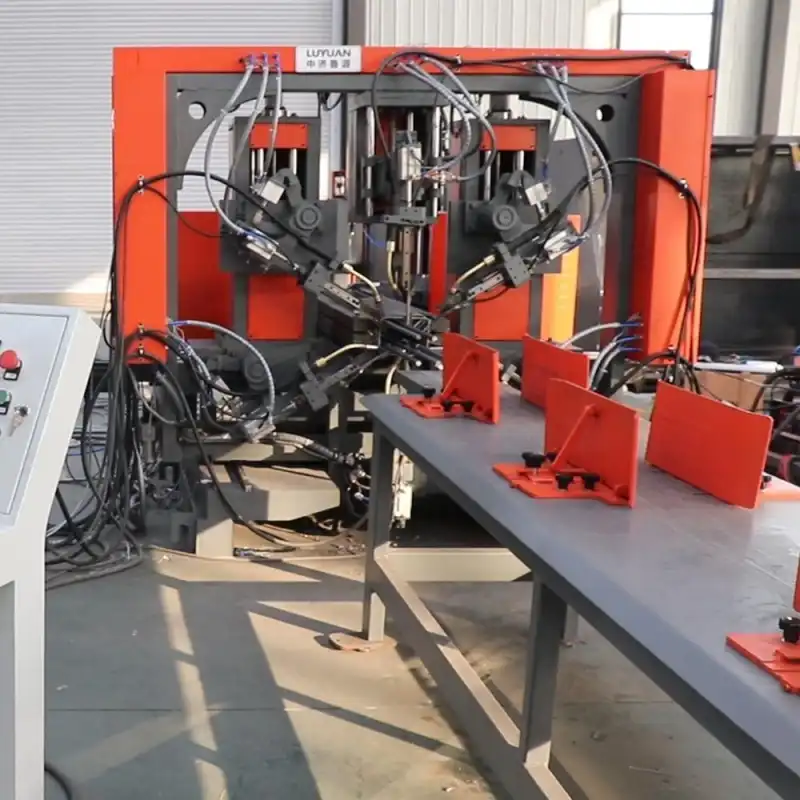
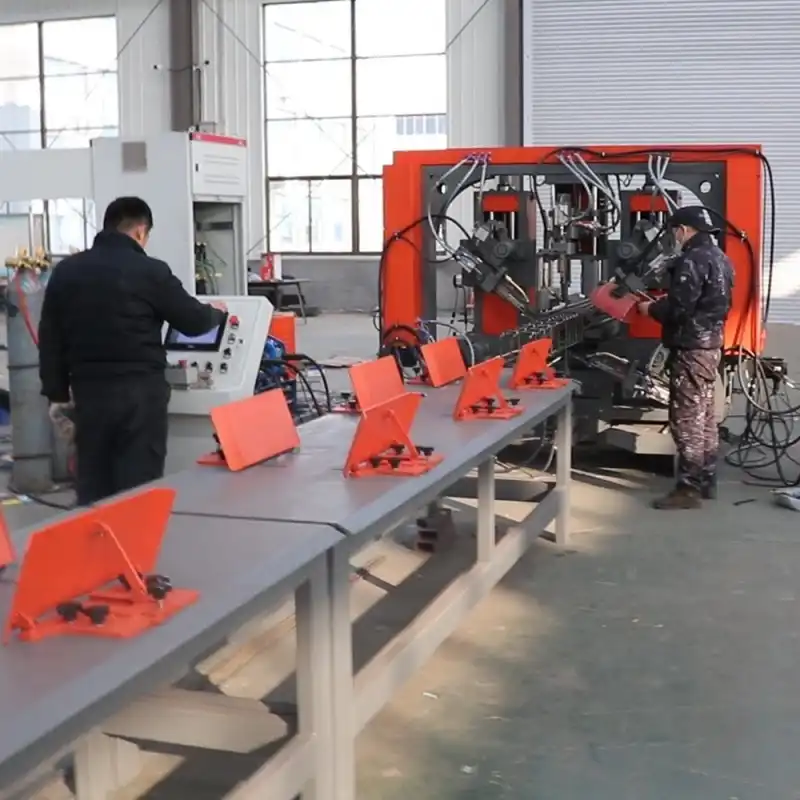
The Stirrup cage welding machine LYGL-350D directly addresses the production bottlenecks that slow down large-scale infrastructure work. By replacing manual tying and hand welding with fully automatic PLC-controlled operation, this machine produces 24 six-meter cage sections in a single 10-hour shift — a rate no manual crew can match. Its gas-shielded welding method delivers consistent joint strength across every weld point, while the touch-screen interface lets one operator manage the entire line. For bridge contractors, metro builders, and highway project teams, that combination of speed, precision, and reduced labor is exactly what keeps schedules on track.
Understanding the Challenges in Rebar Cage Production
For a long time, building rebar cages by hand has been the norm on construction sites. However, it comes with real costs that add up over the course of a big job.
Low Output Speed Delays Project Schedules
A skilled crew that welds by hand usually finishes four to six cage pieces per shift. That speed causes a constant supply gap on a high-speed train bridge project that needs thousands of pile cages. For the first part of the process, materials sit idle while the manufacturing work drags on. This adds direct costs through longer crane times and higher site overheads.
Inconsistent Weld Quality Raises Structural Risk
Hand welding adds variation due to human error. Different workers and hours have different ideas about the depth of the weld, the angle of the blade, and the speed of the journey. According to a study released in the journal Construction and Building Materials in 2021, one of the main reasons why bridge and tunnel projects don't meet standards is that the fusion quality of the reinforcement cage joints isn't always uniform.
High Labor Dependency Drives Up Operating Costs
It is said by the U.S. Bureau of Labor Statistics, the cost of construction work went up by more than 18% from 2019 to 2023. For rebar processing centers and EPC contractors who work multiple shifts, making cages by hand is becoming more and more expensive. It is no longer a choice whether to automate the process; it is a simple matter of lowering costs.
Core Features and Technical Specifications of LYGL-350D
The Stirrup cage welding machine LYGL-350D was purpose-built for column stirrup cages, beam hoops, and general construction reinforcement. Its design choices reflect direct feedback from contractors working on metro stations, highway viaducts, and tunnel linings.
Automation and Control Architecture
The machine runs on a PLC system paired with a touch-screen interface. An operator selects cage diameter, stirrup spacing, main bar count, and section length from the panel — the machine handles the rest. The power supply is 380V / 50Hz / 3-phase, with a total power rating of 14.5 kW and welding power of 100 kW, keeping energy consumption predictable and manageable.
Processing Range and Output Capacity
Here are the core parameters that define the machine's production scope:
- Stirrup bar diameter: φ6–12 mm
- Main bar diameter: 10–20 mm (customizable)
- Number of main bars: 3–6 pieces (customizable)
- Cage diameter range: 150–350 mm
- Cage length: 6 m standard, customizable up to 12 m
- Stirrup spacing: ≥ 30 mm; minimum main bar spacing: 100 mm
- Stirrup shapes supported: triangular, rectangular, special-shaped
- Production output: 24 sections per 10-hour shift (6 m per section)
These parameters give equipment managers and technical directors a clear picture of what the machine can handle before a single unit ships. The numbers translate into production planning, not guesswork.
Structural Quality and Dimensional Accuracy
The cage exits the machine formed in a single pass. Dimensions are precise, angles are standard, and the frame stays square without post-process correction. There is no distortion or twisting, which makes installation faster and reduces rework claims on site. A high-strength steel frame keeps the machine stable during continuous welding cycles, and the compact 16 m × 3 m footprint fits within standard workshop layouts.
LYGL-350D vs. Other Welding Solutions
It takes more than reading a spec sheet to pick the right automated cage welding system. The type of production, the size of the cage, the structure of the shift, and the logistics of the site all affect which machine gives the best return.
Compared to Manual Welding
Manual methods need four to six people per shift, and the results are still not always the same. The LYGL-350D only needs one person, works nonstop, and makes welds that are the same on all joints. Usually, the lower cost of labor alone makes up for the extra money within two to three project cycles for medium- to large-sized jobs.
Compared to Semi-Automatic Systems
Positioning and spot-check welding are still done by hand with semi-automatic cage formers. They cut down on some work, but they don't get rid of differences in quality. With the LYGL-350D's fully automatic gas-shielded welding, there is no need to do anything by hand. The machine sets the wire feed rate, shielding gas pressure (≤ 0.8 MPa), and movement speed for each joint, so the weld strength is always the same.
Why the LYGL-350D Fits Medium-to-Large Projects
The Stirrup cage welding machine LYGL-350D is made to fit the 150–350 mm cage diameter range that is most popular on building projects. It's not over-engineered for specific tasks, so the cost of acquisition stays in line with the amount of work that is done. When it comes to companies working on metro or highway projects that use pile cages, this machine is the perfect mix of output capacity and cost.
Procurement Considerations for B2B Clients
Selecting automated reinforcement equipment for a capital project involves more than comparing specifications. Procurement managers and equipment directors need to weigh total cost of ownership, supplier credibility, and post-delivery support.
Evaluating Project Fit and Configuration
Before placing an order, confirm cage diameter range, section length, and main bar count against your project drawings. The LYGL-350D's customizable parameters — including cage length and main bar quantity — mean configurations can align with specific contract requirements rather than forcing the project to adapt to a fixed machine.
After-Sales Support and Training
Shandong Zhongji Luyuan Machinery Co., Ltd. provides installation guidance, operator training, and ongoing technical support. The company has established supply relationships with China Railway, China State Construction, and China Communications Construction, and its equipment has been exported to markets including South Korea, Malaysia, Thailand, and Kazakhstan. That track record matters to procurement teams conducting supplier due diligence.
Long-Term ROI Calculation
A single LYGL-350D operator replaces a four-to-six-person manual team while delivering higher output. At current U.S. construction labor rates, the machine typically recovers its purchase cost within one to two years on a project of meaningful scale. For rebar processing centers running multi-shift production, the return window can be shorter still.
Best Practices for Operating, Maintaining, and Troubleshooting
How well an automated welding system works depends on how often the team follows the steps for setting it up and taking care of it.
Machine Setup and Parameter Calibration
Check that the stirrup bar diameter settings, cage diameter, and main bar spacing are all correct for the day's work order before each production run. Most of the time, measurement nonconformance is caused by entering parameters incorrectly. The touch-screen interface makes adjustments quickly, but a pre-shift routine keeps mistakes from happening.
Routine Maintenance Schedule
Welding electrodes should be dressed every 500 hours of use and checked for oxidation between dressing cycles. Every day, make sure the air source pressure stays at or below 0.8 MPa. Every week, check the frame connections and drive system. These steps take less than 20 minutes per shift and keep most unexpected stops from happening.
Troubleshooting Common Faults
Through an IoT module, the LYGL-350D supports remote diagnostics. This lets Zhongji Luyuan's technical team find software and sensor problems without having to go to the site. When there are technical problems, like electrodes that aren't lined up right or feed problems, the PLC trouble log is a good place to start. The operator booklet that comes with each unit lists most problems that can be fixed in the field.
Conclusion
The Stirrup cage welding machine LYGL-350D is a useful solution for the problems that construction companies have with labor, accuracy, and output when making rebar cages. This machine can handle the production needs of bridge, metro, tunnel, and highway projects with just one operator, a tried-and-true PLC control system, and the ability to make 24 cage pieces per shift. It cuts down on rework and wasted materials, which are two costs that add up quickly on big projects, because it gives accurate measurements and consistent weld quality. The LYGL-350D is a direct way for teams looking at automated equipment for processing reinforcement to get higher output and lower operating costs.
FAQ
1. What is the maximum production output of the LYGL-350D?
The machine produces 24 six-meter cage sections in a 10-hour operating shift. Welding speed reaches 20–30 joints per minute depending on rebar diameter, with a rotation speed of up to 15 rpm.
2. How many operators does the machine require?
One trained technician can manage the full production cycle from the control console. The automated process removes the need for a multi-person welding crew.
3. What rebar diameters does the machine support?
Stirrup bar diameters range from φ6 to 12 mm. Main bar diameters range from 10 to 20 mm, with three to six main bars per cage depending on configuration.
4. Does the system support remote diagnostics?
Yes. The built-in IoT module allows remote troubleshooting and software updates, reducing the need for on-site service visits and keeping downtime short.
5. What cage shapes can the machine produce?
The machine supports triangular, rectangular, and special-shaped stirrup configurations via CNC system adjustment.
Get a Quote from Zhongji Luyuan — LYGL-350D Stirrup Cage Welding Machine Supplier
Since 2016, Zhongji Luyuan has sold automatic systems for handling rebar to large infrastructure builders in almost 100 countries. If your team needs to find a Stirrup cage welding machine LYGL-350D for a project coming up, please email us at sales2@shandongluyuan.com to get pricing, configuration options, and product details. We accept questions about buying in bulk.
References
1. American Concrete Institute. ACI 318-19: Building Code Requirements for Structural Concrete. ACI, 2019.
2. Construction and Building Materials Journal. "Quality Assessment of Reinforcement Cage Welds in Bridge Pile Foundations." Construction and Building Materials, Elsevier, 2021.
3. U.S. Bureau of Labor Statistics. Occupational Employment and Wage Statistics: Construction Trades Workers. BLS, 2023.
4. American Welding Society. AWS D1.4/D1.4M: Structural Welding Code — Reinforcing Steel. AWS, 2022.
5. Federal Highway Administration. Bridge Inspector's Reference Manual. FHWA, U.S. Department of Transportation, 2022.
6. International Journal of Advanced Manufacturing Technology. "Automation in Rebar Processing: Productivity and Cost Analysis for Infrastructure Applications." Springer, 2022.