How to use a rebar cage welding machine efficiently?
Sep 7, 2026
Using a rebar cage welding machine efficiently requires understanding both its technical capabilities and operational best practices. The foundation of efficient operation lies in proper pre-operation setup, calibration verification, and systematic parameter optimization. Operators should maintain consistent monitoring throughout the welding cycle while implementing structured maintenance routines that prevent unexpected downtime. By integrating automated control systems with skilled oversight, construction teams can achieve precise cage fabrication that meets engineering specifications while dramatically reducing labor costs and accelerating project schedules across infrastructure, rail transit, and commercial building sectors.
Introduction
For modern building projects, making steel reinforcements needs to be done quickly, accurately, and reliably. The speed at which welding is done has become a key factor in the success of projects as procurement managers and engineering directors have to deal with more complicated infrastructure needs. This change has been seen in bridge foundations, subway systems, and high-rise buildings where old-fashioned manual methods just aren't productive enough these days.
This guide answers the most important questions that equipment managers and technical leaders of systems that handle rebar have. We look at how these complex tools work, the problems that can come up and hurt your bottom line, and tried-and-true ways to get the best return on your investment. Whether you're in charge of a steel fabrication workshop or a large-scale highway project, these rules will help you make choices about buying that are in line with your company's strategic goals and make sure that every welded joint is structurally sound.
Understanding the Rebar Cage Welding Machine and Its Working Principles
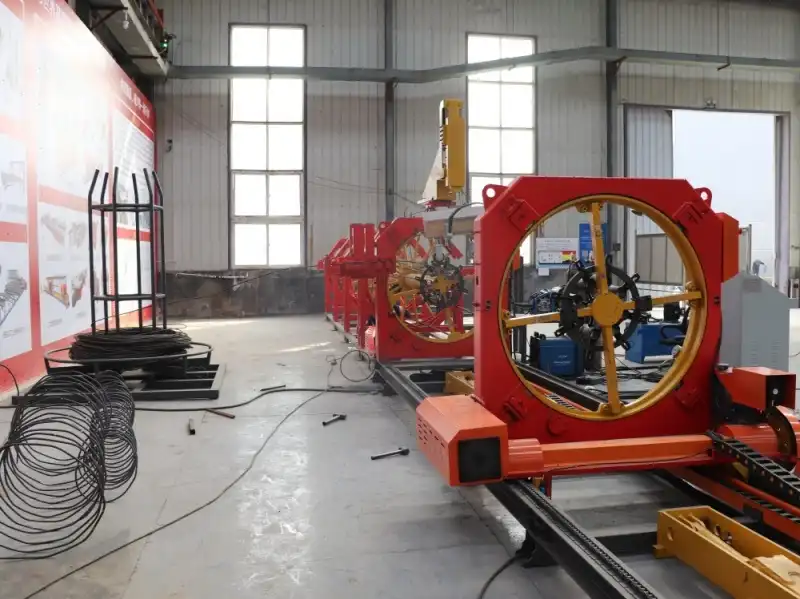
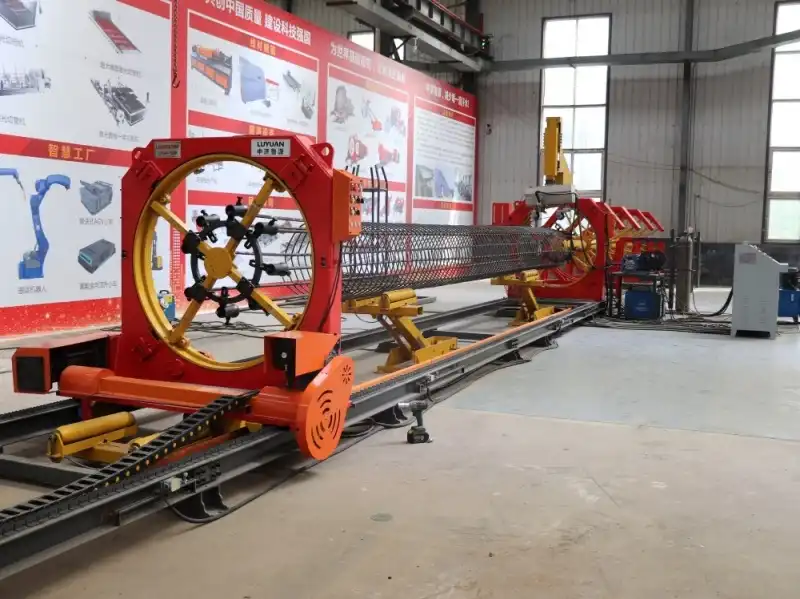
The rebar cage welding machine is a big step from putting things together by hand, which takes a lot of work, to using precision-engineered machinery. This very precise industrial system is designed to make reinforcement cages that are used in bridge piers, deep foundation piles, and structural columns. At its heart, the machine has PLC programming and synchronized spinning mechanisms that turn raw steel bars into cages that meet strict engineering standards in terms of geometry.
Core Components and Their Functions
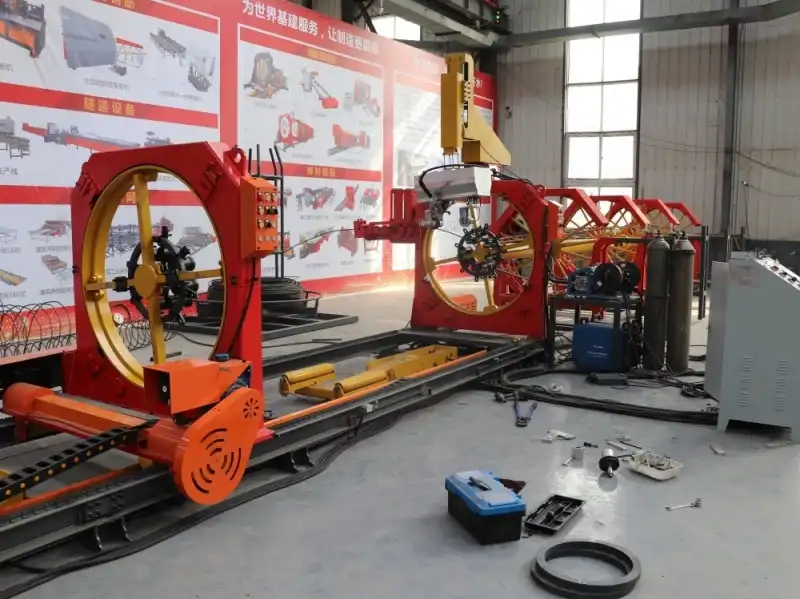
The machine is made up of several subsystems that work together. The feeding system places longitudinal rebars at set distances apart, and the rotation mechanism spins the cage frame at controlled speeds. At every point where two pieces of metal meet, welding heads on automated carriages move along the rotating assembly and make consistent spot welds. Control units keep track of timing sequences, welding parameters, and safety interlocks, making sure that the same thing happens over and over again during thousands of production cycles.
Welding Technologies Employed
Most modern systems, like a rebar cage welding machine use resistance spot welding, in which an electric current flows through rebars that are overlapped. This creates localized heat that melts the metal without using electrodes that need to be replaced. This method works very quickly and makes welds that are often stronger than the rebar material's tensile strength. Some configurations include MIG or arc welding for certain uses that need deeper penetration, like in heavy-duty marine engineering where strong joint integrity is needed for corrosion resistance.
Equipment Classifications
It's easier to choose the right equipment for the job when you know the difference between automatic, semi-automatic, and manual configurations. Fully automatic workstations have robotic feeding, synchronized welding, and automated discharge, which allows for high production rates for making a lot of bridge piers. Semi-automatic models need an operator to add the materials, but they do the welding process automatically. This lets mid-sized contractors balance the cost of the machine's purchase with its ability to produce work. When buying teams know these differences, they can match the skills of tools with the size of the project and the funds they have.
Common Challenges in Using Rebar Cage Welding Machines and How to Overcome Them?
When equipment has problems that keep happening and stop production, operational efficiency goes down. We've seen three problems that keep happening on building sites and have a big effect on project timelines and the quality of the work being done.
Misalignment Issues and Their Resolution
The shape of the cage depends on how well the longitudinal bars line up with the rotation axis. When rebars move while the cage is being fed or rotated, it causes size changes that are too big or too small for engineering standards. This issue usually happens because the guide wheels are worn out, the clamping pressure is too low, or there is dirt in the feeding track. Using laser measurement tools to check the alignment every day and sticking to the same cleaning procedures will greatly lower the rejection rate. For normal uses, calibration procedures should check that the concentricity is within ±2mm. For nuclear power or high-speed rail projects with very strict requirements, this should be within ±1mm.
Inconsistent Weld Quality
Weld spot integrity has a direct effect on how well a structure works when it's loaded. Inconsistencies happen when electrodes wear out, voltage changes, or there isn't enough contact pressure at the weld interface. Before the cages get to the building site, these flaws are found by the shear strength test procedure. Setting plans for replacing electrodes based on cycle counts instead of eye inspection stops performance from slowly getting worse over time. Voltage control devices keep changes in the power source stable, and pneumatic pressure monitors make sure that the same amount of force is applied at every weld point.
Preventive Maintenance Frameworks
Structured repair that takes care of wear before it happens is important for keeping equipment reliable. Electrical connections should be checked every day, hydraulic fluid levels should be checked, and welding surfaces should be cleaned. On a weekly schedule, the rotation bearings are oiled, the electrode alignment is checked, and the control system is diagnosed. Every month, steps include full calibration checks, checking of safety interlocks, and replacing worn-out parts according to the manufacturer's instructions. This layered approach raises the average life span of equipment from 8 years to 12 to 15 years and cuts down on unplanned downtime by about 70%.
Step-by-Step Guide to Using a Rebar Cage Welding Machine Efficiently
To get the best results with a rebar cage welding machine, you need to plan carefully and follow through with your actions during every production cycle. The following process has been improved over thousands of hours of use on metro and bridge building projects.
Pre-Operation Preparation
Start by giving the machine a full inspection that includes the electrical systems, hydraulic connections, and mechanical parts. Make sure that the emergency stop mechanisms work properly and that all of the safety guards are still in place. Compare the specs for the rebar material to the project plans to make sure that the diameter, grade, and length meet engineering standards. Input parameters such as the cage's diameter, length, longitudinal bar count, and stirrup spacing into the PLC program that corresponds to the specific cage design.
Parameter Optimization
Three important factors determine how well a welding job is done: voltage, current, and time. Higher currents speed up production but put electrodes at risk of burning out, and joints that don't get enough current become weak. The voltage settings must meet the diameter and grade of the rebar. Usually, the numbers for 16mm bars are 18–24 V, and for 25mm bars they are 22–28V. Depending on the thickness of the material, standard spot welds take between 0.3 and 0.8 seconds. Do damage testing on test welds you do on scrap metal before you start production to make sure the joint strength is higher than 90% of the base metal's capacity.
Operation Execution
Place the horizontal bars in the feeding system so that they are evenly spaced around the outside. Turn on the mechanism that makes the rotation happen and make sure it moves smoothly without making any noises or vibrations. Start the welder carriage and watch it turn around for the first time to make sure the timing is right between turning it on and starting the weld. Modern CNC systems show the operator real-time information about the number of welds, the cycle time, and any problems they find that need their attention.
Post-Operation Protocols
After the welding sequence is done, let the cage cool for three to five minutes before handling it to keep it from warping from the heat. Check the finished item using measuring tools to make sure it meets the tolerance requirements for diameter, length, and stirrup pitch. Wire brushes can be used to clean welding electrodes and get rid of spatter that has built up. Keeping track of production data, such as cycle time, power use, and any operational problems that come up, will help with efforts to make things better all the time.
Evaluating and Selecting the Right Rebar Cage Welding Machine for Your Business
Long-term choices about procurement affect how well operations run and how well the business does financially. When choosing equipment, it's important to carefully weigh the technical skills against the unique needs of the business.
Productivity Assessment
Look at project pipelines and old fabrication data to figure out your annual cage volume. If a highway contractor makes 500 cages every month, they need a lot more space than a bridge engineering firm that works on 50 complex units. When throughput goes over 300 standard cages per month, automatic machines are worth the extra cost. On the other hand, semi-automatic configurations are more cost-effective for businesses with changing demand trends.
Technical Specifications Analysis
The welding capacity of a rebar cage welding machine tells you the biggest width and length of cages that the machine can handle. Standard models can handle diameters from 600 mm to 2500 mm, which is enough for most construction and highway uses. In rail transit and marine engineering, custom shapes up to 4000 mm in diameter are common. Compare the amount of power used by the electrical system of your building. Typical setups use between 60 and 100kW when they're running. Using inverter-controlled motors in energy-efficient designs cuts down on operating costs by 15 to 20 percent compared to regular systems.
Supplier Evaluation Criteria
When you work with well-known manufacturers, you can get access to tested technology and quick expert help. Working together with big state-owned companies like China Railroad and China State Construction shows that Zhongji Luyuan's tools can handle tough jobs. The reputation of the manufacturer is important, especially for big purchases where the equipment will last for 10 to 15 years. Check the company's after-sales services, such as installation control, operator training programs, the availability of spare parts, and the time it takes to get expert help.
Leveraging Technology and Innovations to Enhance Welding Efficiency
Through digital integration and smart robotics, technological progress is continuing to change the way reinforcement manufacturing is done. These new ideas have direct effects on business outcomes that can be measured.
IoT Integration and Smart Diagnostics
Sensor networks built into modern equipment keep an eye on important factors like temperature, shaking, and electricity load in real time. Cloud connectivity lets technical teams do remote diagnostics, which means they can look at performance data without having to visit the site. This helps them find new problems before they cause failures. Predictive maintenance algorithms look at trends in the past to guess when parts will wear out. They then schedule replacements for planned breaks instead of emergency shutdowns. This method cuts down on upkeep costs by about 25% while increasing the availability of tools from the normal 85% to 93% to 96%.
Artificial Intelligence Applications
AI-powered quality control systems look at every weld point with machine vision, automatically pointing out problems that need to be fixed. As more data is collected, the learning algorithms keep improving the inspection criteria, making them more accurate over time. Adaptive welding controllers change parameters in real time based on changes in the material. This makes up for differences in the surface condition of the rebar or the temperature of the area around the joint that would otherwise weaken it.
Return on Investment Considerations
Even though the original cost of advanced robotics is higher, the financial analysis always supports adopting new technology. The main benefit is that computerized systems cut down on the number of workers needed, from four to five per shift, to just one or two controllers. In mature markets, this can save between $150,000 and $200,000 per year. Material utilization goes up because of more accurate cutting and less rework, which returns 3–5% of the cost of the raw materials. Increasing production speeds by 40 to 60% shortens project timelines and gives companies an edge when bidding against other companies that need to finish quickly.
Conclusion
To use a rebar cage welding machine effectively, you need to know how it works, follow strict steps, and choose the right equipment strategically. We've talked about how understanding machines properly, doing preventative maintenance, and setting parameters so they work best can all work together to boost output in building sites that need to be competitive. Moving from manual fabrication to automated systems solves some of the industry's biggest problems, like a lack of skilled workers, inconsistent quality, and shorter project timelines. When people who work in procurement look at equipment using a wide range of factors, such as automation level, technical support, energy efficiency, and proven reliability, they set their companies up for long-term operational excellence in the infrastructure, rail transit, and commercial construction sectors.
FAQ
How can we reduce machine downtime effectively?
Setting up tiered maintenance schedules makes equipment much more available. Inspections that happen every day find small problems, like loose connections, before they get worse. Weekly lubrication keeps bearings from wearing out, and monthly calibration keeps the accuracy high. Parts inventory management makes sure that important parts are always available, so you don't have to wait a long time for replacement shipments. According to data from the industry, operator training programs cut down on human error, which is the cause of about 40% of unplanned stoppages. Remote monitoring systems let repair teams know when problems start to happen, so they can fix them before they become a problem during set breaks instead of work hours.
What differences exist between automatic and manual welding quality?
Automated systems are more consistent because they can precisely control the welding settings over thousands of rounds. Joint strengths can vary by 15 to 30 percent in manual tasks because workers get tired, their attention wanders, and their skills vary. Weld specifications are kept within a ±5% tolerance by automated equipment. This makes cages that are consistently strong and can pass structural inspections without fail. The trade-off is between the cost of the initial equipment and the cost of labor over time and the lower rate of rejection.
What safety measures protect operators during machine operation?
As part of strict safety rules, there are physical guards that keep people from touching moving parts while the machine is running, emergency stop buttons in several places, and locking systems that stop welding when the guards open. As part of their safety gear, operators need to wear welding hats, heat-resistant gloves, and steel-toed boots. Training programs stress the importance of lockout-tagout procedures for maintenance work, being aware of arc flashes, and using the right techniques for moving heavy bundles of rebar.
Partner With Zhongji Luyuan for Superior Reinforcement Solutions
Zhongji Luyuan makes rebar cage welding machine systems that are the best in the world and are designed for tough infrastructure jobs. Since 2016, our CNC equipment for handling reinforcements has helped with projects in almost 100 countries that include building high-speed trains, metros, and bridges. We offer complete solutions that include choosing the right equipment, overseeing its installation, training operators, and quick technical support to keep your equipment running smoothly for as long as possible.
Our engineering team works directly with procurement managers and technical directors to set up systems that meet the needs of each project, whether it's handling simple building cages or complicated bridge pier reinforcement. Talk to our experts at sales2@shandongluyuan.com about the problems you're having with processing reinforcement and find out how working with a reliable rebar cage welding machine manufacturer can help you improve quality, productivity, and return on investment. Please go to zjly2025.aixdb.cn to see all of our equipment options and ask for full technical details.
References
1. American Concrete Institute (2021). "Automation in Reinforcement Fabrication: Impact on Structural Quality and Construction Productivity." ACI Structural Journal, Volume 118, Issue 4.
2. Chen, W., & Zhang, L. (2022). "Comparative Analysis of Welded vs. Tied Rebar Connections in Seismic Applications." Journal of Construction Engineering and Management, ASCE.
3. European Rebar Producers Association (2020). "Technical Guidelines for Automated Cage Welding Systems in Infrastructure Projects." ERPA Technical Report Series.
4. International Federation for Structural Concrete (2023). "Quality Control Standards for Mechanically Fabricated Reinforcement Cages." fib Bulletin 95.
5. National Institute of Standards and Technology (2022). "Predictive Maintenance Applications in Construction Equipment: Cost-Benefit Analysis." NIST Technical Report 1954.
6. World Steel Association (2021). "Automation and Digitalization in Steel Reinforcement Processing: Global Industry Survey Results." WSA Industry Report.