Industrial Rebar Bending Machine Delivers Reliable Steel Processing for Large Infrastructure Construction
Oct 19, 2026
When a bridge contractor needs thousands of precisely bent stirrups by Monday morning, every second of processing time counts. An industrial rebar bending machine is a heavy-duty mechanical system engineered to cold-bend reinforcement steel bars into exact geometric shapes required by structural drawings. Powered by high-torque electric motors or hydraulic systems, these machines process high-tensile grades like HRB400 and HRB500 with angle precision within ±1 degree. For large infrastructure projects—highways, tunnels, metro lines, nuclear facilities—they eliminate manual bottlenecks, cut labor dependency, and keep construction schedules on track.
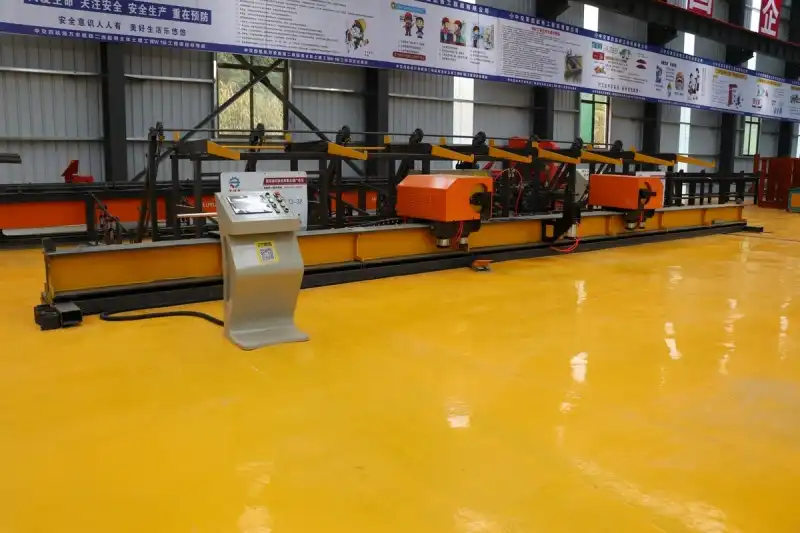
How Industrial Rebar Bending Machines Work and Their Key Benefits
When procurement teams know how steel bar bending equipment works, they can make faster and better decisions that save time.
The Core Working Principle
The machine has one center pin and one bending roller clamped together. A disk that is driven by a motor spins to the angle that was set. This cold-forms the bar without using heat. They can save more than one bending program, which makes it easy for workers to switch between stirrup patterns. The plates and pins that do the work are made of alloy steel that has been vacuum-heated and meets ISO 9001 quality standards. They can be used for more than 10,000 hours.
Manual vs. Automatic Operation
People who use manual units have to set the angle stops by hand and press a foot pedal to turn on the motor. Digital input can be sent to automatic CNC rebar benders, which can then adjust for spring back and run in a loop without being watched all the time. With automatic bending, it's possible to cut the time it takes to bend each piece by 60% or more on a normal highway bridge job. One of the biggest problems contractors are having right now is directly fixed by this.
Key Performance Benefits
These tools are worth the money on big job sites because they do the following things better:
CNC angle control keeps errors within ±1 degree, which means that projects in seismic zones don't have to pay for costly fixes to the structure or waste materials.
Heavy-duty gearboxes that are totally submerged in oil allow production processes to happen 24 hours a day, seven days a week, without getting too hot. This helps mega-infrastructure projects stick to their nonstop plans.- Lower labor costs: One automatic rebar bender can do the work of three to five people by hand, which saves money over the course of the job.
Automated feeding and folding keep workers away from places with a lot of force, which makes it much less likely that someone will get hurt on the job.
- Processing accuracy: CNC angle control holds tolerance within ±1 degree, which prevents costly structural rework and material waste on seismic-zone projects.
- Continuous operation: Oil-enclosed heavy-duty gearboxes allow 24/7 production cycles without overheating, supporting the non-stop schedules of mega-infrastructure projects.
- Labor cost reduction: One automatic rebar bender can replace three to five manual workers, delivering measurable savings across the project lifecycle.
- Safety improvement: Automated feeding and bending keep operators away from high-torque working zones, reducing site injury exposure significantly.
When contracts are due quickly, these industrial rebar bending machine benefits get right to the heart of the problems that equipment managers and project leaders have with output and cost.
Types of Industrial Rebar Bending Machines and Their Appropriate Applications
The job will tell you what kind of machine you need. Your choice of steel bar processing equipment will depend on the diameter range, the amount of work that needs to be done, and the site's conditions.
Manual and Semi-Automatic Models
Rebar benders that you use by hand are cheap and easy to use. They work well for small businesses or repair jobs where there isn't a lot of traffic every day. Models that are only partly automatic have a motor that drives them, but you can still change the angle by hand. When shops make pre-made parts and use the same set of shapes over and over, these models work well.
Hydraulic and CNC Electric Models
Large bars (up to 55 mm in diameter) can be clamped down strongly on hydraulic rebar bending machines. This makes them a popular choice for tunnel pier strengthening and nuclear power plant structure cages where electric units can't easily handle the bigger bars. CNC electric benders are better than hydraulic benders because they use less energy, make less noise, and need less hydraulic maintenance. When it comes to high-rise commercial building and metro train projects that need complex 135-degree anti-seismic stirrups, CNC electric models are quick and good enough.
Portable vs. Stationary Units
When work needs to be done at the site of the installation, portable bending tools give site teams more choices. But they aren't able to handle as much width or make as much as fixed industrial units can. Large companies that work with rebar and precast concrete almost always choose fixed machines that are built into automatic production lines. This is because in these places, steady throughput is more important than mobility.
Choosing the Best Rebar Bending Machine for Your Infrastructure Project
If you want to pick the best steel reinforcement bending tools, you need to think about both science and money.
Key Technical Parameters to Evaluate
Most of the time, motor outputs between 3kW and 7.5kW are enough to bend bars with diameters between 6mm and 55mm. The buying managers should check the Rockwell Hardness grade of rollers and pins that bend. The standard range for HRC is between 58 and 62 so that the parts don't bend when they are loaded. The machine's ability to work with local power standards (3-phase 380V/50Hz standard; can be changed to work with 220V, 440V, or 60Hz grids) and how well it fits a project environment are the things that matter.
Balancing Upfront Cost Against Long-Term ROI
A CNC bent with more features costs more than a simple hand unit. For medium- to large-sized building projects, industrial rebar bending machine automatic equipment usually pays for itself in less than 18 months. This is because the equipment saves time and money over two years because it doesn't need to be fixed as often and less stuff is thrown away. If you are a contractor in charge of more than one busy job site at the same time, you can save even more money by buying in bulk and choosing an OEM setup.
After-Sales Support and Supplier Reliability
For service to be helpful, tools must work well and be responded to quickly. You should make sure that the seller offers installation, user training, access to spare parts, and a clear guarantee term before you decide to buy. A broken gearbox in a machine that can't be used costs a lot more than the price difference between two similar types. People trust supplier recommendations more than general product brochures when it comes to infrastructure projects like tunnels, bridges, and railroads.
Operation, Maintenance, and Safety Best Practices
How often and how well a rebar bending machine is used determines how long it can work at full speed.
Step-by-Step Operational Guidance
All new workers should go through a well-planned onboarding process. This meeting should go over how to enter data into the program, choose a material grade, and set up spring-back pay. The PLC will figure out the over-bend angle for CNC units if you put in the right material grade (Grade 60 or HRB500). You don't have to. Test runs with no load should always be done before a new production batch to make sure the angle adjustment is correct.
Recommended Maintenance Schedule
The engine oil should be changed for the first time after 500 hours of use. After that, every 1,500 to 2,000 hours, the oil is changed. So, high-torque gear sets don't break down too fast. The bending pins and middle wheels should be checked for surface wear every time the shift is made. To keep the CNC's accuracy in the right range, the limit switch is measured against exact angle models every 500 hours. Bearings don't break down too quickly when you grease the moving parts on a regular basis.
Safety Compliance and Hazard Prevention
People who work with rebar processing equipment need to wear the right PPE, like safety glasses, heavy gloves, and shoes with steel toes. As long as the machine is running, no one should be in the area around the bending disk. Before the equipment is put in place, it should be checked to make sure it is safe to use with electricity. There should be tests for both grounding continuity and insulation resistance as part of this. Problems like bending angles that don't match up right away can be caused by a broken center pin, a loose limit switch, or a drop in hydraulic pressure. These issues need to be fixed right away to avoid both quality failures and machine damage.
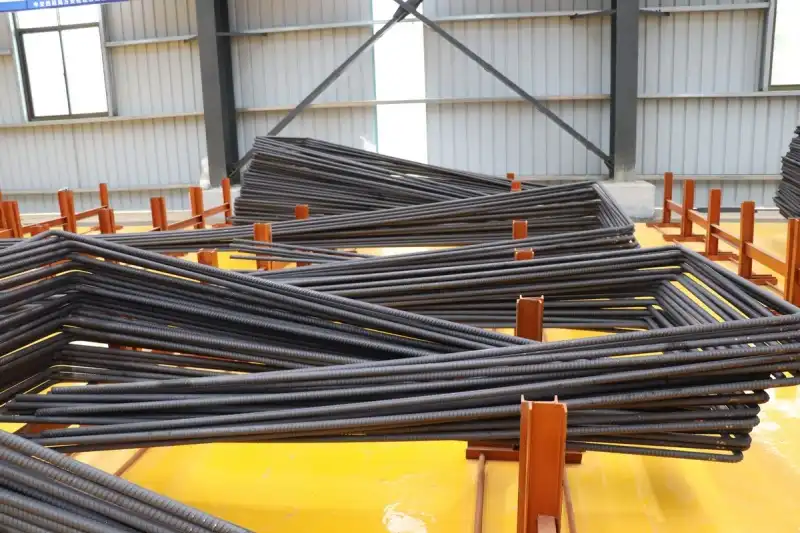
Why Work with Zhongji Luyuan for Your Rebar Processing Equipment Needs?
Lanzhou Zhongji Luyuan Machinery Co., Ltd. has 50 million yuan in listed capital. Since 2016, the company has been making CNC equipment for handling reinforcements. The company makes many different things, from easy-to-use electric rebar benders to fully automatic CNC rebar milling lines. It is possible for these tools to work with bars that are 6 mm to 55 mm in diameter. The tools made by Zhongji Luyuan are used to build high-speed rail systems, highways and bridges, metro rail systems, underground utility corridors, and nuclear power plants. In these places, it's most important that processing is done correctly and technology is always on.
It works with China Railroad, China Railroad Construction, China State Construction, China Communications Construction, and China Nuclear Power Construction Corporation. Along with South Korea, Malaysia, Thailand, Kazakhstan, Israel, South Africa, and more than 100 other places around the world, it has sent goods. Before it is sent out, every machine goes through a full-load test and a no-load run test that lasts for 48 hours straight. Part of after-sales support is training users, setting up and commissioning the system, and getting ongoing expert help.
Conclusion
Companies that build infrastructure are having trouble with labor costs, accuracy, and speed of work. Industrial rebar bending machines are the answer to these problems. What makes a project successful is choosing the right type of machine, checking that the technical specs are correct, and working with a supplier that stands behind their tools with real service. Zhongji Luyuan has been selling CNC reinforced processing equipment for eight years and has a history of supplying equipment all over the world. They also offer a full after-sales service for all of their products. This gives buying teams a solid base for the work they do to process steel.
FAQ
How does a CNC rebar bender handle material spring-back?
Most CNC models allow operators to input the material grade into the PLC. The system then calculates a compensating over-bend angle automatically, accounting for the elastic recovery of grades like HRB500 or Grade 60 steel, so the final shape matches the drawing exactly.
Can one machine bend multiple bars at the same time?
Yes, within diameter limits. A machine rated for 40mm single-bar capacity can typically process three 12mm bars or two 16mm bars simultaneously, provided the combined cross-sectional area stays within the machine's rated limit.
What causes inconsistent bending angles?
The most common causes are a worn center pin, a loose or miscalibrated limit switch, or a hydraulic pressure drop in hydraulic models. Regular encoder or limit block calibration every 500 hours prevents most recurrence.
Are machines compatible with US power standards?
Standard configurations run on 3-phase 380V/50Hz. Manufacturers can customize motor specifications for 440V/60Hz or other North American grid requirements upon order.
What is the expected service life of the working disk?
Working disks made from vacuum heat-treated alloy steel typically exceed 10,000 operating hours before requiring replacement, provided scheduled maintenance and correct bar diameter limits are observed.
Partner with Zhongji Luyuan — Industrial Rebar Bending Machine Supplier for Infrastructure Projects
When you buy steel bar bending tools from Zhongji Luyuan, they are controlled by CNC and are made to build a lot of infrastructure over time. People all over the world know they can trust us to make reliable industrial rebar bending machines. We give expert help, set up tools to fit your needs, and provide quick service after the sale. Connect with our group right away to talk about what you need for your project and receive a full equipment quote. Feel free to email us at sales2@shandongluyuan.com or go to shandongluyuan.com.
References
1. American Concrete Institute. ACI 318-19: Building Code Requirements for Structural Concrete. 2019.
2. Construction Industry Institute. Automation and Robotics in Construction. 2021.
3. International Organization for Standardization. ISO 9001:2015 Quality Management Systems — Requirements. 2015.
4. Engineering News-Record. Top 400 Contractors Report: Infrastructure Trends and Equipment Investment. 2023.
5. McGraw-Hill Construction. Prefabrication and Modularization: Increasing Productivity in the Construction Industry. 2011.
6. American Institute of Steel Construction. Steel Construction Manual, 16th Edition. 2023.