What Applications Require Industrial Rebar Bending Machine for Reliable Steel Forming Performance?
Oct 16, 2026
When contractors and procurement managers ask which projects truly demand an industrial rebar bending machine, the answer spans nearly every segment of heavy construction. From bridge pier cages to high-rise seismic frames, this equipment processes high-tensile steel bars — including HRB400 and HRB500 grades — into precise geometric shapes that manual methods cannot consistently deliver. Whether you manage infrastructure megaprojects, precast factories, or urban rail construction, reliable steel forming performance depends directly on machine capability, automation level, and processing accuracy. Understanding where and how these machines apply helps you make smarter procurement decisions.
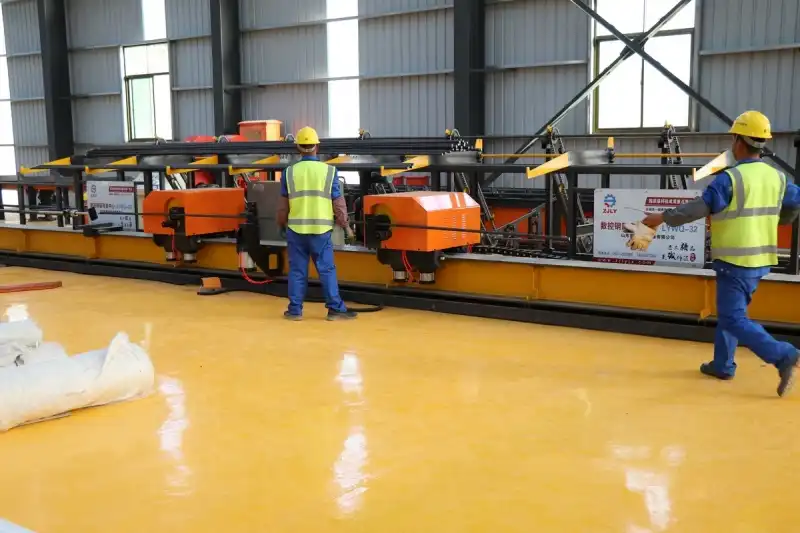
Understanding Industrial Rebar Bending Machines and Their Role in Steel Forming
What This Equipment Actually Does
A heavy-duty mechanical system called a steel bar bending machine cold-bends reinforcement bars into the angles and shapes shown on structural engineering plans. Unlike hand tools, these machines can work with bars from 6 mm to 55 mm in diameter thanks to high-torque electric motors or hydraulic systems. This takes away the physical stress on workers, stops mistakes in measurements made by hand, and keeps production moving at a speed that large job sites can't keep up with.
Key Technical Specifications That Matter
In general, motor power is between 3kW and 7.5kW. Angle accuracy is within ±1 degree for types that are CNC-integrated, and automatic spring-back compensation takes into account the steel's ability to stretch back. Working disks and bent pins are made from vacuum-heated alloy steel that has been formed. They have been tested and proven to last more than 10,000 hours. A heavy-duty oil-enclosed gearbox can work nonstop 24 hours a day, seven days a week without getting too hot, which is a must for jobs that have more than one shift.
Why Automation Level Changes Everything?
In a normal manual setup, each angle has to be set by hand by an operator. A CNC rebar bending machine can store pre-programmed bending sequences, which lets one person produce consistent batches with little help. This cuts down on straight-up labor costs and the need to redo work because of angles that are off. When procurement managers look at return on investment (ROI), the labor savings alone over the course of a 12-month infrastructure project often pay for the capital investment in the first year of use.
Main Applications Requiring Industrial Rebar Bending Machines
Infrastructure Megaprojects: Bridges, Tunnels, and Highways
For seismic protection, bridge pier caps and tunnel lining pieces need large bars that are bent to very tight tolerances. In these places, a machine that bends reinforcement bars can shape bars that would take a crew hours to shape by hand in minutes. Since highway construction requires making stirrups and hooks all the time over hundreds of kilometers, the only way to stay on schedule is to use automated bending. Zhongji Luyuan's equipment is used on large infrastructure projects in the railroad, highway, and tunnel sectors. For example, they have worked with China Railway and China Communications Construction.
Commercial Buildings and High-Rise Structures
For load-bearing frames in urban high-rise buildings, 135-degree anti-seismic stirrups are needed. This form needs precise angle control and the ability to be repeated over and over again. On crowded city job sites with limited space, a small but powerful industrial rebar bending machine lets fabrication happen on-site instead of sending everything to a processing center away. This cuts down on shipping delays and gives project managers direct control over the quality of the parts. Studies in the field of structural engineering have shown that properly made stirrups make a frame much better at absorbing lateral seismic forces.
Precast Concrete Factories and Distribution Centers
Precast companies that make a lot of lintels, floor slabs, and columns need machines that can work with automated production lines. Here, speed and consistency are the most important things—thousands of identical stirrups may be needed for a single shift. High-output bending systems are also needed in rebar processing centers that work with various contractors to handle big orders quickly. These places work best with CNC systems that can store programs so they can quickly switch between different part specifications without having to recalibrate each batch by hand.
Selecting the Right Industrial Rebar Bending Machine for Your Application
Matching Machine Type to Project Demands
For infrastructure contractors working with 40mm to 55mm bars, hydraulic models are the best choice because they can handle the biggest diameters and keep the torque constant even when they're under a lot of stress. Electric CNC models work well in processing centers and precast plants where speed, programmability, and low energy use are more important than maximum width. Portable types are good for remodeling jobs or places where tools need to be moved between different work areas. Finding the right machine type for your production needs will keep you from underperforming and spending too much on capital.
Evaluating Capacity Against Project Scale
Here are the main things you should check before buying:
- Bending diameter range: Confirm the machine covers every bar size specified in your project drawings, including future projects.
- Simultaneous bending capacity: A machine rated for 40mm can typically process two 16mm bars at once — verify combined cross-sectional limits.
- Duty cycle: For 24/7 operations, confirm the gearbox and motor cooling system are rated for continuous industrial use.
- Angle accuracy certification: Request calibration documentation showing the limit switch meets ISO 9001 repeatability standards.
These factors directly show whether the tools you buy will actually help you reach your production goals or cause problems six months into a project.
Why Supplier Reliability Affects Total Cost of Ownership?
You can only get part of the picture from technical specs. It can cost tens of thousands of dollars every day for a big infrastructure project to be down. That risk is cut down a lot if you choose a provider with a proven after-sales service network, extra parts that are easy to get, and virtual technical help. Zhongji Luyuan has a dedicated after-sales team. Their products are used in almost 100 countries, such as South Korea, Malaysia, Thailand, Kazakhstan, and Israel. Because of this track record around the world, the service infrastructure is already there when you need it.
Best Practices for Maintenance and Safe Operation
Structured Inspection Schedules Prevent Failures
The condition of the bending pin of the industrial rebar bending machine, the reaction of the limit switch, and the oil level should all be checked every day. Gear oil viscosity, electrical insulation resistance, and grounding continuity should all be checked once a week. Rockwell Hardness wear on bending pins should be checked every month; they need to stay within HRC 58–62 to keep from deforming under full load. A gear oil change after 500 hours of use and then again every 1,500 to 2,000 hours stops the sharp wear that shortens the life of the gearbox.
Safety Standards Protect Personnel and Equipment
Before they can run the machine without being watched, operators must learn how to use dual-pedal control methods and how to stop the machine in an emergency. It is required that you follow all OSHA rules and manufacturer safety guidelines. Do not go over the machine's rated simultaneous bending capacity. If you do, you will overload the motor, which will stress the gears and cause it to break early. All of these things lower the chance of injuries and the cost of unplanned repair.
Maximizing Uptime Through Proactive Support
Most of the time, a worn center pin, a loose limit switch, or a drop in hydraulic pressure is to blame for bending angles that don't stay the same. Fixing these problems right away instead of continuing production stops the damage from getting worse. Zhongji Luyuan helps with troubleshooting remotely and keeps up a supply chain for spare parts that makes fast resolution possible. This keeps production delays to a minimum, which protects project margins.
Procurement Considerations
Understanding Total Investment and Financing Options
When buying capital equipment for rebar processing systems, you should think about how much it will cost over its whole life, not just the price you pay for it. Include the availability of spare parts, the time between planned repair visits, and the time needed to train operators. To keep their working capital up, many contractors look at leasing options for project-specific deployments. When you buy new equipment from a reputable maker, you get protection and performance guarantees that used machines usually don't have.
Verifying Supplier Credentials Before Committing
Before you sign, make sure you get written project references, promises of when the work will be delivered, and deals for service after the sale. One of the best ways to tell if a supplier makes good products is to look at their history with state-owned engineering firms and big infrastructure contractors. Zhongji Luyuan was established in 2016 with 50 million yuan in registered capital. It has long-term partnerships with China Railroad, China State Construction, and China Nuclear Power Construction Corporation, which shows that their equipment consistently meets the highest project standards.
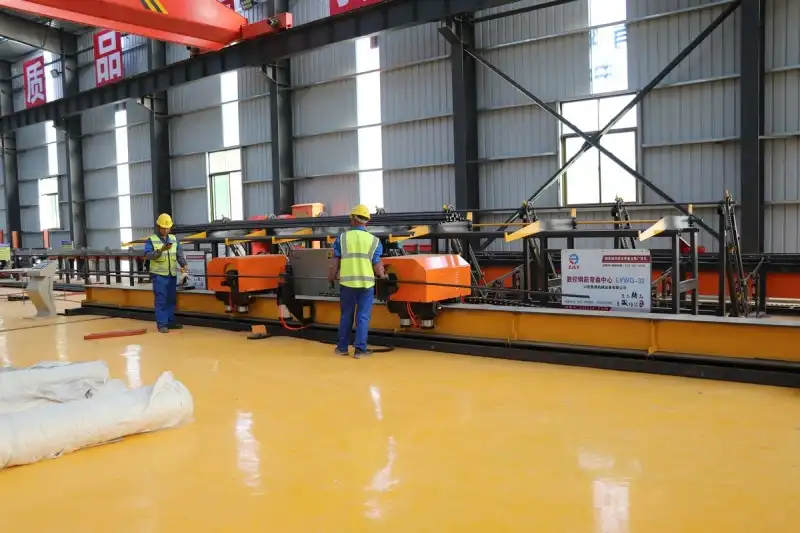
Aligning Equipment Configuration to Your Specific Needs
Large companies often need equipment that is set up in a way that is unique, such as having certain power settings, bending ranges that aren't standard, or the ability to work with current production line control systems. Engineers at Zhongji Luyuan offer setup talks to make sure that the machine specifications are exactly what the project needs. This cuts down on start-up time and gets rid of any compatibility issues before the machine is delivered.
Conclusion
Matching the right equipment to the right job is important for reliable steel forming. An industrial rebar bending machine has to handle a lot of different tasks, from tunnel reinforcement cages to precast slab production lines. If you choose the wrong standard, output problems will happen over and over again, which will slow down the whole project. The technical factors, use scenario, maintenance method, and supplier dependability discussed here make it easy for procurement managers and equipment directors to make good buying choices that will last throughout the whole project lifecycle.
FAQ
How does CNC spring-back compensation work in practice?
The operator inputs the material grade — for example, HRB500 — into the PLC control panel. The machine then automatically over-bends by a calculated margin to account for the steel's elastic recovery, ensuring the final angle matches the drawing specification without manual adjustment between pieces.
Can one machine process multiple bar diameters in the same production run?
Yes. CNC models store multiple bending programs, allowing operators to switch between diameter configurations quickly. Physical tooling changes may be required between significantly different diameters, but the programming changeover itself takes seconds.
What causes inconsistent angles, and how is it corrected?
Inconsistent angles typically result from a worn center pin, a misaligned limit switch, or a hydraulic pressure drop. Regular calibration of the encoder and limit block — checked against precision angle templates — corrects these issues before they affect production batches.
What power supply configurations are available for international projects?
Standard machines are configured for 3-phase 380V/50Hz. Manufacturers can customize motors for 220V, 440V, or 60Hz to match local industrial grid requirements, which matters for projects deployed in North America or regions with non-standard grid specifications.
Connect With Zhongji Luyuan for Your Next Equipment Purchase
Zhongji Luyuan plans and creates CNC steel bar processing equipment for tough infrastructure, rail transit, and industrial building projects. We are a reliable supplier of industrial rebar bending machines that are used in almost 100 countries. We offer tested equipment, technical advice, and help after the sale to keep your production plan on track. You can get specifications and talk about your project needs by going to shandongluyuan.com or emailing our team at sales2@shandongluyuan.com.
References
1. American Concrete Institute. ACI 318-19: Building Code Requirements for Structural Concrete. American Concrete Institute, 2019.
2. American Institute of Steel Construction. Steel Construction Manual, 16th Edition. AISC, 2022.
3. Nawy, Edward G. Reinforced Concrete: A Fundamental Approach, 6th Edition. Prentice Hall, 2009.
4. Mehta, P. Kumar, and Paulo J.M. Monteiro. Concrete: Microstructure, Properties, and Materials, 4th Edition. McGraw-Hill Education, 2014.
5. Construction Industry Institute. Benchmarking and Metrics Report: Automation in Reinforcement Fabrication. CII, 2021.
6. International Organization for Standardization. ISO 9001:2015 Quality Management Systems — Requirements. ISO, 2015.