Industrial Rebar Bending Machine Supports Continuous Production in Professional Rebar Fabrication Facilities
Oct 9, 2026
A professional rebar fabrication facility lives or dies by its ability to keep production moving without interruption. An industrial rebar bending machine is the mechanical backbone of that continuity — a heavy-duty system built to cold-bend HRB400 and HRB500 reinforcement bars into precise geometric shapes required for reinforced concrete structures. Compared to manual bending, these machines process high-tensile steel with far greater speed, consistency, and safety. For large infrastructure contractors and processing centers across the United States, they directly address the three biggest production challenges: rising labor costs, tight project schedules, and strict structural accuracy requirements.
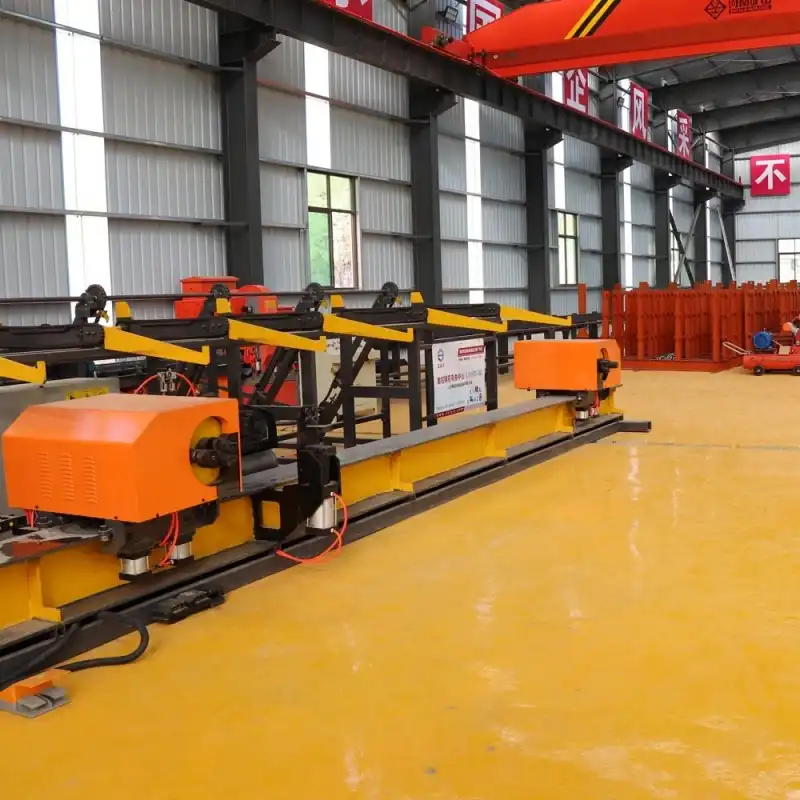
Understanding Industrial Rebar Bending Machines: Key Functions and Advantages
How These Machines Operate
High-torque electric motors or hydraulic drive systems are used in these machines to turn reinforcement bars in a controlled way. A CNC control screen lets the user set the desired angle, and the machine bends the metal with an accuracy of ±1 degree. Advanced CNC models have a feature called "spring-back compensation" that automatically over-bends the bar to account for the steel's ability to stretch and return to its original shape. This makes sure that the finished piece exactly matches the engineering plan.
Core Production Advantages
There are many more benefits to production than just speed. These tools are very helpful for a fabrication plant because they:
- High bending capacity: Most industrial models handle bar diameters from 6mm to 55mm, covering the full range used in bridge piers, tunnel linings, and commercial building frames.
- Continuous 24/7 operation: An oil-immersed heavy-duty gearbox paired with alloy steel working disks — vacuum heat-treated to Rockwell Hardness HRC 58–62 — supports a service life exceeding 10,000 hours without overheating.
- Simultaneous multi-bar bending: A machine rated for 40mm can bend three 12mm bars or two 16mm bars at once, measurably increasing throughput on high-volume projects.
These benefits directly fix the slowdowns in workflow that cause building plans to slip and labor costs to rise. When fabrication teams switch from manually bending rebar to automated rebar processing equipment, cycle time and operator fatigue usually go down a lot.
Safety and Compliance Features
Modern industrial rebar bending machines have emergency stop buttons, two-pedal control systems that let operators move in both directions, and insulation resistance protection that has been checked by electrical safety tests. These features help businesses stay in line with OSHA rules and keep their workplaces safe and legal.
Choosing the Right Industrial Rebar Bending Machine for Your Fabrication Facility
Automation Level and Bending Capacity
The first choice is the level of automation. Automatic CNC rebar benders are good for big infrastructure contractors and processing centers that do a lot of work because they can store many bend programs, switch between them immediately, and need very little help from the user. For medium-sized projects where people still watch over each cycle, semi-automatic models work well. It's still possible to use manual benders, but only for very small jobs or repairs in the field. Match the bending ability, which is shown by the largest bar width and motor power (3kW to 7.5kW range), to the heaviest bar your project needs.
Evaluating Power Sources and Footprint
Electric machines are most common in professional settings because they have more steady power, use less energy, and are quieter when they're running than hydraulic machines. When bending bars with a diameter of more than 50 mm, hydraulic types are better because they can produce more pressure than standard electric motors can easily handle. Measure your floor plan before you buy. Handling time between cutting and bending stations is cut down by a machine that fits neatly into your fabrication line and doesn't get in the way of the flow of materials.
Supplier Reliability and After-Sales Support
Before buying capital tools, you should always look at the seller. Check to see if the manufacturer is ISO 9001 certified, can provide written load test results (including a 48-hour no-load continuous run and a full-capacity load test), and has an easy-to-reach technical support channel. Also, procurement managers should make sure that extra parts are available, especially for parts that wear out quickly, like center pins, limit switches, and bent rollers.
Optimizing Continuous Production: Maintenance and Troubleshooting Best Practices
Proactive Maintenance Schedule
Structured maintenance is what makes the difference between industrial rebar bending machine that lasts 10,000 hours and one that breaks down after only 3,000. To keep high-torque gears from wearing out too quickly, the oil in the gearbox should be changed every 1,500 to 2,000 hours after the first 500 hours of use. Every week, grease the center pin and bending roller bearings. Using precision angle templates, check the angle limit switch and encoder calibration once a month to catch drift before it makes parts that don't meet standards.
Troubleshooting Common Issues
The most common trouble in the field is bent angles that don't stay the same. A broken center pin, a loose limit switch, or a drop in pressure in hydraulic types are the three most common reasons. Technicians who are on-site can fix most problems by recalibrating the encoder or making the limit block tighter, so you don't have to wait for a service call. If the motor gets too hot, it's probably because a cooling vent is blocked or a simultaneous bend is crowded. Lower the number of bar bundles and check the motor's airflow paths first.
Operator Training and Safety Inspections
A fabrication plant in the bridge building industry cut unplanned downtime by 34% after starting a structured monthly safety check program and a two-day course for operator certification. Trained operators found early signs of component wear, like pitting on the roller surface, before they caused the angle to change. This kept materials from going to waste and production from being held up. For regulatory compliance records, regular safety checks should be logged and dated to include tests for grounding continuity, insulation resistance, and pedal-switch function.
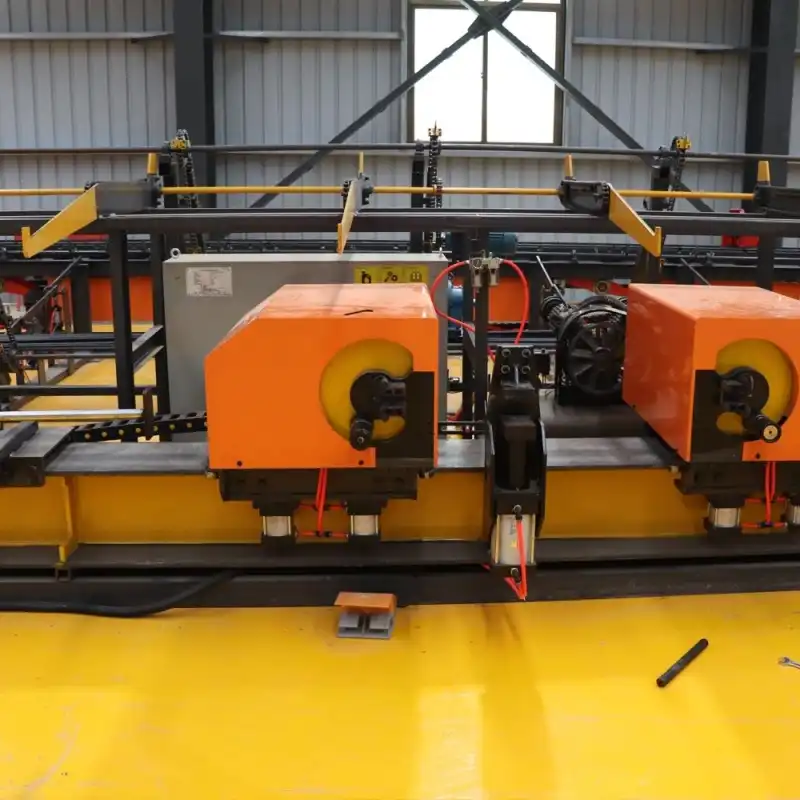
Procurement Insights: Navigating Pricing, Financing, and Supplier Selection
Understanding Pricing in 2024
Semi-automatic rebar benders for beginners cost between $3,000 and $6,000. Full CNC automatic models for professional production shops usually cost between $8,000 and $25,000, but this depends on how much they can bend, how complicated the control system is, and where they come from. Installation, user training, and shipping costs can add 10–15% to the base cost of the tools, so keep them in mind when you make your budget.
Financing and Cash Flow Considerations
A lot of medium-sized to big contractors finance their equipment or lease it to own it so they don't have to use their project operating capital. Ask directly about payment terms when reviewing suppliers, especially for orders that are being placed for the first time. When it comes to project-driven procurement cycles, reputable manufacturers often offer flexible terms to well-known contractors.
Verifying Supplier Credibility
Ask for third-party test certificates, client reference lists, and a log of all the documents that have been exported. Suppliers who have exported to more than one country before show that they have a well-established process for quality control and logistics. Before you sign a purchase agreement, make sure that the supplier can set up the equipment for 3-phase power, whether it's standard 380V/50Hz or customized for 220V, 440V, or 60Hz North American grids.
Future Trends and Innovation in Industrial Rebar Bending Machines
AI-Driven Control Systems
The next generation of steel bar bending machines has PLC systems that are helped by AI and learn from production data. These systems automatically change the adjustment angles based on differences in the materials from batch to batch. This cuts down on the time and materials needed to set up new bar grades without having to do any manual recalibration.
Robotic Integration and Real-Time Monitoring
A number of major makers are combining CNC bending machines with robotic bar-feeding arms and tracking dashboards that are based on the Internet of Things. Remotely and in real time, production managers can keep an eye on output numbers, angle deviation logs, and motor load data. This level of insight directly improves scheduling accuracy and cuts down on emergency repair calls for big rebar processing centers with multiple machines running on different shifts.
Preparing for Digital Fabrication Workflows
If purchasing managers check now to see if their equipment works with BIM-linked fabrication software, they will be better prepared when digital construction workflows are made standard on infrastructure projects funded by the federal government. Engineering plans can be processed directly by machines that accept DXF or standard CAD-format bend schedules. This gets rid of the need for mistakes in data entry between design and production.
Conclusion
Professional rebar fabrication facilities that invest in reliable, high-capacity steel bar bending equipment gain a measurable edge in production speed, structural accuracy, and labor cost control. The key is matching industrial rebar bending machine specifications to your actual bar diameter range, production volume, and automation requirements — then selecting a supplier with proven technical support and global delivery capability. Continuous production is not just about the machine itself; it depends equally on a disciplined maintenance program, trained operators, and a trusted equipment partner.
FAQ
1. How do CNC rebar bending machines handle material spring-back?
The PLC of CNC machines has a setting for the compensation angle. When the user types in the grade of the material, like "Grade 60," the machine slightly over-bends it to counteract the steel's elastic rebound. This makes an angle that meets the technical requirements without having to be adjusted by hand between pieces.
2. Can these machines bend multiple bars at the same time?
Yes, up to the maximum of the combined cross-sectional size. A machine that can handle a single 40mm bar can usually bend three 12mm bars or two 16mm bars at the same time. Before setting up a multi-bar bundle, you should always check the manufacturer's chart for the combined capacity.
3. What is the recommended gearbox oil change interval?
After 500 hours of use, change the gear oil. After that, do it every 1,500 to 2,000 hours. This space keeps abrasive particles from building up and wearing down gears too quickly when they are constantly under a lot of torque.
4. Are these machines compatible with North American power standards?
Three-phase 380V/50Hz is what most configurations use. Many companies let you change the motor so it works with 220V, 440V, or 60Hz lines to meet the needs of North American businesses that need industrial power.
5. What causes inconsistent bending angles during production?
Most of the time, it's because the center pin is worn, the limit switch is loose, or the hydraulic pressure drops. Recalibrating the encoder or making the limit block tighter can usually fix the problem on-site, without the need for help from an outside service.
Get a Direct Quote from Zhongji Luyuan — Trusted Industrial Rebar Bending Machine Supplier
Since its founding in 2016 with 50 million yuan in registered capital, Zhongji Luyuan has sold CNC rebar processing equipment to builders in almost 100 countries. We can help you choose the right industrial rebar bending machine for your project, whether you need a single machine or a fully automatic production line. You can email us at sales2@shandongluyuan.com to get a quote right away.
References
1. Construction Industry Institute. Automation in Reinforcing Steel Fabrication: Productivity and Quality Outcomes. 2022.
2. American Concrete Institute. ACI 318-19: Building Code Requirements for Structural Concrete and Commentary. 2019.
3. Engineering News-Record. Labor Cost Trends in U.S. Infrastructure Construction. 2023.
4. International Organization for Standardization. ISO 9001:2015 Quality Management Systems — Requirements. 2015.
5. Occupational Safety and Health Administration (OSHA). Steel Erection Standard: Subpart R of 29 CFR 1926. 2021.
6. Modern Steel Construction. CNC Fabrication Technologies and Their Impact on Structural Steel Project Schedules. 2023.