LYWQ-32 CNC Vertical Bending Center Supports Efficient Steel Bar Processing in Prefabricated Construction Plants
Sep 29, 2026
Prefabricated construction is growing fast across the United States, and steel bar processing accuracy sits at the center of that growth. The CNC Vertical Bending Center LYWQ-32 is an automated rebar bending machine built for high-volume, precision-driven environments. With a maximum bending diameter of 32mm, bending speed up to 60°/s, and angle accuracy of ±1°, this machine addresses the core production challenges that prefabricated concrete plants, bridge contractors, and infrastructure builders face every day. It processes Grade I, II, and III rebar with consistent results across every shift.
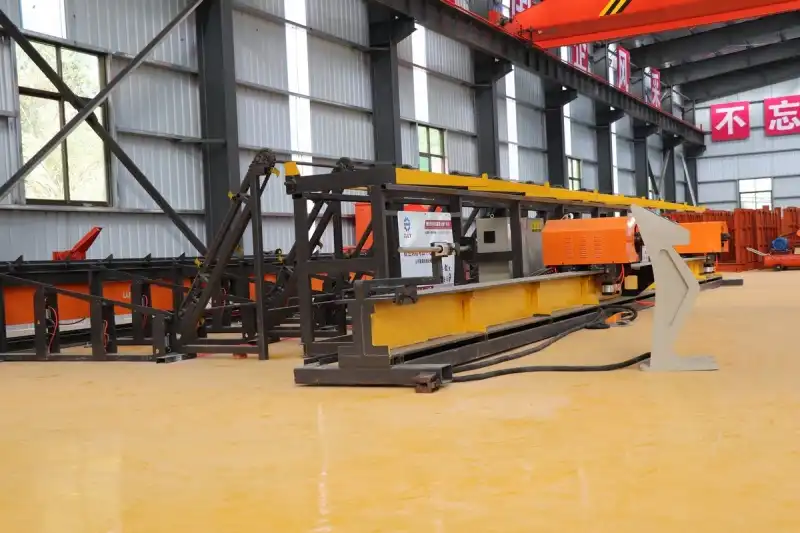
Understanding the LYWQ-32 CNC Vertical Bending Center
What This Machine Actually Does
The LYWQ-32 is an automated industrial bending system made for rebar with a diameter of up to 32 mm. It cuts raw steel bars into exact geometric forms with the help of a high-performance PLC control system and servo-driven mechanisms. The vertical processing orientation makes it easier to control the movement of materials and keeps operators from getting too tired. Unlike most horizontal benders, which need to be measured and adjusted by hand, this machine reads parameters that have been programmed and makes bends with repeatable accuracy.
Key Technical Specifications
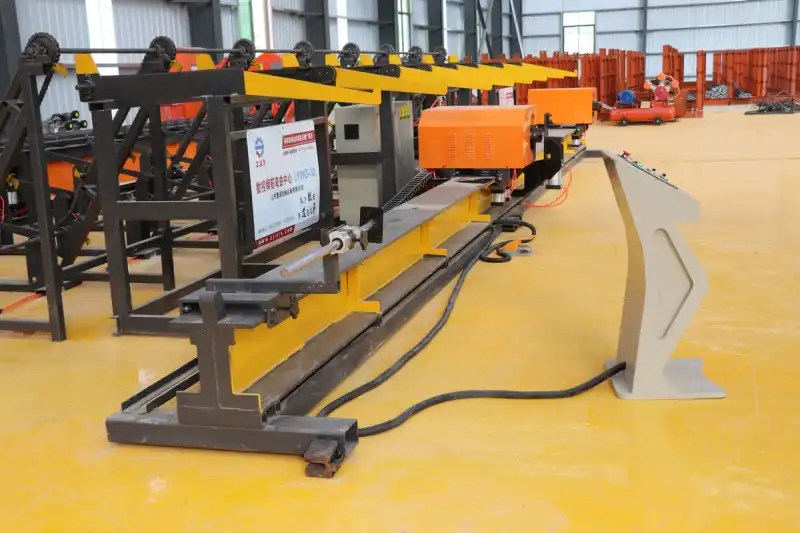
The machine has features that are important to both plant managers and procurement engineers. It can bend at a speed of 60°/s, keep an accuracy of ±1mm for length, and keep an accuracy of ±1° for angle. Because it has two heads, it can bend both ends of a bar at the same time, which greatly reduces cycle times. Precision feeding is controlled by high-torque servo motors, and a stronger hydraulic locking system keeps things from slipping during high-tensile operations. The IP54 rating on the control box protects the internal parts in dusty or damp plant settings.
Software and CAD Integration
Direct CAD data import is a useful feature that production engineers like. When an operator loads a drawing file into the CNC interface, the machine automatically turns that data into bending settings, so the operator doesn't have to enter the information again. This gets rid of a common place where mistakes happen during large-scale production runs. When compared to normal industry options, wear-resistant alloy steel bending pins make parts last about 30% longer, which directly lowers upkeep costs over the life of the machine.
Enhancing Steel Bar Processing Efficiency in Prefabricated Construction
The Real Bottlenecks in Prefab Plants
When steel bar turning is done by hand, prefabricated concrete plants often have to wait longer. Each bar has to be measured, marked, moved, and checked by hand by workers. This makes shifts less consistent and increases the amount of work that needs to be redone. When a structural part has a lot of bent rebar pieces that need to fit together perfectly, even small errors in the angles can cause the part to be rejected during quality control. There are delays in the plan and loss of materials because of these inefficiencies.
How the Vertical Design Changes Output
This rebar CNC Vertical Bending Center LYWQ-32 is set up vertically, which changes how the material goes through the process. Positioning is easier because of gravity, which makes loading and lifting easier on the body. The dual-head method cuts down on cycle times by working on both sides of a bar at the same time. The machine works on between 5 and 8 tons of rebar in an 8-hour shift, depending on how complicated the shape is. For a prefab plant that makes standard housing parts, that output amount lets them work faster than they could with hand bending.
Productivity Gains in Real Applications
Plants that use this vertical CNC bending device in their production lines say they see effects that can be measured. When CAD data is directly imported into prefabricated concrete (PC) factories, operators can switch between rebar shapes without having to stop and make adjustments by hand. For bridge and viaduct projects, the machine makes large pier reinforcement cages and complicated stirrups that have to be exactly the right size. For high-speed railroad projects, it's used to make box girder parts and rebar for tunnel linings that have to meet strict standards for repeatability across thousands of identical pieces.
Comparing LYWQ-32 with Other CNC Bending Solutions
Vertical vs. Horizontal Bending Machines
Long-bar handling is harder with traditional horizontal bending machines because they take up more floor space. The LYWQ-32's vertical layout makes it smaller while also making it easier to control the material during the bending process. With the vertical design, it's also easier to do maintenance. Technicians can get to the hydraulic lines and drive system without taking apart other parts, which cuts down on the average time it takes to fix something.
Performance Against Other CNC Vertical Centers
Here are the main performance benefits of this machine that set it apart from other vertical CNC bending centers:
- Angle repeatability: 1,000 consecutive bends maintain a variance of less than 0.5°, which is verified through a standard dynamic angle repeatability test during quality control.
- Structural load margin: The frame undergoes stress testing at 120% of maximum rated capacity, confirming long-term stability under continuous heavy-duty operation.
- Hydraulic reliability: Pressure stability testing runs for 48 consecutive hours, monitoring for micro-leaks and pressure drops that could affect CNC Vertical Bending Center LYWQ-32 consistency.
Instead of just going by what the maker says, these performance standards give procurement managers a solid technical base for comparison. When a business has two or three shifts a day, these differences in machine margins show up as real cost differences over the course of five years.
Versatility Across Steel Grades and Bar Sizes
Grade I, II, and III rebar can all be used on the machine, which has software that sets different tensile strengths. In other words, one machine can handle all the materials that a prefab plant or rebar processing center normally works with, which means that they don't need as many specialized machines.
Procurement Considerations for B2B Clients
Pricing Transparency and Customization Options
Cost models must be clear for procurement managers who work with budgets for capital tools. Zhongji Luyuan gives thorough quotes that break down the cost of the tools, shipping, installation, and commissioning into their own different items. For certain plant setups, customization choices are available, such as changing the production rate and connecting to automated lines that are already in place. For processing sites that have their own name, OEM arrangements are also an option.
Delivery, Installation, and Warranty Coverage
Delivery times for equipment are guaranteed when the order is placed. Zhongji Luyuan's expert team helps with both setting up the hardware and setting up the CNC parameters during installation and testing. The usual guarantee for the PLC and servo systems lasts for one year. With the built-in IoT module's remote diagnostics feature, Zhongji Luyuan's service team can find and fix problems without having to go to the site, which speeds up the settlement process.
After-Sales Support That Protects Your Investment
Support after the sale is a big part of deciding what big capital equipment to buy. Zhongji Luyuan maintains an extensive service team that works in all project areas. The business has long-term supply agreements with big builders like China Railroad, China State Construction, and China Communications Construction. These references show that the company's equipment is reliable and its service is consistent.
Operating and Maintaining the LYWQ-32 Bending Center
Operator Training and Safety Protocols
The CNC interface is designed to make operations clear, but Zhongji Luyuan suggests a 2-day certified training course that goes over how to optimize CNC parameters and follow safety rules. When operators are properly trained, they are less likely to make mistakes when entering data and can get the most out of the machine. The IP54 control cabinet adds an extra layer of protection in places where there is dust and moisture.
Maintenance Schedule to Prevent Downtime
A planned repair schedule keeps the machine working at its best so it can keep making things. Every day, the levels of hydraulic fluid and the condition of the clamping system are checked. Every week, the links between servo motors and the wear on the bent pins are checked. As part of regular repair, the software and hydraulic systems are fully inspected. By sticking to this schedule, you can cut down on unplanned downtime and make wear parts last longer.
Long-Term Operational Value
Plant managers can keep an eye on output trends and early signs of wear before they become failures by regularly checking performance. When operators learn how to change CNC parameters, they can quickly adapt the machine to new rebar forms. This helps with production flexibility as the needs of the project change. When you have reliable hardware and well-trained operators, you get a steady return on investment over the life of the machine.
Conclusion
The LYWQ-32 is a useful machine for handling steel bars that are needed in current prefabricated construction. Its two-head vertical design, accurate CNC control, and long-lasting mechanical construction meet the needs of infrastructure and prefab builders for fast, accurate, and reliable production. When purchasing professionals look at automated rebar CNC Vertical Bending Center LYWQ-32 tools like this one, the technical specs, quality testing standards, and after-sales support system make it a good choice for a long-term investment.
FAQ
1. What is the maximum rebar size the LYWQ-32 processes?
The machine processes rebar up to 32mm in diameter, covering Grade I, II, and III steel. Software presets adjust bending parameters for each grade's tensile strength.
2. How much rebar can the machine process per shift?
Depending on shape complexity, the machine processes between 5 and 8 tons of rebar per 8-hour shift.
3. Does the machine support CAD file import?
Yes. The CNC system supports direct CAD data import, allowing operators to load drawing files and run production without manual parameter re-entry.
4. What warranty coverage applies to the electronics?
The PLC and servo systems carry a standard 12-month industrial warranty. Remote diagnostics through the IoT module support faster fault resolution.
5. How long does operator training take?
Zhongji Luyuan recommends a 2-day certified training course covering CNC parameter optimization, safety procedures, and routine maintenance tasks.
Request a Quote from Zhongji Luyuan — LYWQ-32 CNC Vertical Bending Center Supplier
Since 2016, Zhongji Luyuan has sold automatic rebar processing equipment to clients in the infrastructure, rail transit, and prefabricated building industries. If you are thinking about getting the CNC Vertical Bending Center LYWQ-32 for your business or project, please get in touch with our team for more information on specs, price, and ways to make it your own. To ask a question, please email us at sales2@shandongluyuan.com. We respond quickly to all requests for B2B procurement.
References
1. American Concrete Institute. ACI 318-19: Building Code Requirements for Structural Concrete. American Concrete Institute, 2019.
2. Precast/Prestressed Concrete Institute. PCI Design Handbook: Precast and Prestressed Concrete, 8th ed. PCI, 2017.
3. Construction Equipment Magazine. "Automation Trends in Rebar Fabrication for Infrastructure Projects." Endeavor Business Media, 2022.
4. International Federation for Structural Concrete (fib). fib Bulletin 40: FRP Reinforcement in RC Structures. fib, 2007.
5. Engineering News-Record (ENR). "Prefabricated Construction Growth and Steel Processing Demand in North America." ENR Media, 2023.
6. National Institute of Standards and Technology (NIST). Manufacturing USA: Advanced Manufacturing Technologies for Infrastructure Construction. NIST, 2021.