LYWQ-50 CNC Horizontal Bending Center Improves Workflow Management for Large Reinforcement Workshops
Sep 29, 2026
Managing a large reinforcement workshop means juggling tight schedules, skilled labor shortages, and strict accuracy requirements all at once. The CNC Horizontal Bending Center LYWQ-50 addresses these pressures directly. Built by Shandong Zhongji Luyuan Machinery Co., Ltd., this automated bending system delivers 500kN nominal pressure, a bending angle accuracy of ±0.3°, and a backgauge positioning accuracy of ±0.1mm. Its horizontal closed-loop structure keeps workpieces flat on the worktable, eliminating gravitational deflection that causes angle errors in long steel bars. For infrastructure contractors and rebar processing centers operating at high volume, this machine is a practical answer to daily production bottlenecks.
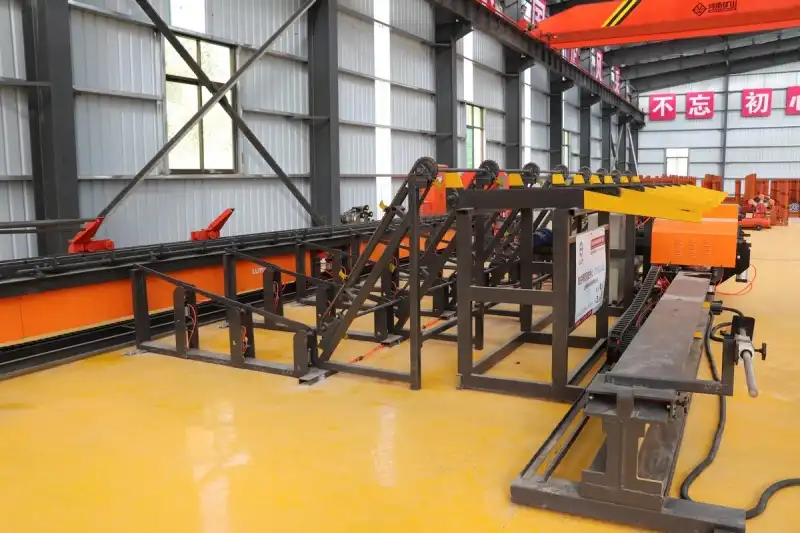
Understanding the LYWQ-50 CNC Horizontal Bending Center
What This Machine Actually Does
The LYWQ-50 is a CNC-controlled bending device that is driven by hydraulics and is made to handle heavy loads of thick steel reinforcement bars. It can work with bars that are up to 200 mm wide and 20 mm thick. A common problem in making rebar is that long bars sag under their own weight when held vertically, which leads to angle errors that need to be fixed and waste of material. This machine's horizontal worktable design fixes this problem.
Core Technical Specifications
A 500kN hydraulic system and a servo-controlled backgauge power the machine. An industrial-grade PLC with a high-resolution touchscreen saves plans for multiple steps in the bending process. Heat-treated Cr12MoV alloy steel is used to make its dies. This steel doesn't wear down easily and keeps the workpiece's surface clean. The system can also accept DXF files, which lets users load complicated multi-bend sequences straight from engineering drawings.
Workflow Integration and Safety
The LYWQ-50 has an RJ45 Ethernet port that works with Modbus TCP/IP, so it can connect to current production systems. This makes it a good choice for places that use MES platforms. Before it is shipped, the control box goes through full electrical insulation and grounding tests. This keeps electromagnetic interference from happening in busy workshop settings. Every six months, you should check the hydraulic oil filter, and every 2,000 hours of use, you should replace the whole oil.
Key Benefits of Implementing the LYWQ-50 in Large Reinforcement Workshops
Large reinforcement workshops are always under pressure to get bars that have been worked on done on time and correctly. The LYWQ-50 solves this problem by mixing automatic CNC Horizontal Bending Center LYWQ-50 with accurate angle compensation. This makes each production cycle less reliant on the operator.
Here are the main ways that this machine helps a reinforcement workshop make more things:
- Automated springback compensation: The CNC controller references a built-in material coefficient database. Operators input the steel grade, and the system automatically adjusts the over-bending angle. This eliminates the trial-and-error cycles that slow manual operations and waste bar stock.
- Consistent angle repeatability: Laser-verified testing confirms bending error stays within ±0.5° across 500 consecutive cycles. For bridge and tunnel projects where rebar geometry is specified by engineering tolerances, this level of consistency reduces rejection rates and field corrections.
- Reduced labor dependency: Because the machine stores multi-step programs and runs them automatically, one trained operator can manage a production sequence that would previously require two or three workers. This directly addresses rising labor costs in the U.S. construction market.
Automatic compensation for springback: A built-in library of material coefficients is used by the CNC processor. The steel grade is entered by the operator, and the over-bending angle is changed automatically by the system. This gets rid of the process of trying things and failing that slows down physical work and wastes bar stock.
Comparing the LYWQ-50 to Alternative Bending Solutions
LYWQ-50 vs. LYWQ-60
The LYWQ-60 is better for extra-heavy-duty uses because it can handle bigger cross-sections and a higher pressure grade. The LYWQ-50 can handle most basic infrastructure rebar needs at a cheaper equipment cost. It also has a better return on investment (ROI) for mid-sized processing centers and project-based contractors who don't normally process bars bigger than 20mm.
Horizontal vs. Vertical CNC Bending Centers
VerticalCNC Horizontal Bending Center LYWQ-50 machines are good for short, stiff bars that don't need to be bent because of gravity. When working with bars longer than one meter, the LYWQ-50 stays stable along its whole length during the bend cycle because it is set up horizontally. Most of the time, this is important for building metros and highway bridges, where long stirrups and frame bars need to meet exact geometric requirements.
What Customers Report in Practice
Procurement teams at rebar processing centers have said that the touchscreen program storage on the LYWQ-50 makes it much faster to switch between bar types. Engineering leaders of building projects have said that the machine's ability to repeat angles is one reason why surveying adjustments don't have to be made on-site as often. These findings fit with the goal of the machine's design, which was to cut down on variation during the production stage, before the bars even get to the field.
Procurement Guide for the LYWQ-50 CNC Horizontal Bending Center
Pricing and Cost Factors
The cost of equipment depends on how it is configured, what customizations are needed, and how it will be shipped to the project site. Buyers need to think about the costs of import taxes, getting the spot ready for hydraulic hookups, and integrating the MES. According to normal practice for this type of capital equipment, Zhongji Luyuan's sales team gives official quotes after going over the specifics of a project.
Ordering Process and Lead Times
The normal steps go from asking about technical details to making sure the specs are correct, signing the contract, planning production, inspecting the factory, and finally shipping the finished product. Zhongji Luyuan provides installation support and execution services to big infrastructure clients to cut down on start times. Delivery times depend on the number of orders and the port of location, so it's best to start working with the sales team early on for project-driven procurement processes.
Warranty and After-Sales Support
The LYWQ-50 is made according to quality standards that are in line with ISO 9001 and CE. Before it is sent out, it goes through a 24-hour hydraulic stability test and a 500-cycle angle accuracy calibration. After a sale, Zhongji Luyuan has an after-sales service team that can do remote diagnostics, send extra parts, and provide expert help on-site. The company's service network has genuine Cr12MoV die sets and hydraulic parts that can be used to keep unplanned downtime to a minimum.
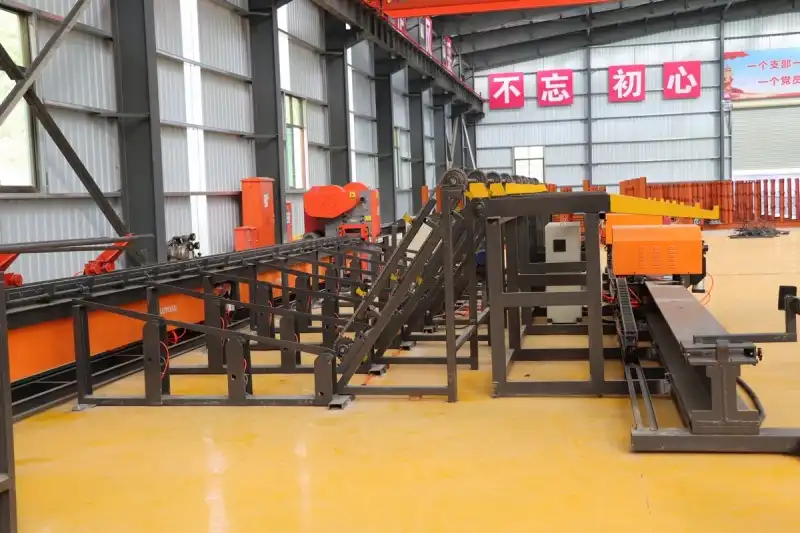
Enhancing Long-Term Workflow with LYWQ Brand Support and Services
About Zhongji Luyuan
The legal capital of Shandong Zhongji Luyuan Machinery Co., Ltd. is 50 million yuan, and the company was established in 2016. CNC rebar processing tools for large-scale infrastructure are what the company does best. Its goods are used on metro, high-speed rail, highway, bridge, tunnel, nuclear power, and hydropower projects. Zhongji Luyuan has long-term supply agreements with China Railroad, China Railroad Construction, China State Construction, and China Nuclear Power Construction Corporation. It also sends goods to more than 100 other countries.
Certifications and Manufacturing Standards
All LYWQ machines go through several steps of pre-shipment checks. These include checking the stability of the hydraulic pressure, the accuracy of the angles with laser measuring tools, the hardness of the materials, the alignment of the dies, and the full electrical safety testing of the CNC control box. These checks follow the rules set by CE and ISO 9001. They give buying teams proof that the quality is good.
Training and Technical Resources
Zhongji Luyuan offers training for operators, detailed user guides, and access to technical support staff after the installation is complete. The CAD/CAM interface that comes with the machine lets you enter coordinates directly and load DXF files, which makes it easier for production workers who already know how CNC workflows work to learn how to use this machine. This support system makes it easier for workshops to reach full production capacity more quickly after installing new equipment.
Conclusion
The LYWQ-50 makes a real difference in how the strengthening workshop works: it has a stable CNC Horizontal Bending Center LYWQ-50 shape, automatically compensates for angles, requires less work for the user, and provides reliable hydraulic performance over long duty cycles. This machine solves specific production problems that less automated or manual equipment can't for infrastructure contractors, metro builders, and processing centers that need to make a lot of the same thing. Procurement workers can be sure that Zhongji Luyuan's investment will last through tough project cycles because the company has a well-established service network and written quality standards.
FAQ
1. How does the LYWQ-50 handle different steel grades?
A built-in library of material coefficients is used by the CNC processor. Once the steel grade is entered, the system figures out the correct over-bending angle to eliminate springback. This gets rid of the need for trial runs by hand and keeps the rate of scrap low across all bar sizes.
2. What is the maximum bar thickness the machine processes accurately?
The machine can handle bars that are up to 20 mm thick. Peak accuracy of ±0.3° is maintained up to 15mm for T2 copper and similar materials. For normal building-grade steel rebar, the full 20 mm capacity is valid as long as the angle tolerance is met.
3. Can the LYWQ-50 connect to our existing production management system?
Yes. The machine has an RJ45 Ethernet port and can communicate using Modbus TCP/IP, so it can be connected to MES systems that meet the standards for Industry 4.0 connection.
4. How often does the hydraulic system need servicing?
For normal 8-hour shift work, the hydraulic oil filter should be checked every six months. It is suggested that all the oil be changed every 2,000 hours of use to keep the valves responding and delivering pressure consistently.
5. Does Zhongji Luyuan provide installation support in the United States?
Yes, Zhongji Luyuan's after-sales team offers both remote and in-person help with commissioning. Talk to the team directly about when the work will happen and what technical needs your building has.
Partner with Zhongji Luyuan for Your Next Equipment Purchase
The CNC Horizontal Bending Center LYWQ-50 can be bought from Zhongji Luyuan by infrastructure contractors, rebar processing centers, and engineering groups all over the United States. Our production is in line with ISO 9001; we have references from past projects, and we have a dedicated after-sales team to help you with everything from buying materials to long-term production. To get a written quote today, email sales2@shandongluyuan.com with the details of your job.
References
1. American Concrete Institute. ACI 318-19: Building Code Requirements for Structural Concrete. American Concrete Institute, 2019.
2. Construction Industry Institute. Automation and Robotics in Construction. University of Texas at Austin, 2021.
3. International Federation of Robotics. World Robotics Report: Industrial Robots. IFR Press, 2023.
4. McGraw-Hill Construction. SmartMarket Report: The Business Value of BIM for Infrastructure. Dodge Data & Analytics, 2020.
5. National Institute of Standards and Technology. Measurement Science for Advanced Manufacturing: A Framework for Progress. NIST, 2022.
6. Steel Construction Institute. Design and Detailing of Reinforcement in Concrete Structures. SCI Publication P391, 2018.