Pile Cage Making Machine for Fast and Precise Foundation Construction
Sep 28, 2026
A pile cage making machine is a fully automated industrial system engineered to fabricate steel reinforcement cages for deep foundation engineering, bridge piers, and large-scale infrastructure. By integrating longitudinal bar feeding, spiral wire winding, and precision gas-shielded welding into a single synchronized operation, these machines eliminate the inconsistency and high labor intensity of manual cage assembly. For procurement managers and project engineers working on tight construction schedules, investing in the right reinforcement cage fabrication equipment directly impacts structural quality, material utilization, and overall project delivery speed.
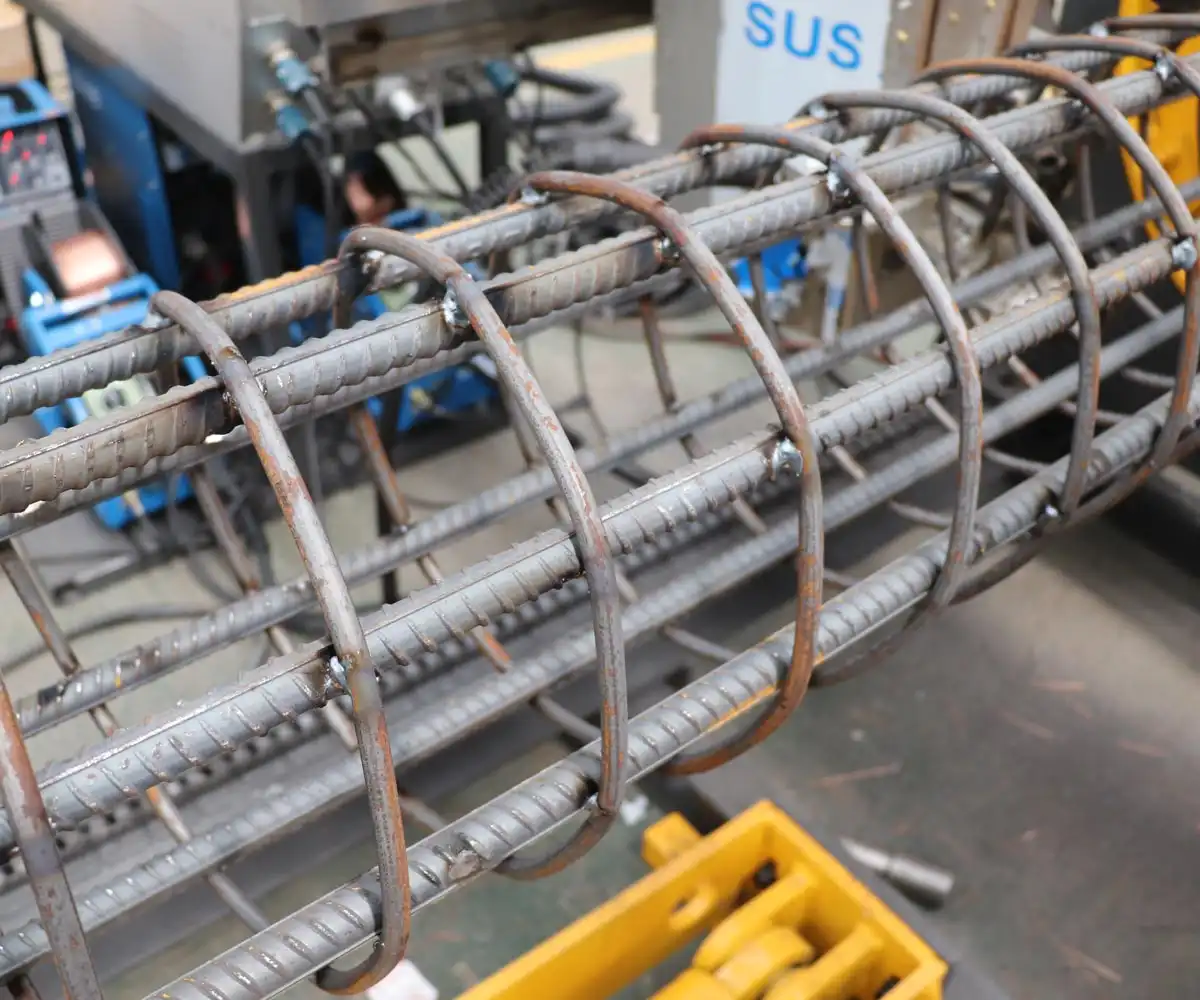
Understanding Pile Cage Making Machines: Key Concepts and Working Principles
Three processes work together to make modern rebar cages: feeding the main bar, wrapping the bars in a spiral, and automatic welding. Each step is coordinated by PLC-based control systems, which make sure that the spiral pitch, cage concentricity, and weld integrity all meet technical standards that can't be met by hand.
Manual vs. Fully Automatic: Why Automation Wins
Assembling a cage by hand takes several trained workers per unit, results in uneven spiral spacing, and puts people at risk of arc welding injuries. A fully automatic system, on the other hand, only needs one person to run it and can produce things three to five times faster than when they are put together by hand. Automated production can finish the cycle for a normal 12-meter cage in about 45 minutes. Hand-tying, on the other hand, could take three to four hours, based on the size of the cage and the density of the reinforcements.
Core Mechanical Components
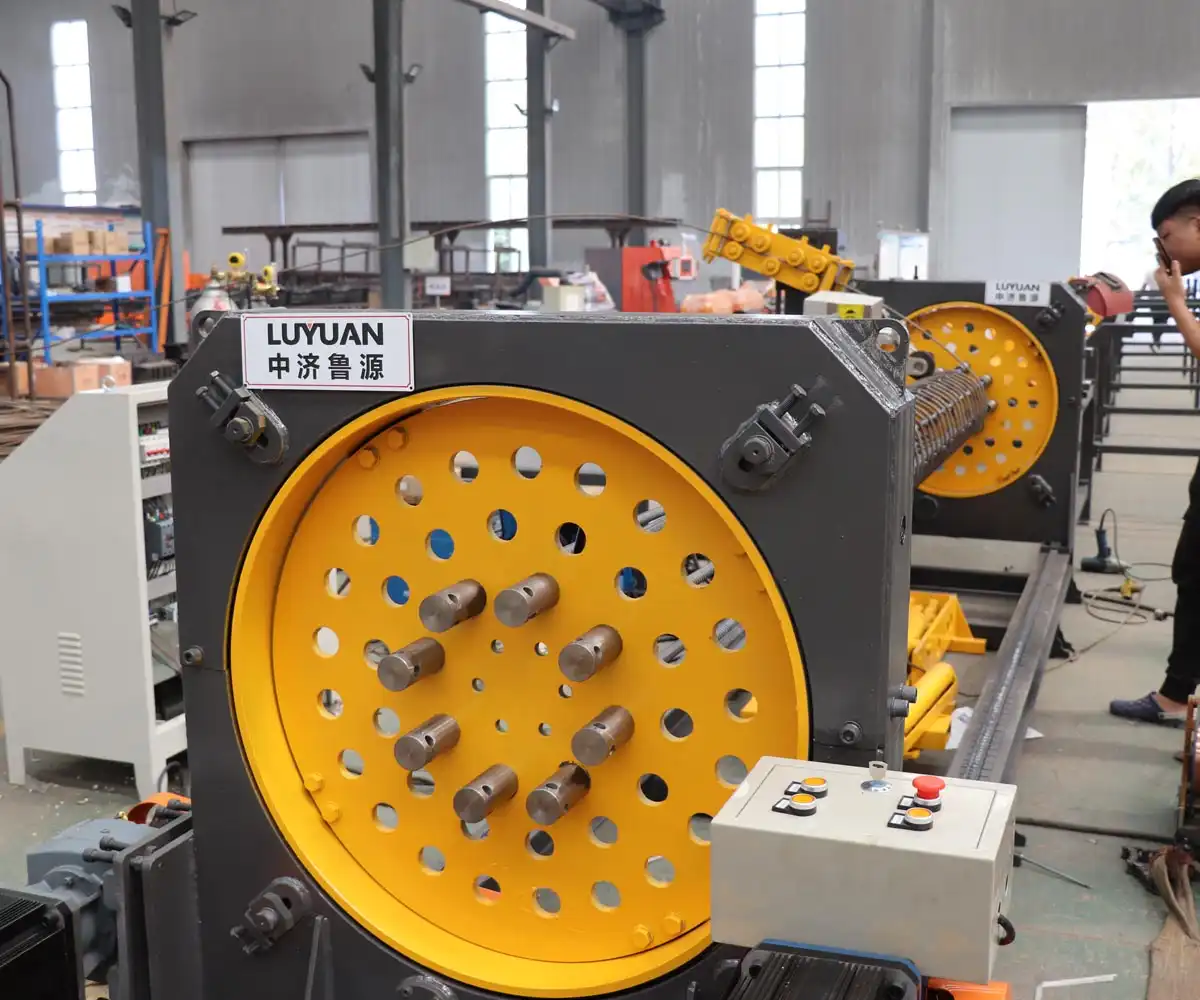
The rotating template disk, multi-point welding head assembly, main bar guide conduits, hydraulic support frames, and the HMI touch-screen control panel are the main mechanical parts of an automatic rebar cage machine. When heavy-gauge steel is used, hydraulic systems keep the concentricity of the cages. This keeps the cages from drooping, which would affect the performance of the structure on site.
Types and Specifications: Choosing the Right Equipment for Your Project
The diameter range of the cage, the thickness of the main bars, the size of the project, and the conditions on the site all affect the choice of the best pile cage making machine reinforcement cage production system. Small semi-automatic machines are used as well as large fully automatic workstations that can make cages up to 2500 mm in diameter.
LYZD-GJL2500: Technical Specifications at a Glance
The LYZD-GJL2500 Automatic Rebar Cage Welding Integrated Workstation from Zhongji Luyuan is the most powerful machine in their line. Let's look at the most important technical details:
- Rebar Cage Diameter: φ700–φ2500 mm
- Cage Length: Up to 12 m per section
- Main Bar Diameter: φ18–φ40 mm (single or double main bar configuration)
- Spiral Bar Diameter: φ8–φ16 mm (single or double spiral bar)
- Spiral Bar Spacing: ≤300 mm
- Total Power: 30 kW (welding power: 100 kW)
- Production Efficiency: 13 cages per 10 hours
- Operating Personnel: 1 operator
- Footprint: 30 m × 8.5 m
- Power Supply: 380V / 50Hz / 3-phase (customizable)
- Control System: PLC with HMI touch interface
Because of these features, the LYZD-GJL2500 pile cage making machine is perfect for building high-speed rail pile foundations, large bridges, and metros in cities, where cage diameters must be greater than 1000 mm and continuous high-volume output is a must.
Matching Machine Type to Project Scale
Smaller semi-automatic units work well for rebar processing shops that do a lot of work for home pile foundations. Fully automatic integrated workstations like the LYZD-GJL2500 meet the needs of large EPC companies and state-owned engineering groups that are in charge of building projects with strict deadlines and quality standards that will not be tolerated. The final choice is based on a comparison of the cost of capital equipment with the expected savings in labor and increased production over the equipment's useful life.
How to Optimize Performance and Maintenance?
Instead of reactive repair processes, structured maintenance practices are what keep machines running smoothly.
Daily and Weekly Maintenance Priorities
Every day, they have to clean the welding tools, check the spiral bar guide ducts, make sure the hydraulic pressure is within the target range of 16 MPa, and make sure the air supply pressure is within the target range of 0.8 MPa. Every week, the grounding wire, copper electrode wear, and PLC parameters should all be checked to make sure they are correct. Not doing these steps can cause the arc to become unstable, the spiral pitch to change, and unplanned downtime to happen, all of which can cause the project schedule to be pushed back.
Efficiency Improvements Through Software and Training
PLC-controlled pile cage making machine systems have programmable variable pitch settings that let operators choose different spiral densities for the top, middle, and bottom of the cage based on structural drawings. Manufacturers like Zhongji Luyuan offer 3–5 days of on-site technical training that covers things like setting up the program, following safety rules, and what to do in an emergency. When compared to complicated mechanical setups, touch-screen CNC tools have much shorter learning curves. Most operators become fully proficient within a week of starting to use them.
Market Landscape and Procurement Insights for B2B Buyers
Along with investments in infrastructure in North America, Southeast Asia, and the Middle East, the market for rebar cage welding machines keeps growing. As of 2024, the main things that influence buying are not just the initial price, but also the level of automation, the speed of after-sales service, and the total cost of ownership.
The LYZD-GJL2500 stands out from its competitors because of the following main benefits:
- Double production capacity through simultaneous dual spiral bar winding, delivering output that single-spiral units cannot match
- Zero missed or false welds achieved through top-mounted automatic welding heads that maintain consistent arc contact throughout rotation
- Single-operator production that reduces direct labor costs substantially on multi-shift operations
- Modular structure design that simplifies component replacement and reduces maintenance downtime
- Servo control system integration that maintains spiral pitch accuracy within tight engineering tolerances
- Reinforced steel frame construction rated for long-term heavy-duty operation in demanding site environments
These benefits of a pile cage making machine solve the most important problems that procurement managers and equipment directors have been complaining about: the need for labor, inconsistent welds, and equipment breakdowns that weren't planned. Together, they add up to a measurable return on investment over the life of the equipment.
Zhongji Luyuan was established in 2016 with 50 million yuan in registered capital. It has long-term supply agreements with China Railroad, China Railroad Construction, China State Construction, and China Communications Construction. Their equipment has been used on projects in almost 100 countries and regions, which gives buying teams examples from real global projects.
Buying Guide: How to Choose the Right Reinforcement Cage Machine?
Specification mismatches can be avoided by defining project needs before considering sources. Before asking for quotes, procurement teams should make sure of the following:
- Target cage diameter range and maximum cage length
- Main bar and spiral bar diameter requirements per structural drawings
- Required daily or weekly production volume
- Site power supply specifications
- Available footprint and logistics access for equipment installation
Once you're sure about these factors, you should look at suppliers' PLC control systems, how reliable their welding methods are, how easy it is to get spare parts in your area, and how well they've documented their after-sales service. Ask for references from infrastructure projects that are similar to yours, and compare the lead times for tools to your project's mobilization plan.
When negotiating a contract, the guarantee terms, commissioning support, scope of operator training, and promises to give extra parts should all be discussed. A supplier with a dedicated after-sales team and the ability to do remote diagnostics greatly lowers operational risk over the life of the equipment.
Conclusion
The technology for making reinforcement cages has changed how quickly foundations can be built. A fully automatic pile cage making machine like the LYZD-GJL2500 can consistently make good welds, require less work, and produce more than manual methods can. Choosing the right pile cage making machine is a strategic choice for procurement professionals in charge of big infrastructure projects. It has direct effects on the project schedule, the quality of the structure, and the long-term cost of operations. Working with a maker with a track record of successful global deployments will make sure that the money you spend on equipment pays off from the time it is set up until the end of the project.
FAQ
How long does installation and commissioning typically take?
Standard installation of a fully automatic rebar cage welding workbench takes about 5–7 working days. This includes putting together the mechanical parts, connecting the power, setting up the PLC's parameters, and making the first test welds. Commissioning times depend on how ready the site is and how much power is available.
How much operator training is required?
On-site technical training at Zhongji Luyuan lasts for three to five days and covers PLC operation, program testing, safety rules, and emergency procedures. After training, most workers are fully proficient in output within a week.
Can the machine handle different cage sizes without major reconfiguration?
Yes. The LYZD-GJL2500 can handle cage diameters between φ700 and φ2500 mm and can work with both single and double main bar configurations. Changes to specifications are made through the HMI touch-screen interface, which lets changes be made quickly between production runs without having to take the machine apart mechanically.
What welding method does the machine use?
The method uses gas-protected arc welding, which makes weld joints that are stable and strong and gets rid of the porosity and burn-through risks that come with welding without a shield in open building sites.
Partner with Zhongji Luyuan for Your Foundation Projects
Major builders in almost 100 countries value Zhongji Luyuan's pile cage making machines more than any other company in the world. The LYZD-GJL2500 is a tried-and-true platform that blends fully automatic PLC control, precise gas-shielded welding, and the speed of a single person. Contact our technical team right away to get a custom quote, see a demonstration of a product, or talk about your specifications. You can email us at sales2@shandongluyuan.com or go to shandongluyuan.com to learn more about all of our pile cage making machine seller options.
References
1. American Concrete Institute. ACI 318-19: Building Code Requirements for Structural Concrete. American Concrete Institute, 2019.
2. International Federation for Structural Concrete (fib). fib Model Code for Concrete Structures 2010. Ernst & Sohn, 2013.
3. Das, Braja M. Principles of Foundation Engineering, 9th ed. Cengage Learning, 2018.
4. Construction Industry Institute. Automation and Robotics in Construction: State of the Industry Report. University of Texas at Austin, 2022.
5. Tomlinson, M. J., and Woodward, J. Pile Design and Construction Practice, 6th ed. CRC Press, 2015.
6. McKinsey Global Institute. Reinventing Construction: A Route to Higher Productivity. McKinsey & Company, 2017.