Pile Cage Making Machine Improves Steel Cage Production Efficiency
Sep 20, 2026
Modern infrastructure demands faster, more precise reinforcement fabrication than manual methods can deliver. A pile cage making machine addresses this gap directly by automating the longitudinal bar feeding, spiral wire winding, and arc welding processes into one synchronized operation. The result is a structurally consistent, dimensionally accurate steel cage produced at a fraction of the labor cost and time required by hand assembly. For contractors managing high-speed rail foundations, bridge piers, or urban pile foundations, this technology represents a measurable shift in both productivity and structural reliability.
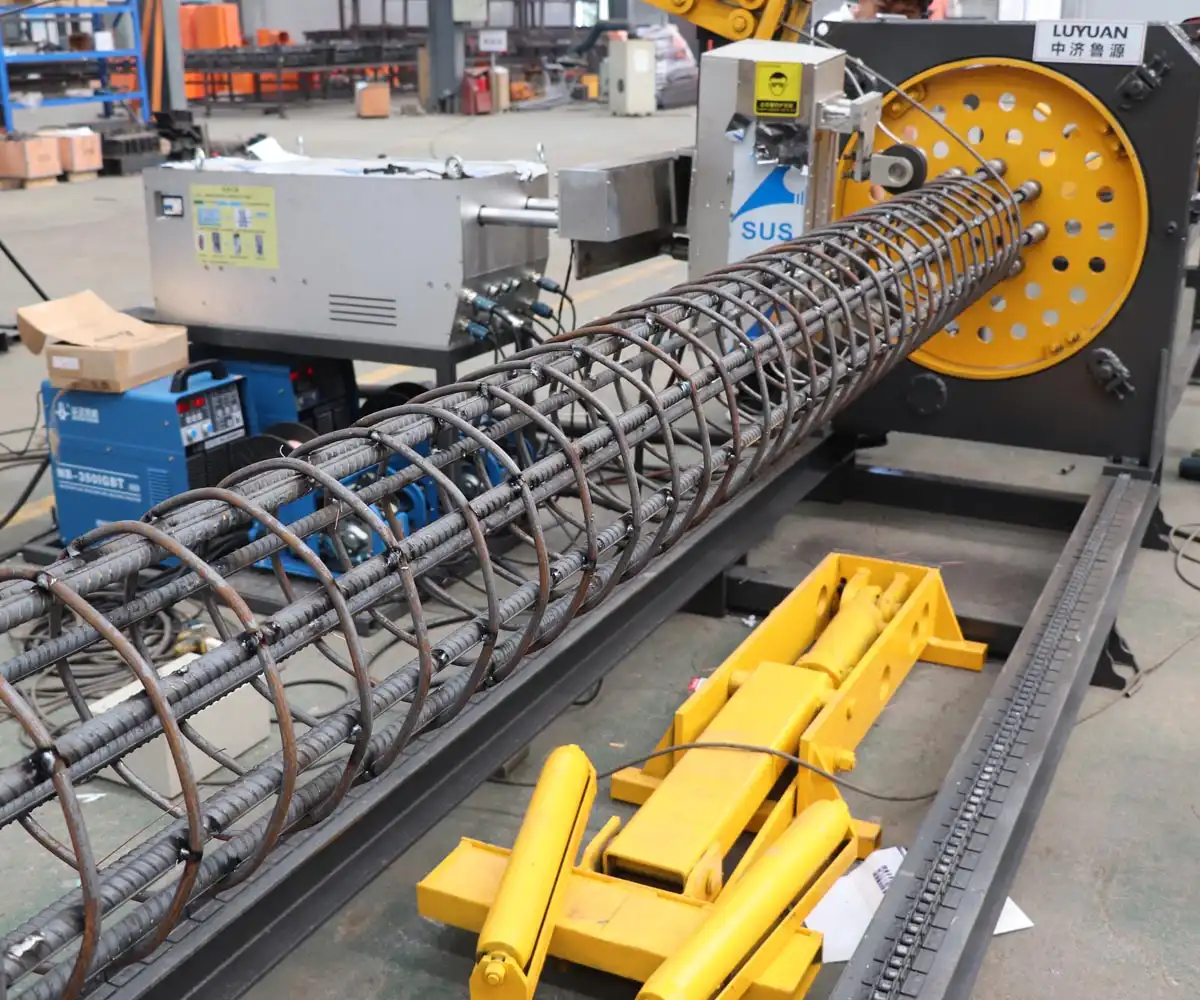
Understanding the Role of Pile Cage Making Machines in Steel Cage Production
What Do These Machines Actually Do?
A rebar cage welding machine does three jobs that three separate crews would have to do by hand: aligning the main bars, winding spiral bars, and welding. By running these steps at the same time under PLC control, the system gets rid of the coordination problems and mistakes made by people that make cycle times and rework rates go up on regular production lines.
There are different types of setups, from semi-automatic units that are good for smaller production shops to fully automatic workstations like Zhongji Luyuan's LYZD-GJL2500, which can handle cages with diameters between φ700 and φ2500 mm and lengths of up to 12 meters. The system can handle main bar diameters of φ18–φ40 mm and spiral bar diameters of φ8–φ16 mm, which is the full range of sizes needed for deep foundation and bridge engineering projects.
For procurement pros, the most important thing to remember is that this level of automation replaces a multi-person manual team with a single operator who can keep up production at 13 cages per 10-hour shift, with each cage being 12 meters across.
Breaking the Bottlenecks: How These Systems Optimize Production Efficiency
Common Pain Points in Traditional Cage Fabrication
It is well known that putting together cages by hand is inefficient. Changes in spiral pitch, horizontal bars that aren't lined up right, and welds of different quality are all common issues that need to be inspected and fixed, which adds hours to project plans. When it comes to big pieces of infrastructure like subway foundations, highway bridge piers, or high-rise core pile systems, these delays add up very quickly, making a pile cage making machine essential.
The LYZD-GJL2500 fixes these problems with gas-protected arc welding, which makes the fusion depth constant and gets rid of any missing or fake welds. The PLC with an HMI touch screen lets workers set varied spiral pitches for different cage sections, so they can match structural drawings without having to recalibrate the machine by hand between runs. Here are the main production benefits that make this method better than traditional cage-tying:
Fully automatic production can make 13 cages in 10 hours, which cuts the time needed to work on each cage to a small part of what it would be if it were done by hand.
- Fully automatic production with output of 13 cages per 10 hours, reducing per-cage labor time to a fraction of manual benchmarks.
- Top-mounted automatic welding delivers straighter, more stable weld points along the entire cage length, improving structural uniformity.
- Single-operator workflow with touch-screen CNC control eliminates the need for a skilled welding crew and reduces ongoing labor cost exposure.
- Modular reinforced steel frame construction and a servo control system maintain dimensional accuracy across extended production runs.
These benefits directly lead to project results that can be measured. A manufacturing center with this method can easily double daily output compared to a manual crew of the same size. This speeds up the foundation part of important building projects.
How to Choose the Right Pile Cage Making Machine for Your Business?
Matching Equipment to Project Requirements
Before looking at price, you need to make sure that the machine's specs match the needs of your project in order to choose the right reinforcement cage production equipment. The main filter is the range of cage diameters. For example, a builder making piles for high-rise buildings in the city will have different needs than one providing bridge pier supports for a highway project.
The LYZD-GJL2500, a pile cage making machine, can handle cage diameters ranging from φ700 to φ2500 mm and can be set up in a variety of ways, including with two main bars or two spiral bars. This range of options covers most pile foundation and bridge engineering needs in the U.S. infrastructure market. The total installed power is 30 kW, and the welding power is 100 kW. It runs on a standard 380V, 50Hz, 3-phase power supply that can be changed to fit the needs of the site.
When considering providers, procurement teams should take these things into account along with the equipment specs:
- After-sales service responsiveness: Downtime on a production line delays the entire project schedule. A supplier with documented onsite commissioning support and operator training reduces this risk.
- Delivery and commissioning capability: Equipment lead time and installation support are as operationally relevant as the machine's performance specifications.
- Long-term parts availability: Modular design and accessible component sourcing reduce lifecycle maintenance costs significantly.
Zhongji Luyuan was established in 2016 with 50 million yuan in registered capital. It maintains established service networks and has provided equipment to contractors working for China Railroad, China Communications Construction, and China Nuclear Power Construction Corporation. That project reference provides most choices about buying capital equipment the proof they need.
Maintenance and Safety: Ensuring Long-Term Efficiency and Reliability
Keeping Your Equipment Running
The LYZD-GJL2500 has a 30 m × 8.5 m size, and its strengthened steel frame is built to handle heavy-duty work all the time. To keep that level of dependability, you need structured maintenance methods instead of reactive repair cycles.
To keep the arc stable on a pile cage making machine, daily upkeep should include cleaning the welding tools, checking that the hydraulic system is working at -16 MPa, and making sure that the air supply line is working at 0.8 MPa. Grounding wires and copper electrodes should be checked once a week to keep the quality of the weld high over time. The servo control system and modular structure design make it easier to get to parts, which means that scheduled maintenance windows are shorter than with non-modular options.
When it comes to safety, the machine's design that requires less physical work means that operators are less likely to be exposed to arc flash and mechanical dangers. The HMI touch screen has emergency stop protocols, and since there is only one operator, there are fewer people in the work area during active welding cycles.
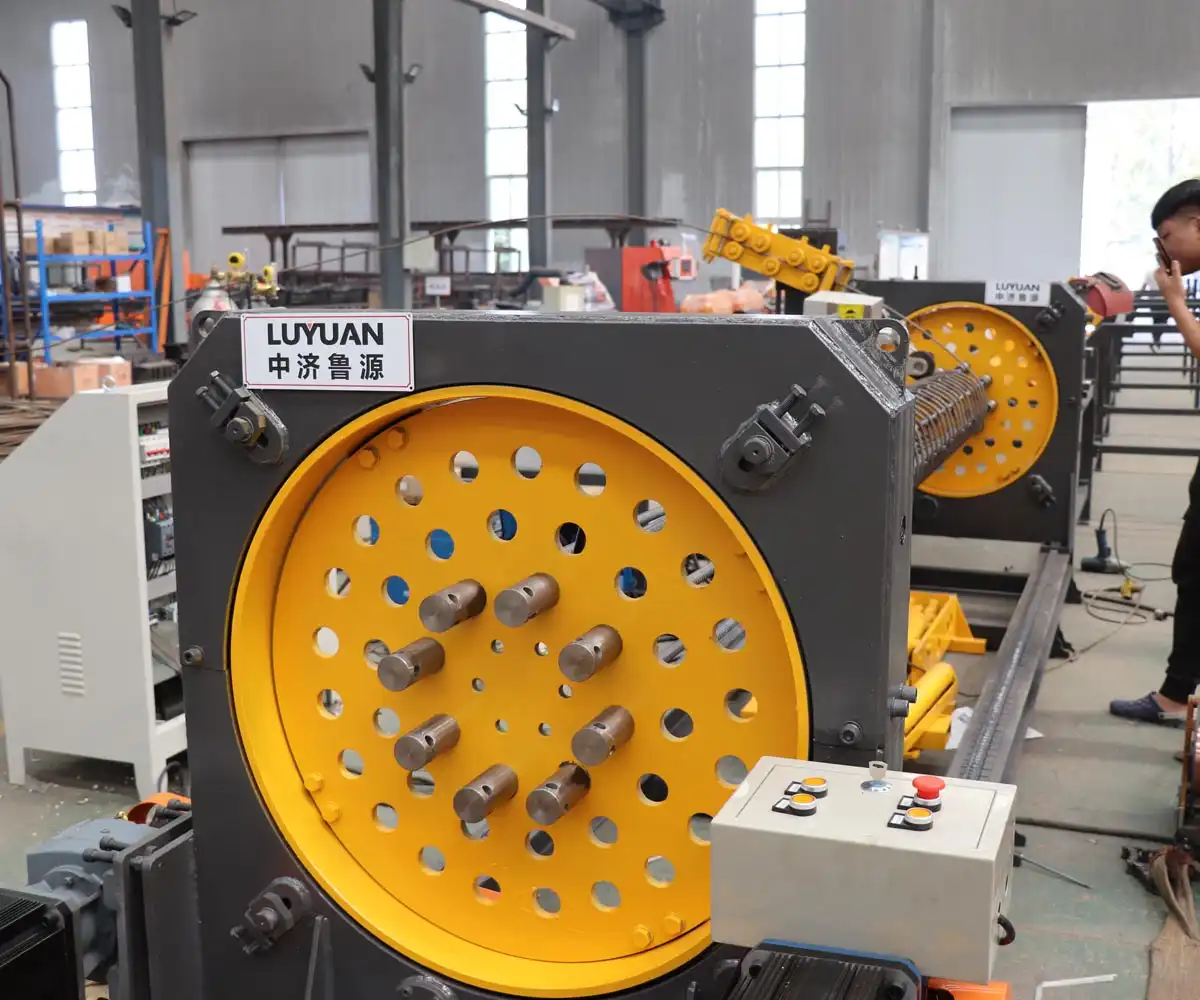
The Future of Steel Cage Production: Advantages of Automated Systems
Why Automation Is Now a Competitive Baseline?
High-speed train growth, metro systems in cities, bridge repairs, and the building of energy facilities are just some of the global infrastructure projects that are driving demand for high-throughput reinforcement fabrication. Because of this, manual production methods can't keep up with the demand without making wages go up by the same amount, so automated rebar cage welding systems are a structural must, not an option.
Newer pile cage machines have servo control for accurate pitch within small ranges, touch-screen CNC interfaces that make training operators faster, and gas-protected welding that meets high quality standards around the world. All of these features are built into the LYZD-GJL2500, which is small and easy to move. It can be used in both permanent fabrication facilities and on-site project installations.
From an ROI point of view, the time saved by switching from a crew of several people to a single-operator system and the material savings from consistent spiral spacing (≤300 mm) and no more rework create a return timeline that most capital equipment evaluations will confirm within the project cycle.
Conclusion
Efficient production of steel cages is no longer a secondary issue; it is now a direct factor in how well projects stay on schedule and how well costs are managed. With automated reinforcement cage systems, a pile cage making machine now makes it possible to get consistent accuracy in measurements, less reliance on manual labor, and high daily output in a single, small production line. As building projects in the U.S. get more complicated, it becomes more and more important to buy a fully automatic, tried-and-true rebar cage welding machine.
FAQ
How much does a pile cage making machine cost?
Prices depend on the range of cage diameters, the level of automation, and the amount of work that can be done. Fully automatic systems that can handle large-diameter cages (up to φ2500 mm) cost more at first than semi-automatic systems, but in a normal project cycle, the savings in labor and increased output usually cover the higher cost. For a quote that is relevant to your configuration, contact the supplier immediately.
Can small fabrication shops operate these machines?
The LYZD-GJL2500 only needs one user and has a touch-screen CNC system that makes it easy to learn quickly. The small size and modular design make it easier to maintain and take up less space, which is good for smaller businesses.
What safety protocols are required during operation?
During welding processes, operators should follow arc flash safety standards, check the hydraulic and air supply pressures before each shift, and clean the nozzle every day to keep the arc working properly. When compared to human cage assembly, the machine's design reduces the amount of work that needs to be done by hand.
What cage specifications does the LYZD-GJL2500 support?
The system can handle cages with diameters between φ700 and φ2500 mm, lengths of up to 12 meters, main bar diameters between φ18 and φ40 mm, and spiral bar diameters between φ8 and φ16 mm. The system can handle single or double main bars and spiral bars.
Partner with Zhongji Luyuan for Your Next Project
Zhongji Luyuan has pile cage making machines that have been used in the industry for a long time and are designed to meet the needs of large-scale infrastructure building. With a fully automatic PLC-controlled rebar cage welding workbench and a track record of success on projects around the world, we provide tools that cut down on labor costs and speed up project timelines. Get in touch with our technical team to talk about the details of your project and get a custom equipment proposal. To start your meeting, go to zjly2025.aixdb.cn or email us at sales2@shandongluyuan.com.
References
1. American Concrete Institute. ACI 318-19: Building Code Requirements for Structural Concrete. American Concrete Institute, 2019.
2. Federal Highway Administration. Deep Foundations Reference Manual. U.S. Department of Transportation, 2016.
3. International Federation for Structural Concrete (fib). fib Model Code for Concrete Structures 2010. Ernst & Sohn, 2013.
4. Nawy, Edward G. Reinforced Concrete: A Fundamental Approach. 6th ed. Prentice Hall, 2009.
5. Das, Braja M. Principles of Foundation Engineering. 9th ed. Cengage Learning, 2019.
6. Construction Industry Institute. Automation and Robotics in Construction. University of Texas at Austin, 2021.