Pile Cage Resistance Welding Machine LYGH-400D for High-Efficiency Production
Sep 17, 2026
The pile cage resistance welding machine LYGH-400D is a fully automated reinforcement cage fabrication system developed by Shandong Zhongji Luyuan Machinery Co., Ltd. Engineered for high-volume structural pile production, it integrates PLC control, resistance welding technology, and hydraulic actuation into a single intelligent platform. With a cage diameter range of φ250–φ400 mm, customizable lengths up to 16 m, and a verified output of 8 sections per 10-hour shift, the LYGH-400D addresses the core efficiency, precision, and labor-reduction demands of modern infrastructure contractors worldwide.
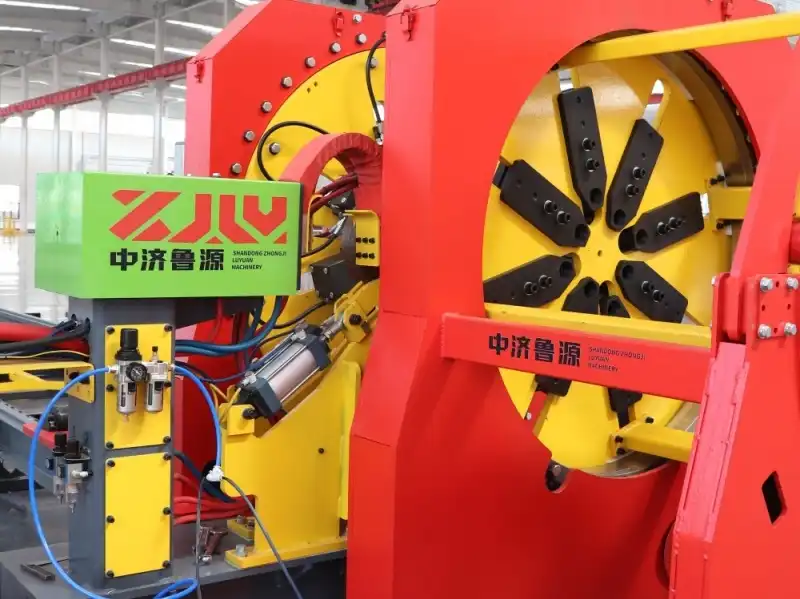
Understanding the LYGH-400D Rebar Cage Welding Machine
High-power resistance welding is what the LYGH-400D does. This is a process that sends a concentrated electrical current through the point where the spiral bar meets the main longitudinal rebar. This creates fusion heat in that area without using an open flame or filler material. When using this method, there is no damage to the base metal from being burned, which is a common problem with regular arc welding on structural reinforcement.
The machine can handle spiral bars from φ6 mm to φ12 mm and main bars with diameters from φ12 mm to φ25 mm. Cage widths range from φ250 mm to φ400 mm, and cage lengths from 3 m to 16 m. The sizes of the cages can be changed to fit the needs of the project. It needs a normal 380V/50Hz three-phase power source, can handle hydraulic pressures of up to 16 MPa, and can handle air supply pressures of up to 0.6 MPa. A PLC system and a touch screen HMI make up the control design. This lets workers enter pitch settings, diameter parameters, and segment numbers automatically, instead of having to measure them by hand.
Structural Design and Footprint
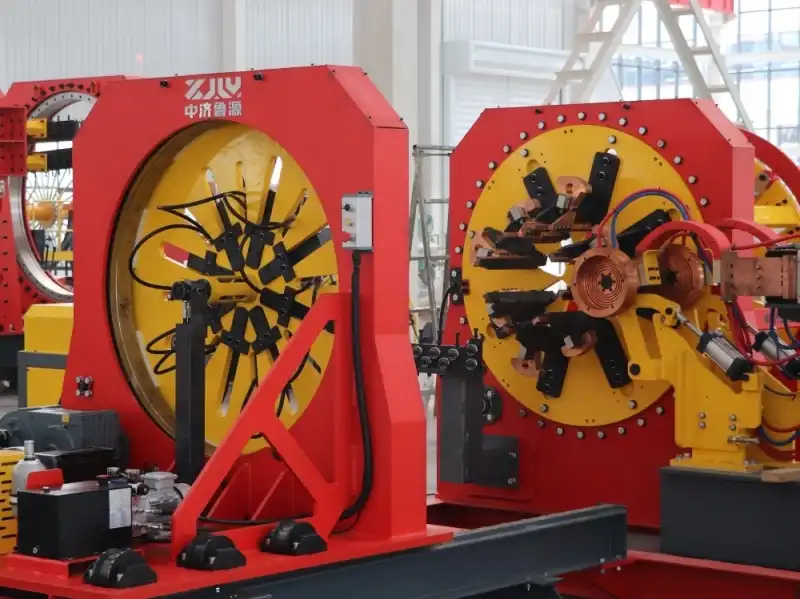
This LYGH-400D has a 35 m x 3 m high-strength steel frame that holds it together. This straight layout lets the cage be formed continuously from the rebar feed to the welded output without having to move. The longer working bed makes it possible to make multiple segments at the same time, which directly contributes to its reported throughput of 8 sections (12 m each) within a normal 10-hour production window.
Core Advantages That Set the LYGH-400D Apart
Infrastructure buying teams always look at welding tools based on four factors: the quality of the weld, the accuracy of the measurements, the amount of work that needs to be done, and the amount of energy that it uses. The Pile cage resistance welding machine LYGH-400D does a good job in all four of these areas.
Here are the main ways that this machine is useful:
- Resistance welding with no burn damage: The controlled current fusion method produces welds with tensile strength meeting or exceeding the parent rebar's yield point, without thermal scarring or heat-affected zone distortion common in arc welding.
- Single-operator efficiency: The fully automated cycle — from rebar positioning to spiral winding and welding — requires only one operator, reducing the labor requirement by 60–70% compared to manual cage tying or semi-automatic alternatives.
- Consistent dimensional output: PLC-controlled spiral pitch (≤200 mm spacing) and digital encoder feedback ensure cage concentricity and ovality remain within tolerance across every section — a non-negotiable requirement for bridge pier pilings and metro station foundations.
- Energy-efficient operation: At 60 kW rated power, the LYGH-400D consumes substantially less energy per weld cycle than continuous arc processes, supporting sustainability targets in public infrastructure programs.
- Eco-safe production environment: No welding fumes, no shielding gas, and no slag byproduct — the resistance process creates a cleaner workshop atmosphere aligned with OSHA standards and site health requirements.
You can measure the benefits of these factors and turn them into project gains. A project team with two LYGH-400D units can replace a six- to eight-person manual welding crew and improve the accuracy of the cage shape at the same time. This lowers the number of repairs that need to be done and the problems that can happen during the concrete pouring process.
How the LYGH-400D Compares to Alternative Welding Methods?
On smaller building sites, manual arc welding of pile cages is still common, but it has well-known problems, such as pitch variations, quality changes caused by fatigued operators, and a production rate of only one to two full cages per shift per welder. Even though semi-automatic winding machines increase throughput, each spiral intersection still needs to be tacked together by hand, and the Pile cage resistance welding machine LYGH-400D addresses these limitations.
Both bottlenecks are gone with the LYGH-400D. Each spiral-to-main-bar junction is finished by its automated resistance welding cycle in milliseconds, with no need for an operator to step in between welds. Resistance welding is 3–5 times faster than CO₂ shielded welding. It also doesn't need any consumables like wire or shielding gas and doesn't make any harmful fumes, which makes a big difference in how things work during a 10-hour production shift.
Pitch Accuracy and Quality Control
Five things can be checked to make sure the LYGH-400D is of high quality: the weld penetration and fusion integrity (checked with macro-etching or shear tests); the spiral pitch deviation (kept within ±5 mm by digital encoder feedback); the ovality and concentricity of the cage; the thermal stability of the transformer under continuous duty cycles; and the PLC auto-correction logic that accounts for differences in rebar diameter between production batches. With these controls, the machine can be used for high-specification jobs like foundations for nuclear power plants and rail transit piling, where differences in size can have structural effects.
Application Sectors and Production Scenarios
The LYGH-400D can be used for many different types of structural pile jobs in many different businesses. It works especially well in the following deployment settings:
- High-speed rail and highway bridge foundations: Large-volume, repetitive cage production under tight schedule pressure benefits most from the machine's continuous automated output.
- Urban metro and subway piling: The single-operator model reduces site labor costs in high-wage urban construction markets, while consistent cage geometry supports dense pile layouts.
- Slope stabilization and ground support: Smaller-diameter cages (φ250–φ300 mm) for micro-pile and soil nail applications are efficiently produced within the machine's standard parameter range.
- Commercial high-rise and industrial facility foundations: EPC contractors and prefabricated construction companies can integrate the LYGH-400D into centralized rebar processing centers to serve multiple sites from a single production line.
Commercial high-rise and industrial building foundations: EPC contractors and prefabricated construction companies can connect the Pile cage resistance welding machine LYGH-400D to central rebar processing centers so that a single production line can serve multiple sites.
Procurement Considerations for the LYGH-400D
When purchasing automated pile cage welding equipment, procurement managers should look at four things besides the initial cost: the amount of work that can be done per hour, the frequency of maintenance needs, the supplier service network, and the lead time for the equipment.
In 2016, 50 million yuan was used to start Shandong Zhongji Luyuan Machinery Co., Ltd. This company has sold CNC rebar processing equipment to companies working for China Railway, China State Construction, China Communications Construction, and China Nuclear Power Construction Corporation. The company has a history of building high-speed railroad, highway, tunnel, and nuclear power facilities in more than 100 countries and regions, such as South Korea, Malaysia, Thailand, Kazakhstan, and Israel.
The LYGH-400D supplier offers full installation support, operator training, and technical service after the machine is up and running. For buyers who are in charge of a lot of projects, the company provides custom equipment sets that are made to fit the width, length, and grade of the cage.
Conclusion
The Pile cage resistance welding machine LYGH-400D offers a measurable mix of automated speed, weld integrity, and reduced labor that meets the main buying needs of infrastructure companies, rebar processing centers, and engineering groups working in tough building settings. With accuracy controlled by a PLC, the ability to work with a single operator, and a production output of 8 sections per shift, it is more of a substantial practical investment than a minor equipment update. Zhongji Luyuan is a good long-term partner for automated pile cage fabrication because they have a lot of technical knowledge, experience shipping to other countries, and a commitment to customer service after the sale.
FAQ
What rebar diameters does the LYGH-400D support?
The machine can handle circular stirrup bars from φ6 mm to φ12 mm and main longitudinal bars from φ12 mm to φ25 mm. If you ask, you can get configurations that are made just for your project.
How does resistance welding compare to manual arc welding for pile cages?
Each weld joint is finished by resistance welding without filling material or an open arc, so there are no fumes and no burn scars. It works three to five times faster than CO₂ arc welding and doesn't require any consumables, which is a big plus for high-volume production.
Can the machine handle variable spiral pitch settings?
The PLC system allows segmented pitch programming, which lets the spiral spacing at the ends of the cages be tighter for better shear resistance. This is required by many bridge and high-rise base projects.
What maintenance does the LYGH-400D require?
Every 5,000 to 10,000 weld rounds, chromium-zirconium copper welding electrodes need to be dressed or replaced. On a regular basis, it is suggested that the hydraulic system be checked and the PLC be diagnosed.
What is the machine's verified production output?
Standard working conditions allow the LYGH-400D to make 8 cage sections (12 m each) in a 10-hour shift, which is overseen by a single operator.
Connect with Zhongji Luyuan — Request a Quote Today
The engineering team at Zhongji Luyuan is ready to help procurement professionals set up the best solution for their project. As a reliable Pile cage resistance welding machine LYGH-400D manufacturer, we offer clear pricing, customized specs, expert support, and shipping all over the world. You can email our sales team at sales2@shandongluyuan.com or go to shandongluyuan.com to ask about a project and get a full quote.
References
1. American Welding Society. Welding Handbook: Resistance and Solid-State Welding. AWS, 2021.
2. American Concrete Institute. ACI 318-19: Building Code Requirements for Structural Concrete. ACI, 2019.
3. International Federation for Structural Concrete (fib). fib Bulletin 72: Reliability and Optimization of Structural Systems. fib, 2014.
4. Construction Industry Institute. Automation and Robotics in Construction: A State-of-the-Art Review. CII, 2020.
5. National Ready Mixed Concrete Association. Reinforcing Steel Placement and Fabrication Standards. NRMCA, 2018.
6. ASTM International. ASTM A615/A615M-22: Standard Specification for Deformed and Plain Carbon-Steel Bars for Concrete Reinforcement. ASTM, 2022.