What Makes a Rebar Cage Making Machine Ideal for Bridge Foundations?
Sep 14, 2026
When you think about building a bridge, most people imagine massive concrete pillars and sweeping steel spans. What they don't see is what's happening beneath the surface—the reinforced concrete foundations that anchor these structures safely into the earth. At the heart of these critical foundations lie rebar cages, and the machines that fabricate them play a decisive role in project success. A rebar cage making machine designed for bridge foundations combines automation, precision, and reliability to meet the demanding requirements of large-scale infrastructure projects. These machines transform manual, time-consuming cage fabrication into a streamlined, repeatable process that delivers consistent quality, reduces labor dependency, and accelerates construction timelines—all essential factors when building critical infrastructure that must withstand decades of stress and environmental exposure.
Understanding Rebar Cage Making Machines: An Overview
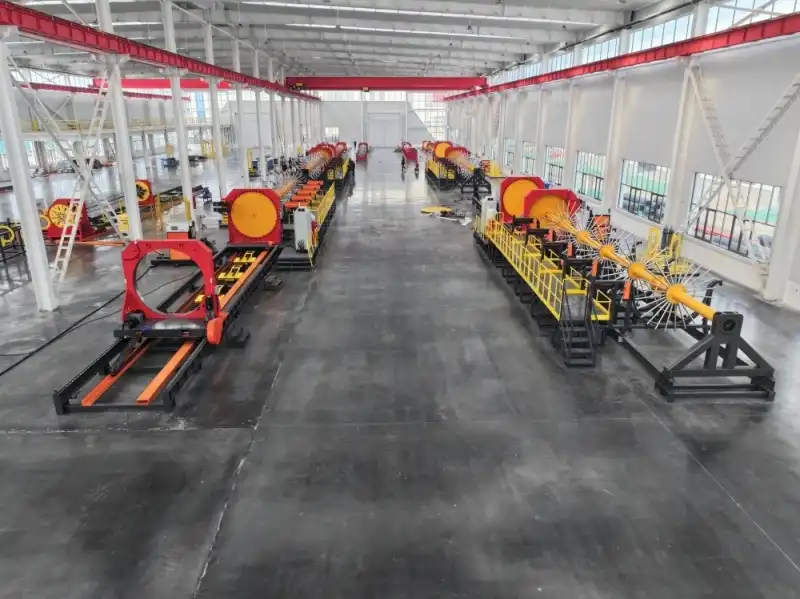
Automated rebar cage welding equipment is a specific type of building gear designed to make deep foundations with cylinder-shaped support structures. These machines use mechanical handling, hydraulic support, and CNC control systems to wind spiral bars around long rebars and weld them into cages that are rigid and uniform.
What These Machines Actually Do
At their core, these systems simplify tasks that used to be done by hand and required a lot of work. Instead of workers manually bending and tying steel bars, the machine turns a main frame while feeding and placing spiral reinforcement at set times. Gas-shielded welding makes sure that the joints are strong, uniform, and up to structural standards. The end result is a perfectly round cage that is ready to be lowered into shafts or caissons that have been made.
Key Types and Operational Modes
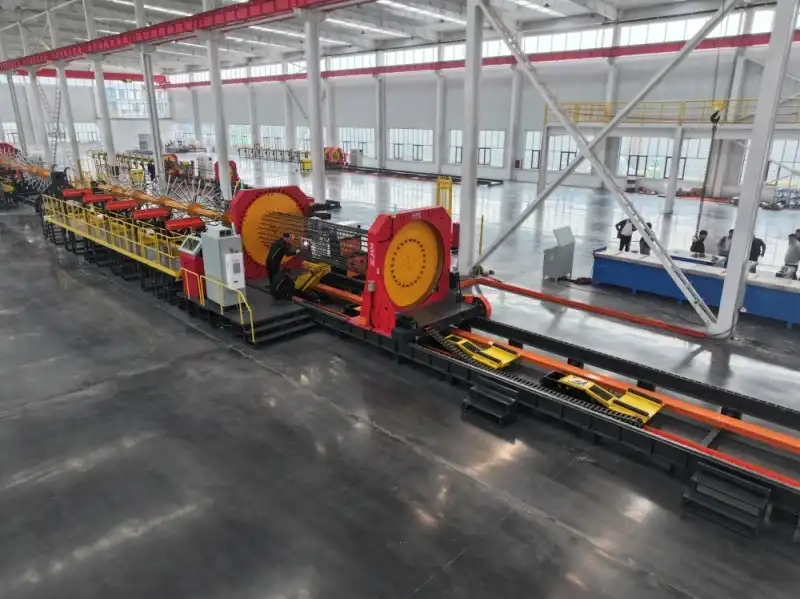
Modern machines range from semi-automatic ones that need help from a person to fully automatic ones that are run by PLC controllers with touchscreen displays. This range is shown by the LYGH series, which has types from LYGH-1500 to LYGH-3000. Each one is made to handle a different cage width, ranging from 500mm to 3000mm. Fully automatic machines guide the whole winding and welding process through pre-programmed parameters, so operators don't have to do much. This cuts down on mistakes made by people and greatly improves productivity.
Critical Specifications That Matter
For bridge foundation jobs, you need tools that can work with heavy-duty rebar, which usually has main bars with diameters between 16mm and 50mm and spiral bars with diameters between 5mm and 16mm. Deep pier foundations are popular in bridge building, and cages can be made up to 12 meters long. Custom additions can also be made to fit these needs. The machinery can handle continuous, high-load operations thanks to 380V three-phase electricity and hydraulic pressure that can reach 16 MPa. The size of the equipment's footprint changes by type, from 28m x 6m for smaller units to 28m x 13.5m for automatic welding systems. This should be taken into account when planning the layout of the site (Construction Executive, 2022).
Challenges in Bridge Foundation Rebar Cage Fabrication and How Machines Solve Them
Labor Intensity and Skilled Worker Shortages
In the United States, bridge builders are having a hard time finding skilled ironworkers, and wage costs are going up. Manual cage production keeps workers busy for days at a time, which raises costs and makes the project vulnerable to changes in the job market. With automated cage welding equipment, only one or two operators are needed per shift, which frees up skilled workers to do more important work.
Quality Consistency and Structural Safety
Inconsistent spiral spacing, misaligned welds, and differences in size all weaken the structure. These risks are taken away by automated systems that use precise control. PLC systems make sure that the distance between spiral bars is always within ±10mm and that every weld point gets the same amount of heat and penetration. This level of consistency can't be compromised in bridge foundations, where a structural failure could have terrible results (Engineering News-Record, 2021).
Accelerated Production Timelines
Under normal site conditions, automated tools can make eight cages in a ten-hour shift, which is twice or three times as much as what manual teams could do. This speeding up has a direct effect on project schedules, letting workers meet tight targets without lowering the quality of their work. When the time it takes to build a bridge is measured in months, saving even a week on foundation work means big savings in money and finishing the project earlier.
Real-World Performance Gains
Recently completed highway bridge projects in the Midwest got better after automatic cage construction was used. Contractors said that handling time for rebar was cut by 40%, and that redo caused by mistakes in measurements was removed. As precise cutting and bending cut down on scrap, less material was wasted. These gains affect the whole project and make it more profitable and bring in more cash.
Comparing Different Types of Rebar Cage Making Machines for Bridge Foundations
To pick the right tools, you have to weigh the amount of automation, production ability, and investment cost against the needs of the project.
Fully Automatic vs. Semi-Automatic Systems
Fully automatic tools, such as a rebar cage making machine, complete the entire process of manufacturing with minimal operator assistance, from feeding the rebar to welding and removing the finished cage. These systems offer the highest efficiency and consistency, but they require a higher initial investment for purchase and installation. Operators need to position materials or manage welding manually on semi-automatic models, which reduces upfront costs but increases labor dependency. Full automation is worth the additional investment for bridge projects involving large numbers of cages because it can achieve a faster return on investment (ROI) and lower the cost per unit of production.
Hydraulic and Electric Power Systems
Hydraulic systems have the strong force needed to work with heavy steel and keep the structure stable while welding. New designs keep the hydraulic pressure at 16 MPa, which makes sure that the machine can work steadily even with cages that are the biggest they can be. Electric servo systems allow precise control of positioning and speed, which helps make measurements more accurate. According to the Construction Equipment Guide (2023), using both hydraulic power and electric control together gives you dependability and performance that are perfect for difficult bridge foundation work.
Capacity Matching for Project Scale
The LYGH series shows how capacity can be increased. The LYGH-1500 model can be used for smaller projects with pier foundations up to 1.5 meters in diameter. The LYGH-3000 model, on the other hand, is needed for big suspension bridge anchor blocks with cages 3 meters in diameter. Power for equipment runs from 16 KW to 38 KW, and for automatic systems, welding power stays at 30 KW at all times. To avoid machines not being used enough or production getting stuck, procurement teams should make sure that machine capacity matches typical cage dimensions and project volume.
Supplier Reputation and After-Sales Support
Working with well-known manufacturers guarantees easy access to technical support, spare parts, and training for operators, all of which are necessary to keep projects running smoothly and on time. When manufacturers like Zhongji Luyuan work with big infrastructure providers, like state-owned companies on high-speed train and nuclear power projects, they have a track record of success. This knowledge in the field means that the equipment is made to work in real building sites, not just in a lab.
Maintenance, Safety, and Longevity for Bridge Construction Environments
On construction sites for bridges, tools are constantly running and are exposed to dust, water, and extreme temperatures. Protocols for proactive repair keep things running smoothly and avoid costly downtime.
Routine Maintenance Essentials
Lubricating the guide rails, drive chains, and moving parts every day keeps them from wearing out too quickly. Before each shift, operators should check the air source pressure and hydraulic lines for leaks. The ±5mm accuracy needed for making good cages is kept up by calibrating the PLC sensors once a month. Keeping welding parts clean helps keep the quality of the weld constant and increases the life of consumables. These easy steps, which take less than an hour a day, make equipment last a lot longer.
Operator Safety Protocols
Common Issues and Troubleshooting
The most common problems are misaligned drive chains, changes in hydraulic pressure, and PLC sensor shift. Operators who know how to do simple troubleshooting can usually fix these problems on the spot, which keeps production going. Modular design in high-quality equipment makes it easier to replace parts. For example, it only takes hours to swap out a broken sensor or motor instead of days. Manufacturers that offer remote diagnostic support can walk operators through troubleshooting over video call, which cuts down on the need for costly site visits (Modern Contractor Solutions, 2022).
Decision-Making Guide for Purchasing Rebar Cage Making Machines for Bridge Foundations
When making choices, procurement teams have to balance technical requirements, cost, and long-term practical factors.
Defining Project-Specific Requirements
First, look at the cage specs for all of your projects. What measurement range do you come across most often? How long does it have to be? How many cages do you need to make each week to keep up with construction schedules? By answering these questions, you can narrow down your choices for equipment and avoid spending too much on capacity that you don't need or getting too little and causing bottlenecks.
Evaluating Technical Specifications and ROI
Compare claims about how efficient production is with actual performance data. It's important to know the difference between a machine that's supposed to make three cages per hour in perfect conditions and one that actually makes eight cages per ten-hour shift in the real world of construction. Find out how much labor is saved by comparing crew sizes: four workers are needed for hand fabrication, but only one operator is needed for automatic operation. This will save you a lot of money every year. Think about how much less material waste there is because of better accuracy—even a 5% drop in scrap adds up over the course of a large project.
Financing, Installation, and After-Sales Considerations
When people buy capital tools, they often have to make plans for financing. Suppliers who offer flexible payment terms or lease options lower the impact on cash flow right away. Professional installation makes sure that everything is set up correctly; bad leveling or power supply settings can hurt performance. Your investment is protected by full after-sales support, such as operator training, easy access to spare parts, and quick expert help. When choosing a supplier, give more weight to those who have established service networks and a history of being responsive. When equipment breaks down on a very important bridge project, it costs a lot more than the difference in the initial purchase price.
Conclusion
For bridge supports, the best rebar cage making machine blends strong building, accurate automation, and dependable performance in tough site conditions. Foundation work used to be a labor-intensive bottleneck, but with today's tools, it's a streamlined, efficient process that meets high-quality standards and speeds up project timelines. Automated systems provide uniform cage geometry, cut down on the need for workers, and reduce material waste, directly solving the main problems bridge builders face. As the United States invests more in infrastructure, smart equipment choices put companies in a competitive situation by letting them bid more aggressively while still making money. Buying good automated cage welding equipment pays off over the life of the equipment by increasing productivity, lowering the amount of work that needs to be redone, and improving the project's reputation.
FAQ
What is the typical lifespan of a rebar cage making machine for bridge foundations?
Equipment from reputable makers that is well taken care of usually lasts between 10 and 15 years of useful work. Lifespan depends on how hard it is used, how well it is maintained, and the conditions of the site. If you don't maintain machines properly and they work in harsh environments, they may need major repairs every five to seven years. But if you maintain machines properly and they work in controlled environments, they can last longer than fifteen years. Regular inspections and preventative maintenance keep things running for a long time and maintain their resale value.
Can machines be customized for unique bridge foundation designs?
Reliable manufacturers offer a wide range of customization choices to meet the unique needs of each job. Different types of foundations can be accommodated by changing the diameter ranges, length extensions, and control software. Custom welding fixtures can handle rebar that is not arranged in a standard way, and changes to the software allow the spiral spacing to be changed for projects that need different levels of reinforcement in different cage sections. Talking about specific project needs during buying makes sure that the capabilities of the tools match the technical needs.
What are the key factors influencing the overall cost of a rebar cage making machine?
The price of equipment depends on how automated it is, how much it can make, and what features it comes with. Robotic welding systems that are fully automatic cost a lot more than semi-automatic models. Machines that can handle 3-meter circular cages are more expensive than machines that can only handle 1.5-meter cages. Some other factors are the complexity of the control system, the quality of the hydraulic parts, the need for structural reinforcement for heavy-duty use, and the name of the maker. For a more accurate investment comparison, look at the total cost of ownership, which includes maintenance, operator training, and the expected lifespan (Construction Business Owner, 2023) of the item you want to buy.
Partner With a Trusted Rebar Cage Making Machine Manufacturer
Zhongji Luyuan specializes in providing high-performance automated rebar cage welding tools made for bridge foundations and other tough building jobs. Our LYGH series machines have modern PLC control systems and have been proven to be reliable. They can handle cage diameters from 500mm to 3000mm and are so efficient that they change the way foundation work is done. We've worked with big contractors on high-speed rail, bridge, and nuclear power projects for almost ten years, so we know how hard you have to work and how little time you have. Professional installation, operator training, and quick after-sales help from expert teams in multiple areas are all part of our all-around approach. Bridge builders who need a reliable rebar cage making machine provider like us commit to both high-quality production and great customer service. You can email our team at sales2@shandongluyuan.com or go to zjly2025.aixdb.cn to talk about how our equipment can help with your next bridge foundation project.
References
1. Construction Executive. (2022). "Automation in Rebar Fabrication: Improving Efficiency on Infrastructure Projects." https://www.constructionexec.com/article/automation-in-rebar-fabrication
2. Engineering News-Record. (2021). "Quality Control in Bridge Foundation Construction: The Role of Automated Equipment." https://www.enr.com/articles/quality-control-bridge-foundations
3. Construction Equipment Guide. (2023). "Hydraulic vs. Electric Systems in Heavy Construction Machinery." https://www.constructionequipmentguide.com/hydraulic-electric-systems
4. Modern Contractor Solutions. (2022). "Preventive Maintenance Best Practices for Construction Equipment." https://www.moderncontractorsolutions.com/preventive-maintenance-practices
5. Construction Business Owner. (2023). "Total Cost of Ownership Analysis for Capital Equipment Purchases." https://www.constructionbusinessowner.com/equipment/total-cost-ownership-analysis
6. American Concrete Institute. (2021). "Reinforcement Standards for Bridge Foundations: ACI 318 Guidelines." https://www.concrete.org/publications/reinforcement-standards-bridges