Pile Cage Resistance Welding Machine LYGH-400D Supports Precise Cage Fabrication
Sep 17, 2026
The Pile cage resistance welding machine LYGH-400D is a fully automated reinforcement cage fabrication system engineered by Shandong Zhongji Luyuan Machinery Co., Ltd. Designed for demanding infrastructure applications, this machine integrates PLC control, high-power resistance welding, and hydraulic clamping to deliver structurally sound, dimensionally consistent steel cages. With a cage diameter range of φ250–φ400 mm and cage lengths up to 16 meters, the Pile cage resistance welding machine LYGH-400D addresses critical production needs across bridge foundations, metro piling, slope reinforcement, and large-scale construction engineering projects.
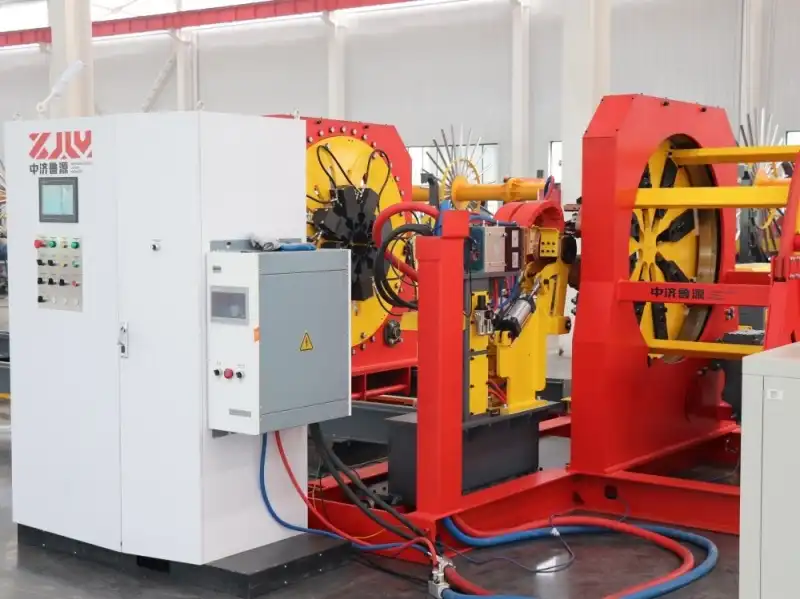
Understanding the LYGH-400D and Its Working Principle
Resistance welding has been known for a long time to be the best way to bond solid steel parts together. Resistance welding joins metals together using controlled electrical current and mechanical pressure. It doesn't need filler material and doesn't produce harmful fumes. Arc welding, on the other hand, creates heat-affected zones and the possibility of burn damage.
On a commercial level, the LYGH-400D works in the same way. It has an integrated PLC system with a touchscreen interface that lets operators set the current intensity, electrode pressure, and weld timing with surgical accuracy. One person can run the whole production cycle, which cuts down on the need for workers and keeps output consistent.
Core Automation and Control Architecture
The PLC and touchscreen control system of the machine lets you change the digital pitch for the spiral bar spacing (≤200 mm), make the cage rotate automatically, and watch the weld in real time. The hydraulic system works at -16 MPa, which ensures that the electrodes stay in contact with the rebar no matter what diameter it is. For pneumatic gripping, the air source pressure stays at 0.6 MPa. These settings work together to get rid of the mistakes that happen when welding by hand, which is especially helpful on big infrastructure projects where any difference in size is unacceptable.
Structural Configuration and Material Standards
The Pile cage resistance welding machine LYGH-400D frame is made of high-strength steel and has a small 35 m x 3 m footprint. It can hold main bars with a diameter of φ12–φ25 mm and spiral bars with a diameter of φ6–φ12 mm, which is the whole diameter range needed for small to medium pile cages in business and infrastructure building. The 60 KW equipment gets its power from a standard 380V, 50Hz, three-phase supply. This makes it easy to install on-site in most construction sites.
How the LYGH-400D Compares to Conventional Cage Welding Methods?
For making reinforcement cages, many workers still use hand arc welding or equipment that is only partly automatic. There are real risks with these methods, like spiral pitch that isn't always the same, weld depth that can be different, and slow output that makes it hard to meet project deadlines.
The LYGH-400D moves the production standard forward. This machine works eight sections every ten hours, and each section is 12 meters long. This is a lot faster than manual production workflows. Resistance welding gets rid of things like welding wire and shielding gas that are used up quickly, which lowers the cost of doing business per unit. Not using open-arc methods also makes the job site safer and cuts down on the time needed to clean up after the welding.
Production Efficiency Gains in Real Project Scenarios
The speed at which the cages are made directly affects when the piles are installed in high-speed rail foundation projects and metro piling in cities. A fabrication bottleneck during the production stage of the cage can cause delays in installing the piles and higher costs for longer mobilization times. The LYGH-400D's automated cycle, which includes spiral feeding and weld completion, gets rid of this bottleneck by setting a standard rate of output that can't be kept up by a manual crew for a 10-hour shift. When procurement teams look at the total cost of ownership of a piece of equipment, they always find that lower labor costs and more predictable output are the two best financial reasons to buy it.
Key Technical Specifications and Operator Safety Guidelines
The Pile cage resistance welding machine LYGH-400D's working envelope is defined by the following factors, which also help engineering teams make sure that the equipment will work together before buying it:
- Rebar Cage Diameter: φ250–φ400 mm
- Cage Length: 3–16 m (customizable per project requirement)
- Main Bar Diameter: φ12–φ25 mm (customizable)
- Spiral Bar Diameter: φ6–φ12 mm (customizable)
- Spiral Bar Spacing: ≤200 mm
- Equipment Power: 60 KW
- Operating Personnel: 1 person
- Production Output: 8 sections / 10 hours (12 m per section)
- Hydraulic Pressure: ≤16 MPa
- Air Supply Pressure: ≤0.6 MPa
Pressure of the air supply: 0.6 MPa
Maintenance Protocols and Electrode Management
These specs cover the needs for making small-diameter piles, structures that support slopes, and regular construction engineering tasks. The cage's length can be changed from 4 meters to 16 meters, which lets you use it for different foundation levels without having to change any of the tools.
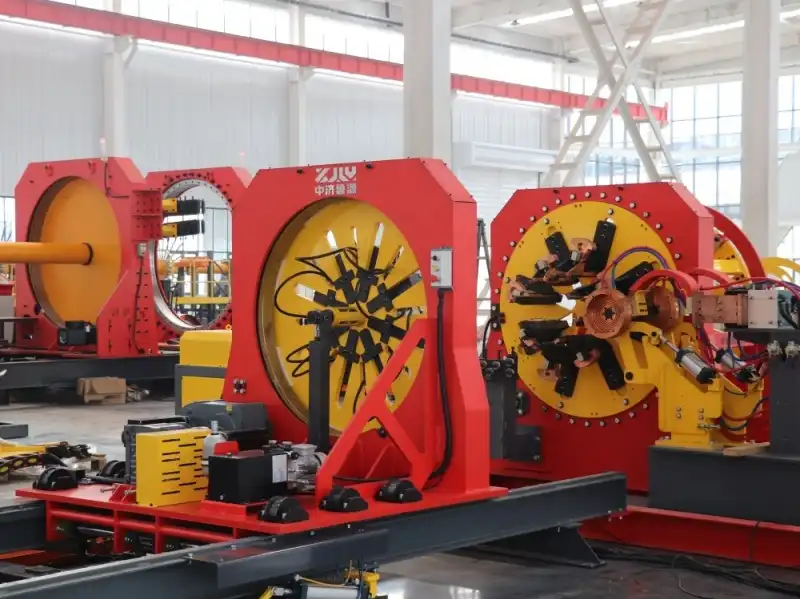
Why Procurement Managers and Engineering Teams Prefer the LYGH-400D?
When infrastructure purchases involve capital equipment, decisions are made by a lot of different people. For example, equipment managers look at how reliable the equipment is, project directors worry about staying on schedule, and supply chain managers think about how much the whole purchase will cost. The Pile cage resistance welding machine LYGH-400D's design architecture and support ecosystem take care of all of these issues.
Here are the main operational benefits that always make people decide to buy something:
- Single-operator efficiency: One trained operator manages the full automated production cycle, reducing skilled labor requirements on-site and lowering ongoing staffing costs without sacrificing output quality.
- No burn damage, no structural compromise: Resistance welding generates heat only at the weld contact point. The surrounding rebar remains thermally unaffected, preserving the base metal's tensile properties — a critical requirement for pile foundations under dynamic loading conditions.
- Consistent dimensional accuracy: The PLC-controlled spiral pitch system holds spacing deviation within ±5 mm, ensuring cages meet engineering drawings without manual re-measurement or rework.
- Eco-responsible operation: No welding wire, no shielding gas, no arc flash. The LYGH-400D's process eliminates the consumable supply chain entirely and reduces site emissions — a growing requirement in government-tendered infrastructure contracts.
These benefits directly lead to a measurable return on investment (ROI): fewer rejected materials, lower costs for consumables, shorter lead times for fabrication, and fewer workers needed. For big contractors who are in charge of several piling jobs at the same time, these savings add up quickly across all of their projects.
The LYGH-400D comes with a full after-sales service package from Zhongji Luyuan that includes installation commissioning, user training, and quick technical assistance. The company has shipped tools to more than 100 countries and has built relationships with big companies like China Railroad, China State Construction, and China Communications Construction. They can provide verifiable project examples at any purchase meeting.
Enhancing Your Fabrication Workflow with the LYGH-400D
For the LYGH-400D to be added to a current production line, a 35 m x 3 m floor space and a standard 3-phase power link are needed. The small linear footprint fits into most rebar yards without moving other equipment around. Zhongji Luyuan's technical team helps with commissioning, which includes calibrating the machine, setting up the PLC parameters, and certifying the operator. This is usually done within a set window of time for mobilization.
The spiral feeding stage is where workflow optimization starts. The rotation mandrel is loaded with pre-cut main bars, and the touchscreen starts the automated spiral winding and welding cycle. Through the PLC link, operators check the consistency of the weld and make digital pitch changes. There is no joining by hand, no moving around between welds, and no reliance on the skill level of each individual welder. Large companies need this level of standardization so they can increase the output of manufacturing across multiple shifts or project sites.
Conclusion
The Pile cage resistance welding machine LYGH-400D is a mature, field-proven option for contractors and manufacturing shops that need to make a lot of pile cages quickly and reliably. Its single-operator design, resistance welding architecture, and PLC-driven accuracy take care of the problems that human and semi-automated methods can't handle on a large scale. This machine provides the consistent sizes and steady output that modern infrastructure needs for bridge foundation projects, urban piling contracts, and hill stabilization work.
FAQ
What rebar diameters does the LYGH-400D support?
The machine can handle spiral bars from φ6 to φ12 mm and main bars from φ12 to φ25 mm. These ranges include most of the small to medium pile cage sizes that are used in commercial and infrastructure building.
How does resistance welding differ from CO2 arc welding for cage fabrication?
Each weld is finished by electrical current and pressure contact in resistance welding. Filler wire or protective gas is not needed. It usually works 3–5 times faster than CO2 arc welding, doesn't produce any slag or fumes, and keeps the structural qualities of the base rebar by keeping it from being exposed to high temperatures for long periods of time.
Can the machine produce cages with variable spiral pitch?
Yes. The PLC control system lets you program segments within a single cage. This lets the cage ends be closer together, where shear forces are strongest, which is a typical condition in structural engineering.
What quality checks are recommended after production?
Important checks include weld shear tests to make sure the bond is strong, digital pitch measuring to make sure the ≤200 mm spacing is met, concentricity checks to make sure the cage is round, and a visual check of the quality of the electrode contacts along the whole length of the cage.
What does the after-sales support package include?
Zhongji Luyuan offers on-site commissioning, training for operators, spare parts, and ongoing technical support. You can email sales2@shandongluyuan.com or go to zjly2025.aixdb.cn with questions.
Partner with Zhongji Luyuan for Your Next Piling Project
The Pile cage resistance welding machine LYGH-400D supplier team at Zhongji Luyuan is ready to help you with your purchase by giving you scientific information, modification options, and project references. We send equipment that works right away because we've been making CNC reinforcement equipment for almost ten years and have used it on building projects around the world. You can email our team at sales2@shandongluyuan.com or go to zjly2025.aixdb.cn to ask for a spec sheet or a production sample right now.
References
1. American Concrete Institute. ACI 318-19: Building Code Requirements for Structural Concrete. ACI, 2019.
2. American Welding Society. AWS D1.4/D1.4M: Structural Welding Code – Reinforcing Steel. AWS, 2022.
3. Transportation Research Board. NCHRP Report 697: Design and Construction of Drilled Piers. National Academies Press, 2012.
4. International Federation for Structural Concrete (fib). fib Model Code for Concrete Structures 2010. Ernst & Sohn, 2013.
5. Peurifoy, R.L., Schexnayder, C.J., Shapira, A., & Schmitt, R.L. Construction Planning, Equipment, and Methods (9th ed.). McGraw-Hill Education, 2018.
6. Federal Highway Administration. Design and Construction of Driven Pile Foundations: Lessons Learned on the Central Artery/Tunnel Project. FHWA-HRT-05-159, U.S. Department of Transportation, 2006.