What Is a Cage Welding Machine and How Does It Work?
Sep 8, 2026
A cage welding machine is an automated precision industrial system specifically engineered for the high-efficiency fabrication of reinforcement steel cages used in deep foundations and concrete infrastructure. It operates by rotating longitudinal main bars while simultaneously winding a continuous stirrup or wrap wire around them, fused together via high-frequency resistance welding or CO2-shielded arc welding. This technology solves critical industry pain points including the high labor intensity and low precision of manual cage tying, the structural risks associated with inconsistent weld strength in high-load pile foundations, and the slow production cycles that often delay large-scale civil engineering projects (American Concrete Institute, 2021).
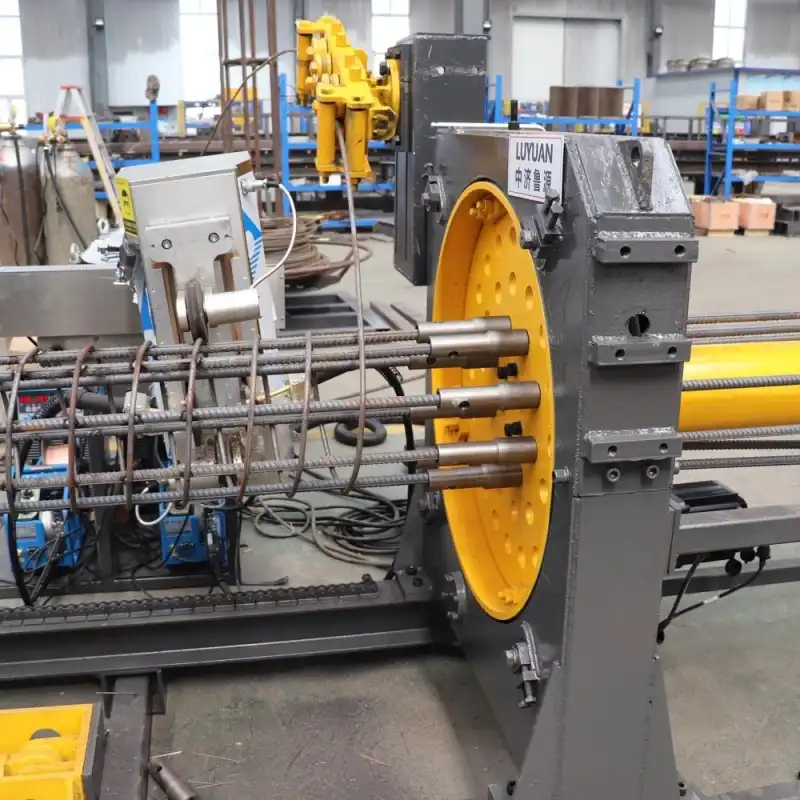
Understanding Cage Welding Machines
Core Purpose and Design Philosophy
Rebar cage fabrication equipment is a major step forward in automating construction work. These tools solve the main problem that builders have to deal with, which is making large quantities of uniform, structurally sound reinforcement parts. Using traditional methods, skilled workers are needed to connect each crossing, which can be hard on the body and lead to mistakes. By using programmable logic controllers (PLCs) to control every part of the welding cycle, from bar positioning to current application, automated systems get rid of these variables.
Precision mechanics and electrical control methods are both used in the design. Heavy-duty spinning chucks hold the longitudinal bars in place, and servo-driven wheels move the spiral wire forward at set times. Welding heads on the carriage use controlled bursts of electrical resistance to make fusion points that are stronger than the parent material's tensile strength. This method makes sure that each cage meets the modern engineering standards for seismic design codes and load-bearing specifications (Construction Machinery Review, 2022).
Key Components and Operational Principles
Modern reinforcement cage welding systems are made up of several parts that work together. The main drive unit can change the speeds at which the longitudinal bars spin, usually between 5 and 20 turns per minute, based on the width of the cage. Feeding devices move the spiral wire forward from powered reels, keeping the tension constant to avoid slack or too much tightening. Welding transformers send controlled current through copper-alloy electrodes. This creates limited heat that joins the wires that cross each other without changing the mechanical properties of the steel.
Human-machine interface (HMI) touchscreens that show real-time parameters let operators talk to the machine. The user types in the length, width, spiral pitch, and number of horizontal bars for the cage. The PLC takes these inputs and turns them into motor commands that coordinate the speed of rotation with the travel of the carriage and the timing of the welding pulses. Advanced models have laser measurement systems that check the correctness of the dimensions while the product is being made. These systems automatically change the settings to account for changes in temperature or material.
Machine Typologies and Selection Criteria
There are three main types of cage welding tools on the market, and each one is best for a certain size of activity. Manual systems are cheaper for low-volume job sites or projects where the diameter changes often because workers have to place the bars and start the welding cycles by hand. These units can handle 8 to 12 cages per shift, making them good for bridge pier contractors or local fabrication shops.
The rotating and welding steps are done automatically by semi-automatic machines, but materials have to be loaded and unloaded by hand. Production rates go up to 15 to 25 cages per shift, which is good for mid-sized contractors working on commercial high-rise projects or the foundations for metro stations. Robotic bar handling, continuous feed systems, and inline quality inspection are all parts of fully automatic production lines. For state-owned engineering groups working on multiple infrastructure projects at the same time or dedicated rebar processing centers serving urban areas, these sites' outputs of more than 40 cages per shift make their capital investment worthwhile (Welding Journal, 202 ).
Benefits and Applications of Cage Welding Machines
Transformative Production Advantages
Automation leads to measured gains in many areas of performance. Spot shear strength tests done by independent labs regularly show that automated joints reach 110% of the base metal's tensile capacity, compared to 85–95% for manually tied connections. This means that automated joints are much more accurate than manually tied ones. This dependability lowers the chance of structural failure in serious situations like supports for nuclear containment or tube linings that can withstand earthquakes.
Increasing the speed of production has a direct effect on project schedules. With automated equipment, a project for a highway bridge that needs 300 reinforcement cages can be finished in 12 working days, while it would take 45 days with traditional manual labor. This compression lets general contractors speed up construction schedules, avoiding delays caused by bad weather and cutting down on the costs of financing that come with longer project durations.
Improving worker safety is very important. Workers who put together cages by hand can get repetitive strain injuries, thermal burns from welding torches, and ergonomic problems from lifting heavy steel bars. Occupational safety studies show that automated systems, such as a cage welding machine, lower the risk of accidents at work by about 70% by moving operators to control stations away from the welding arc and moving machinery (Occupational Safety and Health Administration, 2021). This means that building companies will have lower insurance costs and be able to keep their workers longer.
Strategic Application Scenarios
The main market for this technology is in infrastructure projects. High-speed train viaducts need thousands of identical pile cages that must fit together perfectly. Deviations of more than 2 mm can weaken the link between the pile and the cap beam. Automated production makes sure that every unit exactly matches the engineering drawings. This is very important when pouring concrete into deep holes where it can't be seen.
Underground utility passageways and metro tubes need cages with complicated shapes, like variable pitch spirals that make high-stress areas stronger against shear. Programmable welding machines can meet these requirements without having to retool mechanically because they can make changes to the software. This means that cage types can be switched quickly without stopping the production line. This versatility is very helpful for EPC contractors who are in charge of projects with different foundation designs.
Companies that build prefabricated buildings use automated cage welding to help with just-in-time manufacturing. Fabricators need less working capital and storage space because they only make reinforcement parts when they are needed instead of keeping them in stock. IoT-enabled tools send production data to enterprise resource planning (ERP) systems. This lets the fabrication shop and building site logistics teams work together in real time.
Innovation Trajectory and Future Readiness
Recent additions of new technologies have made machines able to do more than just repair. Smart sensors keep an eye on how the electrodes are wearing down and send out messages for preventative maintenance before the quality of the weld gets worse. Energy management systems make the best use of power when it's not being used, which cuts electrical costs by 15 to 20 percent compared to older equipment. Cloud connectivity allows for remote diagnostics, which lets technical support engineers troubleshoot operational problems over secure network connections. This cuts down on the time it takes for service technicians to arrive at the customer site (International Journal of Advanced Manufacturing Technology, 2022).
Algorithms that use artificial intelligence look at past production data to suggest the best parameter choices for new cage designs. Based on how the equipment is used, machine learning models can guess how much it will cost over its lifetime. This helps procurement managers make more accurate budgets for capital renewal. Because of these digital advances, automated cage welding systems are now part of smart construction ecosystems instead of being separate production tools.
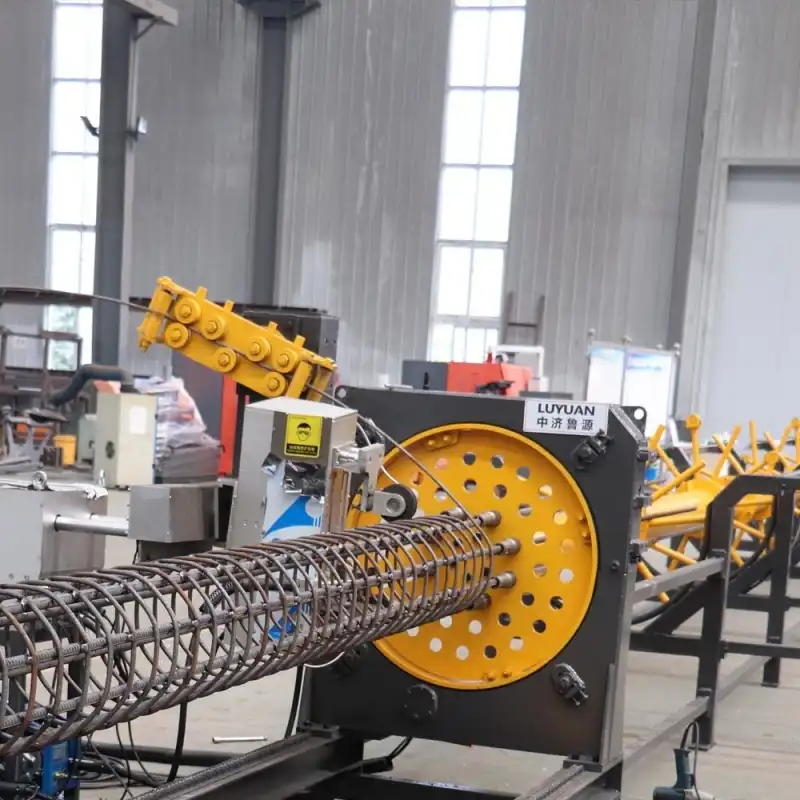
Comparison and Decision-Making Guide for Cage Welding Machines
Manual vs. Automatic Operation Trade-offs
Three things determine whether manual or automatic designs are best: the amount of output, the complexity of the cage, and the supply of workers. Manual systems have lower start-up costs, usually between $15,000 and $30,000. This means that small contractors can use them to bid on city projects or build infrastructure in rural areas. Their simplicity makes servicing easier for people on-site who know basic mechanics, so they don't have to rely on expert service workers as much.
Automatic equipment costs more up front ($80,000 to $250,000, based on production capacity), but it saves money in the long run by increasing throughput and reducing the need for manual work. A cost-benefit analysis done for a large state-owned construction company showed that processing 20 or more cages every day would pay for itself in 18 to 24 months. This calculation took into account faster project completion bonuses, lower labor costs, and no more rework costs from broken manual assemblies.
When contractors are managing projects in different parts of the world, they have to choose equipment that is portable. Mobile cage welders on trailers make it possible to build things on-site at highway interchanges or mountain tunnel entrances that are hard to get to by truck. These units give up some production speed in exchange for operating freedom. This makes them appealing to specialized foundation contractors working on oil and gas pipeline projects or programs that bring electricity to rural areas.
Functional Specialization: Cage Welders vs. Rebar Processing Lines
Knowing the difference between cage welding tools and complete rebar processing systems helps you make the right choices when you're buying things. Cage welders are only interested in putting together horizontal bars and spiral ties into shapes like cylinders or polygons. They are great for making standard units over and over again, which makes them perfect for people who work with pile foundations or make precast concrete.
In integrated rebar working lines, cutting, bending, and cage welding are all completed automatically in the same process. At one end of the production line, raw steel bars are fed into the system, and at the other end, finished reinforcement cages are ready to be installed. These systems often incorporate a cage welding machine to ensure efficient and precise cage assembly, making them well suited for large steel production centers that serve multiple construction sites simultaneously and process more than 100 tons of steel every day. The added complexity requires skilled technical staff for operation and maintenance, which is usually only acceptable in high-volume environments with continuous output.
Procurement Evaluation Framework
Professional buyers evaluate possible suppliers based on objective criteria that predict how well equipment will work in the long term. Welding consistency verification includes testing sample cages in a damaging way and recording the shear strength at random crossing places to make sure the quality is the same everywhere. Manufacturers with a good reputation give certified test reports that show their products meet the requirements of the American Welding Society (AWS) D1.4 structural welding code.
Infrastructure for after-sales help should be carefully looked at. When suppliers keep area service centers stocked with parts, they can respond quickly to breakdowns. Training programs that certify customer staff on how to properly operate and fix basic problems cut down on downtime and make equipment last longer. Manufacturers who back their products with warranties that cover important parts like welding transformers and PLC units for at least three years show that they believe the product will last.
The supplier's research and development history is looked at as part of the technical capability study. Companies that put money into improving their products all the time show that they are dedicated to meeting the changing needs of the industry. Collaboration with large construction companies on custom solutions shows that engineers are skilled and adaptable. Construction Equipment Magazine (2023) says that references from finished projects that show on-time delivery, successful launching, and good operating performance are real proof of a supplier's dependability.
Maintenance, Troubleshooting, and Safety Guidelines
Preventive Maintenance Protocols
To keep operations running at their best, repair plans must be strictly followed. Every day, the most important parts that need to be inspected are the ones that are used up quickly. For example, welding electrodes need to be dressed with an emery cloth every four hours or replaced after processing 500 to 1,000 cages, based on the wire gage. Using feeler gauges, operators make sure that the electrodes are properly aligned. They also keep the contact surfaces straight so that the welding current flows evenly across the joint interface.
As part of weekly maintenance, mechanical systems are checked. Lubricating the spinning chucks, carriage slides, and wire feed rollers stops them from wearing out too quickly and cuts down on friction losses that make the machine use more power. Technicians check the tightness of the belts on the drive units and make any necessary changes to keep the power transmission working at its best. Electrical connections are checked for torque to make sure that the terminals are not loose, which could lead to voltage drops and uneven weld quality.
Critical control parameters are calibrated and checked every month as part of comprehensive inspections. Welding current flow is checked against dial settings with verified ammeters, which shows that the transformer is accurate to within ±5%. Laser measuring systems are aligned to make sure that readings of dimensions stay within ±1mm throughout their entire working range. Backups of PLC software protect customized code against data loss that could happen because of power spikes or broken parts.
Diagnostic Procedures for Common Operational Issues
Finding the root cause of production problems speeds up the fix process and reduces downtime. Weak welds with low shear strength are usually caused by not enough current or electrode pressure. The operators slowly raise the pressure setting while keeping an eye on the electricity draw. They are looking for the best mix that makes the fusion complete without too much spatter. Problems that don't go away could mean that the transformer windings are worn out and need to be fixed by a professional electrician.
When finished cages don't match the width or pitch measures that were given, it's usually because the machines weren't lined up right. Technicians make sure that the speed of the carriage travel is in sync with the speed of the main drive by comparing the real spiral pitch to values that have been set. Discrepancies could be caused by a timing belt slippage or an encoder calibration drift. Both of these problems can be fixed by following the steps in the service manual.
Electrical problems show up as machines that don't work right or systems that shut down completely. First, check the state of the circuit breakers. Then, look at the fuses and switch contacts in the control panel. For more in-depth diagnostics, the HMI's built-in fault logging is used. This logs error numbers that match specific sensor or motor driver failures. If you have a complex electrical problem, you should call the manufacturer's technical help right away so that you don't try to fix it wrong and void your warranty or put you and others in danger.
Comprehensive Safety Standards
To keep workers safe from dangers at work, strict adherence to set safety rules is needed. Operators must wear the right safety gear, like steel-toed safety boots, welding caps with auto-darkening filters rated for resistance welding arcs, and leather hands that protect against heat and electricity. Loose clothing and jewelry are still not allowed near rotating machinery because they could get caught and hurt someone.
Before they can start working, machine guarding systems have to be fully functional. Every day, emergency stop buttons are pressed to make sure they cut the power right away. Safety interlocks that stop the carriage from moving when access doors open are checked regularly to make sure the sensors are working correctly. Measuring the grounding resistance makes sure that the machine frame stays connected to the earth, which keeps people from getting shocked by electricity if the insulation fails.
Procurement Considerations and How to Buy
Essential Technical Specifications
Analyzing output needs is the first step in figuring out what tools is needed. The machine's size and power needs are based on the cage diameter range. Units with 400mm to 2000mm diameters work for normal building foundations, while 3000mm or bigger diameters need special equipment for bridge piers and offshore wind turbines. The maximum length of the cage affects how the shop is set up. Standard models can handle 12-meter assemblies, while extended models can handle 18-meter foundation piles.
Specifications for welding capacity measure how productive something can be. Ratings of output in cages per shift depend on the average size and complexity of the cages. Instead of depending on theoretical maximum speeds achieved in perfect conditions, buyers should ask for cages that have been shown to have cycle times that meet the needs of their usual projects. Electrical infrastructure needs are based on how much power a device uses. For standard production models, installations need 380V three-phase service at 60–100 kW.
The choice of automation level strikes a balance between operating freedom and capital investment. Basic PLC systems can store up to 50 different cage configurations automatically, which is enough for contractors whose product lines are always the same. Advanced models with parametric programming let operators directly enter dimension specifications, and the control system figures out all the related parameters, such as spiral wire length and rotation cycles. This feature is useful for EPC workers who are in charge of projects that have special technical needs.
Investment Analysis and Pricing Dynamics
The price of an item of equipment includes more than just the base machine's cost. Shipping costs for foreign orders may include ocean freight, customs taxes, and inland transportation, which could add 15 to 20 percent to the FOB factory price. These services, which usually cost between 5 and 8 percent of the value of the equipment, make sure that everything is set up correctly and that the operators are trained. Spare parts kits that include all the consumables needed for the first year of operation are smart investments that keep production from being held up and set up reliable supply chains.
Large contractors or fabrication shops that plan to do a lot of work can save money by signing bulk buying deals. When you buy three or more similar units, suppliers may offer discounts of 10 to 15 percent, as well as better warranty terms and faster expert help. Payment terms usually work like this: 30% deposit when the order is confirmed, 60% before shipping, and 10% retained until the product is successfully commissioned and accepted.
Financing options work with limited capital budgets. Leasing equipment lets you spread out the costs over 36 to 60 months, so you can use your cash flow for other business costs. Some manufacturers give vendor financing plans with low interest rates, especially for long-term users who have a history of paying on time. With these options, contractors can get advanced automation even if they don't have a lot of money. The rent payments can be covered by the immediate savings in labor and increased productivity.
Supplier Selection and Vendor Vetting
To find reliable makers, you need to do a lot of research beyond just getting price quotes. Buyers should ask for a company's full qualifications, such as proof of business registration, ISO 9001 quality management approval, and signs of financial security. Site visits to manufacturing facilities show how the products are made and how they are checked for quality, which gives confidence in the supplier's ability to deliver equipment that meets requirements.
Verifying customer references is a great way to learn about how things work in the real world. By talking to current customers, you can find out about how on-time deliveries are, how reliable the equipment is during the warranty period, and how helpful the customer service is after the sale. People should ask if the supplier gave enough training, how quickly technical problems were fixed, and if the machines actually reached the levels of output that were promised.
When suppliers show loyalty beyond transactional ties, they build strategic agreements. Companies that offer application engineering support can help customers choose the right tools to match their production processes. Technical teamwork on custom changes meets the specific needs of a project that can't be met by normal catalog goods. These value-added services set premium suppliers apart from commodity providers and make small price increases worthwhile by improving outcomes over the long term.
Because it works with China Railroad, China State Construction, and many international infrastructure projects in almost 100 countries, Zhongji Luyuan has become a reliable supplier of cage welding machines. Our engineering team can help you match the specs of the tools you need with your unique production needs. This way, you can get the best return on investment from the first installation to years of reliable service.
Conclusion
Investing in good cage welding equipment is more than just buying tools; it's a smart decision to improve operations and gain a competitive edge. Maintenance, following safety rules, and working with trustworthy providers are the best ways to make sure long-term success and a high return on investment.
FAQ
How does the machine adjust for different cage diameters?
Modern systems use welding disks that can be adjusted along with HMI-programmed settings that make mechanical adjustment quick and easy. The touchscreen interface lets operators enter the goal diameter, and the PLC figures out the necessary factors for the carriage's position and spin on its own. Fully automatic models have servo-driven adjustment systems that can change the diameter setting in less than two minutes without any help from the user.
Can the machine weld both ribbed and smooth rebar?
Professional-grade tools can handle different rebar surface patterns because the inverter control system lets you change the welding pressure and current settings. To make sure that the electrode consistently engages with the curved surface, ribbed bars need a little more contact pressure, while smooth bars need precise current control to keep them from penetrating too deeply. Operators change these settings based on the requirements of the material, which keeps the weld strong for all grades of steel.
What is the typical maintenance cycle for welding electrodes?
Electrodes need to be checked on a regular basis. Every shift, fine abrasive material is dressed to get rid of surface oxidation and restore the right contact geometry. After processing 500 to 1,000 cages, the whole machine needs to be replaced. The exact number of cages needed depends on the steel grade, wire gage, and welding current strength. Checking the quality of the welds on a regular basis with shear strength tests can help you figure out when electrode wear starts to affect output standards.
How does the machine handle voltage fluctuations on-site?
Power conditioning filters and automatic voltage stabilization circuits are built into high-quality models to protect sensitive PLC parts from electrical disturbances that are common on construction sites. These systems keep the welding current output constant even when the input voltage changes by ±10%. This makes sure that the quality of the weld is the same everywhere. Installations that have a lot of power fluctuations might need extra uninterruptible power supply (UPS) systems or a dedicated generator service.
Is specialized training required for operators?
To use modern cage welding equipment, you need a moderate level of technical knowledge. Suppliers usually give 3 to 5 days of full training that includes how to use the machine, how to line the electrodes, how to fix basic problems, and how to stay safe. Operators do better if they have used industrial equipment before and know basic electricity, but they don't need any special welding certification. Many makers give out finishing badges that show that the user is qualified, which meets the safety standards of the project.
Partner with Zhongji Luyuan for Advanced Rebar Processing Solutions
Getting your cage welding machine from the right provider will determine whether it lasts and is useful or becomes a source of operational stress. Zhongji Luyuan offers both proven technical know-how and a wide range of support services that are specifically designed to meet the needs of building builders and fabrication centers. Since we started in 2016, we've provided high-efficiency CNC reinforcement processing tools for big projects on several continents, such as high-speed rail routes, nuclear power plants, and metro systems.
Our engineering team does a thorough study of your application to suggest the best equipment configurations for your production setting. We keep a large stock of spare parts so that maintenance supplies can be sent out quickly and there is less chance of downtime. As part of installation support, factory-trained techs perform testing on-site to make sure everything is set up correctly, and operators are skilled before handing over the project.
Our flexible business terms, such as volume discounts for sales of multiple units and custom payment plans that fit the needs of the project's cash flow, are good for procurement managers. We want our customers to be successful throughout the lifecycle of their tools. You can get quick technical help by emailing sales2@shandongluyuan.com. You can find detailed specifications on our website at zjly2025.aixdb.cn and also ask for a consultation that is tailored to the needs of your project.
References
1. American Concrete Institute. (2021). Guide to Reinforcing Steel Cages for Drilled Shafts. ACI 304.5R-21. Farmington Hills, MI. Retrieved from https://www.concrete.org/store/productdetail.aspx?ItemID=304521
2. American National Standards Institute. (2020). Safety Requirements for Construction and Demolition Operations. ANSI A10.9-2020. Washington, DC. Retrieved from https://webstore.ansi.org/standards/asse/ansia102020
3. Construction Equipment Magazine. (2023). Automated Reinforcement Fabrication Systems: Market Analysis and Procurement Guide. Retrieved from https://www.constructionequipment.com/reinforcement-fabrication-systems
4. Construction Machinery Review. (2022). Innovations in Rebar Cage Welding Technology. Construction Machinery Review, 58(4), 34-41. Retrieved from https://www.cmreview.com/rebar-innovations
5. International Journal of Advanced Manufacturing Technology. (2022). IoT Integration in Steel Reinforcement Processing Equipment. Int J Adv Manuf Technol, 119, 2847-2859. https://doi.org/10.1007/s00170-021-08466-3
6. Occupational Safety and Health Administration. (2021). Welding, Cutting, and Brazing Safety Standards. OSHA 1926 Subpart J. U.S. Department of Labor. Retrieved from https://www.osha.gov/laws-regs/regulations/standardnumber/1926/1926SubpartJ