Why Choose a Pile Cage Making Machine for Foundation Projects?
Sep 21, 2026
When it comes to deep foundation engineering, the quality and consistency of reinforcement cages directly determine structural integrity. A pile cage making machine automates the entire fabrication process — from longitudinal bar feeding and spiral winding to precision welding — replacing labor-intensive manual assembly with a controlled, repeatable industrial workflow. For infrastructure contractors, bridge engineers, and rebar processing centers managing high-volume output under tight schedules, investing in automated cage production is no longer optional. It is a strategic necessity that directly impacts project cost, schedule compliance, and structural reliability.
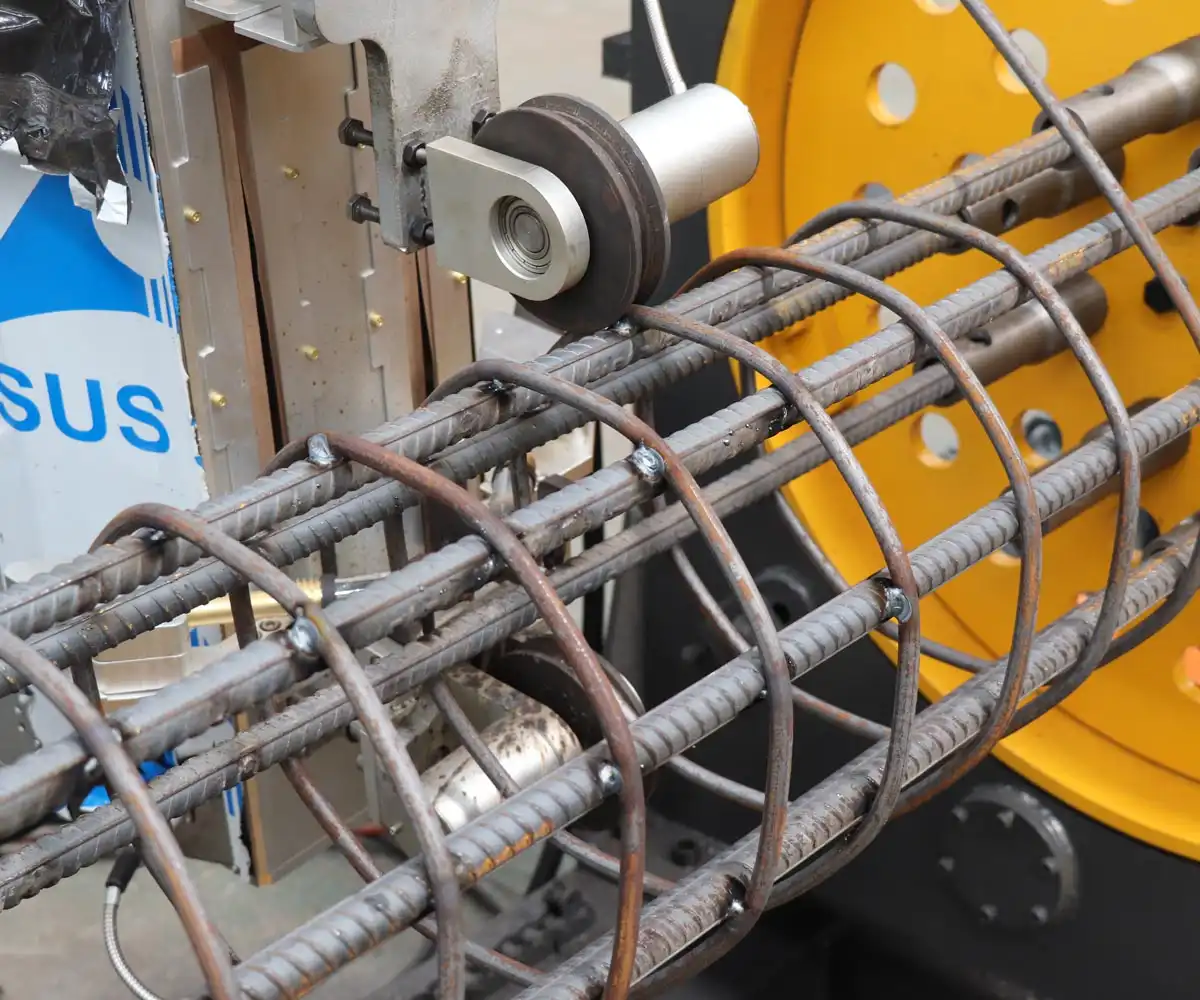
Understanding Pile Cage Making Machines: Definition and Features
What Exactly Is a Rebar Cage Fabrication Machine?
A rebar cage fabrication machine is an industrial system that is controlled by a computer numerical control (CNC) system. It automatically welds, places main bars, and winds spiral wires all at the same time. Manual tying methods cause stirrup pitch and cage concentricity to be less consistent. These tools, on the other hand, use PLC logic to keep dimensions within strict civil engineering standards. As a result, a strong, precisely measured reinforcement cage is made at a speed that can't be matched by manual labor.
The Zhongji Luyuan pile cage making machine LYZD-GJL2500 model is a good example of what a high-spec automatic rebar cage welding combined workstation can really do. Some important technical factors are:
- Cage diameter range: φ700–φ2500 mm
- Cage length: up to 12 m per section
- Main bar diameter: φ18–φ40 mm
- Spiral bar diameter: φ8–φ16 mm
- Spiral bar spacing: ≤300 mm
- Total power: 30 kW (welding power: 100 kW)
- Operating personnel: 1 person
- Production efficiency: 13 cages per 10-hour shift
- Footprint: 30 m × 8.5 m
The power source for the pile cage making machine system is 380V, 50Hz, three-phase, and it has an HMI touch-screen interface that makes setup easy. Gas-protected arc welding ensures that the joint strength stays the same and that there are no false or missing welds. It works with both single and double main bar configurations, as well as single and double spiral bar designs. This gives engineers a lot of freedom to adapt to different project needs.
The Benefits of Using a Pile Cage Making Machine in Foundation Projects
Efficiency, Cost Control, and Structural Assurance
Assembling cages by hand is slow, not always reliable, and getting more and more expensive. As labor costs continue to rise in the U.S. building industry—the Bureau of Labor Statistics says pay growth in construction has been higher than inflation for several years running—automation has become more than just a way to save money.
Here are the core advantages this pile cage making machine category delivers on active infrastructure sites:
- Dramatic labor reduction: The whole LYZD-GJL2500 production cycle is run by a single operator. This means that there is no need for large hand-binding teams, which cuts direct labor costs by a large amount.
- Consistent welding quality: Gas-protected arc welding makes weld joints that are the same and can be checked along the length of the cage. This gets rid of the differences that come with manual tying and spot welding.
- Higher throughput: Automated production keeps up with tight project plans for bridge piers, high-rise foundations, and metro infrastructure, with 13 cages working for 10 hours on 12-meter parts.
- Material efficiency: The precise control of spiral bar spacing reduces the amount of rebar that is wasted due to overruns or the wrong pitch, which improves the total use of materials across big procurement volumes.
- Reduced rework risk: Because servo control and PLC synchronization make the dimensions more accurate, there are fewer cage rejections on-site, which protects both the schedule and the budget.
These benefits of a pile cage making machine directly address the problems that procurement managers and project engineers have the most trouble with: relying on workers, slow production, and inconsistent quality. When added up over a multi-year infrastructure contract, the ROI case is strong.
How Does a Pile Cage Making Machine Work? A Step-by-Step Process Explanation
From Raw Rebar to Finished Cage: The Automated Workflow
The first step in the production process is to put the main reinforcement bars into the rotating drive head. The PLC system then starts the spiral wire feed device, which turns the cage while winding the stirrup bar at a set pitch. Welding torches are placed at the top of the assembly to make the joint points sharper and more stable. They automatically join each piece together. The operator keeps an eye on the HMI interface and only steps in when a change in specifications is needed.
Every day at the start, the touch screen is used to check the parameters, the wire feed is calibrated, and the welding tip is inspected. Regular maintenance, like checking the electrodes once a week and keeping an eye on the hydraulic pressure (at ≤16 MPa), keeps the pile cage making machine running smoothly. This is something that field teams always say is a big benefit.
This level of production reliability is very helpful for urban building foundation projects that need to get cages to pile locations just in time. For bridge pier projects that need deep-water foundations, the machine can handle cages up to φ2500 mm in diameter, which means that even the heaviest structural parts can be made accurately on-site.
Comparing Pile Cage Making Machines: Finding the Right Solution for Your Business
Manual vs. Automated vs. Fully Automatic Systems
There are many ways to make reinforcement cages on the market, ranging from simple semi-automatic rollers to fully integrated CNC machines. Semi-automatic machines need more help from a user and work best in yards that process fewer cages per day and smaller widths. Fully automatic systems like the LYZD-GJL2500 are designed to work in high-output environments where quality control and tight schedules require little to no human input.
When American business buyers are looking for pile cage making machine suppliers, they can effectively narrow the field by evaluating the following criteria: the range of cage diameters, the welding technology, the level of sophistication of the control system, the need for operator training, and the ability to provide technical support after the sale. Zhongji Luyuan's equipment has been sent to almost 100 countries and regions, such as South Korea, Malaysia, Thailand, Kazakhstan, and Israel. This gives the company a strong international reputation that makes buyers feel confident.
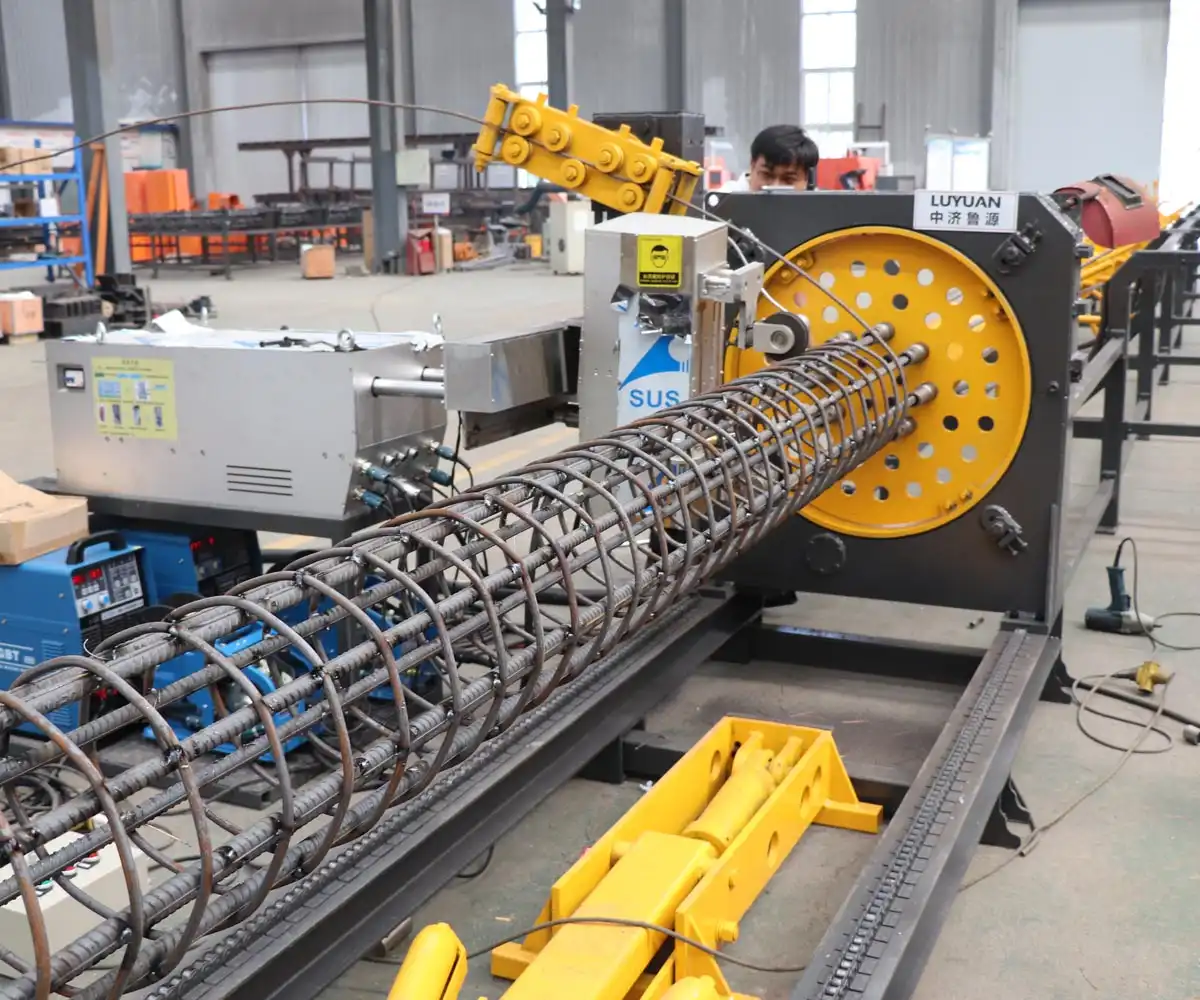
Making an Informed Purchase: Procurement Guide for Pile Cage Making Machines
What to Evaluate Before Committing to a Supplier?
It takes more than just checking the specs on a document to find the right pile cage making machine for sale. Purchasing managers should check to see if a supplier can really customize their products, such as by offering double main bar configurations or changeable spiral pitch programming across cage sections. They should also check to see if the supplier offers after-sales service that includes setting up the machines on-site and teaching operators.
Zhongji Luyuan was established in 2016 with 50 million yuan in listed capital. It works with China Railroad, China Railroad Construction, China State Construction, and China Nuclear Power Construction Corporation. The engineering standards that the equipment is made to meet are reflected in these agreements. The company offers installation help, operator training programs, and quick technical support, all of which are important when capital equipment has to keep working on multi-year infrastructure contracts.
Logistics for delivery and imports are also important. Clear communication about lead times, customs paperwork, and site preparation needs helps keep projects on schedule and avoids delays that cost a lot of money.
Conclusion
Automated production of reinforcement cages has gone from being a competitive edge to being standard practice in large-scale building projects. A fully automatic pile cage making machine system can't be matched in terms of accuracy, speed, and labor efficiency on a large scale by human methods. When purchasing managers and project engineers look at foundation construction equipment, the choice comes down to matching the machine's capabilities to the needs of the project and picking a supplier with the technical depth and service infrastructure to support long-term operations.
FAQ
How often does the welding system require maintenance?
It is standard practice to clean the welding nozzles every day and check the grounding wires and copper electrodes every week. Maintenance that is done on a regular basis keeps the arc stable and greatly increases the life of welding parts of the pile cage making machine.
Can the spiral pitch be adjusted mid-production?
Yes. Through the PLC touch-screen interface, operators set variable pitch values for the top, middle, and bottom cage sections based on the requirements of the structural design. There is no need for mechanical change.
How long does operator training typically take?
Zhongji Luyuan offers basic training on-site that includes setting up programs, following safety rules, and what to do in an emergency. It takes most workers three to five days to become good at production.
What cage diameter range does the LYZD-GJL2500 support?
The machine can work with cage widths ranging from φ700 mm to φ2500 mm, which is big enough to meet the needs of most pile foundation, bridge pier, and metro structure projects.
Is the equipment suitable for corrosion-resistant rebar?
The gas-protected arc welding method keeps weld spots from getting too hot, so it can be used with coated rebar in situations where the surface needs to stay protected.
Connect with Zhongji Luyuan — Your Trusted Pile Cage Making Machine Manufacturer
Zhongji Luyuan helps building workers all over the world with proven CNC processing skills for making reinforcements. Our engineering team can make sure that the fully automatic pile cage making machine you need is just right for your project, whether it's a bridge, a metro tunnel, or a high-rise foundation. Reach our team directly at sales2@shandongluyuan.com or visit shandongluyuan.com to request a personalized quotation and product demonstration.
References
1. American Concrete Institute. ACI 318-19: Building Code Requirements for Structural Concrete. ACI, 2019.
2. Portland Cement Association. Design and Control of Concrete Mixtures. PCA, 2018.
3. Bureau of Labor Statistics, U.S. Department of Labor. Construction Labor Productivity and Wage Trends Report. BLS, 2023.
4. Federal Highway Administration. Design and Construction of Driven Pile Foundations — Reference Manual. FHWA, 2016.
5. International Federation for Structural Concrete (fib). fib Model Code for Concrete Structures 2010. Ernst & Sohn, 2013.
6. National Institute of Standards and Technology. Guide to Industrial Control Systems (ICS) Security. NIST Special Publication 800-82, 2015.