Why Choose Pile Cage Resistance Welding Machine LYGH-400D for Projects?
Sep 24, 2026
When project timelines are tight and structural quality is non-negotiable, choosing the right reinforcement cage fabrication equipment becomes a critical decision. The pile cage resistance welding machine LYGH-400D, developed by Shandong Zhongji Luyuan Machinery Co., Ltd., delivers fully automated, high-precision rebar cage production for foundation engineering, slope support, and civil construction projects. With PLC control, resistance welding technology, and a single-operator workflow, the LYGH-400D addresses the core challenges of labor cost, weld consistency, and production throughput that today's infrastructure contractors face every day.
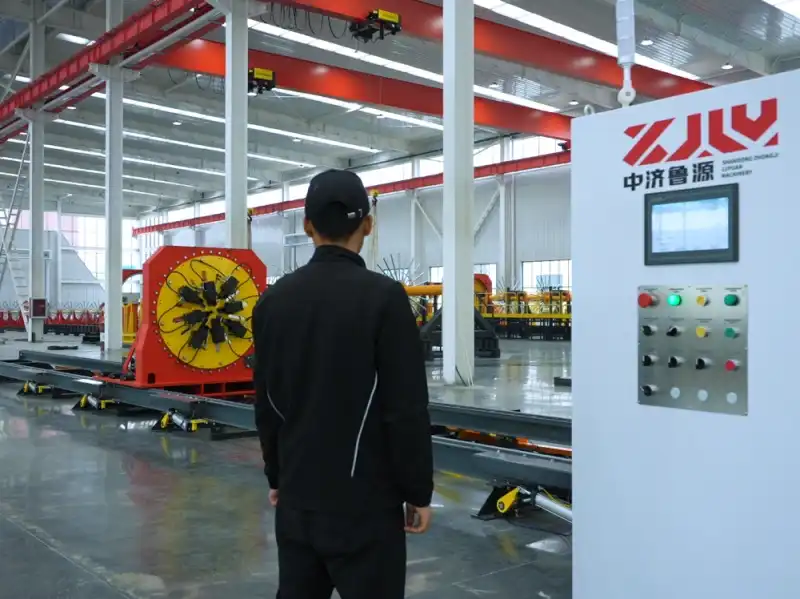
Understanding the Role of LYGH-400D in Modern Pile Cage Welding
In the last ten years, foundation building has changed a lot. Now, contractors working on subway stations, highway bridges, and high-rise building piles want rebar cages that are made at scale and meet tight tolerances for size. Manual welding can't keep up with these needs anymore, and welds that aren't consistent put structures at risk of failing when loads change.
How Resistance Welding Transforms Cage Fabrication
At each point where two circular bars meet, the LYGH-400D uses high-power resistance welding to join them together. In contrast to CO₂ arc welding, this method creates limited heat through electrical resistance, which forms strong bonds without hurting or burning the base metal. Because of this, the weld profile is cleaner, there is no need to remove slag, and there is no need for disposable wire or shielding gas. This directly leads to lower running costs and a better work environment.
Structural Precision That Projects Demand
When it comes to cage diameters, the machine can handle main bar diameters between φ12 mm and φ25 mm and spiral bar diameters between φ6 mm and φ12 mm. The length of the cage can be changed to fit any needs. The distance between spiral bars is kept at ≤200 mm, and pitch variation is kept within ±5 mm by digital encoder input. This is a tolerance level that meets the requirements for reinforcement cages on high-speed railroad and bridge foundation projects.
Technical Deep Dive: Specifications and Operation Guide
When procurement and technical teams know what makes the Pile cage resistance welding machine LYGH-400D work well, they can make more confident buying decisions. These are the most important technical specs about this machine:
- Control System: PLC with touch screen interface for digital pitch and speed adjustment, enabling segmented spacing settings across a single cage length.
- Equipment Power: 60 kW, powered by a 380V / 50Hz three-phase supply with a dedicated transformer managing high-current resistance welding demands.
- Hydraulic & Pneumatic Systems: Hydraulic pressure ≤16 MPa; air supply pressure ≤0.6 MPa, supporting stable cage rotation and automatic electrode pressure control.
- Production Output: 8 cage sections per 10-hour shift at 12 meters per section — a rate that far exceeds manual gang-welding operations.
- Footprint: 35 m × 3 m, suited for permanent workshops or large construction staging areas.
- Operating Personnel: Only one operator is required per shift, dramatically reducing labor dependency.
Because of these features, the LYGH-400D is perfect for contractors who run continuous production cycles. The touch screen interface makes it easy for operators with little technical knowledge to quickly change parameters, and the PLC's auto-correction feature fixes any small changes in the diameter of the rebar without stopping production. It's easy to do checks before use, and the high-strength steel frame construction guarantees long-term mechanical stability under heavy industrial use.
To keep the best conductivity, the chromium-zirconium copper welding electrodes should be dressed or changed every 5,000 to 10,000 welds, which is what the maintenance standards are all about. Zhongji Luyuan offers technical support after the sale, such as remote guidance, on-site commissioning, and programs for training operators.
LYGH-400D vs. Alternative Pile Cage Welding Machines: A Rational Comparison
When project managers look at automated cage welding tools, they often compare more than one type before making a decision. The Pile cage resistance welding machine LYGH-400D is better than lower-capacity options and traditional hand production in a number of ways that can be measured.
Zhongji Luyuan's LYGH-300D is a smaller type that can handle narrower cage diameters and lower production rates. This makes it a good choice for smaller domestic or utility projects. Because it can handle a wider range of diameters (up to φ400 mm) and more sections per 10-hour shift, the LYGH-400D is the best choice when a lot of projects need to be made all at once. On many high-speed rail substructure or port foundation projects, contractors have said that the LYGH-400D's output capacity gets rid of the bottlenecks that existed in earlier manual or semi-automatic workflows.
The LYGH-400D is better than cheap options because Zhongji Luyuan has put more money into research and development since the company started in 2016. The machine is CE-certified and built to ISO 9001 quality standards, which makes sure that the weld's tensile strength meets or exceeds the yield limits of the parent metal. Zhongji Luyuan has long-term partnerships with China Railroad, China State Construction, and China Communications Construction. These partnerships provide real-world proof of the machine's performance at scale, which is something that procurement managers and engineering directors look at carefully when deciding how trustworthy a supplier is.
Procurement Essentials: How and Where to Buy LYGH-400D?
To find the best reinforcement cage welding equipment, you need to do more than just compare products. You also need to look at how reliable the supplier is, how long the lead time is, and how much support they offer after the sale. It works with approved dealers to serve infrastructure companies in the US and in almost 100 other countries and regions, such as South Korea, Malaysia, Thailand, Israel, Kazakhstan, and South Africa. Zhongji Luyuan has a structured global sales network.
Buyers of the Pile cage resistance welding machine LYGH-400D can ask for customizable designs based on project needs, such as desired cage lengths, main bar diameter combinations, and production capacity goals. Processing centers or EPC companies that are working on multiple projects at the same time can buy in bulk. Prices depend on how the equipment is set up, and Zhongji Luyuan's sales team gives clear quotes that include full information on guarantee coverage, delivery times, and help with installation.
It's easy to start the procurement process. Buyers can go to zjly2025.aixdb.cn or call the sales team directly to ask for a technical consultation and a quote that is tailored to their project.
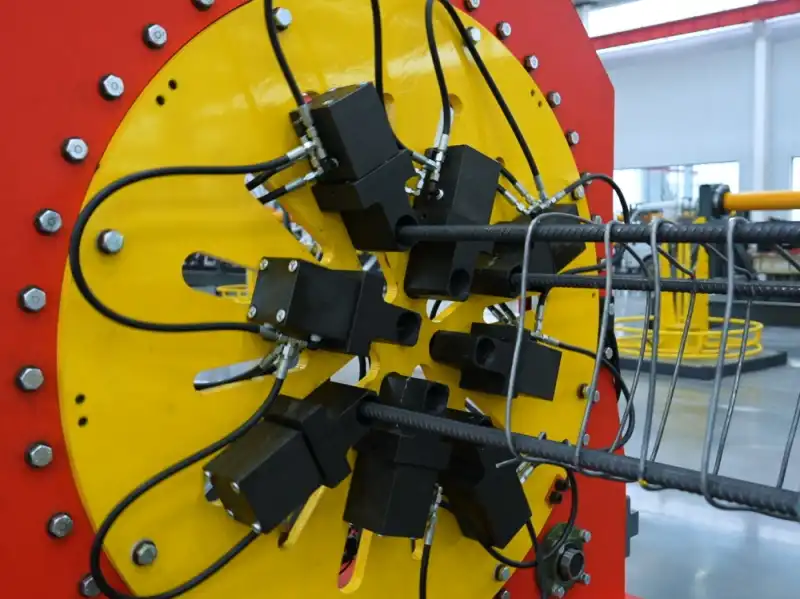
Maximizing Project Success with LYGH-400D: Practical Insights
There's more to getting the most out of this reinforcement cage welding system than just setting it up. The equipment's ability to regularly give its rated output over the course of a project depends on how well it is used and how often it is trained.
Teams that schedule regular electrode checks and keep an eye on the PLC problem logs report a lot less unexpected downtime. The machine's auto-correction logic takes care of changes in rebar width on its own, but workers who know how to spot the first signs of electrode wear or changes in hydraulic pressure can step in before a small problem turns into a production stop.
The LYGH-400D also fits with goals for green building. Resistance welding doesn't need any consumables, doesn't make any harmful fumes, and only uses 60 kW of power, which is a small amount of energy compared to the amount of work that can be done. These traits are useful for contractors who want to get green building certifications or who have to follow environmental rules. They are more than just output measures.
Conclusion
The Pile cage resistance welding machine LYGH-400D is a great solution for infrastructure contractors who need to meet real production challenges because it is precise, automated, and energy-efficient. With just one operator, projects can finish eight cage sections in a 10-hour shift without sacrificing the accuracy of the measurements or the strength of the welds.
FAQ
What cage diameter and length range does the LYGH-400D support?
The machine can work with rebar cages with widths between 250 mm and 400 mm and lengths between 3 meters and 16 meters. Both of these sizes can be changed to fit the needs of the project.
How does resistance welding differ from traditional arc welding for pile cages?
Resistance welding uses limited electrical heat to fuse the ends of two pieces of rebar together. This makes a clean, strong link with no slag, burn damage, or waste materials. The speed of production is three to five times faster than with CO₂ arc welding.
How many workers does the LYGH-400D require per shift?
One person is needed for each shift, which cuts down on labor costs for big jobs by a lot.
Can the spiral bar spacing be adjusted for different engineering specifications?
The PLC control system lets you set different pitch levels for different parts of a single cage. This lets you make the spacing smaller in some areas to meet the needs of the structural design. The distance between spiral bars stays at 200 mm.
What after-sales support does Zhongji Luyuan provide?
Zhongji Luyuan has a dedicated after-sales service team that helps with installation and commissioning on-site, technical support over the phone, operator training programs, and ongoing maintenance.
Ready to Upgrade Your Pile Cage Production? Contact Zhongji Luyuan
The Pile cage resistance welding machine LYGH-400D from Zhongji Luyuan has been used successfully by builders who need to make a lot of rebar cages quickly and reliably without using a lot of labor. As a reliable company that makes pile cage resistance welding machines and has worked on projects all over the world, we can provide custom configurations and quick technical support. To get a quote for your job right away, email our team at sales2@shandongluyuan.com or go to shandongluyuan.com.
References
1. American Concrete Institute. ACI 318-19: Building Code Requirements for Structural Concrete. ACI, 2019.
2. American Welding Society. AWS D1.4/D1.4M: Structural Welding Code — Reinforcing Steel. AWS, 2018.
3. Federal Highway Administration. Deep Foundations Design and Construction Guide. FHWA, 2020.
4. International Federation for Structural Concrete (fib). fib Bulletin 72: Shear and Punching Shear in RC and FRC Elements. fib, 2014.
5. National Institute of Standards and Technology. NIST Technical Note 1863: Automation in Construction Productivity Research. NIST, 2015.
6. Steel Reinforcement Institute of Australia. Reinforcement Detailing Handbook for Reinforced and Prestressed Concrete. SRIA, 2017.